
Show summary Hide summary
- What happened: illness, hospitalization and death of Jesse Jackson
- Roots in the Jim Crow South and early influences on his activism
- From student protests to the Southern Christian Leadership Conference
- Assassination of Martin Luther King Jr. and Jackson’s changing role
- Operation PUSH, voter registration and the national political stage
- Controversies that shaped public perception
- Beliefs, rhetoric and political style
- How historians and colleagues remember his impact
- Moments that defined him in the public imagination
- Recognition and contested inheritance
- About the author
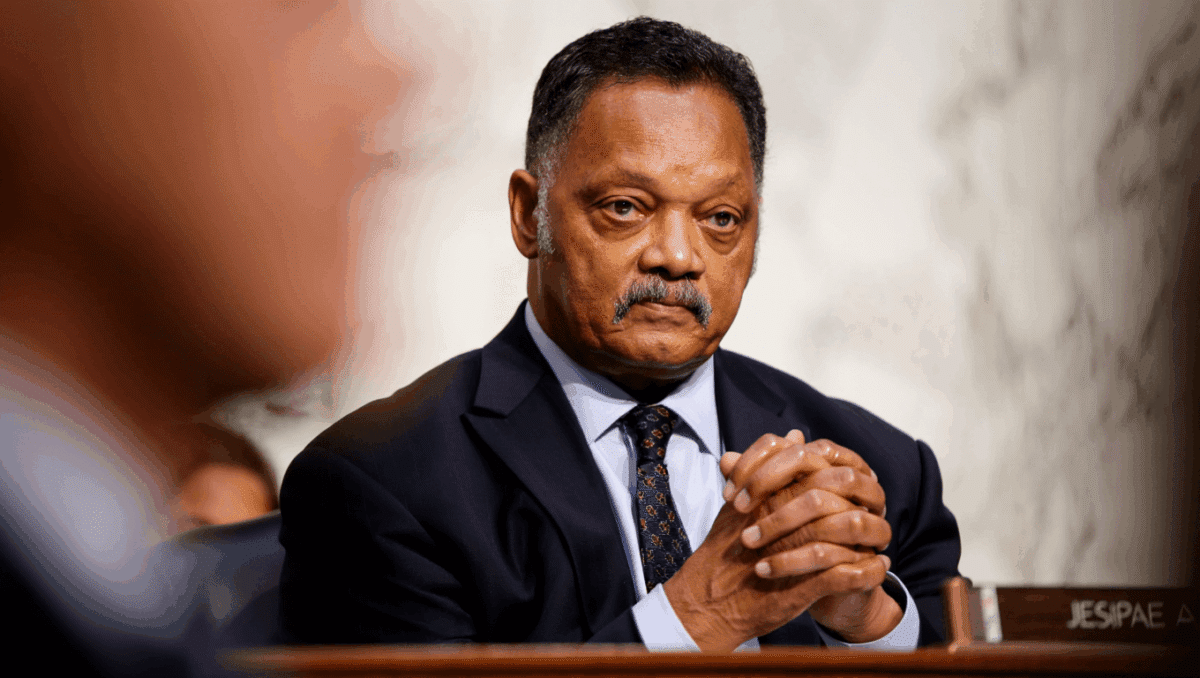
Jesse Jackson, a towering and polarizing figure who helped move Black activists from the streets into the halls of American power, has died at 84. Diagnosed earlier with progressive supranuclear palsy, he was hospitalized in November and passed away this week while surrounded by family and friends.
From his beginnings in segregated South Carolina to national prominence as a civil-rights organizer and two-time Democratic presidential contender, Jackson’s life tracked the long arc of Black political mobilization in the United States. His career combined fierce advocacy, strategic political organizing, public controversy, and an unmistakable appetite for public life.
The Growing Demand for Data-Driven Decision Making in Silicon Valley
He quit, ran out of money, and begged to come back — here’s how his boss reacted
What happened: illness, hospitalization and death of Jesse Jackson
Jackson’s health deteriorated after a diagnosis of progressive supranuclear palsy in April 2025, a rare neurodegenerative disorder that affects balance, movement and speech. He was admitted to the hospital in November and remained under care until his death on Tuesday. Reports say he spent his final hours with close relatives and longtime associates.
Roots in the Jim Crow South and early influences on his activism
Born Jesse Louis Burns on October 8, 1941, in Greenville, South Carolina, Jackson grew up in a working-class Black neighborhood where church and family provided social structure and support. His mother, a teenager at his birth, later married Charles Jackson, who became an influential figure in his upbringing. The local church became a launching pad for his faith and activism.
At school he stood out—popular among peers, competitive in sports, and determined in the classroom. He earned a football scholarship to the University of Illinois in 1959 but left after a year and transferred to North Carolina A&T State University, an HBCU in Greensboro. That campus was a hotbed of direct-action protests, and although Jackson’s earliest engagement with sit-ins and demonstrations was cautious, he soon enrolled himself fully in the civil-rights struggle.
From student protests to the Southern Christian Leadership Conference
Jackson’s activism matured at North Carolina A&T, where he joined other students in nonviolent demonstrations that helped desegregate public facilities. After completing a degree in sociology in 1964, he moved to Chicago to study theology and became involved with the Southern Christian Leadership Conference (SCLC), the organization Martin Luther King Jr. helped build.
King noticed Jackson’s organizing drive and appointed him to lead Operation Breadbasket, an SCLC project that used economic leverage—boycotts and procurement campaigns—to pressure businesses to hire Black workers. Under Jackson’s direction the program expanded beyond Chicago into a national effort to convert civil-rights rhetoric into jobs and contracts.
Assassination of Martin Luther King Jr. and Jackson’s changing role
Jackson was present in Memphis in 1968 when Martin Luther King Jr. was slain. The assassination fractured the movement’s leadership and shifted Jackson into a more public, assertive role. He claimed a close personal connection to King at the time of the shooting, a version of events that created friction with some colleagues and has been contested by others.
In the years after King’s death, Jackson positioned himself as both an organizer and a public spokesman for Black political interests, moving from movement work toward a broader political strategy.
Operation PUSH, voter registration and the national political stage
After leaving the SCLC in 1971, Jackson founded People United to Serve Humanity, later shortened to Operation PUSH, which pushed voting access, employment opportunities and educational reforms. His organization focused on converting grassroots energy into political influence through voter registration drives, corporate pressure campaigns and coalition building.
- Operation PUSH: grassroots organizing, corporate boycotts, and job campaigns.
- Voter registration: efforts to mobilize first-time voters and historically disenfranchised communities.
- National profile: Jackson cultivated visibility through preaching, protests, and media appearances.
His national profile grew in the 1970s and 1980s. During the 1972 election cycle there were even discussions in Republican circles about funding Jackson as a third-party spoiler—an idea that failed to materialize. Jackson later campaigned for Democratic candidates while also mounting his own bids for the presidency in 1984 and 1988, the latter campaign drawing roughly seven million primary votes and making him a significant force within the Democratic coalition.
Controversies that shaped public perception
Jackson’s public life was marked by both high achievement and recurring controversies. He was criticized for inflammatory remarks, including insulting language about Jewish New Yorkers and sharp attacks on foreign leaders, which led to accusations of anti-Semitism and damaged some alliances. His relationship with Nation of Islam figures and his reluctance to fully repudiate extremist statements further complicated his reputation.
Personal matters also became public: extramarital affairs and family disputes invited scrutiny and shifted headlines away from his policy work. Critics frequently labeled him egotistical and media-driven; defenders argued ambition was a political necessity that propelled people from humble origins into national leadership.
Beliefs, rhetoric and political style
Jackson combined a preacher’s cadence with a politician’s tactical sense. He emphasized moral uplift and family stability as remedies for social ills, at times expressing socially conservative views on issues like abortion while advocating progressive economic policies. His language often fused religious and liberation themes, and he popularized slogans that resonated with supporters across generations, such as “keep hope alive” and the aspiration to “be somebody.”
He also used moral exhortation to steer crowds away from violence. In public interventions during tense moments, Jackson urged restraint and channeling energy into organized political effort rather than destruction—an approach that underlined his belief in disciplined civic engagement.
How historians and colleagues remember his impact
Jackson’s defenders highlight his strategic contributions: building institutions that broadened Black representation in local, state and national politics; mobilizing new voters; and pressuring corporate America to change hiring practices. Detractors emphasize missteps and rhetorical excesses. Biographers and scholars note that his readiness to see racism at work sometimes eclipsed more complex explanations for setbacks.
- Organizational legacy: PUSH and later Rainbow/PUSH created durable advocacy networks.
- Electoral impact: Jackson’s campaigns helped normalize Black candidacies at the national level.
- Tactical influence: Economic boycotts and voter drives became staples of Black political strategy.
Moments that defined him in the public imagination
Jackson’s presence at iconic moments—standing beside Martin Luther King Jr. in Memphis, then years later embracing the inauguration of Barack Obama—helped cement his place in American political memory. The image of him moved to tears at Obama’s swearing-in captured both pride in what had been achieved and the private ache of political near-misses.
Recognition and contested inheritance
Scholars and activists will continue to debate Jackson’s record: his successes in opening doors for Black political participation, his role in shaping national debates over race and economics, and the controversies that dogged him. There is broad agreement that he changed the terrain of American politics by insisting that Black communities be counted not only as moral claimants but as organized political forces.
About the author
Kevin Yuill is emeritus professor of history at the University of Sunderland and CEO of Humanists Against Assisted Suicide.
You might also like:
- Black women in Hollywood say there’s space for all at Essence ceremony
- Michael Jackson movie Screentime review: entertaining but incomplete
- UK Labour Party risks final nail in its coffin after latest setback
- Kentucky teacher of the year builds prosthetic hand for student in school 3D printing lab
- Sydney Sweeney may be exactly who she appears to be: inside her public persona

Robert Johnson is a dedicated columnist focusing on political and social debates. With twelve years in editorial writing, he provides nuanced, well‑argued perspectives. His commentaries invite you to form your own views and engage in critical issues.


Man, Jesse Jackson was a true legend. His fight for civil rights and political impact were off the charts. His legacy lives on, inspiring us to keep pushing for equality and justice. A true hero, gone but never forgotten.
Man, Jesse Jackson had grit. From the Jim Crow South to national politics, he fought for civil rights. His journey from student protests to MLKs assassination – a legacy worth remembering.
Man, Jesse Jackson was a force to be reckoned with. His impact on civil rights and politics was monumental. Its crazy how one person can make such a huge difference in the world. His legacy will never be forgotten.
Man, back in the day, Jesse Jackson really shook things up, huh? His voice was loud, his message clear. Its wild how one person can drop a pebble and create ripples that last a lifetime, isnt it? His impact will echo through the ages, no doubt about it.
Man, Jesse Jackson was a force, you know? His dedication to civil rights and push for change made waves, for real. He wasnt just a talker; he walked the walk. Rest in power, legend.
Man, Jesse Jackson was a true trailblazer. His impact on civil rights and politics is legendary. He faced so much adversity with unwavering courage. Rest in power, Mr. Jackson. Your legacy lives on.
Man, Jesse Jackson was a force, yknow? His passion for civil rights was like a wildfire, burnin down barriers. His legacy lives on, a reminder to fight for justice and equality. Rest easy, trailblazer.
Man, Jesse Jackson was a real force, huh? I remember watchin him speak and feelin like he could move mountains with his words. The way he fought for civil rights was somethin else. Its like his passion was contagious, spreadin hope and courage. His legacy will definitely keep inspirin folks to stand up for whats right. Rest easy, trailblazer.
I remember Jesse Jackson as a beacon of hope, standing tall in the face of adversity. His legacy reminds us to keep fighting for justice and equality, no matter the obstacles. Rest in power, trailblazer.
Man, Jesse Jackson was like a force of nature, you know? His fight for civil rights was real, inspiring. We need more leaders like him today, ones who aint afraid to shake things up and speak truth to power.
Man, Jesse Jackson was a legend. His fight for civil rights was real, ya know? He didnt just talk the talk, he walked the walk. We need more leaders like him today, standing up for whats right.
Oh man, Jesse Jackson was the real deal, ya know? He didnt just talk the talk, he walked the walk. We definitely need more leaders like him today, standing up for whats right. His legacy aint something to overlook, thats for sure.
Man, Jesse Jackson was a powerhouse in civil rights. His impact on politics and society… yo, its massive. The way he stood up and fought for justice, inspiring stuff, yknow? His legacys gonna live on strong.
Yeah, Jesse Jackson was a true force to be reckoned with in the civil rights arena. His dedication to justice and equality… its seriously admirable, man. The impact he had on politics and society, no joke, massive. His legacy? Gonna keep on inspiring folks for years to come. The dude was a real game-changer, no doubt about it.
Man, Jesse Jackson was a real force, ya know? He paved the way, fought the good fight. His legacy lives on in the battles we still gotta fight today. Rest easy, trailblazer.
Man, Jesse Jackson, he was a true trailblazer. Fought for civil rights like a boss. His legacy lives on. Respect. Lets keep fighting for justice and equality like he did.
Man, Jesse Jackson was a real force, yknow? His dedication to civil rights and political activism was next level. Dude faced so much, from racism to health battles, but he never backed down. A true inspiration.
Man, Jesse Jackson was a true force, yknow? His legacy in civil rights and politics is just immense. Its a loss that hits hard, but his impact wont be forgotten. RIP, legend.
Man, Jesse Jackson was a force in civil rights. His dedication and fearlessness paved the way for many. His legacy is a reminder that the fight for equality is ongoing. RIP, legend.
Man, Jesse Jackson was a legend. His journey from the Jim Crow South to national politics is inspiring. We need more trailblazers like him today, fighting for justice and equality. His legacy will never be forgotten.
Man, Jesse Jackson was a force to be reckoned with. His impact on civil rights and national politics is undeniable. He faced so much adversity, but he never backed down. Rest in power, legend.
Man, Jesse Jackson had that fire in him, no doubt. He was out there hustlin for civil rights like a boss. The way he held his ground against all that hate? Respect. His legacy aint gonna fade anytime soon. Rest easy, legend.