
Show summary Hide summary
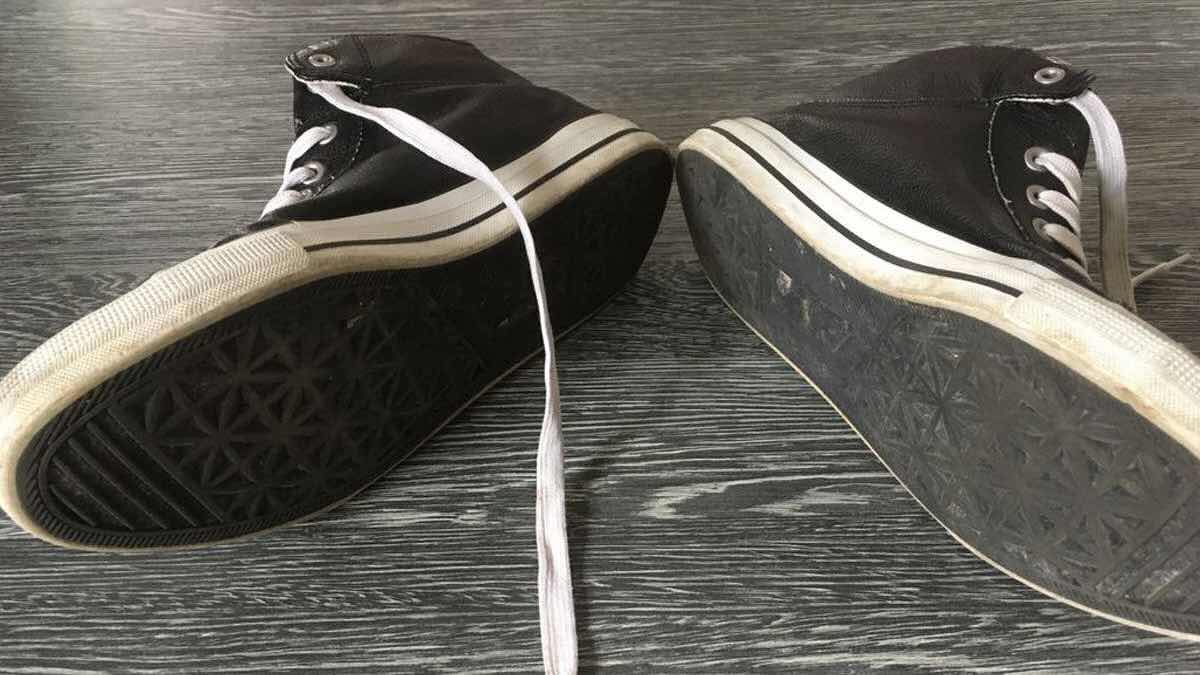
Most of us donate clothing with a simple thought in mind: someone, somewhere, will wear what we no longer need. But when a German content creator slipped an AirTag into a pair of trainers before dropping them into a charity collection bin, he unwittingly opened the door to a hidden world of textile sorting, exporting, and resale. What began as a small experiment quickly turned into a revealing investigation — and raised uncomfortable questions about what really happens to our donations.
Tracking a donation in real time
In Starnberg, Bavaria, the creator — known online as Moe — dropped his AirTag-equipped shoes into a charity container and opened the Find My app. What he saw over the next few days surprised even him.
Instead of remaining in the local area or heading directly to a relief centre, the shoes travelled through a vast network of depots and transit hubs. The signal showed the trainers moving from Munich to Austria, then on to Slovenia and Croatia — nearly 800 kilometres of travel captured minute by minute.
The Growing Demand for Data-Driven Decision Making in Silicon Valley
He quit, ran out of money, and begged to come back — here’s how his boss reacted
Far from a simple handover between donor and recipient, Moe’s map revealed a sprawling industrial chain, with donations sorted, packed, exported, and funnelled into large-scale textile markets. For many viewers following the journey on social media, the logistics were fascinating — and a little unsettling.
When the truth appears on a market stall
After days of tracing the AirTag, the signal finally stopped in Bosnia and Herzegovina. Moe decided to see for himself where his shoes had ended up.
There, in a local second-hand market, he found them: his own pair of trainers, neatly displayed and priced at roughly ten euros. He even bought them back — filming the entire encounter. The attached AirTag confirmed without doubt that these were the very shoes he had donated.
The vendor told him the items came from “regular German suppliers”, with no mention of charitable origins. That disconnect — between the donor’s intention and the product’s commercial destination — sparked a wave of debate online.
Some viewers were outraged. Others pointed out that selling textiles can help fund humanitarian work. But the experiment highlighted one problem above all: a serious lack of transparency about where donations really go.
What charities say — and what donors expect
Amid growing attention, the German Red Cross quickly clarified its position.
Some donated items, they explained, are considered unsuitable for direct redistribution. These are sold to textile recycling companies, and the revenue helps fund social programmes — a practice that is legal, long-standing, and common across Europe.
It’s a system designed to prevent waste and support charitable work, but Moe’s AirTag adventure exposed a gap between procedure and public perception. Many donors still believe their items are handed directly to people in need. The reality is far more complex.
This mismatch breeds confusion and distrust, especially when items end up resold abroad. As several humanitarian organisations have acknowledged, improving communication is now essential.
Why transparency matters
Clear, accessible explanations could prevent the kind of shock that Moe — and millions of viewers — experienced. Simple measures such as:
- detailed information on textile collection bins
- public breakdowns of how donations are processed
- explanations of when and why items are resold
…would allow donors to give with full understanding of the system. And as experts in charitable governance often point out, transparency strengthens generosity, rather than weakening it.
A small AirTag that raised big questions
What began as a curious experiment has become a case study in the need for trust between charities and the public. Moe’s AirTag journey didn’t expose wrongdoing — but it revealed a world that operates largely out of sight, in which donated goods become commodities moving through international supply chains.
For donors, the takeaway is simple: your gift may be helping in ways you don’t see. For charities, the message is even clearer: people want to know how their contributions make a difference.
When transparency meets generosity, solidarity becomes stronger than ever.
You might also like:
- He donated shoes to the Red Cross, then tracked them — what he discovered was shocking
- School uniform donations by teens save 1,400 families $140K
- Beloved town Santa donates kidney to resident in need
- Single mom given 10 months to live asks for Christmas cards and thousands respond
- Mobile dental lab brings volunteer dentists to care for homeless and vulnerable in the UK

David Miller is an entertainment expert with a passion for film, music, and series. With eight years in cultural criticism, he takes you behind the scenes of productions and studios. His energetic style guides you to the next big releases and trending sensations.


Man, that story hits close to home. Donating shoes to help out, only for them to end up in some shady resale gig? Makes you wonder whos really benefiting from our goodwill. Transparency is key, folks!
Man, what a wild ride! Cant believe someone would be sneaky enough to track a donation like that. Wonder how many other schemes are out there, hidden in plain sight. Transparency is key, folks!
Man, that storys wild! Reminds me of this time I found a secret stash of snacks in my grandmas closet. But seriously, shady stuff like that with donations? Not cool. Transparency matters, folks!
So, I was just thinking, like, whats the deal with people always trying to make a quick buck, you know? Donating shoes to help others, and then someone pulls a shady resale scheme? Man, thats low. Transparency matters, dude.
I once donated my old kicks to a charity, thinking theyd find a good home. Now, reading this, Im side-eyeing my closet. Who knew my worn-out sneakers could be part of some shady resale scheme? Scandalous, right?
Man, talk about shady business. Its wild how technology can reveal the truth behind some messed-up schemes. Hope this sheds light on the importance of transparency in donations. Cant trust anyone these days!
I once donated my old sneakers, thinkin I was doin a good deed. Now, Im side-eyein everyone I see with new kicks. Cant trust anyone these days, huh? Crazy what you can uncover with an AirTag.
Man, thats low, like bottom-of-the-barrel low! Donating shoes to help those in need, only for them to end up on a resale scheme? Trust no one, not even your local charity shop. Scary times were living in, folks.
I remember once donating old shoes, thinkin I was doin good. Now Im side-eyein every donation bin. Who knew AirTagsd be the new norm? Stayin woke to shady stuff!
Man, I feel ya! Its wild how we gotta watch our backs even when tryin to do some good. AirTags turnin the donation game into a spy thriller, aint it? Gotta stay on our toes with these sneaky moves!
I once donated kicks to charity, hope theyd find a good home. Now Im side-eyeing my closet like Sherlock. Dudes AirTag hustle is next-level. Who knew shoes had secret lives?