
Show summary Hide summary
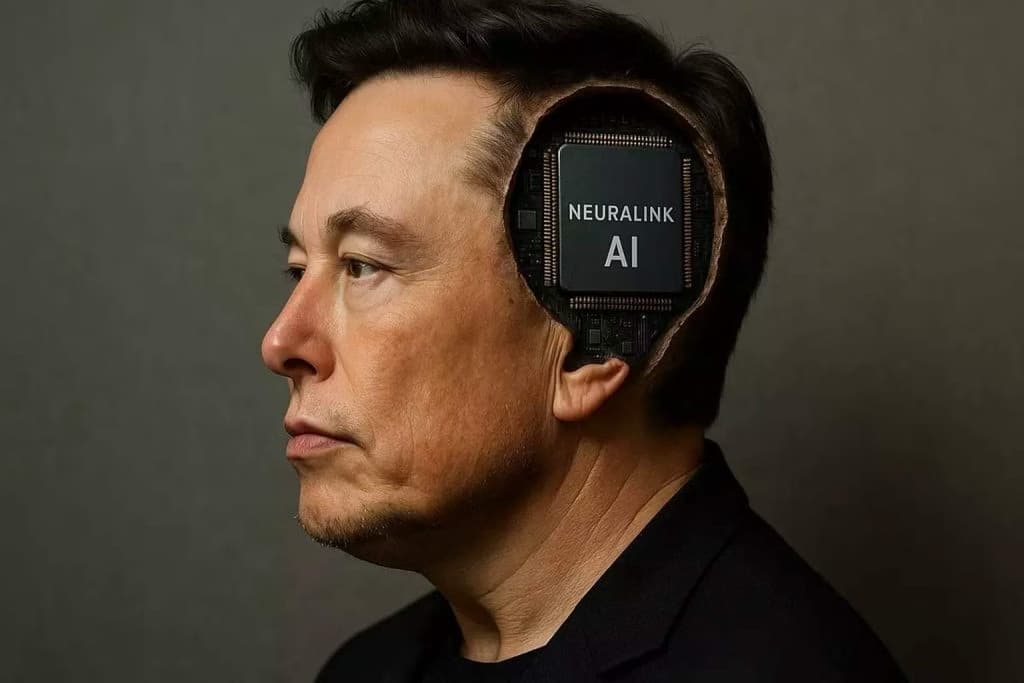
Eighteen months ago, a paralyzed man made history with a brain chip the size of a coin. Today, he’s playing video games, studying neuroscience, and opening doors with his mind. This is no longer the stuff of sci-fi — it’s one man’s very real, very human story of hope and high-tech transformation.
A chip that rewrote his daily life
Noland Arbaugh was just 29 when he became the first person to receive Neuralink’s groundbreaking brain-computer interface — a device designed to decode thoughts and turn them into digital commands. Paralyzed from the shoulders down after a 2016 swimming accident, Noland had lived for years without the ability to move or interact with the world as he once did.
The Growing Demand for Data-Driven Decision Making in Silicon Valley
He quit, ran out of money, and begged to come back — here’s how his boss reacted
That changed during a two-hour robotic surgery at the Barrow Neurological Institute in Phoenix. Surgeons implanted thousands of ultra-fine threads into the motor cortex of his brain, allowing Neuralink’s chip to translate neural signals into action.
The result? He now uses his thoughts to scroll the web, play Mario Kart, read about the brain, and operate his smart home devices — all without lifting a finger.
The chip is wireless and compact, though it needs charging every few hours. But for Noland, who once described his life as “a blur of meaningless time,” the trade-off is worth it. It’s a new kind of independence that few imagined possible just a few years ago.
Rediscovering purpose and momentum
Before the implant, Noland’s days were quiet and slow. Now, he’s back in school, diving deep into neuroscience — the very field that helped change his life. He spends up to ten hours a day using the chip to study, engage with others, and plan his future.
And he’s not stopping there. With a new career in public speaking, Noland now shares his story with audiences around the world, highlighting the emotional and psychological power of restored autonomy. “It feels like I’ve been given a second shot,” he says. “I always had potential — now I have a way to express it.”
His message is clear: technology alone isn’t the hero — it’s the partnership between innovation and human spirit that creates real breakthroughs.
The pressure and the price of being first
Becoming the first human to test such an ambitious piece of tech brought its share of complications. Media attention led to online harassment, and in one terrifying instance, a hoax call triggered a SWAT team raid at his home.
Despite the stress, Noland remains a committed advocate for the project. He’s not paid by Neuralink but supports himself through speaking gigs, including a memorable live-streamed greeting earlier this year: “Hello, humans.”
For him, the implant isn’t just a device — it’s freedom, a tool to reclaim dignity and shape a future on his own terms. But his story also highlights how pioneers in science often face invisible emotional burdens. It’s a reminder that cutting-edge tech is still lived out in very personal, human ways.
A vision that extends far beyond one patient
Founded by Elon Musk, Neuralink’s ultimate goal is to build seamless communication between the brain and external devices. Whether helping someone with paralysis control a prosthetic limb or giving a voice to those unable to speak, the technology aims to bridge the gap between thought and action.
There are still technical hurdles to overcome — from battery life to signal fidelity — but Noland’s success offers a compelling glimpse of what’s possible. His journey gives a face to the potential: not a futuristic fantasy, but a life changed here and now.
As these interfaces evolve, they could also spark entirely new ways of interacting with the world — not just for those with disabilities, but eventually for anyone who wants to extend their cognitive abilities or communicate differently.
Would you plug into the future?
Noland’s story raises profound questions about what it means to be human in an age where our minds might one day connect directly to machines. What would it be like to control your world with pure thought? Would you be curious enough — or brave enough — to try?
These aren’t just tech questions. They’re deeply philosophical ones, about identity, autonomy, and what kind of future we want to build.
So what do you think? Would you embrace this kind of technology if it meant restoring movement or enhancing your abilities? Share your reflections below — let’s start a conversation about what this next chapter in human evolution might look like.
You might also like:
- Zuckerberg, Musk, and Altman say smartphones are over — but Apple isn’t giving in
- Huawei and Xiaomi’s secret weapon revealed: how China stunned the U.S. tech world
- The Future of AR Eyewear? Ray-Ban Display’s Neural Interface Might Be Game-Changer
- Revolutionary Artificial Tongue Mimics Human Taste: Learns Flavors Just Like Us!
- AI-proof job? Bill Gates names the one role safe for the next 100 years

David Miller is an entertainment expert with a passion for film, music, and series. With eight years in cultural criticism, he takes you behind the scenes of productions and studios. His energetic style guides you to the next big releases and trending sensations.


Oh man, remember when we all thought brain chips were just sci-fi stuff? Now this guys walking around like a cyborg, sharing his journey after 18 months. Its like living in a Black Mirror episode for real, wild times were in.
Yo, remember when we thought sci-fi stuff was just in movies? Now this dudes living it! Crazy how techs moving. Cant imagine the guts it takes to be the first guinea pig for something like that. Admirable or insane, you decide.
Man, reminds me of that sci-fi flick I saw. Real life catchin up quick. Wonder if Id ever let em plant a chip in my noggin. Brave dude sharin after 18 months. Admirable, but aint for everyone, thats for sure.
Man, remember when smartphones were the big thing? Now were talking brain chips! Its like living in a sci-fi flick, except its real life. Wonder how this tech will evolve in the next few years. Exciting times were in, huh?
Man, remember when we thought smartwatches were the peak? Now we got brain chips changing lives! Cant decide if Im impressed or terrified. The futures here, folks!
Man, aint that something? 18 months deep with a neural chip? I can barely keep track of my keys for 18 minutes! Hats off to that pioneer, must be like living in a sci-fi flick 24/7.
Man, that Neuralink story got me thinking – what if our brains turn into smartphones? Like, do we get brain updates or need to recharge overnight? Gotta admit, its cool and kinda scary at the same time, you feel me?
Man, that Neuralink storys wild! Reminds me of that Black Mirror ep where tech goes haywire. Hope the dudes doing okay, living with a chip in his head. Brave new world were rollin into, huh?
Yo, I remember when this Neuralink thing first hit the news. Crazy to think its been 18 months already. Wonder how that patients doing now. Hope its all smooth sailing for them, man.