
Show summary Hide summary
- From Bus Fare to Museum Case: The Coin’s Unlikely Journey to Leeds
- Who Minted the Coin and Where It Came From: Phoenicians, Carthage and Cadiz
- What the Coin Reveals: Imagery, Identity and Ancient Commerce
- The People Behind the Find: Family, Curiosity and Local Museums
- Why This Small Object Matters to Museums and the Public
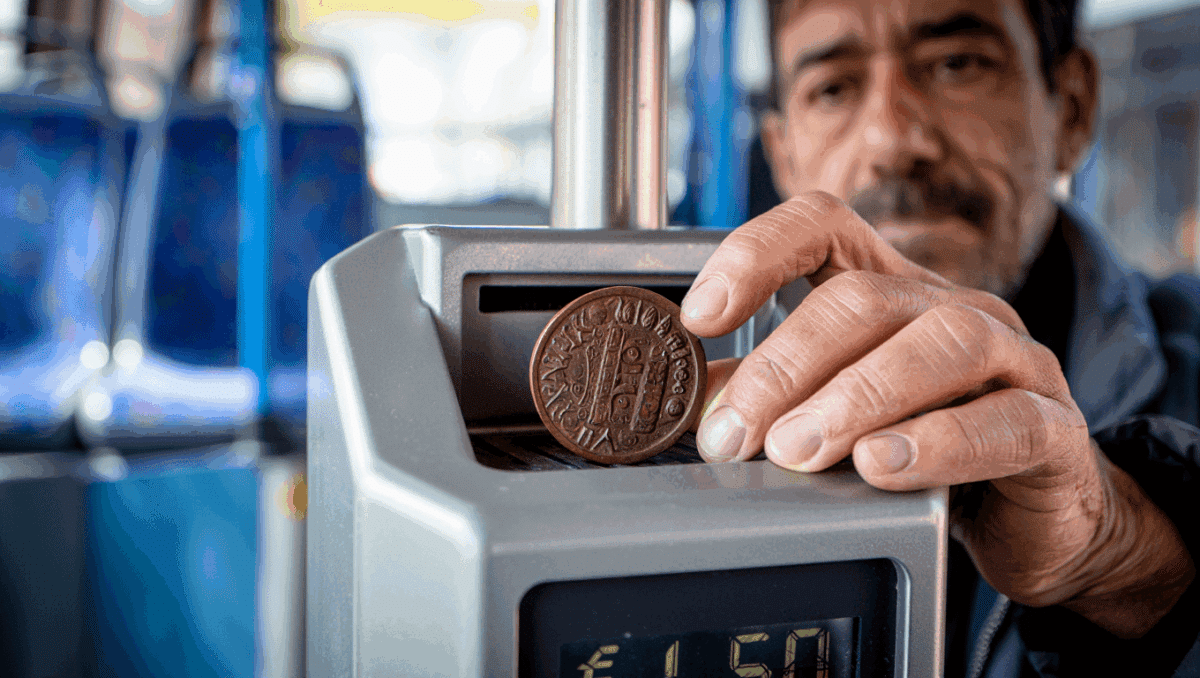
A man in Leeds tried to pay for a bus ride with a small, worn coin—and it turned out to be far older and rarer than anyone could have guessed. The metal disc, tossed into a fare box decades ago, has now been identified as a Phoenician-era piece minted more than two millennia ago on the coast of what is now Spain.
The discovery reads like a detective story: a routine act of rejecting foreign change, a grandson’s curiosity, and finally a donation that reunites a tiny artifact with public care. Museums say the coin will join a growing collection that traces trade, migration and empire across the ancient Mediterranean.
From Bus Fare to Museum Case: The Coin’s Unlikely Journey to Leeds
The Growing Demand for Data-Driven Decision Making in Silicon Valley
He quit, ran out of money, and begged to come back — here’s how his boss reacted
The coin’s path began in the hands of a Leeds transport official who collected cash from bus drivers each day and set aside anything that didn’t belong. Those oddments of currency—foreign coins, fakes and odd small change—became curiosities rather than cash, handed down through the family to a young relative who kept them in a wooden box for decades.
Years later, that young collector, now an elderly donor, approached Leeds Museums and Galleries after doing some digging of his own into the origins of one particularly intriguing piece. What started as discarded fare had, through a mixture of chance and care, found its way into a museum’s catalog.
Who Minted the Coin and Where It Came From: Phoenicians, Carthage and Cadiz
Experts traced the coin back to a Carthaginian outpost on the Atlantic coast of Iberia—ancient Gadir, today’s Cádiz. Carthage, a dominant maritime power with roots in the Phoenician city of Tyre (in modern Lebanon), established trading colonies across the Mediterranean. Those settlements produced distinctive coinage for commerce that circulated widely.
The Phoenicians and their Carthaginian successors were famed for seafaring and trade. Their influence stretched from the Levant to North Africa and into southern Spain, where coastal settlements served as hubs for exchanging goods, ideas and currency. The Leeds coin likely began its life in that bustling trading network more than 2,100 years ago.
Why Cadiz mattered in ancient trade
- Strategic Atlantic port connecting Mediterranean trade to Iberian resources.
- Center for commerce in metals, textiles and other valuable goods.
- Catalyst for cultural exchange between Phoenicians, Iberians and later Romans.
What the Coin Reveals: Imagery, Identity and Ancient Commerce
One face of the coin features a deity linked to Carthaginian religious tradition—often compared to the Greek hero Herakles—wearing a distinctive lionskin headdress. The adoption of Greek-style imagery on Phoenician coins was a common tactic to make currency more recognizable and trustworthy to international traders.
Key details that helped identify the coin:
- Portraiture: Headwear and facial style reminiscent of Melqart/Herakles motifs.
- Wear and patina: Corrosion patterns consistent with an ancient bronze or silver piece.
- Minting style: Symbols and strikes matching known Phoenician-Carthaginian issues from Iberia.
The People Behind the Find: Family, Curiosity and Local Museums
The family story adds human texture to the artifact’s biography. The original finder, who worked with Leeds public transport, routinely separated foreign and suspicious coins from legitimate fares. His grandson, fascinated by the imagery and stories behind each coin, kept them safe for more than seven decades.
After researching the piece, the grandson chose to donate it to Leeds Museums and Galleries so the object could be studied and enjoyed by the public. The coin will join other ancient currency at the Leeds Discovery Centre, where curators look after collections spanning cultures and centuries.
Why This Small Object Matters to Museums and the Public
Museums emphasize that such discoveries do more than enrich display cases—they connect people to global history through everyday objects. A single coin can illustrate trade networks, religious syncretism, and the movement of goods and people across thousands of miles.
Leeds city officials noted how surprising it is to find artifacts of Mediterranean origin turning up in northern English pockets. The coin’s presence in Leeds raises questions about the many routes—military, commercial, or personal—that could have brought it north over the centuries.
What visitors and researchers gain from artifacts like this
- Concrete evidence linking local life to global history.
- Teaching opportunities about ancient economies and cultural exchange.
- Inspiration for further investigation and public interest in archaeology and numismatics.
Those who handled the gift say the donor’s grandfather would likely be pleased the piece is now preserved for public study and appreciation. How the coin traveled from a Mediterranean mint to a British bus still contains gaps—but the object’s rediscovery offers a fresh story for museum visitors and historians alike.
You might also like:
- Viking coin hoard found in Norway by metal detectors is the largest-ever discovery
- He saved pennies for 45 years and was shocked by the amount he collected
- Rare Tudor coins unearthed in backyard, family to sell at auction
- $5,136.14 saved in pennies over 45 years: the shocking discovery at the bank
- Not for coins or keys: the true purpose of your jeans’ tiny pocket will surprise you

Michael Thompson is an experienced journalist covering U.S. and global news. With ten years on the front lines, he breaks down political and economic stories that matter. His precise writing and keen attention to detail help you grasp the real‑world impact of every event.


I swear, I once found a vintage comic in my attic, worth a pretty penny! This Phoenician coin story hits different though – imagine using it for a bus ride! Talk about a wild ride through time, huh?
Man, imagine finding out your bus fare was a 2,000-year-old Phoenician coin! Like, talk about a historical ride. From being tossed around on buses to ending up in a museum case, that coins seen it all. Life really is full of surprises, aint it?
Dang, talk about a wild ride! Imagine the stories that coin could tell, from jingling in peoples pockets to hitching a ride on the bus! Life sure knows how to throw us some curveballs, huh? Makes you wonder what other treasures are hidden in plain sight, dont it?
Man, imagine using an ancient coin for bus fare. Thats like trading a Picasso for a pack of gum! Bet that coins seen some wild rides before ending up in a museum.
I remember dropping coins in the bus, never thought bout ancient Phoenicians! Makes ya wonder bout the stories behind everyday stuff. Bet that coin got tales to tell!
Man, imagine using a 2,000-year-old Phoenician coin as bus fare? Thats wild! Its like a time-traveling token, from ancient trade to modern transit. Bet that coin has some stories to tell!
Dang, thats some next-level bus fare swag! Can you imagine the Phoenician coins face when it sees a bus ticket? Back in my day, we traded spices, not rides! Bet that coins got a whole ancient gossip column in its pocket. Wonder if its got a favorite bus route by now!
Man, imagine using a 2,000-year-old coin to ride the bus! Bet they didnt see that coming. From bus fare to museum, talk about a glow-up! Wonder if its haunted by ancient Phoenician ghosts…
I once lost a rare keychain that my grandma gave me, found it years later in my couch cushions. Cant imagine mistaking a Phoenician coin for bus fare! That coins probably seen some wild rides. Wonder if itll get homesick in a museum!
Ah, finding a Phoenician coin in a bus fare? Talk about a real-life history lesson on the go! Makes you wonder about all the stories those ancient coins hold, right? From trading hands in Cadiz to cruising the streets of Leeds, thats one adventurous little coin!
Whoa, hold up! Finding a Phoenician coin in your bus fare? Thats like stumbling upon a time-traveling treasure, mate! Imagine the tales that ancient coin could spill – from sippin sangria in Spain to hoppin on a double-decker in the UK. That coins seen more action than a Saturday night out in Soho!
I remember finding an old coin in my couch once, but this Phoenician one beats it. From bus fare to museum exhibit, talk about a glow-up! Makes you wonder what else is hiding in plain sight, right?
Oh, man, thats wild! Finding an ancient Phoenician coin in your couch is like hitting the jackpot! Talk about a glow-up indeed. Makes you wonder what kind of treasures are hiding right under our noses, huh? Who knows, maybe next time youll unearth a lost city in your backyard!
Man, finding a Phoenician coin in your pocket after a bus ride? Thats like winning the historical jackpot! From bus fare to museum exhibit, talk about a glow-up. Makes you wonder what other treasures are hiding in plain sight!