
Show summary Hide summary
- Bondi: a flashpoint prompting renewed debate on anti-Jewish attacks
- When political Israel critique becomes cultural Israelophobia
- Public figures, polarizing responses, and the pushback
- The combustible mix: geopolitical rhetoric, migration policy, and extremist networks
- How old anti-Jewish tropes are resurfacing in new guise
- Which voices shape the conversation and the risks they highlight
- About the writer and further reading
The shocking massacre on Bondi Beach has forced a ruthless question into the daylight: can the rising, often elite-driven hostility toward the State of Israel be feeding a renewed wave of violence against Jewish people? For many observers, the timing is impossible to ignore — public denunciations of Israel have swelled in recent months even as antisemitic attacks have spiked. That coincidence deserves scrutiny rather than reflexive denial.
This is not an attempt to excuse the perpetrators — two men who carried out a brutal assault on Jewish worshippers are fully responsible for their actions. But crimes do not happen in isolation. Ideas, rhetoric and mainstream outrage create the climate where violent prejudice can flourish. Understanding how critique of a nation can leak into hostility toward an entire people is now a vital conversation for democracies grappling with social unrest and hate-driven attacks.
Bondi: a flashpoint prompting renewed debate on anti-Jewish attacks
The Growing Demand for Data-Driven Decision Making in Silicon Valley
He quit, ran out of money, and begged to come back — here’s how his boss reacted
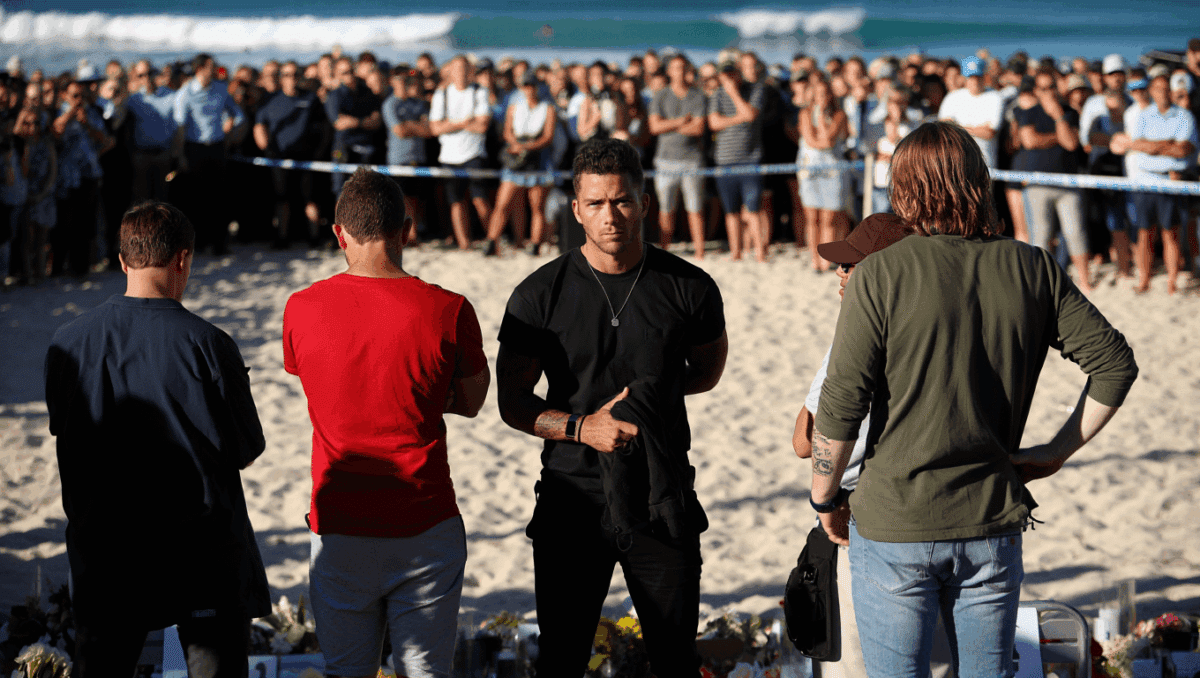
The Bondi killings have been called a grim echo of earlier atrocities, and the public response has been explosive. Political leaders, religious figures and commentators have all weighed in, arguing over whether the chorus of anti-Israel sentiment in public life has crossed into encouraging antisemitic violence.
Voices from across the political spectrum have linked the rhetoric on the streets and online to the violence:
- Religious leaders warned that chants and slogans at large protests have stoked fear and suspicion of Jewish communities.
- Some politicians pointed to protest imagery and cries calling for harm to Israelis as evidence that the line between criticizing a government and demonizing a people has been blurred.
- Others — especially activist groups on the left — insist their movements oppose specific policies and military actions, and they reject any claim that their demonstrations inspire hate crimes.
These competing narratives matter because they shape how institutions respond: whether lawmakers tighten hate-crime laws, whether platforms moderate discussion, and whether community leaders call for restraint or double down on rhetoric.
When political Israel critique becomes cultural Israelophobia
There is a difference between reasoned criticism of a government and a sustained cultural campaign that singles out one nation for uniquely harsh condemnation. The latter can become a new mask for old prejudices.
Key distinctions to watch
- Targeted policy critique vs. endless condemnation: Legitimate debate focuses on policies; persistent moral delegitimization treats the state as inherently evil.
- Political argument vs. existential rhetoric: Saying a government made mistakes is not the same as insisting the country must be erased.
- Protest slogans vs. calls to violence: Peaceful dissent is protected speech; chants that glorify or call for harm cross into incitement.
When commentary repeatedly depicts the Jewish state as uniquely murderous, conspiratorial, or as the root of global ills, it revives motifs that historically fueled antisemitism — accusations of bloodlust, secret control and universal culpability. That pattern is what many critics now identify as Israelophobia: an antagonism toward Israel that shades rapidly into hostility toward Jewish people broadly.
Public figures, polarizing responses, and the pushback
After the Bondi attack, leaders from multiple countries condemned the killings and connected them to the virulent rhetoric in protests. Some commentators argued that certain demonstrations and slogans have effectively normalized language that dehumanizes Israelis and, by extension, Jews at large.
Meanwhile, activists and progressive commentators accused their critics of silencing legitimate opposition to state violence. They argue that equating anti-government protest with antisemitism undermines free speech and the right to hold powerful states to account. This defensive posture has hardened the debate.
- Supporters of the protests say their cause is anti-war and pro-human rights, not antisemitic.
- Opponents say selective outrage and repetitive demonization of Israel create the conditions for hate to go from rhetoric to action.
The tension has produced a defensive cycle: calls for more vigorous policing of hate speech meet accusations of political censorship, while denunciations of rising antisemitism are dismissed as opportunistic attempts to shut down dissent. That stalemate leaves vulnerable communities exposed.
The combustible mix: geopolitical rhetoric, migration policy, and extremist networks
Experts point to several structural trends that, when combined, raise the risk of violence:
- Widespread, high-profile criticism of Israel that moves beyond policy to existential delegitimization.
- Large-scale migration into Western countries from regions where extremist and anti-Jewish ideologies are prevalent, with uneven integration and border controls.
- The visible presence of Islamist extremists and radical groups at some rallies, marching alongside secular left-wing activists.
- Reluctance from authorities to robustly confront antisemitism in certain political or intellectual circles, alongside vigorous enforcement against other forms of speech.
When cultural elites repeatedly frame Israel as uniquely criminal at the same time that Islamist extremists are growing more visible and assertive, the rhetorical tinder can light real-world violence. Critics say that failing to address both arms of this problem — the mainstreaming of Israel-focused hostility and the rise of violent Islamism — is reckless.
How old anti-Jewish tropes are resurfacing in new guise
Historians and analysts warn that many contemporary themes echo medieval and modern antisemitic tropes, repackaged as political criticism. Common patterns include:
- Accusations of bloodthirstiness — portraying an entire people as craving the death of innocents.
- Conspiracy narratives — alleging disproportionate global influence and sinister control.
- Scapegoating — blaming the Jewish nation for broader geopolitical or economic grievances.
When these ideas migrate from fringe corners into mainstream discourse, they gain legitimacy. And once legitimated, they can embolden individuals predisposed to violence. As one commentator put it, prejudice rarely announces itself as prejudice; it often arrives dressed as the fashionable cause of the moment.
Which voices shape the conversation and the risks they highlight
Leading public figures and researchers have tried to draw attention to the link between heated public rhetoric and street-level attacks. Some have warned that protests featuring violent slogans can radicalize susceptible bystanders. Others emphasize that labeling all criticism as antisemitic risks stifling legitimate debate.
Authorities face difficult choices about where to draw the line between free speech and incitement, but many now argue that rhetoric which systematically dehumanizes Israelis — and by extension Jewish people — should trigger stronger civic and legal responses to prevent escalation.
About the writer and further reading
This article draws on recent commentary from political writers and analysts who study the intersection of public discourse and hate crimes. For more in-depth perspectives, readers may consult contemporary books and podcasts on the subject that examine how a post-7 October political atmosphere has shaped public attitudes and the threats facing Jewish communities in the West.
You might also like:
- Australia antisemitism crisis demands urgent national action
- Anti-Zionism is anti-Semitism after Manchester attack
- Blaming Israel for antisemitism: why it’s harmful bigotry
- Starmer and Corbyn accused of crocodile tears after controversy
- Ezra Klein’s comments on anti-Zionism spark heated criticism

Robert Johnson is a dedicated columnist focusing on political and social debates. With twelve years in editorial writing, he provides nuanced, well‑argued perspectives. His commentaries invite you to form your own views and engage in critical issues.


Yo, I get its important to criticize policies, but when does it cross the line to straight-up hating a whole people? Its like, can we talk about Israel without dissing Jewish folks everywhere? Balance, people, balance.
Man, the hates gotta stop. Were all just tryna live, you know? Differences aint an excuse for violence. Lets spread love, people, not more of this mess. Peace out.
You know, its wild how criticizing Israeli politics can spiral into full-on cultural Israelophobia. Wheres the line between critique and straight-up hate? Its like everyones walking on eggshells, but with dynamite underneath.
Man, its like every time you open the news, theres some new anti-Israel hate stirring up trouble. Makes you wonder if people even care about the consequences of their words and actions. Its a mess out there.
Man, seriously, its like a broken record with these news sites lately. Always some drama about Israel. People need to chill and think before they speak, yknow? Words carry weight, after all. Its like a never-ending cycle of chaos out there.
Yo, people gotta chill with the anti-Israel stuff. Its like a bad soap opera, but real. Cant we all just vibe together without all this hate flying around? Spread love, not war, peeps.
Yo, for real though, the whole Israel drama be like a never-ending reality show, right? I feel you on spreading love over war, man. Its exhausting seeing all that hate flying around. Like, cant we just vibe together and chill without all this unnecessary drama? Peace and love, peeps. Lets make that the trend.
Man, its like some folks cant separate criticism from hate. Gotta watch out for that fine line, or things get messy real quick. Stay informed, yall.
Man, I feel ya! Its wild how some peeps out there mix up criticism with straight-up hate. Like, one minute youre just sharing your opinion, next thing ya know, people takin it like a personal attack. Gotta keep it real and know when to throw shade constructively, yknow? Its a fine line, for real. Spreadin love, not hate, thats the motto. Stay woke, friends!
Man, its wild how criticism of Israel can spiral into full-blown anti-Semitism. People need to learn the diff between legit critique and straight-up hate. Lets keep the convo respectful, folks.
Man, its like every time I open my feed, theres some new anti-Israel hate brewing. Cant folks see the line between criticism and straight-up bigotry? Its a mess out there. Hope we find some common ground soon.
Man, its like the worlds playing a messed-up game of blaming Jews for everything. Its not about politics anymore, its straight-up hate. When did criticizing Israel turn into attacking Jewish folks everywhere? This mess is toxic.
Man, its sad to see the rise of anti-Israel hatred affecting Jews worldwide. We need to stand together against all forms of hate and discrimination. Its about time we spread love and understanding instead of division and animosity. Peace and unity, people!
Man, its like a broken record with this Israel hate. Its not critique, its straight-up venom. When did fighting for justice turn into attacking an entire people? Its a mess.
Dude, I feel you. It’s like a never-ending loop, right? The line between criticism and just plain hate seems blurrier than my vision after a late-night Netflix binge. When did speaking up for whats right become about pointing fingers at an entire crew? Its a total chaos out there, like trying to find matching socks in a dryer.