
Show summary Hide summary
- What happened: the attack and the immediate public reaction
- From Cable Street to today: a painful historical contrast
- Why critics insist anti-Zionism is different—and why many reject that distinction
- How political language can mask deeper prejudice
- Voices and defenses on social media and in politics
- Patterns in rhetoric: echoes of older prejudices
- How anti-Zionism functions across the political spectrum
- Practical signs to watch for in public discourse
- Accountability and the limits of rhetoric
- A personal stance and next steps from the author
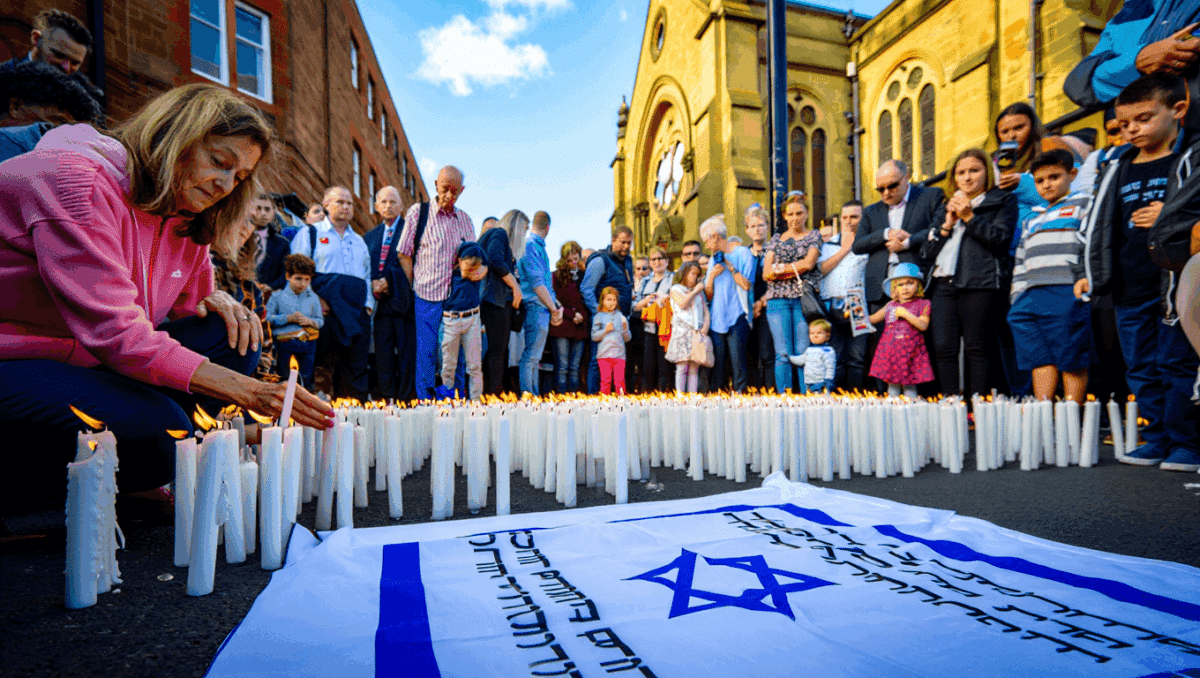
The killings at a Manchester synagogue and the wave of anti-Israel demonstrations that erupted across British cities within hours shook many people to their core. The timing and tenor of those protests—chants calling for the elimination of a nation while two Jewish people lay dead—turned grief into alarm and forced a national reckoning about where criticism of Israel ends and hostility toward Jewish people begins.
Across London, Edinburgh and Manchester the same message was broadcast: fury at a state folded into fury at a people. That fusion exposed a seam of public opinion where political protest and ethnic hatred overlap, and it raised urgent questions about responsibility, language and the limits of legitimate dissent.
What happened: the attack and the immediate public reaction
The Growing Demand for Data-Driven Decision Making in Silicon Valley
He quit, ran out of money, and begged to come back — here’s how his boss reacted
In Manchester, an attacker struck at a synagogue, killing two Jewish worshippers. The tragedy prompted instant shock and mourning within Britain’s Jewish community and beyond. Yet, almost immediately, crowds in several cities used the violence as a backdrop for street demonstrations aimed at Israel—chanting slogans that call for the country’s elimination and displaying a level of vitriol that many found chilling in light of the murders.
Those protests were not limited to small rallies. Marches and gatherings in major transport hubs and public squares drew attention and controversy, with images and videos circulating online that showed protesters linking the deaths in Manchester to broader political grievances in the Middle East. The juxtaposition of mourning and militant slogans intensified public debate about whether anti-Israel rhetoric was crossing into outright hatred of Jews.
From Cable Street to today: a painful historical contrast
Britain has a history of public resistance to fascism. In 1936, the famous Cable Street mobilization saw local communities, including Jewish residents, push back against an openly fascist movement. The contrast between that moment and the recent demonstrations is stark: where previous generations once rallied to protect Jewish neighborhoods from violent extremists, some modern crowds appear to channel their anger toward the Jewish state instead.
This isn’t simply a matter of changed tactics. The symbolism matters. When broad political movements that historically opposed fascism now express or tolerate language that aligns with violent rhetoric against Jews or Israel, it signals a shift in moral alignment on public streets. For many observers, that inversion is both shocking and disheartening.
Why critics insist anti-Zionism is different—and why many reject that distinction
In the aftermath, influential commentators and political figures rushed to distinguish opposition to Israeli policy from hatred of Jews. Some called for careful language, arguing that criticism of a government—even strong, moral condemnation—does not automatically mean hostility toward a religion or an ethnic group. These defenders said labeling every protest against Israel as antisemitic was simplistic and unjust.
Yet a growing number of analysts and community leaders argue that the line between legitimate critique and bigotry is being blurred. They point to patterns in rhetoric and behavior—repeated demonization of Israel, calls for its eradication, tropes recycled from older forms of Jew-hatred—as evidence that anti-Zionism can function as a contemporary vehicle for anti-Jewish sentiment.
How political language can mask deeper prejudice
Anti-Zionism can operate as both political argument and social camouflage. When criticism of a nation becomes a daily obsession and when that country is cast as uniquely evil in ways no other state is, observers say that political debate morphs into cultural targeting.
- Obsessive focus: Israel often occupies an outsized place in activist discourse compared with other countries involved in armed conflict.
- Demonizing metaphors: Recycled slurs and conspiracy language once aimed at Jews are sometimes repurposed to describe the state.
- Calls for elimination: Slogans that imply or demand the destruction of a nation echo rhetoric that historically preceded violence against Jews.
These dynamics suggest that, for some, anti-Zionism can be a trojan horse for long-standing prejudices. It allows political actors across the spectrum—some from liberal circles, others from extremist fringes—to present entrenched hostility toward Jews as principled resistance to a government.
Voices and defenses on social media and in politics
In the hours after the Manchester attack, social platforms were filled with debates about culpability and rhetoric. Some politicians and commentators condemned the violence while also urging others not to conflate street-level protests with outright antisemitism. They stressed the need to differentiate between activists who target policy and those who espouse hatred.
Opponents of that view countered that words have consequences. When major public figures repeatedly vilify a nation and use language that delegitimizes an entire people’s right to security, they argued, it is disingenuous to express shock when harassment or violence follows. For those critics, equivocation about the link between anti-Israel speech and antisemitism amounts to a refusal to confront a social problem.
Patterns in rhetoric: echoes of older prejudices
Across many modern settings, commentators note striking parallels between polemics about Israel and historic antisemitic narratives. Claims about secretive power, bloodlust, and exceptional culpability mirror the conspiracy-laden accusations that fueled centuries of persecution. That resemblance fuels concern that contemporary political language may be recycling dangerous myths under the guise of policy criticism.
- Accusations of unique evil: Labeling Israel as uniquely monstrous without proportional criticism of other states.
- Conspiratorial framing: Attributing outsized global influence or malevolent intent to Jewish institutions or supporters.
- Collective blame: Holding all Jews responsible for the actions of a state they may not support.
Those patterns help explain why many Jewish organizations and civil-rights advocates treat certain forms of anti-Zionism as indistinguishable from antisemitism.
How anti-Zionism functions across the political spectrum
Anti-Zionism is not confined to one corner of politics. In some cases it appears as intellectual opposition among progressive activists; in others, it emerges as explicit hatred from far-right or religious extremist groups. This ideological cross-pollination makes the phenomenon both pervasive and difficult to address.
For some, anti-Zionism is a sincere policy stance; for others, it’s a convenient cover for a deeper hostility. That dual reality complicates attempts to police discourse: measures that target hateful rhetoric risk censoring genuine policy debate, while tolerating extreme expressions allows prejudice to spread.
Practical signs to watch for in public discourse
Recognizing when criticism becomes bigotry can be helped by looking for concrete signs. These indicators are not exhaustive but can guide public officials, platform moderators and citizens when assessing speech:
- Calls for the erasure of a nation or its people rather than policy change.
- Use of classic antisemitic tropes adapted to modern contexts.
- Disproportionate focus: denouncing one country’s actions while ignoring worse abuses elsewhere.
- Attempts to delegitimize the right of an entire group to self-determination.
Accountability and the limits of rhetoric
After the Manchester murders, many called for leaders and organizers to be held accountable for incendiary rhetoric that may inflame tensions. Others warned against guilt by association, urging careful legal and ethical standards before branding protesters as bigots. The debate over culpability continues to animate political discourse and policy choices regarding protests, speech and community safety.
The challenge for democracies is to protect free expression while preventing rhetoric that fuels violence. That balance requires nuance, vigilance and consistent enforcement of standards that separate legitimate dissent from targeted hatred.
A personal stance and next steps from the author
As someone who follows these debates closely, I believe it’s essential to call out the ways political arguments can enable prejudice. When a movement treats an entire nation as the embodiment of evil and refuses to countenance alternate perspectives, it risks becoming a vector for the very intolerance it claims to oppose. Combatting antisemitism requires honest naming of tactics that hide behind political language.
This moment in Britain’s public life should provoke reflection across political lines: activists, journalists and political leaders must scrutinize their language, and civil-society institutions should work to ensure that human tragedy never becomes the stage for calls to erase a people or a state.
Brendan O’Neill is a political writer and podcast host. His recent book, After the Pogrom: 7 October, Israel and the Crisis of Civilisation, is available in the UK and US. Find him on social media under the handle @burntoakboy
You might also like:
- Ezra Klein’s comments on anti-Zionism spark heated criticism
- Hate marchers couldn’t even take one day off
- Anti-Israel hatred threatens Jews worldwide
- Anti-Zionism threatens Jews worldwide, experts warn
- City University antisemitic attack reported, police investigating

Robert Johnson is a dedicated columnist focusing on political and social debates. With twelve years in editorial writing, he provides nuanced, well‑argued perspectives. His commentaries invite you to form your own views and engage in critical issues.


Man, the whole anti-Zionism vs. anti-Semitism debate is like a broken record. Can we focus on humanity for once? Tragic events like Manchester should unite, not divide.
Man, its like a broken record with this anti-Zionism and anti-Semitism debate. Can we just agree that hate is hate, no matter how you dress it up? Whys it so hard for folks to see that?
Yeah, its like a never-ending loop, innit? Hates just hate, no matter how you try to sugarcoat it. Wish folks could see that and move on to more positive vibes, ya know? Like, why dwell in the negativity when theres so much good stuff out there to focus on? Peace, love, and understanding, man.
Hey, mate, its like saying youre against pineapple on pizza but not against pizza. Anti-Zionism aint a free pass when its just good ol anti-Semitism with a new hat. Lets call it what it is.
Mate, its like a broken record. Anti-Zionism aint a free pass for anti-Semitism. After Manchester, can we wake up? Same old song, different backdrop. Lets learn from history, not repeat it.
Man, its like were stuck on replay with this anti-Zionism vs. anti-Semitism debate. After what went down in Manchester, aint it time to open our eyes? Feels like were singing the same tune but in a different place. Lets not keep hitting that repeat button, right? Time to shake things up and actually learn from the past.
Man, its wild how some still try to mask their hate as anti-Zionism. After Manchester, we gotta call out all forms of bigotry. History repeats if we stay silent. Stand against all hate.
Man, youre spot on about that. Its like a bad rerun of a show we all want to change the channel on. Bigotrys just bigotry, no matter the fancy disguise it puts on. Kudos for calling out the sneaky stuff. Lets turn up the volume on standing against hate, right?
Mate, its like folks forgot history! Anti-Zionism aint a free pass for anti-Semitism. After Manchester, we gotta call out hate in all forms. No excuses, no hiding behind politics. Peace means respect, innit?
Hey, mate, preach! Its like people skipped class the day history was taught, innit? Anti-Zionism aint an excuse for spreading hate. After Manchester, we gotta stand up against all forms of bigotry. No room for hate, only love and respect. Peace out.
Man, its like were stuck in a twisted time loop. Every tragedy, the same ol debate resurfaces. Cant folks see the difference? Anti-Zionism aint a free pass for anti-Semitism. Lets break this cycle, people.
Man, whys it still a debate? Anti-Zionism, anti-Semitism – same hate, different clothes. After Manchester, gotta call it out. No room for hiding behind politics when lives are lost.
Man, its like history playing on repeat. Anti-Zionism, anti-Semitism – same old tune, different day. Cant folks see its the same poison in a new bottle? Break the cycle, people. #UnityOverDivision
I mean, can we just call a spade a spade? Anti-Zionism is often just a flimsy cloak for good ol anti-Semitism. Trying to sugarcoat it wont change that bitter reality.
Mate, its like people forget historys lessons. Anti-Zionism, anti-Semitism – different clothes, same hate. After Manchester, lets unite, not divide, yeah?
I cant help but notice how some folks twist anti-Zionism into a shield for plain ol anti-Semitism. Its like slapping a fancy label on a rotten apple – doesnt change the core, mate.
Mate, you hit the nail on the head there. Its like putting lipstick on a pig, right? Some people try to hide their true colors under the guise of anti-Zionism, but the stench of bigotry still lingers. Its all about peeling back those layers to see whats really there, innit?
I mean, its like saying pineapple doesnt belong on pizza – some folks just wont accept it. But hey, if were serious about fighting hate, cant we all agree on that much? Just a thought.
I feel you, mate! Its like the eternal debate about pineapple on pizza – some things just divide us. But, you know, if we can all rally together to combat hate, then maybe theres hope for humanity after all. Just a sprinkle of positivity for your thoughts!
Ya know, its like trying to fit a square peg in a round hole with this whole anti-Zionism debate. Cant we just agree that hatred in any form sucks? Lets focus on spreading love instead of finding ways to justify hate.
Man, people gotta stop twisting things! Anti-Zionism aint some innocent stance; its often a cloak for straight-up anti-Semitism. Dont let political jargon hide the real deal. Lets call it out.
Dude, totally get where youre coming from! Its wild how some folks use anti-Zionism as a cover for old-school hate. Gotta stay woke and call out that shady business, no doubt. Real talk, we cant let the real deal hide behind fancy words. Time to keep it real and stand up against that noise.
Oi, mate, lemme get this straight. Criticizing Israel’s policies ain’t the same as hating Jews. It’s like saying dissing Trump means you hate all Americans. Let’s not blur the lines, innit?
As a history buff, its baffling how some twist anti-Zionism into a cloak for anti-Semitism. Its like saying disliking pizza is a cover for hating Italy. Lets call out prejudice for what it is – no disguises needed.