
Show summary Hide summary
- Violence and protests: what happened on our streets this week
- New government guidance on “anti-Muslim hostility” and why it matters
- Free speech under strain: examples and potential fallout
- Context: the Iran conflict and its ripple effects in Western cities
- Who is protected and who feels abandoned?
- Practical dilemmas and questions for policymakers
- Voices on the controversy and competing perspectives
- What this means for free expression and civic cohesion
The past week in Britain felt less like a domestic lull and more like the sharp wake-up call of a country wrestling with a transnational ideological storm. Streets around London and Birmingham saw clashes, arrests and incendiary slogans — scenes that force a reckoning over how Islamist politics and sympathy for theocratic regimes have taken root among segments of the population here. At the same time, Westminster is consumed with a new bureaucratic definition designed to tackle so-called “anti-Muslim hostility,” a move that has inflamed debate about free speech, protection and political priorities.
These events are not isolated: they intersect with the wider conflict involving Iran, a surge in anti-Western sentiment among some communities, and a government intent on drawing new lines around what critics call permissible public discourse. Below I unpack the street-level incidents, the policy response, and the wider political stakes.
Violence and protests: what happened on our streets this week
The Growing Demand for Data-Driven Decision Making in Silicon Valley
He quit, ran out of money, and begged to come back — here’s how his boss reacted
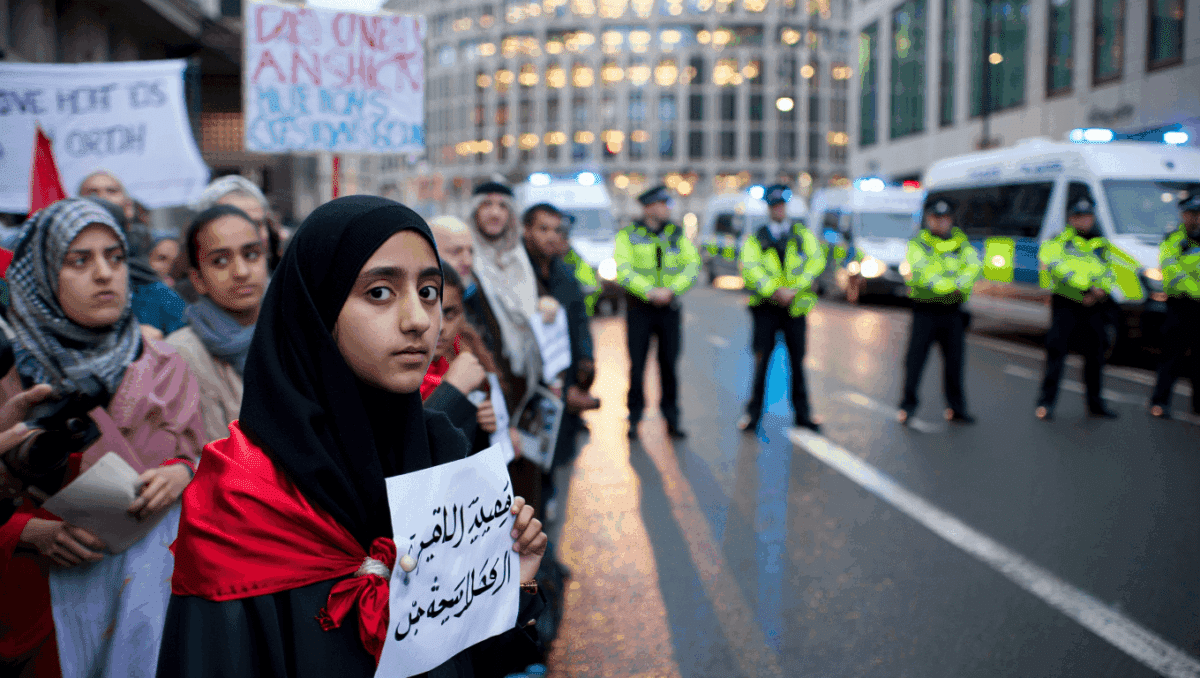
Police and bystanders bore witness to a string of tense moments across several British cities. Reports included arrests linked to suspected surveillance of Jewish institutions, attacks on Iranian dissidents outside a London Islamic centre, and a charged demonstration in Birmingham where an Israeli flag was burned. Crowds in parts of the capital broke into chants denouncing Israel and, in some cases, celebrating Iran’s theocratic leadership.
- Four men detained in London on suspicion of spying on Jewish groups allegedly on behalf of the Iranian state.
- Physical assaults reported at a central London Islamic centre targeting opponents of the Iranian regime.
- A militant demonstration in Birmingham that culminated in the burning of the Israeli flag and anti-Israel slogans.
- Smaller gatherings near government precincts where pro-Iranian chants and calls for violence were heard.
These incidents are part of a broader pattern: a mix of genuine political solidarity with foreign causes, extremist agitation, and anti-Semitic expressions that create a volatile atmosphere in public life.
New government guidance on “anti-Muslim hostility” and why it matters
At the same time these disturbances unfolded, the government published a draft definition aimed at clarifying what counts as “anti-Muslim hostility.” Officials emphasize the move is not intended to shield Islam as a religion, but rather to protect individuals from prejudice and abuse. Still, critics warn the wording could have unintended consequences for debate and satire.
Key elements of the policy and the red flags
- Debating “public interest”: The guidance allows criticism in the public interest, but leaves open who decides the threshold for what qualifies.
- Intimidation and online speech: The definition flags both written and verbal intimidation — a broad formulation that could be read to include mocking or satirical online pages.
- Stereotyping on appearance: The document condemns stereotyping based on dress or looks, which raises questions about whether satirizing religious garments would fall foul of the new rules.
These provisions prompt uneasy questions: if a regulator or an appointed official deems a piece of satire unnecessary or provocative, could it be curtailed? Is the state creating a special protective status for one faith that other religions won’t enjoy to the same degree?
Free speech under strain: examples and potential fallout
Defenders of the new definition say it simply restates existing protections against hatred. But the nuance of enforcement could tilt the balance between protecting individuals and policing ideas. Consider a few scenarios that highlight the tensions.
- A satirical cartoon lampoons religious figures — would its publication be defended as public-interest commentary or suppressed as intimidating?
- A columnist uses provocative metaphors about religious dress — could that be labeled as stereotyping and trigger formal complaints?
- Social-media communities trade jokes about belief systems — might those pages be targeted under a wide interpretation of “intimidation”?
What critics fear is a stepwise narrowing of acceptable public discourse: not an outright ban, but a regulatory environment where writers, comedians and ordinary citizens self-censor to avoid sanctions or reputational harm. This, opponents argue, resembles a modern version of a blasphemy standard — not explicit, but effective.
Context: the Iran conflict and its ripple effects in Western cities
The timing of the government’s policy push — amid surging tensions around Iran — exposes a stark contrast between the threats abroad and the measures at home. While protesters in some Western cities have openly mourned or praised Iran’s clerical leadership, elsewhere there have been violent attacks linked to extremist ideologies: a synagogue blast in Belgium, a suspected ISIS-inspired bomb attack in New York, and attempted assaults on Jewish institutions in the UK.
These incidents underline a painful reality: Western societies face both external hostility and internal ferment from groups that regard foreign theocratic agendas as ideological kin. In such an atmosphere, policy choices at home can either calm or inflame tensions.
Who is protected and who feels abandoned?
The new definition purports to shield individuals from discrimination and abuse, a legitimate objective. Yet many observers note an asymmetry in public concern: criticism and policy attention often focus heavily on grievances allegedly suffered by Muslim communities, while the anti-Western sentiment and violence directed at Jews, liberal Iranians, women, and LGBTQ+ people sometimes attract less urgent protection.
- Victims of Islamist violence: Families and communities that have lost members to extremist attacks argue for firmer recognition of Islamist-driven hatred.
- Secular and religious dissenters: Iranians and other dissidents fleeing repression want support from Western democracies, yet may feel sidelined when policy centers on shielding religious sensibilities.
- Women and minority groups: Concerns persist about gendered violence and community abuses that have not always received proportionate public scrutiny.
There is a political question embedded here: does singling out a religion for special protective treatment risk undercutting solidarity with those resisting theocratic oppression abroad and those targeted by Islamist hostility at home?
Practical dilemmas and questions for policymakers
Lawmakers face a series of practical trade-offs. Below are some of the questions they must answer with clarity to avoid unintended consequences:
- Who will make final judgments about what is “in the public interest” when it comes to criticism of religion?
- How will regulators distinguish between hateful intimidation and robust, even offensive, public debate?
- Will special definitions create a hierarchy of victimhood, where one faith receives privileges not extended to others?
- How will authorities balance the need to protect communities from violence with the right to criticise oppressive ideas and regimes?
Voices on the controversy and competing perspectives
Supporters of tighter definitions argue that clearer language helps communities feel safer and may deter hate-motivated attacks. Opponents counter that the same language can be weaponized to restrict legitimate scrutiny and satire. Some commentators warn that celebrating a special status for Islam, or any religion, risks fueling the grievance narrative exploited by extremists.
On one side, advocates stress the need to guard against real and rising risks to Muslim individuals. On the other, critics warn that elevating one faith to a quasi-exempt status from mockery or critique will chill debate and weaken solidarity with those fighting religious tyranny abroad.
What this means for free expression and civic cohesion
At stake is the culture of public life: whether citizens can openly criticise ideas and institutions without fear of being branded as bigots, and whether state policy will treat all citizens and beliefs equally. If regulations are interpreted too broadly, they could suppress discussion of foreign regimes, religiously motivated extremism, and domestic social problems tied to ideology.
Policymakers must weigh immediate safety concerns against long-term civic principles. Clear legal definitions, independent oversight, and transparent criteria for enforcement would be essential to avoiding an environment in which speech about ideas becomes a casualty of well-intentioned but loosely drafted protections.
Brendan O’Neill writes on politics and culture and hosts a regular podcast. He is the author of a book that explores contemporary cultural shifts and their impact on public life.
You might also like:
- UK Labour Islamic blasphemy code criticized as concession to sectarians
- John Cleese adopting based views?
- Defiant resident says they can come and arrest me
- Al-Quds Day protests spark debate over multiculturalism’s effect on Britain
- Greens under fire after lawmaker calls party lunatic, deranged and evil

Robert Johnson is a dedicated columnist focusing on political and social debates. With twelve years in editorial writing, he provides nuanced, well‑argued perspectives. His commentaries invite you to form your own views and engage in critical issues.


Man, its like a minefield out there, innit? Islamisms got us all on edge. Gotta differentiate that from Islamophobia, though. Tricky stuff, but we gotta keep our heads screwed on right.
Oi mate, tell me about it! Its like walking through a bloomin minefield with Islamism and Islamophobia all mixed up. Gotta keep our wits about us, ya know? Tricky business, but we gotta stay sharp and not let fear cloud our judgment. How do you reckon we navigate through this mess, eh?
Man, its like everyones so focused on Islamophobia, theyre missing the real threat: Islamism. We gotta tackle extremism head-on, no more tiptoeing around. Time for some real talk and action.
Man, seriously, I feel ya on that one. People talkin bout Islamophobia all the time, but Islamism? Thats the real deal we gotta address. Its like, lets stop dancin around the issue and tackle extremism head-on, no more beating round the bush. Time for some real talk and action, no more tiptoeing.
Man, its like were playing a game of Whac-A-Mole with these threats. Islamism, Islamophobia, where does it end? Gotta stay vigilant without turning into a bunch of paranoid chickens, yknow?
I remember this one time, folks just couldnt separate Islamism from regular Islam. Its like confusing a lemon with a lime, ya know? Gotta tackle the real threat without painting everyone with the same brush.
Man, the West better wake up! Its not about Islamophobia, its about tackling Islamism. We need to fight the real threat, not get lost in fear and ignorance. Time to face the music and take action.
Yo, check it, fighting Islamism is crucial, not Islamophobia. We gotta target the real threat, not innocent peeps. Lets get our priorities straight, folks. Peace out.
Man, it aint about Islamophobia, its about tackling extremism head-on. Gotta address the root causes, not just slap labels. Time to focus on real threats without stirring up unnecessary hate. Lets get it together, folks.
Hear ya loud and clear, mate! Tackling extremism head-on is crucial, no doubt. Labels aint gonna cut it. Its all about digging deep for them root causes, right? Time to focus on the real threats and leave the drama behind. Lets roll up our sleeves and get this show on the road, folks!
Man, its like playing Whack-a-Mole with these threats. Islamism, Islamophobia, protests… Its a mess out there. We gotta figure out how to fight the right battles without making enemies everywhere. Tough nut to crack, huh?
Man, the West needs to wake up and tackle Islamism head-on. Its a real threat to our values and safety. Cant confuse it with Islamophobia though. Lets focus on the real issue here.
Man, its like playing Whack-a-Mole with these extremist groups. Gotta tackle Islamism head-on without feeding the Islamophobia monster. Its a fine line, but one we gotta walk if we want peace and unity.
Man, its like playing chess with shadows. We gotta tackle the real enemy, thats the move! Islamism aint the same as Islam. Lets not trip on the wrong wire. Time to focus on the real threat, folks.
Man, its like people mix up Islamism and Islamophobia all the time. We need to focus on fighting the real threat—extremism. Its a fine line, but we gotta get it right.
Totally feel ya, mate! Its like everyones tangled up in this messy web of confusion. We gotta untangle the mess and focus on taking down the real troublemakers — those extremists causing chaos. Gotta zoom in on the real target, right?
Man, its like people cant tell the difference between critiquing extremism and bashing a whole religion. We gotta be smart about fighting Islamism without causing more division. Time for some real talk and less knee-jerk reactions.
Man, the West needs to wake up and focus on the real threat: Islamism, not Islamophobia. We cant let fear cloud our judgment. Its time to address the root issues and fight for a safer future.
Man, it’s like were in a constant tug-of-war between tackling Islamism and avoiding Islamophobia. How do we find that balance without going bonkers? Its a real challenge, ya know? Gotta navigate these murky waters carefully.