
Show summary Hide summary
- What the official definition actually covers and why wording matters
- Vagueness opens the door to disputes over intent and interpretation
- How institutions may apply the definition: schools, police, and employers
- Real-world examples point to how enforcement could play out
- Legal critiques and the question of equal treatment
- Potential consequences for public debate and employment
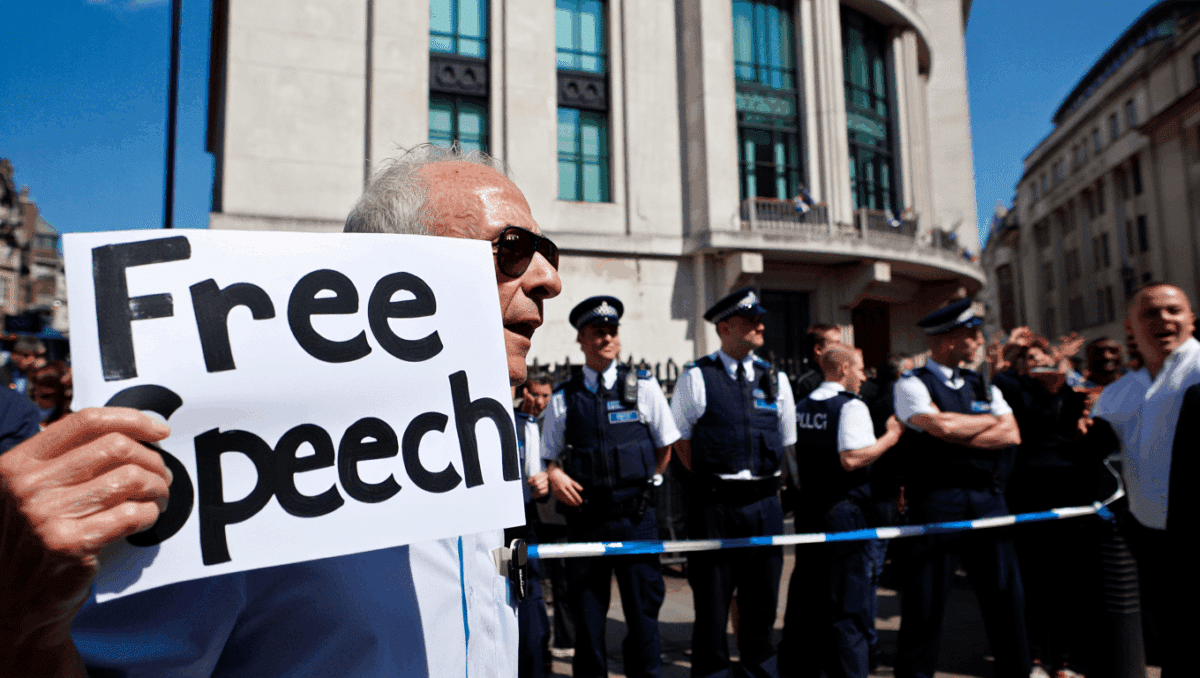
The UK government quietly adopted an official definition of “anti-Muslim hostility” last night without a parliamentary vote or public debate, a move that has alarmed free-speech advocates and some public figures. Critics warn the wording is vague enough to be turned into a tool that stifles legitimate criticism of Islamic beliefs and practices, and that it confers unique protections on Muslims that other faiths and viewpoints do not receive.
Proponents say the definition is meant to tackle hate and discrimination. Opponents say it replaces robust argument with a broad, elastic standard that could be used to challenge everything from political protest to academic critique. The debate now pivots on how vague legal and policy language will be interpreted in schools, courts, and workplaces — and who gets to decide what counts as “hostility.”
What the official definition actually covers and why wording matters
The government avoided the term “Islamophobia” and instead framed the issue as “anti-Muslim hostility.” That phrasing may sound less politically charged, but its flexibility is precisely the problem critics point to: the word “hostility” can be read as anything from overt hatred to mere opposition.
The Growing Demand for Data-Driven Decision Making in Silicon Valley
He quit, ran out of money, and begged to come back — here’s how his boss reacted
According to the new definition, acts that may qualify as “anti-Muslim hostility” include:
- Prejudicial stereotyping of Muslims where the conduct is presented as intended to generate hatred;
- Unlawful discrimination or institutional practices and biases that are purportedly meant to disadvantage Muslims in public or economic life;
- Other conduct perceived as hostile toward Muslims or those thought to be Muslim.
The definition also contains explicit exceptions designed to reassure critics: it states that free speech should not be curtailed, and it lists several forms of protected expression — for example, criticism of a religion’s doctrines, historical analysis, and even ridicule or insults directed at religion. Still, the inclusion of those caveats has done little to soothe fears that the broad core language will be the operative tool in practice.
Vagueness opens the door to disputes over intent and interpretation
One of the most contested elements is the requirement that stereotyping be “with the intention to encourage hatred.” That raises immediate questions: who determines intent, and on what basis? In many public controversies, intent is ambiguous, contested, or impossible to prove. Activists or complainants could argue that a range of ordinary statements — descriptions of ritual practices, demographic trends, or political demands — are intended to stir up hostility.
Consider everyday claims that might fall into gray areas:
- Describing Muslim cultural practices such as abstaining from alcohol.
- Asserting theological differences between Islam and other faiths.
- Pointing to political lobbying or community organizing as evidence of growing influence.
All of the above could be framed by opponents as “prejudicial stereotyping” intended to foster hatred, depending on how intent is judged.
Voices raising the alarm
Prominent figures have publicly warned of unintended consequences. Former diplomat Sir John Jenkins cautioned that the definition could be stretched to silence Iranians protesting the Tehran regime, since criticism of the Islamic Republic often targets its religious foundations. Separately, the government’s counter-terrorism adviser Jonathan Hall warned the policy could “inhibit” legitimate critiques of Islamist movements, questioning how far people might be able to press the definition for political advantage. These interventions underscore a practical worry: definitions drafted to protect can be repurposed to limit debate.
How institutions may apply the definition: schools, police, and employers
Although the definition is technically non-statutory, the government expects public bodies — police forces, schools, the NHS, and other government-funded institutions — to adopt it. When an official standard is circulated for use across institutions, two dynamics typically follow:
- Officials and managers often err on the side of caution to avoid accusations of bias, increasing the risk of sanctioning speech that sits near the line.
- Complaints that rely on ambiguous definitions can trigger investigations, disciplinary actions, and reputational damage even when no legal penalty is imposed.
The government has proposed creating an official post to oversee these efforts: an “anti-Muslim hostility tsar” whose brief would be to coordinate responses across agencies. That appointment, critics argue, risks institutionalizing a watchdog whose judgments could drive policy and personnel decisions.
Real-world examples point to how enforcement could play out
Recent incidents suggest how a broad definition could be operationalized:
- The Crown Prosecution Service has previously considered cases involving the public burning of a religious text as political protest, prompting debate over whether to press charges.
- Police have intervened in street preaching incidents where questions about the Koran’s content led to arrests or investigations.
- School disciplinary procedures have been invoked after physical altercations involving religious texts, with suspensions and criminal inquiries following.
If official guidance is interpreted expansively, similar episodes may draw swifter, more frequent institutional responses — not necessarily criminal prosecutions, but administrative penalties and employment consequences.
Legal critiques and the question of equal treatment
Critics argue additional, bespoke protections for Muslims are unnecessary because existing anti-discrimination and hate-crime laws already cover religion. They warn that giving one faith group unique procedural or symbolic shields may itself be a form of unequal treatment under the law. That argument has two strands:
- A legal one: layering extra definitions and enforcement mechanisms risks running into compatibility issues with general equality principles;
- A political one: singling out a faith group can be perceived as privileging that group’s political influence over broader free-speech norms.
The policy’s rapid adoption, without a parliamentary vote and absent from the Labour Party’s election manifesto, has fed charges that the government is responding to targeted lobbying rather than a measured public-policy debate. Opponents describe the move as an exercise in political management that substitutes protective language for open discussion.
Potential consequences for public debate and employment
Even if the new definition never becomes criminal law, its reach may be felt through workplace policies, university codes of conduct, and school rules. Employers and regulators vetting speech-related complaints could conclude that certain comments or criticisms violate institutional standards, creating risks such as:
- Suspensions or dismissals for staff and academics;
- Curriculum constraints in schools to avoid triggering complaints;
- Self-censorship among journalists, researchers, and campaigners worried about administrative or reputational fallout.
Some commentators have described this trajectory as creating a practical “blasphemy code” in which institutional discipline, not criminal law, curtails speech.
Tim Dieppe is head of public policy at Christian Concern
You might also like:
- Nigel Farage Islamophobia: why were police given lectures?
- Islamism, not Islamophobia: the threat the West should fight
- Islamism is a growing threat to German public life
- John Cleese adopting based views?
- Defiant resident says they can come and arrest me

Robert Johnson is a dedicated columnist focusing on political and social debates. With twelve years in editorial writing, he provides nuanced, well‑argued perspectives. His commentaries invite you to form your own views and engage in critical issues.


Ah, mate, seems like a slippery slope were on. Once you start dancin around with definitions like that, its like tryna catch fog – ya never quite get a grip. Gonna be a wild ride seein how this plays out.
I mean, come on, a blasphemy code in the UK Labour? Its like theyre asking for trouble. Cant we all just get along without stepping on each others toes? Seems like unnecessary drama, if you ask me.
Oh mate, I hear ya! Its like the Labour partys playing a game of How to Stir the Pot 101. Cant they just focus on, you know, actual policies and stuff? Seems like theyre diving headfirst into drama for no good reason. Why complicate things when we could all just chill and vibe together, right?
Man, this whole Islamic blasphemy code debate is a sticky web, aint it? Cant wrap my head around how these definitions get twisted like a pretzel. Feels like a recipe for non-stop bickering. Wheres the chill, folks?
Ah, mate, what a can of worms this is. Giving in to religious pressure aint a smart move. Gotta stick to principles, not make exceptions. Hope they sort this mess out pronto.
I mean, come on, a blasphemy code? In the UK? Its like watching a sitcom where the writers ran out of ideas, so they just threw in a random plot twist. Whats next, mandatory tea-drinking breaks at work?
A blasphemy code in the UK? Mate, thats like trying to fit a square peg in a round hole. Its so bizarre, its like watching a sci-fi flick set in a parallel universe. Next thing you know, theyll be enforcing mandatory tea breaks at work! Wouldnt that just be a hoot? The Brits and their love for a good cuppa, eh? What a world we live in, mate.
Ah, here we go again with the ol dance around words. Why not call a spade a spade? Vague definitions just stir the pot. Time to cut the fluff and get real about whats what.
Oh, mate, I hear ya! Tired of all this fancy word-dancing myself. Lets call a spade a spade, right? No need for the fluff and fuzziness. Time to cut through the jibber-jabber and get to the core of things. Whos with us on this no-nonsense train?
Mate, can you believe this? Labour with an Islamic blasphemy code? Madness, innit? Opens a right can of worms. Whats next, a code for every group? Gotta watch that slippery slope, I tell ya.
Mate, this whole Muslim blasphemy code feels dodgy, innit? I mean, why bend over backward for sectarians? Worrying how this vague wordings gonna play out in schools and workplaces. Time for some clarity, right?
Man, I hear you! Its like walking a tightrope with this whole blasphemy code, right? I mean, whos got time for all this vagueness nowadays? Schools and workplaces are gonna be like a minefield with these blurred lines. Clarity? Yeah, thatd be nice for a change!
Man, talk about walking on eggshells. Blasphemy, sectarians, official definitions… Its like a minefield of sensitivity and controversy. Who knew language could be so heated? Bet folks will be tip-toein around this one for a while.
Man, this Labour Islamic blasphemy code is like playing a game with no rules. Vague much? Its a recipe for chaos and misinterpretation. Why open that can of worms, eh? Just asking.
Man, this whole Islamic blasphemy code situation feels like a snowball rolling downhill. Vagueness in definitions always leads to trouble. Whos gonna police intent and interpretation? Well end up in a circus, mark my words.
Mate, talk about walking on eggshells! Cant please everyone, can you? Blasphemy code, huh? Sounds like a recipe for disaster. Whos the genius behind this one, stirring the pot?
Ugh, tell me about it, mate! Its like trying to juggle flaming torches while wearing a blindfold. Who even came up with this stuff, right? Sounds like a recipe for a royal mess if you ask me. The genius behind this mustve been a real firestarter, stirring up trouble for kicks. But hey, at least we get a front-row seat to the show!
Mate, can you believe the fuss about the UK Labours move on Islamic blasphemy? Its like walking on eggshells. I get the intent, but man, the wording couldve been clearer. Hope they sort it out without ruffling too many feathers.