
Show summary Hide summary
- China’s first manned survey of the eastern Gakkel Ridge
- Why the Gakkel Ridge draws intense scientific interest
- How the expedition worked in an ice-locked environment
- What researchers targeted on the ridge and what they observed
- Technical and scientific hurdles the crew faced
- Samples now being analyzed back on shore
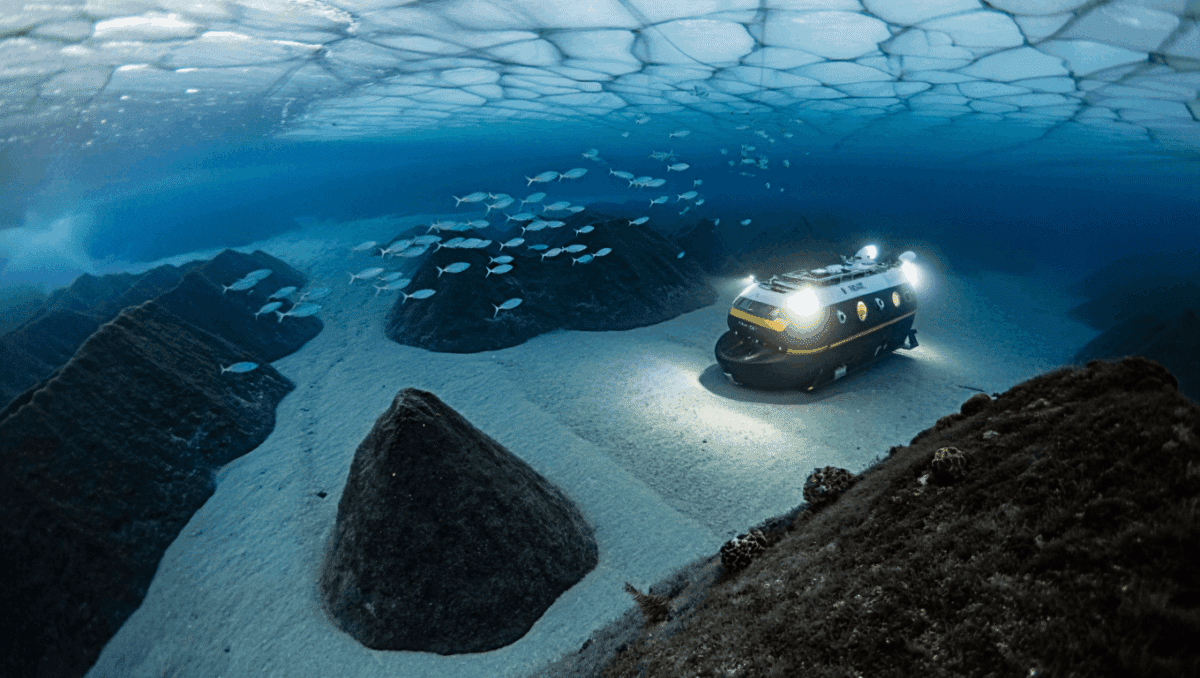
Beneath a shifting blanket of Arctic ice, Chinese scientists have sent a crewed submersible into a stretch of seafloor that no human has ever stood over. The mission dove into the eastern flank of the Gakkel Ridge, a slow-spreading underwater volcanic chain that runs from Greenland toward Siberia, opening a fresh chapter in polar ocean exploration.
The voyage combined an icebreaker, a three-person submersible and a team of geophysicists and marine biologists aiming to chart terrain that, until now, had only been sampled by surface ships or robotic craft on the ridge’s western side. What the scientists brought back—tens of dives, rock and animal specimens, and images from extreme depths—promises to change how we think about volcanic seafloors and life in the deep Arctic.
China’s first manned survey of the eastern Gakkel Ridge
The Growing Demand for Data-Driven Decision Making in Silicon Valley
He quit, ran out of money, and begged to come back — here’s how his boss reacted
For decades the Gakkel Ridge has been partly mapped from afar: Russian researchers sampled it from the surface, and a US-German robotic expedition probed the western slope in 2001. But the eastern section remained untouched by human-occupied vehicles because of permanent sea ice and extreme logistics. This year, a team organized by the Chinese Academy of Sciences and the Ministry of Natural Resources set out to change that.
- Vessel: Polar-class icebreaker capable of operating in multi-year sea ice.
- Submersible: Fendouzhe, a three-person crewed craft designed for deep, icy waters.
- Operation scope: More than 40 dives, with the deepest descent exceeding 14,000 feet (about 5,277 meters).
Why the Gakkel Ridge draws intense scientific interest
The ridge marks a tectonic and volcanic boundary where new ocean crust forms slowly—at a pace slower than the growth of a human fingernail. Its volcanic activity and hydrothermal systems create unique habitats that thrive in complete darkness, and scientists view those ecosystems as natural laboratories for studying life under extreme conditions.
Connections to astrobiology and ocean chemistry
Hydrothermal vents along mid-ocean ridges eject mineral-rich fluids that support unusual communities of organisms. Because similar processes might occur on icy worlds such as Jupiter’s moon Europa, researchers study these vents as analogs for potential extraterrestrial habitats. The western Gakkel Ridge, exposed under open water, has already revealed vent-associated life; the eastern side could help complete the picture.
How the expedition worked in an ice-locked environment
Operating a crewed submersible under drifting pack ice requires exacting coordination. The team rotated Fendouzhe between clearings in the ice, used the icebreaker to tow the submersible to safer open-water zones, and relied on sonar to map escape holes so the vehicle could resurface after long dives.
- Sonar scouting to identify thin-ice or polynyas for emergency surfacing.
- Icebreaking to carve return paths when conditions prevented natural openings.
- Careful dive planning to avoid being cut off by shifting floes.
Operational risks were high: if the submersible surfaced in solid pack ice, recovery would be extremely difficult. Still, scientists reported that their motivation outweighed the danger, calling the chance to observe the deep Arctic directly “a rare privilege.”
What researchers targeted on the ridge and what they observed
The team focused on dramatic geological features—seamounts, steep cliffs and fault scarps—taking close-up footage and collecting samples of rock, water and living organisms. Many of the creatures encountered live in total darkness and under intense pressure and cold, presenting behaviors and morphologies unlike shallow-water species.
- Geological targets: fresh volcanic outcrops, fault zones, and sediment-covered slopes.
- Biological targets: sessile animals, fish adapted to abyssal conditions, and microbial mats.
- Environmental sampling: water chemistry near the seafloor and mineral-rich deposits suspected to be linked to hydrothermal activity.
Signs of hydrothermal activity and biodiversity clues
On the ridge’s western flank, earlier surveys revealed ecosystems clustered around vents. The eastern dives sought to determine whether similar hydrothermal systems exist there and how life is distributed across this isolated landscape. The expedition team has been cautious about making premature claims, but returned imagery and specimens that raise strong possibilities of active vents or vent-influenced habitats.
Technical and scientific hurdles the crew faced
Diving in the high Arctic pushes engineering and human endurance. Besides the ice navigation challenges, the submersible’s mission profile required precise depth control and long-duration power management. At some depths, Fendouzhe used onboard sonar to locate thin sections of ice above that could serve as recovery points.
Scientists also had to balance sampling with minimal disturbance, preserving fragile communities and ensuring specimens were viable for laboratory work. Recovering live or structurally intact animals and microbes from the abyss is difficult, and documentation—high-resolution video and in-situ measurements—was critical.
Samples now being analyzed back on shore
The collected rocks, biological specimens and water samples are en route to laboratories for detailed study. Researchers will examine mineralogy and geochemistry to confirm volcanic and hydrothermal processes, sequence microbial DNA to probe biodiversity, and test whether any compounds might have pharmaceutical or biotechnological interest. Results from those analyses will determine whether the eastern Gakkel Ridge hosts the same kind of vent systems found on the western slope, and how its ecosystems compare.
You might also like:
- World’s largest whale graveyard teems with deep-sea life including species unknown to science
- Greenland sharks study upends scientists’ assumptions about lifespan and behavior
- Less than a million years for a new ocean: the African continent is splitting fast
- Scientists discover a massive ocean 700 km beneath Earth’s surface
- Vast Subterranean Ocean Discovered 700 Kilometers Below Earth’s Surface Astounds Scientists

Michael Thompson is an experienced journalist covering U.S. and global news. With ten years on the front lines, he breaks down political and economic stories that matter. His precise writing and keen attention to detail help you grasp the real‑world impact of every event.


Man, imagine diving there! The Gakkel Ridge sounds like a sci-fi movie set. Volcanoes in the Arctic Ocean? Thats wild. Cant wait to see what other secrets this mysterious place holds.
Dang, those divers mustve felt like they hit the jackpot! Imagine stumbling upon an Arctic ocean ridge packed with volcanoes! Its like finding a hidden treasure chest but with more danger and way less gold. Wonder if they found any mermaids down there.
Dang, divers hitting up the Arctic ocean ridge? Thats some next-level exploration, man. Can you imagine the crazy stuff they found down there? Volcanoes in the ice? Thats some sci-fi movie material right there. Wild.
Dude, imagine diving into the Arctic and stumbling upon a whole ridge of volcanoes! Thats like finding a secret level in a video game, but way cooler. Bet those divers felt like real-life explorers uncovering some ancient mystery.
Man, those divers mustve had the wildest adventure down there in the Arctic Ocean ridge with all those volcanoes! Its like a whole new world hidden beneath the icy surface. Wonder what else is lurking down there…
Man, diving in the Arctic? Thats some next-level adventure! Finding a whole ocean ridge with volcanoes? Thats like playing an epic video game but for real. Wonder what other crazy stuff is hiding down there!
Diving into that Arctic ocean ridge, eh? Reminds me of that time I got lost in a maze of caves. Bet those volcanoes made the water real toasty! Wonder what else is lurking down there…
Man, diving in the Arctic? Thats some next-level adventure stuff right there! Finding a whole ridge full of volcanoes underwater? Sounds like a sci-fi movie plot. Cant wait to hear what crazy discoveries they make down there!
Dude, diving in the Arctic? Thats some insane stuff, man! Like, are they gonna stumble upon a frozen mermaid or something? *laughs* For real though, the mysteries down there are wild. Cant wait to see if they find Atlantis or just a bunch of frozen fish sticks.
Man, diving in the Arctic? Thats some next-level adventure! Imagine coming face-to-face with those underwater volcanoes, its like a sci-fi movie down there. Kudos to the divers for exploring such uncharted territory!
Dude, tell me about it! Arctic diving is like a whole other planet under the sea! I mean, those underwater volcanoes – talk about a natural Jacuzzi, am I right? Props to the divers for being the real-life Aquamen and Aquawomen of our time, exploring those icy depths like its just another day at the office. Wonder what other crazy stuff theyll discover down there next!
Dude, imagine diving down there, feeling the chill, and suddenly, boom! Volcanoes! Its like Mother Natures secret party at the bottom of the Arctic. Bet those divers had a wild time down in the deep.
I used to dream about diving in icy waters, but now these divers found an Arctic ocean ridge with volcanoes? Thats like finding treasure in a snowstorm! Natures full of surprises, aint it?
Dang, those divers are living my dream exploring the Arctic Ocean ridge! Can you imagine the thrill of discovering volcanoes down there? Makes my desk job feel even more mundane. Time to add underwater volcano explorer to my bucket list!
Man, those divers really got the coolest job! I feel you though, desk life can be a snooze fest compared to chasing underwater volcanoes. Maybe its time to swap that coffee mug for a scuba tank, huh? Who knows what thrills are waiting down there for ya!
Dang, those divers are braver than me diving into the Arctic ocean! Volcanoes underwater? Thats like a real-life action movie. Imagine the stories theyll have at the pub now!
Mate, can you believe divers found an Arctic ocean ridge full of volcanoes? Sounds like a sci-fi movie plot! Imagine the thrill of exploring that icy, fiery underworld. Talk about an adrenaline rush!
Man, imagine diving into that Arctic ocean ridge! Must be like exploring another planet. Bet those volcanoes are wild. Science is so cool, finding new stuff like this. Wish I could be there!
Oh, man, diving in the Arctic? Sounds like a wild ride! Imagine finding a whole ocean ridge down there, studded with volcanoes! Cant wait to see what else they discover in that icy wonderland.
Dude, imagine diving into the Arctic and stumbling upon a volcano party down there? Thats like finding a hidden level in a video game! Cant wait for the scientists to spill the tea on those ocean ridge secrets.
Dude, imagine youre chillin in the icy waters, and bam! Volcano party! Thats like unlocking a secret level in real life, man. Cant wait for the scientists to spill the tea on those ocean ridge secrets. Its gonna be lit down there!
Man, divin in the Arctic ocean, discoverin a ridge full o volcanoes? Thats like findin treasure in your backyard! Natures full o surprises, aint it? Wonder what else is hidden down there.