
Show summary Hide summary
- How the memorial turned into a media controversy
- What mainstream outlets actually said and why it mattered
- Examining Kirk’s positions: mainstream conservative or fringe?
- The paradox of being labeled “extreme” while inviting debate
- The risks of rapid labeling after a political killing
- What balanced coverage should aim to do
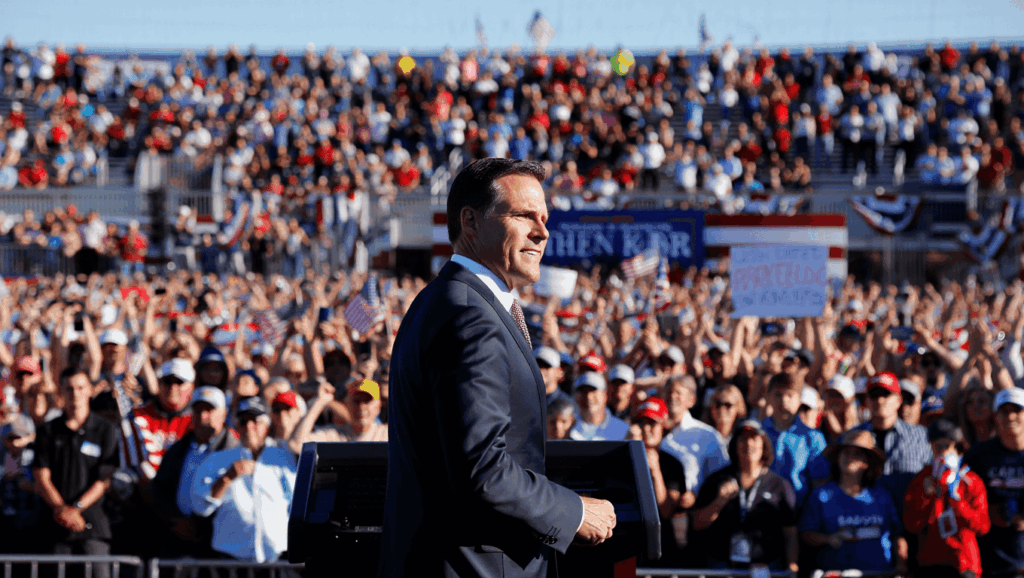
The scene in Arizona — a stadium filled with tens of thousands, a presidential address, and an outpouring of grief — quickly became a battleground over language. As cameras rolled, a debate unfolded not just about a man’s legacy but about how the press frames political figures in life and death.
Coverage of Charlie Kirk’s memorial sparked swift headlines. Some outlets labeled him “far-right” while others focused on the scale of the crowd and the spectacle of a sitting president speaking at the service. That split exposed a deeper argument: when an individual is killed for their beliefs, how should journalists describe their politics without fanning the flames of division?
The Growing Demand for Data-Driven Decision Making in Silicon Valley
He quit, ran out of money, and begged to come back — here’s how his boss reacted
How the memorial turned into a media controversy
The memorial in Arizona drew national attention and a range of editorial takes. Major news organizations described the event in different tones — some emphasizing the crowd and the presence of a former president, others characterizing Kirk’s politics in stark terms. That divergence became a story in itself.
- Broadcast reporters highlighted the scale of the mourning and the political theater surrounding the event.
- Opinion pieces and analysis ran faster to assign a label to Kirk’s ideology, often settling on phrases like “far-right” or “hard-right.”
- Corrections and clarifications from several outlets followed as claims and quotations were checked under intense scrutiny.
Public broadcasters and major newspapers face a special responsibility: audiences expect careful, impartial reporting, especially on matters that can inflame political sentiment. When reporters make sweeping characterizations — particularly about someone who has just been killed — it raises questions about tone, accuracy, and the potential effects of language.
What mainstream outlets actually said and why it mattered
Within days of the shooting, several prominent organizations used strong terminology to describe Kirk and his movement. Those labels helped shape public perception instantly, but they also invited pushback:
- Some pieces described Kirk’s politics with terms suggesting he represented an extreme wing of American conservatism.
- Other reports emphasized his role as a popular voice among younger conservatives and a provocateur on college campuses and social media.
- A small number of stories issued corrections when attributions or quotes were found to be inaccurate.
Fast-moving coverage amplifies small errors and inflames already polarized debates. When outlets rush to define a person’s politics in binary terms — extreme or mainstream — nuance is lost and the conversation can tilt toward dehumanization rather than analysis.
Examining Kirk’s positions: mainstream conservative or fringe?
To decide whether a political figure belongs on the “far-right” spectrum, it helps to look at specific positions rather than rely on labels. Some of Kirk’s recurring stances included:
- Vocal defense of free speech on college campuses and online platforms.
- Opposition to abortion legislation, in line with many conservative Christians and Republicans.
- Support for meritocratic principles in education and hiring.
- A commitment to biological definitions of sex in public policy debates.
These positions are familiar within contemporary American conservatism. They are not, in themselves, evidence of fascism or the kind of authoritarianism those words imply. Reducing a set of policy views to a single incendiary label obscures differences between mainstream conservative advocacy and genuinely extremist ideologies.
The paradox of being labeled “extreme” while inviting debate
One striking detail often noted by observers was Kirk’s public willingness to engage with critics. On campuses and in public forums, he frequently offered opponents the chance to speak and challenged audiences to debate him directly. That approach — inviting challenge rather than silencing dissent — clashes with typical images of authoritarian behavior.
When a reporter calls someone “far-right” and also points out their eagerness to debate, the two claims sit uneasily side by side. Either the term is being used broadly to signal political disagreement, or it has narrowed to mean “conservative” in the current media vocabulary. Neither outcome clarifies what the label is supposed to convey.
The risks of rapid labeling after a political killing
When a person is murdered because of their beliefs, journalists must weigh accuracy and restraint carefully. Quick, sweeping characterizations can have real-world consequences:
- They can dehumanize the victim and simplify complex political identities into a single, vilifying term.
- They may inadvertently suggest moral equivalence between the beliefs and the act of violence that took a life.
- They risk hardening public attitudes, making reasoned discussion harder in an already tense environment.
Responsible reporting requires distinguishing between sincere political advocacy and extremist movements that embrace violence. That distinction matters for readers trying to understand both motive and context.
What balanced coverage should aim to do
Clear, careful journalism would describe facts about the memorial, provide context for the deceased’s public positions, and avoid rushing to labels that carry heavy historical baggage. Audiences benefit from:
- Specific descriptions of policy positions rather than one-word branding.
- Transparent sourcing, including corrections when mistakes are made.
- Coverage that separates condemnation of ideas from justification of violence.
Words shape how the public remembers the dead and how society debates the living. In the aftermath of a killing tied to political motives, readers deserve reporting that informs rather than inflames.
Georgina Mumford is an intern at spiked.
You might also like:
- BBC crisis: why centrists are so upset and what it means for UK politics
- Charlie Kirk’s influence on Gen Z explained
- Is Free Speech Under Fire in America? After Colbert, Jimmy Kimmel Suspended Over Charlie Kirk Remarks
- Charlie Kirk’s apocalyptic rhetoric about trans rights sparks backlash
- BBC losing trust and viewers across the UK

Robert Johnson is a dedicated columnist focusing on political and social debates. With twelve years in editorial writing, he provides nuanced, well‑argued perspectives. His commentaries invite you to form your own views and engage in critical issues.


Man, the media labeling game is wild. One day youre mainstream, next day youre far-right. But hey, at least its sparking debate, right? Who knew a label could cause such a stir?
Man, labels flyin around like confetti at a party! But seriously, its wild how one word can spark such a debate. Makes you wonder, why the fuss over a simple label?
Oh man, tell me bout it! Labels droppin like confetti at a party, makin everyone go wild! Its like that one words the secret code to start a whole debate. Why all the fuss over a simple label, right? Like, cant we all just vibe and let things be?
I remember when labels were just for cans, not people. But hey, seems like everyones got a tag these days. BBC calling Kirk far right made me wonder: Is it to inform or to stir the pot?
Charlie Kirk aint just a plain cookie, BBC! They slap the far right label on him. Its like spice in a bland soup, but does it add flavor or burn your tongue? Lets debate!
Man, the media loves slappin labels on folks like stickers on a suitcase. But hey, lets not forget, labels aint the whole story. Whats the real deal with Charlie Kirk, though? Lets dig deeper.
Man, the media loves their labels! Its like theyre playing a game of extreme or just passionate? with every public figure. But hey, controversy sells, right? Wonder if they ever get tired of stirring the pot…
Controversy, controversy, controversy… Ah, the medias favorite tune! Its like they sprinkle drama on everything these days, hoping itll stick. Cant blame em though, gotta keep those ratings up somehow, right? But seriously, wonder if they ever hit snooze on stirring the pot or if its just a 24/7 gig for them!
Ive seen Kirk stir the pot, but far right is a stretch. BBCs sippin that spicy tea. Labels stick like gum on a shoe. Cant we just debate without the name-calling circus?
Man, the media loves tossing labels around like confetti. But hey, gotta hand it to BBC for calling out Charlie Kirk. Whether hes far right or not, at least theyre stirring the pot, making us question these political boxes were all crammed into.
Oh my, media labels! I remember when they called my cat an anarchist for knocking over a plant. But seriously, labels are tricky. Are they nailing it with Charlie Kirk, or just stirring the pot? Whats the real deal?
Man, mainstream media loves tossing labels around like confetti. But hey, if Charlie Kirks views are on the right field, then call a spade a spade. Just hope its not all about stirring the pot for clicks.
Oh, the medias labeling game again. Cant they just report facts without slappin names left and right? Charlie Kirk gets the far right stamp, but whats the deal? Lets keep the news spicy with those controversial labels, eh?
Man, these media labels are like a rollercoaster. One minute youre mainstream, the next, youre far-right. Cant keep up! Labels, man, theyre like fashion trends, always changing.
I remember when labels were just for canned goods, not folks. But hey, if the shoe fits, right? Who decides who’s far right or far left anyway? It’s all a big ol mess, if you ask me.
Man, labels these days are wild. Its like everyones either far right or far left. Cant a guy just have opinions without being slapped with some extreme tag? Lets keep the debate spicy without the need for those crazy labels, okay?
Man, the media these days, always stirring the pot with labels and controversy. Calling someone far right or extreme can really shape public opinion. Its like theyre setting the stage for a debate before it even begins. Crazy stuff.