
Show summary Hide summary
- Why coverage of Nigel Farage’s schooldays became a national story
- Current threats to Jewish communities that are getting less attention
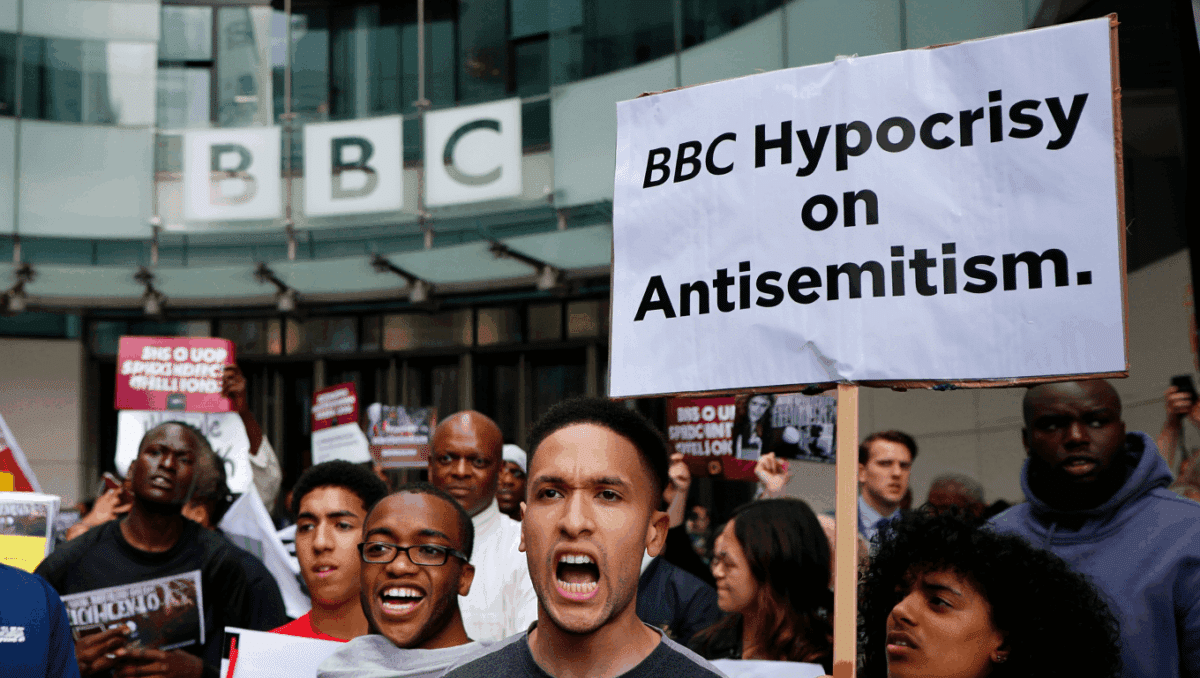
- Accusations of hypocrisy aimed at the BBC
- How the Guardian is implicated in the same debate
- Double standards, politics, and media motives
- Notable public figures and the debate over past statements
- How audiences are responding
- About the writer and where to follow more commentary
The BBC has finally put anti‑Semitism on its radar — but its choice of target feels like a theatrical sleight of hand. Rather than interrogating the recent rise in violent and vocal hostility toward Jewish people on British streets and transport, the broadcaster has homed in on allegations about remarks made by a schoolboy half a century ago. That decision has prompted a sharp backlash: critics say the corporation is policing the past while ignoring poisonous rhetoric circulating in the present.
This piece takes apart that inconsistency, looking at what the media are choosing to cover and what they are glossing over. It also examines how outlets that now preach about bigotry have themselves been implicated in tolerating or amplifying anti‑Jewish sentiment.
Why coverage of Nigel Farage’s schooldays became a national story
The latest media storm centers on reports that Nigel Farage may have uttered anti‑Semitic remarks as a teenager at an exclusive school in the 1970s. Major outlets have recycled anecdotes from former classmates, including a claim from one man who says he heard phrases like “Hitler was right” and even “gas them.” Those allegations are damning if true — but they remain unproven and hinge on memories of events decades old.
The Growing Demand for Data-Driven Decision Making in Silicon Valley
He quit, ran out of money, and begged to come back — here’s how his boss reacted
At the same time, the choice to spotlight decades‑old playground chatter raises questions about editorial priorities. Many readers are asking: why devote prime airtime to disputed claims about a 13‑year‑old when the country is confronting fresh incidents of Jew‑hatred?
- Allegations rely largely on recollections by people who were teenagers at the time.
- No definitive contemporary record or corroborating evidence has emerged to prove the specific phrases were used.
- The story’s prominence coincides with wider political battles over populism, party support, and culture wars.
Current threats to Jewish communities that are getting less attention
Across Britain in recent years there have been tangible, violent, and intimidating acts directed at Jewish people and institutions. These are concrete incidents — not disputed memories — and they reflect a climate many feel the national conversation should be centered on.
- Synagogues and Jewish centers have faced targeted protests and threats.
- Schoolchildren and students have reported harassment and assaults linked to their Jewish identity.
- There have been documented cases of people being attacked or targeted on public transport because they are Jewish.
By highlighting old allegations about an elite school while these events unfold, critics argue the media risk minimizing the urgency of present‑day anti‑Semitism.
Accusations of hypocrisy aimed at the BBC
Several commentators have pointed to instances where BBC reporting or staffing choices appeared at odds with the corporation’s sudden focus on historical allegations. They argue the BBC has, at times, provided platforms to journalists and performers who have expressed extreme hostility toward Jews — or has required public corrections for coverage of the Israeli‑Palestinian conflict.
Some of the recurring complaints include:
- The broadcaster’s need to issue clarifications or corrections over coverage of Gaza and related reporting.
- Instances where contributors or stringers associated with BBC stories used inflammatory, anti‑Jewish language in other contexts.
- Allegations from staff and contractors that the organization has struggled to address anti‑Semitic bias internally.
Those who raise these points argue that if the BBC wishes to be a moral arbiter on anti‑Semitism, it must first clean its own house and explain how such lapses occurred. The criticism is not just about what the BBC reports, but whom it elevates and how consistently it applies standards.
How the Guardian is implicated in the same debate
The national conversation broadens when other outlets, notably The Guardian, are also scrutinized for instances of anti‑Jewish imagery and commentary. In recent years the paper has disciplined cartoonists and faced accusations that certain editorials or illustrations echoed long‑criticized tropes.
Details under scrutiny include:
- Cartoons that some readers and Jewish groups described as reinforcing harmful stereotypes.
- Editorial choices that critics say have downplayed or contextualized hostility toward Jews in ways that appear lenient.
- The perception that some criticism of Israel crosses into portrayal of Jews as a collective or conspiratorial force.
The point many make is that media institutions cannot credibly lecture others about anti‑Semitism while simultaneously publishing or tolerating work that feeds age‑old prejudices.
Double standards, politics, and media motives
Observers see political calculation behind much of the coverage. When allegations about elite figures and their youth surface, those stories can distract from systemic problems and political currents that threaten to realign voting patterns. Some suggest that concern about anti‑Semitism spikes when it intersects with fears about populist politics gaining ground — not solely out of principled outrage.
Media critics argue that:
- Discussing historical accusations can shift attention from contemporary violence and intimidation.
- Painting populist or working‑class movements as inherently bigoted may serve political objectives beyond addressing prejudice.
- Coverage timing and framing often reflect broader editorial priorities, not just newsworthiness.
This framing suggests that outrage is sometimes selective and that moral indignation can be weaponized in partisan debates.
Notable public figures and the debate over past statements
The controversy has also rekindled scrutiny of other public personalities whose youthful comments have resurfaced. Critics note that many people have expressed problematic views in their youth and later recanted or contextualized them — a pattern that complicates how society judges past behavior.
Two consistent themes emerge:
- The challenge of proving anecdotal claims about what someone said decades ago.
- Whether youthful statements should define a public figure’s entire career, especially when those remarks are not corroborated.
This raises broader ethical questions about memory, redemption, and the extent to which institutions should police historical speech.
How audiences are responding
Public reaction has been mixed. Some believe any allegation of anti‑Semitism warrants rigorous inquiry, no matter when it allegedly occurred. Others see the current media spotlight as selective moralizing. Social media threads, comment boards, and letters to editors reveal a nation deeply divided over how to balance historical accountability with present‑day priorities.
Common reactions include:
- Calls for transparent investigations and evidence before judgment.
- Demands that outlets give greater prominence to immediate threats against Jewish communities.
- Skepticism toward perceived establishment attempts to control political narratives by resurrecting long‑buried controversies.
About the writer and where to follow more commentary
Brendan O’Neill writes on politics and culture and hosts a regular podcast in which he explores current controversies and their wider implications. His recent book examines the fallout from major events in the Middle East and the ripples they create across global politics. To follow his work, readers can find his podcast and social profiles through usual platforms.
You might also like:
- UK universities face surge in antisemitism allegations
- BBC antisemitism: why Jews are afraid and the broadcaster must look in the mirror
- Casual antisemitism is poisoning public life and normalizing hate
- Antisemitism and anti-Israel sentiment are spreading in classrooms
- Nigel Farage: Guardian hit job sparks claims of a sinister new low

Robert Johnson is a dedicated columnist focusing on political and social debates. With twelve years in editorial writing, he provides nuanced, well‑argued perspectives. His commentaries invite you to form your own views and engage in critical issues.


Mate, the BBCs got more twists than a soap opera. One minute theyre preachin about antisemitism, next theyre in the hot seat for it. Its like watchin a ping pong match with news instead of paddles.
Man, the BBC really be playing both sides like a see-saw. One minute theyre all about fighting antisemitism, next theyre knee-deep in scandals. Cant keep track, mate.
Mate, its like a merry-go-round of finger-pointing. BBC, Guardian… whos right, whos wrong? Feels like everyones knee-deep in mudslinging. Cant they just sort this out like adults?
Man, the BBC really be playin both sides. They callin out antisemitism but then get caught up in it themselves. Cant trust the media these days, always some shady stuff goin on behind the scenes. Smh.
Mate, the bias is real! BBC cant preach about antisemitism when theyre knee-deep in it. The pots calling the kettle black, aint it? Time for some honesty and accountability, innit?
Mate, cant believe the BBCs double standards on antisemitism. One rule for one, another for the rest. Wheres the fairness in that? Its like theyre playing a game of spot the hypocrisy and winning every time.
Man, I hear you about the BBC and their wild double standards. Its like theyre playing chess while were stuck playing checkers, right? Wonder if they have a spot the hypocrisy championship going on behind the scenes. Its a real head-scratcher, aint it?
Oi, mate, can you believe the hypocrisy going on? BBC, Guardian… they all got their hands dirty. Its like a circus of finger-pointing and avoiding the real issues. Wheres the accountability, eh?
Mate, the hypocrisy these days is off the charts, innit? Everyone pointing fingers but no one willing to take responsibility. Its like a never-ending game of hot potato with the truth. Accountability? Pfft, seems like its become an endangered species.
I mean, seriously, BBC? Preaching about antisemitism while turning a blind eye to their own controversies? Talk about hypocrisy on steroids. Time to practice what you preach, aint it?
Mate, I get what youre sayin, but aint it a bit like the pot callin the kettle black? BBC aint exactly squeaky clean, are they? Hypocrisy seems to be the flavor of the month in the media circus. Its like theyre playin a game of Do as I say, not as I do. What a wild ride, innit?
Man, the BBCs got more twists than my grandmas knitting. One minute theyre all about condemning antisemitism, the next theyre tangled up in hypocrisy accusations. Its like watching a soap opera, but with less drama and more politics.
Mate, the BBCs like that one friend who claims to hate drama but somehow always ends up in the middle of it. Its a rollercoaster ride of contradictions and controversies. Feels like they need a reality check or a script editor, eh?
Mate, the BBCs double standards on antisemitism? Dodgy as a three-pound note. Why are they quick to call out others but mumble when its in their own backyard? Something smells fishy here, innit?
Man, the BBC really dropped the ball on this one. Antisemitism is no joke, but their hypocrisy is off the charts. Time for some serious self-reflection and accountability, dont you think?
Man, the Beeb really fumbled the ball on this one, didnt they? Antisemitism is a serious deal, no room for slip-ups. Their double standards are next level. Accountability? Yup, its high time they faced the music and owned up to it. Whats your take on their whole mess, huh?
Man, BBC really dropping the ball on antisemitism coverage. Its like theyre playing hot potato with accountability. Cant just sweep it under the rug. Time to step up and address the issues head-on!
Yeah, mate, the BBCs dodging the antisemitism issue like its a game of hot potato. Its time for them to face the music and deal with it head-on instead of brushing it off. Cant just pretend its not there, right?
Mate, BBCs double standards on antisemitism got me fumin. They call out others but turn a blind eye to their own mess. Can they even spell hypocrisy? Outrageous!
Mate, BBCs handling of antisemitism is a total mess. Its like theyre playing Spot the Hypocrite but cant even spell hypocrisy themselves. Outrageous indeed! Its like watching a soap opera where everyones got secrets but no ones calling them out. Are we in for a plot twist or what?