
Show summary Hide summary
The Bolivian Andes have just gained a major line of defense for wildlife and water. Local leaders in Palos Blancos approved a wide-ranging protected area at the end of 2025, securing vast tracts of cloud forest and upper Amazon foothills that support thousands of species and feed rivers relied on by nearby communities.
This action, backed by international conservation partners and funding, stitches together a landscape of parks and indigenous territories to create a stronger wildlife corridor. The move promises to protect habitat for jaguars, black spider monkeys, Andean bears, and other species while safeguarding the headwaters of the Alto Beni River.
New municipal reserve expands protection across high Andean cloud forest
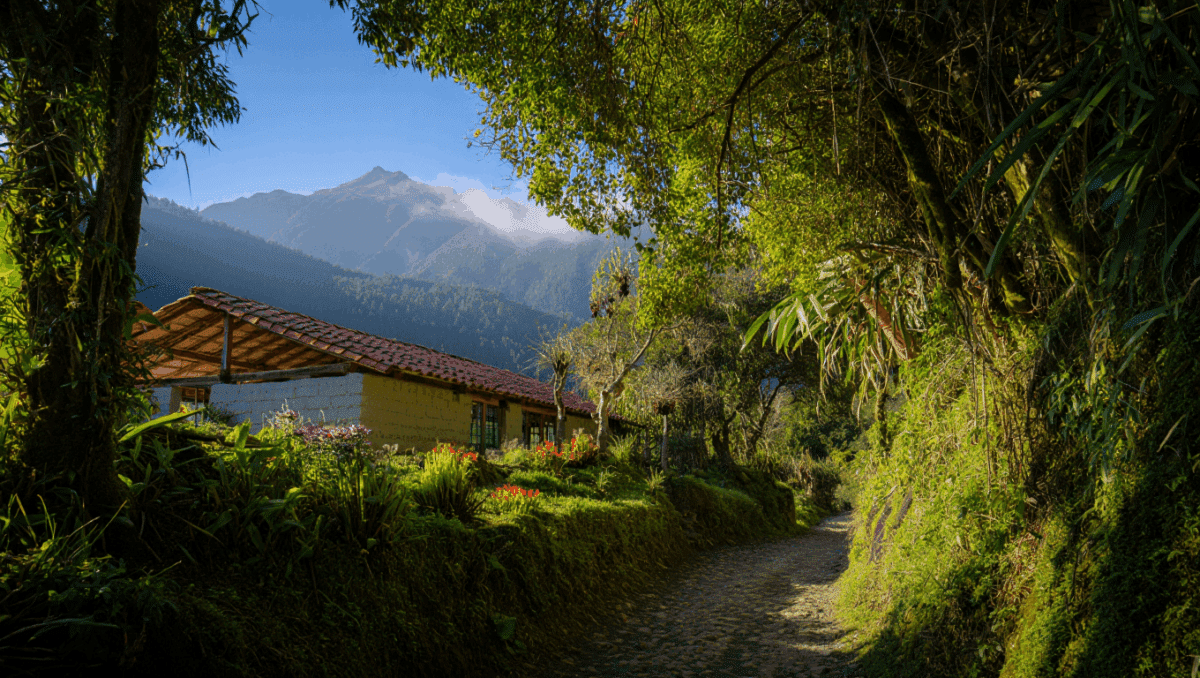
Palos Blancos’ municipal government formalized the creation of the Serranías y Cuencas de Palos Blancos Protected Area on December 30, 2025, following recommendations and financial support from the Andes-Amazon Fund. The reserve covers roughly 340 square miles of transitional forest where high-altitude Andean cloud forest blends into Amazonian lowland rainforest.
The Growing Demand for Data-Driven Decision Making in Silicon Valley
He quit, ran out of money, and begged to come back — here’s how his boss reacted
This region is ecologically significant for several reasons:
- Exceptional biodiversity: Surveys have recorded more than 1,300 native species, including at least 13 species found nowhere else in Bolivia.
- Intact forest: Approximately 86% of the forests within the new municipal area show no evidence of prior human disturbance, offering rare primary habitat in the Andes-Amazon transition zone.
- Water security: The protected area contains headwaters that contribute to the Alto Beni River, a vital water source for downstream towns and agriculture.
Connecting a larger mosaic: corridor, parks, and indigenous reserves
The Palos Blancos reserve sits adjacent to two indigenous territories and links directly with other protected places, strengthening movement routes for wide-ranging animals. To the north, a neighboring province recently established a separate protected zone of about 320 square miles along the same cloud forest–Amazon gradient. Together, those municipal and provincial actions create roughly 660 square miles of newly protected landscape.
Conservation organizations highlight how this expansion plugs into an even broader conservation network:
- Cotapata National Park
- Madidi National Park
- Multiple indigenous reserves
These areas form the emerging Gran Paitití de Mapiri Biodiversity Corridor, which conservationists say will improve habitat connectivity for jaguars, black spider monkeys, Andean bears, and many smaller species dependent on unbroken forest blocks.
Who funded and organized the effort
Several conservation groups and funds played coordinating and financial roles, helping municipal planners move from proposal to legal protection. Key partners included:
- The Andes-Amazon Fund (provided recommendations and financial backing)
- Conservation International Bolivia (technical and organizational support)
- Rainforest Trust (funding and project assistance)
Local officials and conservation leaders emphasized that the combined public and NGO effort was essential to secure rapid legal protection and to plan for ongoing management.
Why this matters: species protection and ecosystem services
Protecting this transition zone matters for both wildlife and people. The mosaic of reserves creates larger contiguous blocks of habitat that are increasingly rare in the Andes-Amazon foothills. That larger habitat helps sustain species with big home ranges and seasonal movement patterns.
Key impacts include:
- Wildlife corridors: Larger connected areas allow predators like jaguars and arboreal species like black spider monkeys to move, mate, and access resources.
- Endemic species conservation: The region’s unique assemblage of plants and animals includes species not recorded elsewhere in Bolivia.
- Freshwater protection: Safeguarding headwaters protects drinking water, irrigation supplies, and downstream ecosystems that support thousands of people.
Regional momentum: more forest protection across Latin America
The Palos Blancos initiative is part of a wider pattern of recent conservation victories across the region. In the past year alone, several countries have taken large steps to protect critical jungle habitat—choices that range from banning new oil and mining concessions to establishing thousands of square miles of new reserves. These trends reinforce the strategic value of the new Bolivian protections as part of a continental effort to preserve tropical forests and the climate, cultural, and biodiversity services they provide.
Voices on the ground
Local conservation leaders praised the decision as an important piece of a larger strategy to protect landscape-scale biodiversity. Officials noted that bolstering the protected-area network from cloud forest to lowland Amazon improves long-term resilience for species and people who depend on these ecosystems.
You might also like:
- New bird species discovered in Ecuador could reshape conservation
- French Guiana protects 370,000 acres of rainforest and granite peaks
- Cloud jaguar sighting in Honduras caught on trail cam, first in a decade
- French Polynesia protects a biodiverse marine reserve twice the size of Arizona teeming with life
- New Zealand marine reserves: 5 new sites to protect dolphins and kelp forests off South Island

Michael Thompson is an experienced journalist covering U.S. and global news. With ten years on the front lines, he breaks down political and economic stories that matter. His precise writing and keen attention to detail help you grasp the real‑world impact of every event.


Man, Bolivia stepping up its game, protecting 660 square miles of biodiverse forest? Thats what I call environmental ambition! Hope other countries take notes. Gotta give credit where its due.
Bro, Bolivia aint playing around! Protecting all that greenery? Mad respect. Lets see who else steps up to the plate now! Mother Natures MVP, huh?
Man, Bolivias really stepping up to protect that biodiverse forest—660 square miles, thats the real deal. Hope they keep expanding, we need more places like that. Who wouldve thought, right?
I gotta hand it to Bolivia, man, theyre really making moves to protect the forest. 660 square miles, thats no joke! Its like a hidden gem, right? Who knew they had it in em! Lets hope they keep this up and inspire other places to do the same. Hey, maybe well see more of these green warriors poppin up everywhere, huh?
Man, Bolivias stepping up its game! Protectin that much biodiverse forest is like givin a big ol bear hug to Mother Nature. We need more countries takin action like this, ya know, showin some love to our planet.
Dang, Bolivias really takin charge, huh? Protectin all that biodiverse forest is like throwin a massive party for Mother Nature! Its about time more countries start showin some love to our planet, ya feel me?
Oh man, I remember trekking through Bolivias forests ages ago, such a thrill! Glad theyre protecting those 660 square miles now. Whos behind this eco-heroism, huh? Gotta give credit where its due!
Man, Bolivias stepping up, protecting all that forest. Wish more countries cared about nature like that. Maybe wed have cooler animals around. How about we all pitch in and save the planet together, huh?
Man, Bolivias stepping up their game! Protecting all that forest is like giving nature a big ol bear hug. Hope other countries take notes and start preserving our planet too.
Man, Bolivias stepping up for nature! 660 square miles of biodiverse forest? Thats like a whole adventure waiting to happen. Cant help but wonder, whos the hero behind this green crusade?
Man, Bolivias on fire with this forest protection move! Reminds me of my camping trip there years back. Wonder whos behind this eco-warrior gig? Hope its not just a greenwash show!
Man, Bolivia really stepping up for nature, huh? Its like that one time I tried to save a beetle from drowning in a puddle. But, like, on a massive scale. Kudos, Bolivia, for being the superhero Earth needs.
Man, aint it a breath of fresh air to see Bolivia stepping up to protect their forests? We need more countries taking action like this. Its like a domino effect, one place at a time making a real difference.