
Show summary Hide summary
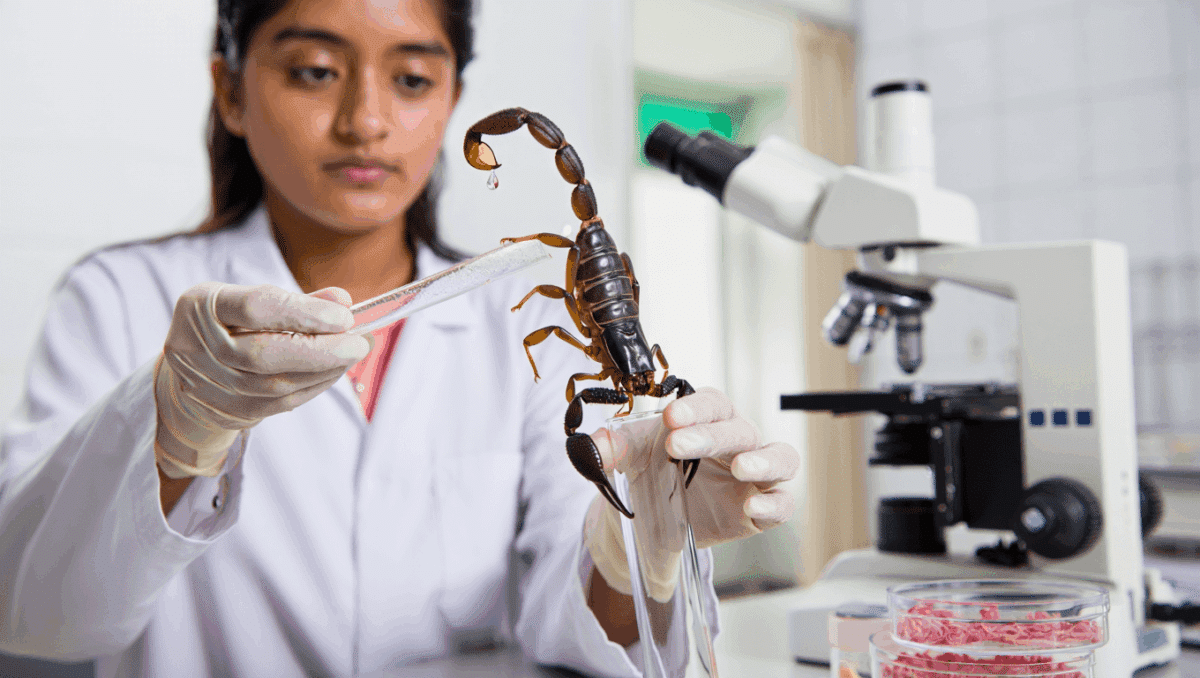
Researchers in Brazil are exploring an unexpected ally in the battle against breast cancer: the venom of an Amazonian scorpion. Early laboratory work suggests a compound from this creature could attack tumor cells in a way that resembles the action of existing chemotherapy drugs, opening a new avenue for drug development.
Teams from several Brazilian institutions are combining biochemical techniques and ecological knowledge to isolate, clone and test venom proteins. Their discoveries could expand a growing list of medical treatments derived from animal venoms, but the work remains at a preliminary stage.
Why Amazonian scorpion venom is drawing scientific attention
The Growing Demand for Data-Driven Decision Making in Silicon Valley
He quit, ran out of money, and begged to come back — here’s how his boss reacted
Scientists at the University of São Paulo’s Pharmaceutical Sciences School (FCFRP‑USP) have been mining venoms for therapeutic molecules for years, cloning and expressing proteins from rattlesnakes and scorpions to see which ones can be repurposed as medicines. Working with partners in the Amazon region, the researchers focused on an endemic scorpion, Brotheas amazonicus, and used bioprospecting methods to search for biologically active peptides.
The project is collaborative in nature, involving the National Institute for Amazonian Research (INPA) and the Amazonas State University (UEA). Bringing together toxinology, cell biology and protein engineering, the teams aim to move beyond descriptive studies and toward compounds that can be tested in clinical settings.
Identification of a peptide that targets breast cancer cells
From the venom of Brotheas amazonicus, researchers isolated multiple molecules, including two neurotoxins showing immunosuppressive properties. One peptide in particular—called BamazScplp1—has emerged as a promising candidate because of its destructive effect on cultured breast tumor cells.
Laboratory findings and how the peptide works
In controlled lab experiments, BamazScplp1 produced cell death patterns resembling those caused by paclitaxel, a widely prescribed chemotherapy drug. The peptide primarily induces necrosis, a type of cell death associated with membrane disruption and inflammation, rather than apoptosis, which is programmed cell suicide. While paclitaxel and the scorpion peptide may trigger tumor cell demise through different biochemical cascades, the outcome—rapid loss of cancer cell viability—was comparable in the assays performed so far.
- Tests were in vitro (cell culture) and represent an early research phase.
- Necrosis as a mode of action may have implications for immune system engagement and side‑effect profiles.
- Further mechanistic studies and safety testing are required before any clinical development.
Other medical breakthroughs emerging from venom research
Venoms have a long history as a source of drug leads. The same Brazilian group and their collaborators have previously isolated venom components that helped inspire novel clinical tools. One vein of work produced an internal wound sealant that mimics the body’s clotting and scaffolding processes; that biomaterial is now being explored in trials for nerve repair, bone regeneration and recovery after spinal cord injury.
Across the broader scientific community, venom-derived research has yielded several encouraging results:
- Peptides from snakes and spiders are being screened as potential new antibiotics.
- Genome editing tools like CRISPR have been used to find small molecules that neutralize certain venom effects, suggesting new antidote strategies.
- Proteins from spider venom have shown potential in cardiovascular research, including treatments that could limit damage after heart attacks.
Next steps: safety testing, clinical trials and conservation concerns
Moving BamazScplp1 from the petri dish toward a therapy will require a long pipeline of work: detailed pharmacology, toxicity studies, dosing optimization and eventually human trials. Researchers also need to determine how to synthesize or express the peptide at scale so that treatments don’t rely on harvesting wild scorpions.
Ethical and environmental considerations are already part of the conversation. Sustainable sourcing and benefit sharing with Amazonian communities are essential when bioprospecting in biodiverse regions. Regulatory pathways must balance rapid development of promising therapies with careful assessment of risks.
What this means for future cancer research
Discoveries like the one in Brazil illustrate how biodiversity can inform medicine and why protecting ecosystems matters beyond conservation alone. If further studies confirm safety and efficacy, venom‑derived peptides could join a growing roster of biologically inspired cancer treatments. For now, scientists are advancing cautiously, designing experiments that will clarify whether these Amazonian compounds can be turned into effective, safe drugs.
You might also like:
- Treatment-resistant breast cancer: antibody breakthrough offers new hope
- Breast cancer risk lower after childbirth and breastfeeding, new study finds
- 10-minute intensive workout triggers powerful anti-cancer effects, study finds
- Breakthrough Cancer Treatment: Retooled Drugs Wipe Out Aggressive Tumors in New Trial!
- Cancer vaccine reduces melanoma risk 49% after five years

Michael Thompson is an experienced journalist covering U.S. and global news. With ten years on the front lines, he breaks down political and economic stories that matter. His precise writing and keen attention to detail help you grasp the real‑world impact of every event.


So, lemme get this straight – scorpion venom kickin breast cancer cells to the curb? Thats some wild stuff, man. Natures like a hidden pharmacy, huh? Cant wait to see where this venom research leads!
Man, Im all for unconventional solutions, but scorpion venom fighting breast cancer? Feels like a sci-fi plot twist! Hope it pans out in real life too. Natures full of surprises, innit?
Oh mate, totally feel ya on that one! Scorpion venom curing cancer sounds like a sci-fi flick waiting to happen. Nature sure loves throwin us some wild curveballs, right? Who knows, maybe this crazy idea might just work out in the end. Nature never ceases to amaze, innit?
I remember watching a documentary about venomous creatures, and now this study? Scorpion venom against breast cancer? Natures got some wild tricks up its sleeve. Cant wait to see where this research leads!
Oh, I totally feel you on that! Natures like, Hold my beer, right? Scorpion venom for breast cancer… talk about a plot twist! Can you imagine the scorpions face if it knew? Guess Mother Natures the ultimate trickster! Lets buckle up and see where this wild ride takes us!
Man, natures full of surprises! Scorpion venom taking on breast cancer? Thats some wild science right there. Cant wait to see where this research leads. Who knew these little critters could pack such a punch?
Man, scorpions aint just creepy crawlies anymore! Venom against breast cancer? Thats some wild science fiction stuff right there. Hope they can turn this lab magic into real-life cures soon, cause cancer aint playing fair.
Man, who wouldve thought scorpion venom could be the next big thing in fighting breast cancer, right? Nature always has some surprises up its sleeve. Exciting times for science, but Im keeping my distance from those venomous critters!
Oh man, natures really out here pulling out all the stops, huh? Scorpion venom fighting cancer, who wouldve thunk it? Science sure keeps us on our toes! But hey, Im with you on staying clear of those venom-packed critters. Better safe than sorry, right?
Man, scorpion venom against breast cancer? Natures wild, huh? Cant wait to see if this peptide thingy becomes a real game-changer. Hope its not one of those promising studies that vanish into thin air.
Oh man, scorpion venom for breast cancer? Nature sure knows how to throw a curveball, huh? I hear ya on that peptide hype train – fingers crossed its not just another disappearing act. Wouldnt it be wild if this venom turns out to be the real deal? Lets hope science doesnt ghost us on this one!
Man, scorpion venom fighting cancer? Thats like straight outta a sci-fi flick! Natures full of surprises, aint it? Cant wait to see if this venoms gonna be the next big thing in cancer research. Wild stuff!
Scorpion venom fighting cancer? Thats some wild sci-fi stuff, dude! Natures always throwin curveballs, aint it? Cant wait to see if this venoms the real deal in cancer research. Who knows, maybe scorpions are the unsung heroes we never knew we needed!
Man, imagine if scorpions were the heroes in the fight against cancer! Natures got some crazy tricks up its sleeve. Cant wait to see how this venom research unfolds. Nature, you scary!
Man, scorpions are like the rockstars of the critter world, right? But now theyre stepping up their game, fighting breast cancer and all. Natures full of surprises, aint it? Wonder what other tricks these little guys have up their sleeves.
Man, scorpion venom for breast cancer? Thats some wild science right there. Natures got the goods, I guess. Wonder if theyll have scorpion venom smoothies at the next health craze.
Man, scorpions aint just about stinging folks anymore! Who knew their venom could be the next big thing in fighting breast cancer? Natures full of surprises. Hope they can turn this lab success into real hope for patients.
Man, you never know what Mother Natures got up her sleeve, huh? Scorpions coming in clutch with the cancer-fighting venom, wild stuff! Lets hope they can make it work for real folks battling. Natures the ultimate MVP sometimes, aint she?
Man, scorpions being heroes against cancer? Thats wild! Mother Natures got some unexpected allies up her sleeve. Imagine if scorpion venom becomes a game-changer in fighting cancer. Natures full of surprises, aint it?
Ya know, scorpions aint just for freaking people out in the desert. Now theyre out here potentially helping with breast cancer? Natures full of surprises, man. Who wouldve thought venom could be part of the cure game, huh? Natures like a big ol pharmacy, innit?
Dang, natures playing 4D chess with us now, huh? Who knew scorpions had a secret side hustle as cancer fighters? Its like Mother Natures got a whole pharmacy up her sleeve, man. Keep those surprises coming, right?
Man, who wouldve thought scorpion venom could be the next big thing in fighting breast cancer? Natures full of surprises, aint it? Keep those studies coming, science! Time to give those scorpions some credit, I guess.
I remember readin bout this venom thing before. Scorpions, man, who knew they could help fight cancer? Natures full of surprises. Hope this research goes far, we need all the help we can get.