
Show summary Hide summary
- Why the comparison to France keeps coming up in Britain
- Strikes and public services: the frontline of public discontent
- Political polarization: echoes of French-style clashes
- Immigration and borders: a flashpoint for public debate
- Economic stressors driving protests and political anger
- Voices from the streets: what protesters are demanding
- Paths forward: what policymakers and communities are trying
- What to watch next: indicators of escalation or calm
Britain’s streets and public debates feel different this year — louder, more fractious, and more reminiscent of scenes we associate with a modernizing France. From rolling transport strikes to heated town-hall clashes, ordinary people are voicing frustration about wages, services and how the country is governed. The mood is not uniform, but the patterns are clear: institutions under strain, politics pulled toward confrontation, and a public demanding faster fixes.
That comparison to France is not meant as a cultural jab. It’s an observation about converging pressures — labor unrest, strained public services, immigration debates, and polarized politics — that have driven major protests in Paris and other French cities in recent years. Britain’s current trajectory raises questions about whether policymakers can steer away from disruptive conflict or whether the country will see similar cycles of protest and political upheaval.
Why the comparison to France keeps coming up in Britain
The Growing Demand for Data-Driven Decision Making in Silicon Valley
He quit, ran out of money, and begged to come back — here’s how his boss reacted
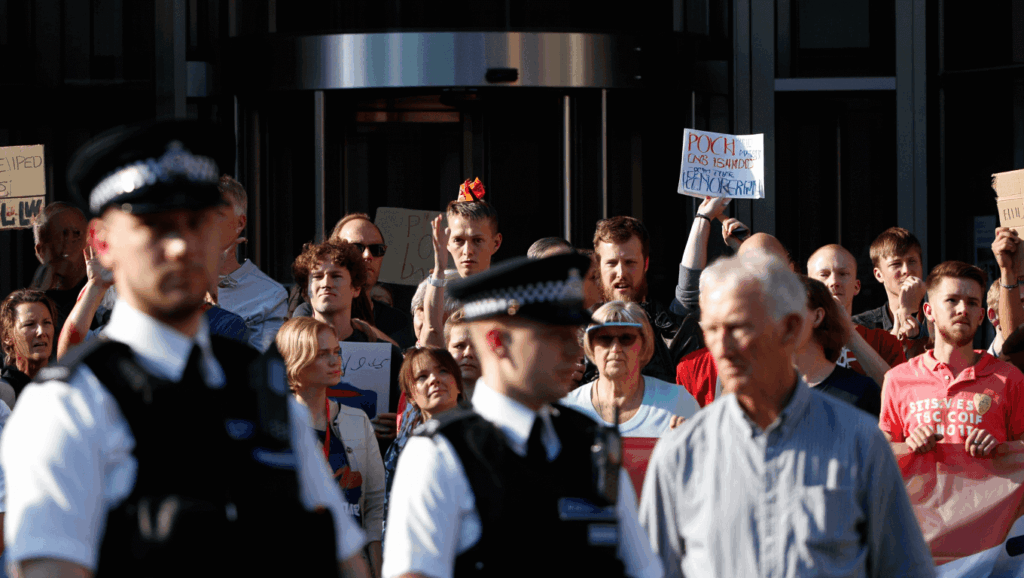
The headlines that once read as isolated incidents now form a pattern. Strikes that disrupt daily life, high-profile protests, and frequent clashes between protesters and police are familiar images from French news coverage. In Britain, similar scenes are becoming more common, prompting analysts and citizens to ask if the nation is following a comparable path.
- Labor disputes have escalated in scale and visibility, with transport and public-sector workers pressing for pay and conditions that keep pace with inflation.
- Political gridlock makes decisive reforms harder, fuelling frustration and a sense that traditional institutions can’t respond quickly enough.
- Economic strain — notably high energy bills and stagnating real incomes — has increased the public appetite for direct action.
Strikes and public services: the frontline of public discontent
Britain’s public services are at the center of mounting tensions. Hospitals, trains, and schools are facing both chronic funding issues and acute labor disputes. For commuters, canceled trains and noisy picket lines are daily inconveniences. For patients and students, the consequences can be far more serious.
Where the pressure is most visible
- NHS staffing shortages: Hospitals report vacancies and burnout, prompting industrial action over pay and conditions.
- Transport disruptions: Rail and underground workers have staged strikes that ripple through the economy.
- Education concerns: Teachers’ strikes and budget cuts are affecting classroom time and student outcomes.
These disruptions feed a feedback loop: service degradation fuels public anger, which encourages more intense union action and public demonstrations.
Political polarization: echoes of French-style clashes
Britain’s political debate has hardened, with parties staking out sharply different approaches to immigration, economic policy, and public spending. The result is a public arena in which compromise looks increasingly elusive.
How political dynamics resemble French patterns
- Populist rhetoric from multiple parties that channels voter anger into simple, emotive messages.
- Frequent protests met with heavy policing and contentious legal responses.
- Policy swings following electoral shocks, creating uncertainty for businesses and public bodies.
When politics turns performative, practical problem-solving suffers. The more leaders use conflict as a campaign tool, the harder it becomes to build the cross-party consensus often needed to stabilize services and manage change.
Immigration and borders: a flashpoint for public debate
Immigration policy in Britain has been fiercely debated since Brexit, and that debate has been a major driver of protest politics. Whether the focus is on asylum seekers, small boat crossings, or broader migration policy, the issue has become a persistent source of public anxiety and political theater.
- Policy volatility: Rapid changes and high-profile court battles have left voters unsure what to expect.
- Local pressures: Some communities face concentrated demands on housing and social services, intensifying local opposition.
- Media amplification: Coverage often highlights the loudest voices, making national consensus harder to achieve.
Economic stressors driving protests and political anger
At the root of many tensions are economic realities: slower wage growth, rising costs, and mixed signals about growth prospects. Households coping with the cost of living are more likely to support disruptive tactics when they feel traditional channels aren’t delivering results.
Key economic drivers
- Inflation and real incomes: Many workers have seen pay packets lose purchasing power over several years.
- Housing and rent pressures: Affordability challenges remain acute in cities and commuter belts.
- Public spending constraints: Austerity-era legacies and current budget choices limit the scope for rapid service improvements.
Voices from the streets: what protesters are demanding
Those who take to the streets articulate a mix of practical and symbolic demands. Some want immediate, concrete changes — higher wages, better staffing in hospitals, or more affordable housing. Others seek systemic shifts: a more responsive political system, accountable policing, or reforms to immigration policy.
- Improved pay and working conditions from unions.
- Clearer, durable policies on migration.
- Investment in public services rather than short-term fixes.
Public outrage is rarely just about one policy; it reflects a breakdown in trust. Rebuilding that trust requires credible action, not just rhetoric.
Paths forward: what policymakers and communities are trying
Across local councils and Westminster, officials are experimenting with different responses: targeted funding boosts, negotiated settlements with unions, and new border controls. Some cities are piloting community-based approaches to integration and service delivery to lower tensions on the ground.
Examples of approaches in play
- Negotiated wage deals that include staged increases tied to productivity measures.
- Local partnerships between councils, charities, and businesses to relieve pressure on housing and social services.
- Legal and logistical reforms to make asylum processing faster and more transparent.
None of these is a panacea. Each carries political risks and trade-offs, and success often hinges on transparent communication and consistent implementation.
What to watch next: indicators of escalation or calm
Certain metrics will reveal whether Britain’s path continues to echo French-style unrest or shifts toward greater stability. Watch for changes in union strategies, polling on public confidence in institutions, and the pace of policy shifts at Westminster.
- Frequency and scale of industrial action across sectors.
- Polling on trust in the government, police, and media.
- Speed and clarity of migration and welfare policy reforms.
The coming months will test whether leaders can contain conflicts and restore a sense of effective governance — or whether street-level politics becomes the dominant engine of change.
You might also like:
- England street violence risk rises as protests and tensions escalate
- Globalists accused of failing Britain’s economy and political system
- UK political crisis sparks nationwide outrage after Nov. 5, 2025
- Andy Burnham accused of being dangerous and undermining democracy
- Britain: has it already fallen? Melanie Phillips on national decline

Robert Johnson is a dedicated columnist focusing on political and social debates. With twelve years in editorial writing, he provides nuanced, well‑argued perspectives. His commentaries invite you to form your own views and engage in critical issues.


I remember when Brits were all prim and proper, now theyre acting all French with strikes and protests. Cant decide if its bougie or badass! Maybe a mix of both? Vive la revolution, innit!
Mate, right? Its like theyve gone from tea and crumpets to baguettes and protests! Who knew the Brits had it in em? Maybe its a bit of both—classy with a side of rebel. Cheers to the revolution, innit!
A grumpy grandpa persona: Back in my day, Britain and France were like chalk and cheese. Now, with all these comparisons, I dont know what to think anymore. Politics, strikes, public services… Its all a mess!
Mate, Britain morphing into a mini-France? Crikey! Its like watching a remix of classic hits. Strikes, political drama… feels like déjà vu. Are we in for a twist or a rerun? Time to grab the popcorn.
As a skeptical critic, the constant comparisons between Britain and France feel like an endless loop of déjà vu. Are we destined to mirror each other in politics and public services, or is this just lazy analysis? Time for some fresh perspectives, maybe?
As a skeptical critic, gotta say, Britain and France are like siblings squabbling over whos got the worse deal. Strikes, politics, public services… its a messy soap opera. Will they ever stop comparing notes and just sort it out?
Mate, its like watching a sitcom where Britain is trying to cosplay as France but failing miserably. Strikes, political drama, public services on edge – whats next, a baguette shortage? This crossover episode needs a rewrite, pronto!
Man, this Brexit drama is like a bad comedy sketch gone wrong. Britain thinking it can pull off a French vibe? Sacré bleu! Baguette shortage would be the cherry on top. This show definitely needs a script doctor, like, yesterday!
Oi mate, lemme tell ya bout this whole Britain-France biz. Its like watchin a reality show unfoldin. Strikes, politics, public services… Its a right drama! Makes me wonder whats next on the telly!
Oh mate, youre spot on about the whole Britain-France saga! Its like a soap opera, innit? Strikes here, political drama there, its never a dull moment. Wonder what crazy twist is coming next! Its almost binge-worthy, aint it?
I always thought Britain was all about the stiff upper lip and tea, but now theyre getting all French with strikes and protests? Mais oui, whats next, berets and baguettes for everyone? Sacré bleu!
Oi mate, looks like Britains taking some French lessons, innit? Who wouldve thought, strikes and protests on the menu now! Maybe theyll start rocking those berets and munching on baguettes next, who knows? Lifes full of surprises, aint it? Cheers to a bit of French flair in the mix!
Mate, it’s like watching a sitcom crossover between Britain and France, innit? One’s all Brexit drama, the others yellow vest chaos. Who needs reality TV when you got these two stirring up trouble?
Oh mate, you hit the nail on the head with that one! Its like a sitcom mashup of Brexit drama and yellow vest chaos – who needs reality TV when youve got these two keeping us on our toes, right? Its a rollercoaster of chaos and entertainment, thats for sure. Wonder what plot twist theyll throw at us next!
Mate, its like Britains trying on a French beret, innit? Strikes, protests, public services on the blink. Is this a Brexit hangover or just a case of identity crisis? Either way, pass the croissants!
You know, its like when your favorite band tries a new sound – Britain and France are like that. But instead of music, its politics and public services. Will this remix be a hit or a miss? Time to grab the popcorn!
Mate, Britain trying to copy France? Whats next, croissants for breakfast and baguettes for tea? Politics and public services aint a fashion show. Lets keep our cool and sort things out without going all continental, right?
Bloody hell, mate, croissants for brekkie and baguettes for tea? Sounds like a right fancy mess-up! But youre spot on – lets not turn politics into a runaway train to Paris. Keeping it cool and sorted without all that continental flair aint a bad idea, eh?
Man, its like Britain caught a glimpse of itself in the French mirror and got spooked. Strikes, protests, political chaos…feels like déjà vu. Are they borrowing a page from the French playbook, or is it just a wild coincidence?
Man, its like watching a bad movie sequel, innit? Britain and France, always in this weird sibling rivalry. If they start swapping baguettes for scones, Im out. Cheers to political drama, I guess.
Oh mate, tell me bout it! Its like watching that cringe-worthy sequel no one asked for, innit? Britain and France, locked in this never-ending sibling squabble. If they start trading baguettes for scones, Im off too. Cheers to the political soap opera, I guess – grab the popcorn and watch the drama unfold!
Man, its like watching a weird mirror reflection. Britain and France, theyre like twins separated at birth, but with different dramas. Strikes, politics, public services — same old song, different accents. Déjà vu much?
I tell ya, its like watching a reality show crossover – Britain and France swapping notes on politics and public services! Are we in for a drama-packed season or what? Cant wait to see how this plot twist unfolds!
Yo, this comparison game between Britain and France got me thinking. Are we really becoming that similar? Like, are we gonna start having strikes every other day and cafes on every corner? Maybe we need some croissants to calm down the political tension, who knows?
Mate, Britain going all French-style clashes?! Cant picture the Queen in a beret. But hey, if it means more baguettes and less stiff upper lip, count me in! Vive la révolution, am I right?
Mate, Britain turning into France is like seeing your favorite band go acoustic – unexpected and not always welcomed. Public services and politics are always touchy subjects, but lets hope for the best, eh?
Oh mate, I get what you mean! Its like expecting a rock concert and getting a poetry reading instead. Public services and politics, huh? Always a rollercoaster ride. Lets cross our fingers and hope for the best outcome, right? Who knows, maybe itll end up being a surprisingly good acoustic set!
Oh, here we go again with the Brits comparing themselves to the Frenchies. Its like a never-ending game of Whos got it worse? Cant they just focus on fixing their own mess without dragging France into it every time? Sheesh.
You know whats funny? Its like watching a never-ending tennis match between the Brits and the Frenchies, always serving up complaints and comparisons. But hey, maybe they just need some French toast to butter up their mood and move on from this endless back-and-forth, right? Just saying…
Mate, its like Brits and French, tea and baguette, they keep clashing. Strikes to protests, politics to public services, déjà vu! Are we turning into each other, or just lost in translation?
Mate, its like were caught in a bizarre game of cultural musical chairs, innit? The Brits waving their tea cups while the French juggle baguettes. Strikes, protests, politics, public services – its a mash-up of chaos and déjà vu. Are we morphing into each other or just stuck in a babble of lost translations? Its like watching a sitcom where nobody gets the punchline!
I aint no expert, but Britain going all Frenchy? Sacré bleu! Will we start kissing on both cheeks now? Maybe we need some British flair to spice up the mix. Keep calm and carry on, mates!
Mate, its like Britains having an identity crisis, innit? With all this talk about turning into France, are we gonna start serving croissants at the NHS? I just want me cuppa tea without all this drama, honestly.