
Show summary Hide summary
- Flags, banners and an uneasy backdrop to the march
- Organizations in attendance and why some observers were alarmed
- How a style of anti-fascism became a middle-class festival
- Where old left alliances with Islamist politics began
- Speakers, rhetoric and the problem of performance politics
- Why many voters feel alienated and how that shaped recent street politics
- Who gets labeled “fascist,” and what gets ignored
- What the march revealed about modern political alliances
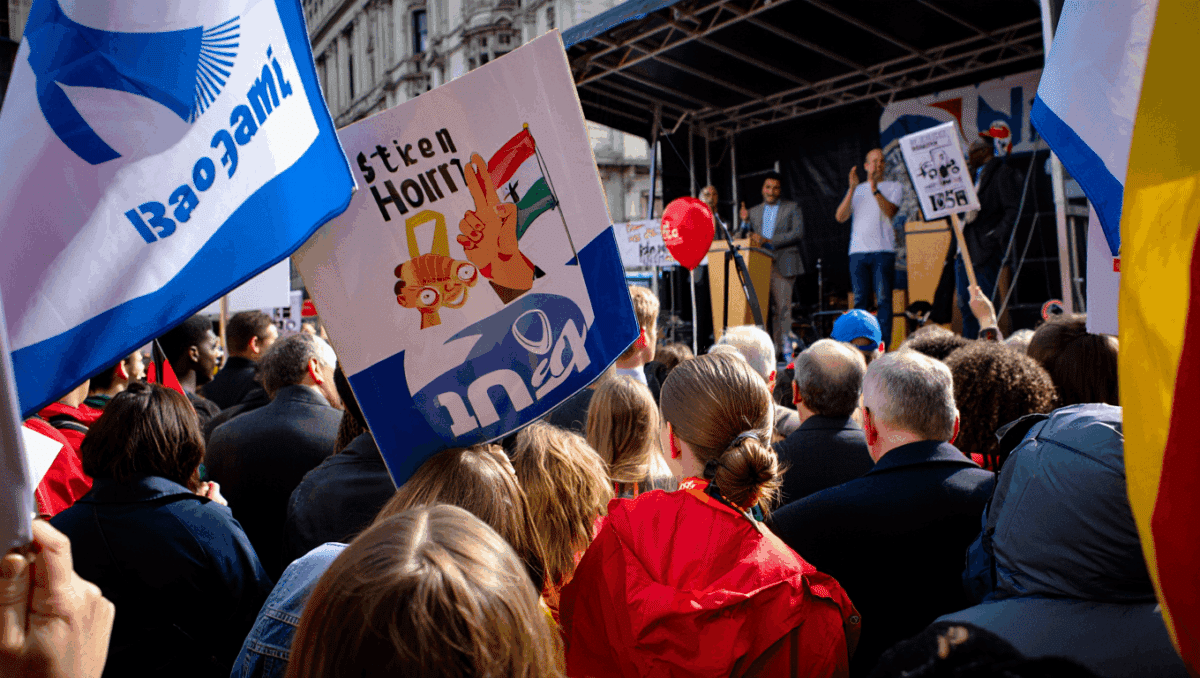
I went to the “march against the far right” in central London expecting chants about unity and solidarity. What I found instead was a dissonant mix of placards, pop-up stages and a surprising number of flags belonging to regimes and movements many would call authoritarian — a reminder that public demonstrations can mean very different things to different people.
The event, billed by organizers as a defense of liberal values against rising populism, quickly revealed fault lines: mainstream-left activists rubbing shoulders with groups and banners that have long been accused of aligning with Islamist causes. That collision raised hard questions about who gets to claim the anti-fascist mantle, and what that label means in practice.
Flags, banners and an uneasy backdrop to the march
The Growing Demand for Data-Driven Decision Making in Silicon Valley
He quit, ran out of money, and begged to come back — here’s how his boss reacted
Within minutes of arriving on Whitehall I saw dozens of flags associated with the Islamic Republic of Iran. For many observers those symbols represent a government that stands accused of severe human-rights abuses; for others in the crowd they appeared as expressions of solidarity with a particular political cause. The sight underscored a central irony of the day: a rally against extremism that included participants supporting, or at least not distancing themselves from, actors widely criticized for their own extremism.
The presence of those banners made a clear impression — and not a comforting one for everyone there. Far from being an incidental detail, the flags and related messaging were woven throughout the march, visible alongside stage programming and speakers.
Organizations in attendance and why some observers were alarmed
The coalition behind the event, the Together Alliance, lists a range of trade unions, activist groups and community organizations as backers. Some of the groups named on the alliance’s website have histories that critics say raise serious questions about alliances on the left.
- Muslim Association of Britain: Long active in anti-war and pro-Palestine campaigns, the organization was founded by Muhammad Sawalha, who has previously been described in media reports as a former Hamas military commander in the West Bank. That background has been repeatedly cited by detractors as a reason to scrutinize the association’s role in broader coalitions.
- Islamic Human Rights Commission (IHRC): Described by some think-tanks as having links to the Iranian state, the IHRC has attracted controversy for a number of public interventions — including symbolic awards and protest campaigns — that have drawn fierce criticism from survivors and opponents of Islamist violence.
Those affiliations, reported in public sources, are the sort of details that made many onlookers wonder whether the march had blurred the lines between opposing the “far right” and tolerating or endorsing other forms of extremism.
Specific incidents and contested moments
- Speakers and banners reportedly included praise for figures and causes tied to Iran and other Islamist movements — actions that some participants defended as anti-imperialist politics, while others saw them as condoning violent ideologies.
- Earlier public demonstrations organized by some of these groups have included controversial calls or awards that sparked outrage, such as highly provocative gestures in the wake of terrorist attacks or efforts to resist Holocaust remembrance events.
How a style of anti-fascism became a middle-class festival
What was striking about the march was how thoroughly the event adopted the aesthetics of modern protest culture: festival fonts, a dance stage, tote bags and a program that looked as comfortable on a university campus as on a picket line. That atmosphere — cheerful, curated, Instagram-ready — stood in sharp contrast to the militant, working-class roots of anti-fascist organizing in earlier decades.
For many critics, the march felt less like a defensive stand against street violence and more like a branding exercise for a specific urban, middle-class political sensibility. That sensibility often frames immigration concerns, debates over national sovereignty, and anxieties about social change as expressions of bigotry or nostalgia rather than political grievances worth engaging.
Where old left alliances with Islamist politics began
The overlap between segments of the left and Islamist groups is not new. Some on the British left have for decades argued that anti-imperialist narratives and solidarity with Muslim-majority populations could be politically useful. A 1990s pamphlet by a prominent socialist intellectual explicitly suggested that Islamist movements might be tapped as a form of grassroots dissent — a line of thinking that later activists continued to build on.
- High-profile left figures have in recent years used warm language to describe groups like Hamas and Hezbollah, calling members “friends” or characterizing them as part of legitimate resistance movements.
- Stop The War Coalition activists, who were visible at the march, have long pushed a narrative that frames some Islamist organizations as democratic alternatives in the Middle East, a position that critics say ignores the track records of those groups.
Speakers, rhetoric and the problem of performance politics
The lineup of speakers leaned into optimistic, Instagram-ready rhetoric — calls for “love” and “hope,” polished slogans and a visually cohesive stage program. Some of the leading faces fit a pattern of relatively new politicians and activists who rose quickly into the public eye and now act as spokespeople for a brand of progressive politics that prizes symbolic gestures.
That style can cut two ways. To supporters it feels inclusive and modern; to detractors it can read as superficial and tone-deaf — a substitution of performative gestures for hard political listening and policy engagement.
Why many voters feel alienated and how that shaped recent street politics
Behind the spectacle lies a deeper story about public sentiment. Large numbers of people who attended nationalist or migration-skeptical rallies in recent months say they are reacting to real concerns: housing pressures, changes in local communities, and unease about extremist ideologies imported from abroad. Organizers on both sides often frame those concerns in starkly different terms.
- One recent nationalist demonstration reportedly drew over 100,000 people last September; the Together Alliance sprang up partly in response to that turnout.
- Organizers of the anti-right rally claimed very large numbers for their march, while police estimates suggested a considerably smaller crowd — highlighting the gap between political rhetoric and observable turnout.
Rather than interrogating why so many citizens are angry or anxious, some speakers at the anti-right event seemed to treat those voters as misled or manipulated — a stance that risks deepening the political divide instead of closing it.
Who gets labeled “fascist,” and what gets ignored
One recurring theme was the breadth of the “fascist” label in contemporary political debate. Parties and figures who led democratic campaigns for things like national sovereignty or immigration control are frequently called fascist by opponents. For many observers, that language is shorthand for a refusal to acknowledge legitimate political disagreement.
At the same time, critics of the march accused many organizers of downplaying or tolerating Islamist extremism — the very threat that, historically, anti-fascist movements were meant to oppose. Security services’ public reporting and media analyses over the years have repeatedly highlighted Islamist-motivated violence as a significant portion of the terrorist threat in the U.K., a point opponents say was insufficiently addressed at the rally.
What the march revealed about modern political alliances
The day made plain that contemporary protest coalitions are complex and sometimes contradictory. Left-leaning organizers insist they oppose bigotry and authoritarianism, yet their willingness to share platforms with groups denounced for links to violent movements creates uncomfortable optics and sharp criticism.
Whether the new alliances on display at the march are strategic, principled, or simply a product of shared short-term aims, they’ve reshaped how many people view the very idea of anti-fascism — transforming it from a hard-fought, often working-class defense into a broader cultural brand that invites both support and scorn.
Tom Slater is editor of spiked. Follow him on X: @Tom_Slater_.
You might also like:
- Islamo-left alliance: the dark comedy behind its rise
- Durham miners being forced to celebrate Palestine?
- Trans+ pride London marred by alleged violent bigotry
- Al-Quds Day protests spark debate over multiculturalism’s effect on Britain
- Your Party conference: funniest political spectacle in years

Robert Johnson is a dedicated columnist focusing on political and social debates. With twelve years in editorial writing, he provides nuanced, well‑argued perspectives. His commentaries invite you to form your own views and engage in critical issues.


Man, seeing the Islamo-left scene gaining ground in Britain… Its like a mixtape of conflicting vibes, you know? Flags, banners, uneasy backdrops – its like a real-life drama series playing out on the streets. Wonder how this rollercoaster will unfold next.
Yo, I feel you on that. Its like a mashup of mismatched energies, right? Flags waving like they’re at a concert, banners screaming for attention, and those gritty backgrounds setting the stage for a real-life soap opera. The dramas on, and were all just waiting for the next plot twist. Wheres the popcorn, man?
Man, these Islamo-lefties are really stirrin the pot, huh? Like, flags and banners aint gonna solve nothin. Its all a show, I tell ya. Wonder why some folks are gettin all riled up about it.
Man, these Islamo-lefties, always causin a ruckus, eh? Flags and banners aint fixin squat, just makin a scene for show. Some folks sure love a good drama, dont they? Wonder if theyll ever see past the theatrics to the real deal.
Man, seeing the Islamo-left gaining momentum in Britain really makes me wonder about the future. Its like a wild mix of ideologies colliding, but hey, diversity is what keeps things interesting, right? Cant wait to see how this all unfolds.
Man, I remember when these rallies were about real issues, not just a trendy gathering for the middle-class. Feels like everyones seeking validation instead of fighting for change. What happened to genuine activism?
Man, that whole situation is like watching a reality show gone wrong. Flags, banners, and drama everywhere. Cant decide if its a political march or a circus act. Guess the line between the two is getting blurry these days.
Man, this Islamo-left buzz is like a rollercoaster ride through a maze of ideologies. Flags, banners, and drama, oh my! Feels like a clash of worlds – wonder how itll all unravel.
Man, these Islamo-left folks are really making waves, huh? Its like a clash of ideologies on steroids. Wonder if theyll keep up the momentum or fizzle out in the chaos. Time will tell, I guess.
Man, these Islamo-left folks are really stirring the pot, huh? Its like a clash of ideas on steroids. Will they keep the fire burning or will it all fizzle out like a damp firework? Times the ultimate snitch, I guess.
Mate, this Islamo-left march got people talking, innit? Flags, banners, and all that jazz. Cant figure out if its a genuine cause or a middle-class shindig. Whats your take on this hullabaloo?
Man, the Islamo-left movement in Britain – its like watching a whirlwind of ideologies clash, aint it? Flags waving, banners flapping, and tensions rising. Its a rollercoaster of beliefs and fears out there.
Oh mate, tell me about it! Its like a never-ending clash of titans out there, innit? Flags flappin, tensions risin, its a proper rollercoaster ride of beliefs and fears. Makes ya wonder if theres gonna be a calm after this storm, or if its just gonna keep on spiralin!
Man, this whole Islamo-left scene in Britain is like a rollercoaster ride, innit? Flags, banners, and all that drama. Feels like a clash of ideologies on steroids. Wonder where this whole things heading, mate.
Man, I remember when these events werent such a big deal. Now its like a whole production, flags waving everywhere. Its all getting a bit too much, if you ask me. Whats next, a themed soundtrack for the march?
Mate, that Islamo-left thing in Britains quite the stirrer, innit? Flags, banners, all that jazz, making folks uneasy. But hey, whats the deal with anti-fascism turning into some posh shindig? Bit of a head-scratcher, if you ask me.
Mate, the Islamo-left gaining momentum in Britain? Its like mixing oil and water! Flags, banners, and an uneasy backdrop to the march? Sounds like a recipe for disaster. Wonder how this clash will unfold.
Oh mate, youre right, watching that clash unfold is like waiting for a storm in a teacup! Islamo-left mixing with the British backdrop? Its like watching a rom-com with a horror twist. Wonder if thisll be more like a comedy of errors or a full-on drama. Cant wait for the popcorn moment!
So, like, I was checking out this whole Britains Islamo-left buzz, yknow? Flags waving, tensions rising, its like a rollercoaster. Wonder if this clash of ideologies will lead to fireworks or fizz out quietly. Whats your take, peeps?
Mate, this Islamo-left thing, its baffling! Feels like a political rollercoaster with flags and banners. But hey, gotta keep an open mind, right? Who knows where this whole march will lead us.
Man, I hear ya! Its like trying to navigate a maze blindfolded. I mean, whos driving this crazy train anyway? Gotta buckle up and enjoy the ride, I guess. Hopefully, we wont end up in a loop-de-loop of confusion!