
Show summary Hide summary
- Why Diego Garcia matters: the military and geopolitical value
- How the handover unfolded: a short timeline of events and legal moves
- Legal symbolism versus strategic substance
- What Westminster is arguing — and where the disputes lie
- Geopolitical risks of swapping sovereignty for a lease
- How international law is being used — selectively and politically
- Immediate policy choices and practical alternatives
- Author note
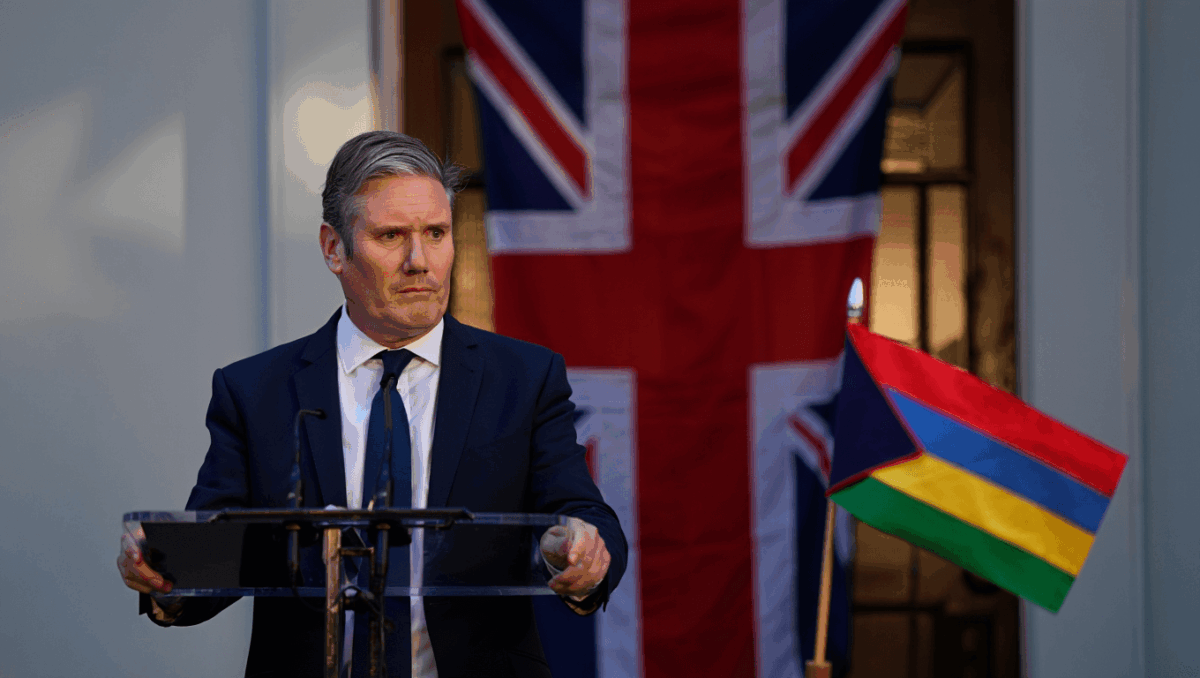
When Prime Minister Keir Starmer’s government moved to transfer sovereignty of the Chagos Islands to Mauritius in October 2024, it framed the decision as putting international law first. The move was presented as a tidy response to a 2019 International Court of Justice advisory opinion that said the UK’s retention of the archipelago was unlawful — but the deal that followed has raised deep strategic concerns across Westminster and Washington.
Under the agreement, the UK would hand over the islands while paying roughly £101 million a year to lease back continued use of the military base on Diego Garcia — a remote atoll that has long been a linchpin for operations across the Middle East, the Indo-Pacific and Africa. Critics say that swapping sovereignty for a costly tenancy, in the name of legal certainty, risks weakening Britain’s strategic posture at a time when global rivalries are sharpening.
The Growing Demand for Data-Driven Decision Making in Silicon Valley
He quit, ran out of money, and begged to come back — here’s how his boss reacted
Why Diego Garcia matters: the military and geopolitical value
Diego Garcia is more than a speck in the Indian Ocean. Its location gives the United States and Britain an unrivaled logistical and strategic hub — air and naval facilities that support long-range strike, surveillance and resupply missions. For decades the base has been a quiet enabler of coalition operations from the Gulf to the Indian Ocean and beyond.
- Range and reach: Diego Garcia’s position allows air assets to operate across large swaths of the Middle East, Indian Ocean and parts of Africa with fewer staging points.
- Operational flexibility: The atoll provides secure port, airfield and communications capacity for both US and UK forces.
- Partnership leverage: Control — or reliable access — to the base strengthens Anglo-American interoperability and regional presence.
How the handover unfolded: a short timeline of events and legal moves
Key dates and diplomatic steps
- 1965–1968: During decolonization the UK separated the Chagos group administratively from Mauritius, which became independent in 1968 while the UK retained the islands.
- 2017: Mauritius asked the United Nations to seek an advisory opinion from the International Court of Justice (ICJ) on the legality of the UK’s separation of the islands.
- 2019: The ICJ delivered an advisory opinion concluding the decolonization was not lawfully completed, and that the UK should end its administration.
- 2024: The Labour government announced a transfer of sovereignty to Mauritius and a leaseback arrangement for the Diego Garcia base, arguing the move would remove “legal uncertainty.”
Legal symbolism versus strategic substance
The government argues that resolving the ICJ advisory opinion through a transfer removes future ambiguity about sovereignty and therefore protects long-term access to the base. Yet critics counter that ceding sovereignty to secure a paid tenancy is the opposite of strengthening security: it turns permanent control into a negotiable contract with financial and diplomatic costs.
Handing over territory in order to preserve base access is a fragile bargain — especially if geopolitical winds shift or if the new sovereign partner pursues a foreign policy increasingly shaped by other major powers.
What Westminster is arguing — and where the disputes lie
The handover has split opinion across political lines, but not in a simple government-versus-opposition pattern. Labour insists it is honoring international obligations; Conservatives have raised alarm, claiming the transfer could violate prior commitments to the United States.
- Government position: Compliance with international legal advice demonstrates principled statecraft and removes an ongoing legal cloud over the territory.
- Conservative objections: Some Tory peers argue the move would breach a 1960s-era agreement with the United States that referenced UK sovereignty over the territory and guaranteed US basing rights.
Legal scholars note a key nuance: a treaty’s literal phrasing rarely tells the whole story. Judges interpreting a historic security pact would almost certainly consider its context and intent. Many observers argue that assurances about sovereignty in Cold War-era language were meant to secure the US presence, not to trap the UK into indefinite ownership of territory regardless of changing circumstances.
Geopolitical risks of swapping sovereignty for a lease
At a moment when strategic competition between the United States and China is reshaping defense planning and alliance politics, relinquishing direct sovereignty over a strategic island chain is not a neutral act. The argument that such a step reduces legal uncertainty is only persuasive if the new sovereign partner will guarantee unfettered access for decades to come.
- Replacing permanent sovereignty with a lease introduces new vulnerabilities: cost escalations, renegotiation risk and political pressure from the island’s owner.
- If Mauritius deepens ties with Beijing or shifts its diplomatic alignment, the UK’s and US’s operational freedoms could face diplomatic constraints.
- Relying on treaty text and legal niceties to resolve a matter with clear strategic weight treats geopolitics as a footnote rather than the central issue.
For critics, the central objection is straightforward: national security calculations should trump abstract legalism when the stakes involve basing essential to coalition operations and regional deterrence.
How international law is being used — selectively and politically
States routinely invoke international law when it suits their interests and sidestep it when it does not. The current debate over Chagos underscores how legal arguments can serve as both a shield and a lever in diplomacy. Treating the ICJ advisory opinion as a binding moral directive ignores the long history of selective legal interpretation in international relations.
Meanwhile, global leaders and analysts increasingly discuss the erosion or reconfiguration of the so-called rules-based order. Whether that order is in decline, adaptation or transformation, the practical reality is that great-power competition now drives many outcomes that were previously thought to be governed by legal institutions alone.
Immediate policy choices and practical alternatives
Policymakers have options beyond a straight transfer-plus-lease arrangement. Any alternative would need to balance legal credibility, long-term basing rights and political feasibility. Possible approaches include:
- Negotiating a multilateral status-of-forces agreement that binds successive governments to base access terms with stronger legal safeguards.
- Securing a long-term lease with hard guarantees, built-in dispute-resolution mechanisms and financial safeguards against unilateral changes.
- Maintaining sovereignty while addressing ICJ concerns through diplomatic remedies and international compensation rather than outright transfer.
Author note
Luke Gittos writes on geopolitics and civil liberties. His recent work examines the tensions between legal frameworks and national security decision-making.
You might also like:
- Trump’s Unexpected Visit to the Falklands: Political Motives Unveiled?
- Paraguay Labels Cartel de los Soles as Terrorist Group: Major Crackdown on Crime Syndicate
- UK Territories Alert: US State Department’s Latest 2025 Diversity Visa Program Update!
- De Moraes’ Credit Card Cancellation: A Major Dilemma for Brazilian Banks!
- Trump Threatens to Shoot Down Venezuelan Jets: Tensions Rise with US Warships

Robert Johnson is a dedicated columnist focusing on political and social debates. With twelve years in editorial writing, he provides nuanced, well‑argued perspectives. His commentaries invite you to form your own views and engage in critical issues.


Man, Labours legal fumbles on Chagos be like watching a squirrel trying to juggle acorns. Diego Garcias a chess piece, and theyre playing checkers. Get it together, mates!
Man, Labour needs a compass. They fumbled the Chagos handover. Diego Garcia aint just a pawn, its a key player. Legal battles? More like a playbook for confusion. Time for them to up their game.
Yeah, Labours like a lost sailor at sea with no compass! Dropping the Chagos handover ball? Classic fumble. Diego Garcia aint just any piece, its the ace up the sleeve! Legal battles or a playbook for confusion? Sounds like they need a new coach, pronto. Time to step up their game before they get benched.
Man, talk about a shaky legal ground! Labour Partys missteps laid bare by the Chagos ruling. Diego Garcias no mere pawn; its a chess piece in a geopolitical minefield. Time for some serious recalibration, folks.
Man, Labours legal slip-up on Chagos aint a good look. Diego Garcias strategic like the last piece of pizza at a party. Hope they sort this mess out, geopolitics aint no playground game, right?
Oh man, I feel ya on that one! Labours Chagos slip-up is like dropping your phone in the toilet right before a big presentation. Diego Garcias strategic importance is no joke, its like having the last slice of pizza at a party – everyone wants a piece! Lets hope they get their act together cause geopolitics is a serious business, not some playground game where you can just wing it.
Man, Labour really dropped the ball on this one. What a mess! Diego Garcia aint just a sunny spot, its a hotspot of legal drama. Time for some serious reflection and action, folks!
Man, Labours legal slip-up on Chagos, thats a facepalm moment. Diego Garcias a hot potato, and they dropped it. Cant ignore the strategic stakes, legal drama aside. What a mess!
I mean, Labour really dropped the ball on this one, huh? Its like watching a game where your team keeps fumbling in the last quarter. Diego Garcia might be a tiny blip on the map, but the legal mess is a big deal.
Yo, its like watching a legal soap opera unfold, but for real. Labours slip-ups on Chagos got them in hot water. Cant make this stuff up, right? Wonder whats next on this drama series.
Man, Labour Party droppin the ball on the Chagos Islands? Thats a whole mess waitin to explode. Legal fumbles aint no joke, especially with somethin as big as Diego Garcia in the mix. Time to step up, folks!
Man, Labour Party needs to up their legal game! Missing Chagos ruling? Thats like forgetting your keys at home, but, like, on a global scale. Cmon, folks, get it together!
Dude, Labour Party really droppin’ the ball, huh? Forgettin’ the Chagos ruling is like leavin’ your keys on a crazy scale. They need a wake-up call, like ASAP. Gotta step up their game, man!