
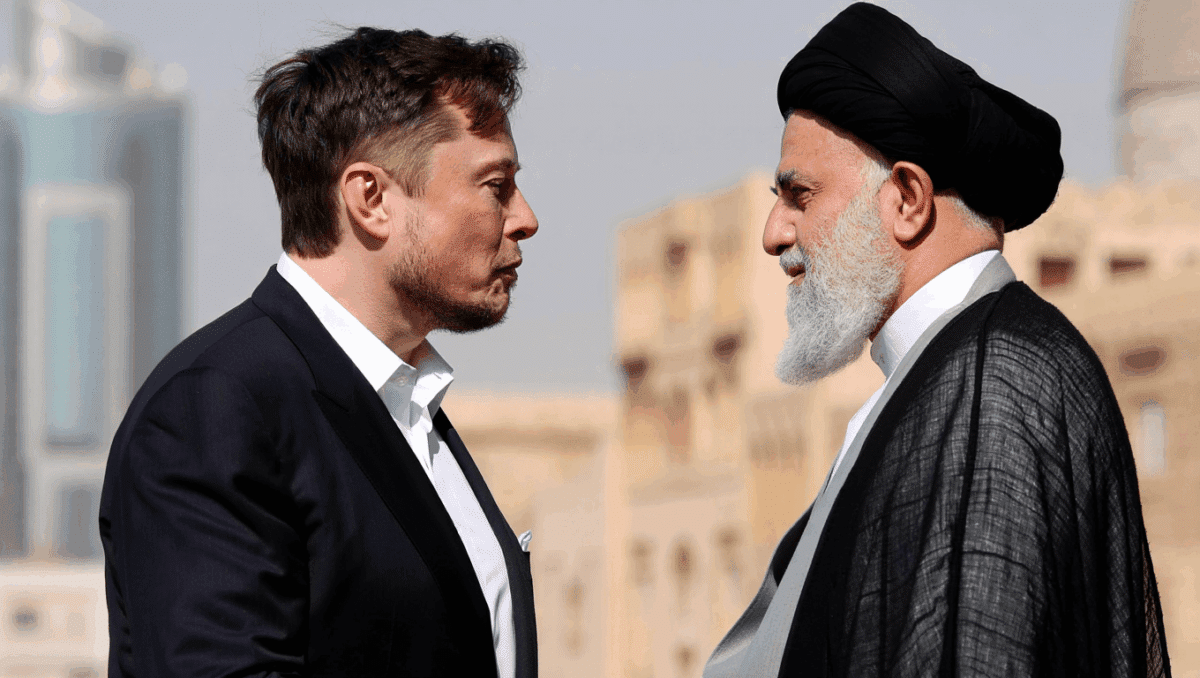
Show summary Hide summary
When Tehran severed internet access on January 8, a blackout did far more than darken screens: it cut off the witnesses, the organizers and the journalists who might have told the world what was happening on the streets. Within hours, millions of Iranians found themselves isolated from each other and from any outside scrutiny — a condition that, according to multiple reports, coincided with an unprecedented wave of state violence.
That shutdown has prompted urgent debate about who controls the digital commons. The episode exposed two connected risks: the power of authoritarian states to erase public life, and the reality that private tech companies can become the only alternative to state censorship — yet without the accountability that democratic societies demand.
What the blackout looked like and why it mattered
On the evening of January 8, global network monitoring showed Iran’s internet traffic plummet to near-zero levels. The practical effects were immediate and total: no social posts, no live video, no messaging, no online organizing. Families could not track detained relatives; emergency reporting stopped; civil society was cut off from international media and aid.
The Growing Demand for Data-Driven Decision Making in Silicon Valley
He quit, ran out of money, and begged to come back — here’s how his boss reacted
– Independent trackers recorded an almost complete collapse of connectivity within hours.
– Humanitarian sources and journalists report that the information blackout coincided with mass arrests and significant casualties; some outlets cite figures suggesting the number of dead may be in the thousands and injuries in the hundreds of thousands.
– Western governments condemned the move, calling it a blatant attempt to silence dissent, yet these same governments also pursue policies that increasingly regulate and manage online speech at home.
The blackout was not an incidental side effect of unrest — it was the mechanism that made large-scale repression easier. Without a digital public square, accountability becomes almost impossible.
How Starlink stepped in as a communications workaround
When terrestrial networks were switched off, satellite internet provided a route around the state-enforced disconnection. SpaceX’s Starlink uses low-earth-orbit satellites to deliver connectivity that does not rely on local fiber lines or cell towers, making it difficult for governments to simply “flip the switch.”
According to international reporting, thousands of Starlink terminals have been brought into Iran despite legal prohibitions. Iranian authorities have attempted countermeasures such as satellite jamming and GPS spoofing, underlining how aware they are of the threat posed by external links to the web.
Why Starlink mattered on the ground
- It enabled live communication and reporting when conventional networks were down.
- Civilians, aid groups and journalists could coordinate or relay information externally.
- Previous crises — notably Ukraine’s war — showed Starlink’s practical value in sustaining communications for both civilians and emergency services.
SpaceX’s system has been deployed in other conflict zones: during Russia’s invasion of Ukraine, tens of thousands of terminals were put into service, supporting everything from emergency response to military coordination. In the early stages of that crisis, SpaceX absorbed costs and provided Starlink service free in many areas when rapid connectivity was critical.
Limits and exposures: when private control falters
The same features that make Starlink useful also highlight a strategic vulnerability: the ability to provide or withhold connectivity sits with a private company and ultimately with its leadership. There are documented instances where that power was exercised in ways that had major consequences.
– In 2022, reports indicated Starlink coverage was disabled in select Ukrainian zones during a counteroffensive, citing a desire to limit escalation. The interruption affected battlefield communications at a pivotal moment.
– Those decisions show that a single tech owner can influence the course of conflict without democratic oversight or clear public-accountability mechanisms.
That concentration of authority — a corporate “switch” that can route or block an entire population’s access — is a new form of sovereignty. It moves control from state-run infrastructure to private platforms and entrepreneurs.
Policy options: how democracies can respond to satellite dependency
If satellite systems are now a backstop against authoritarian shutdowns, democratic governments face a policy choice: leave critical routing and access in private hands, or treat connectivity as a public good requiring oversight.
Possible approaches include:
- Government contracts or partnerships that place emergency satellite networks under public authority for crisis use.
- Regulatory frameworks that require transparency, non-discrimination and audited decision-making on service cutoffs.
- International norms and agreements to prevent deliberate jamming and to protect civilian communications in times of unrest.
A partial precedent exists: in mid-2023 the U.S. Department of Defense entered into contracts to use and govern Starlink services in Ukraine, transferring some operational control from a single entrepreneur to a public institution. That move illustrated one path for democracies to reclaim oversight — however imperfectly — when private systems serve strategic public functions.
The broader dilemma for free speech and digital governance
The Iran blackout forces a sharper reckoning about the shape of the digital public square. Western leaders who denounce state censorship abroad are also, domestically, crafting laws and regulations that reshape social platforms and online speech. The EU’s digital regulatory agenda, national content rules, and other moves to manage online harms all reflect a tension: treating the internet as both a right and a risk.
Questions now on the table include:
- Should communication networks that can bypass state control be governed as critical infrastructure?
- How can democracies ensure that private providers who operate such networks remain accountable to the public interest?
- What international mechanisms can deter states from jamming or otherwise attacking satellite links during crackdowns?
Until societies decide who legitimately controls the means to connect — and establish checks on that power — free expression will remain vulnerable to whoever holds the most effective switch.
Dr. Norman Lewis is a writer and visiting research fellow at MCC Brussels. He publishes commentary on current affairs on his Substack, What a Piece of Work is Man!.
You might also like:
- AOL Ends Dial-Up Internet Era: Surprisingly, It Was Still Active
- Anguilla’s .ai domain cashes in on AI boom
- Secret Service finds underground cell network that could cripple New York City
- Ofcom’s push to censor online speech worldwide
- Online Safety Act could affect Americans: what the U.K. law means for you

Robert Johnson is a dedicated columnist focusing on political and social debates. With twelve years in editorial writing, he provides nuanced, well‑argued perspectives. His commentaries invite you to form your own views and engage in critical issues.


Man, Elon Musk and Irans ayatollah going head to head? Thats like watching a tech showdown in a political ring. Wonder whos gonna come out on top with all these high stakes. Let the games begin!
Man, Elon Musk and the Ayatollah in a showdown? Like, tech meets geopolitics in a crazy mix. Wonder if Musks Starlink can outsmart Irans moves. Wholl blink first, right? Wild times were living in.
Yo, imagine Elon Musk and the Ayatollah squaring off? Thats like a tech vs geopolitics royal rumble! Can Starlink outplay Irans moves? Whos gonna flinch first? Crazy times were in… Like a real-life chess game with high stakes. Who do you thinks got the upper hand in this match-up?
Man, Elon Musk vs. Irans ayatollah? Thats like a high-stakes tech showdown mixed with geopolitics drama! Its like watching a real-life sci-fi movie unfold, but with serious consequences. Whos gonna come out on top in this wild clash of titans?
Man, Elon and the ayatollah going at it? Wild times were living in. Cant help but wonder how this tech showdown will play out on the world stage. Like, whos gonna blink first, yknow?
Man, Musk and the Ayatollah? Thats like mixing oil and water, aint it? Tech meets geopolitics, drama incoming! Wonder if Starlink can really shake things up or if its just another Elon show. Time will tell!
Man, this Elon Musk vs Irans ayatollah drama? Its like watching a sci-fi flick gone wrong. Tech moguls playing chess with geopolitics. Starlink swooping in like a superhero? Crazy times were in.
Man, Elon Musk and the ayatollah going at it? Its like watching a tech-savvy Bond villain facing off against a whole country. Cant decide if its thrilling or terrifying. Wonder wholl come out on top in this high-stakes showdown.
Man, Elon Musk and the ayatollah going at it? Its like watching a tech showdown in a political arena. Wonder whos gonna come out on top. Cant help but be hooked on this drama!
Man, Elon Musk and the ayatollah going at it? Thats like a tech showdown in a political arena. Wonder wholl come out on top. Will Musks Starlink save the day or is it just another power play? Exciting times we live in, huh?
Dude, talk about a clash of the titans! Elon Musk and the ayatollah throwin down like its tech vs. politics MMA. Whos gonna take the belt in this match? Starlink swooping in to save the day or just another chess move in the power game? Cant deny, were living in some wild times, huh?
Man, Elon Musk vs Irans ayatollah sounds like a tech thriller plot! Imagine Starlink saving the day during a blackout. Private space race meets geopolitics – popcorn-worthy drama!
Man, Musk and the Ayatollah sound like theyre playing chess with satellites. Whos gonna win this high-stakes game? Starlink swooping in like a tech superhero is wild. Geopolitics meets sci-fi, what a combo.
Man, Elon Musk and Irans ayatollah going at it? Thats like a tech showdown meets geopolitical drama. Wonder wholl blink first. Grabbing my popcorn for this one, its gonna be a wild ride!
Man, Elon Musk and the Ayatollah of Iran going at it? Thats like a tech thriller mixed with some serious geopolitics! Its gonna be a showdown for the ages. Wonder whos gonna back down first in this high-stakes game. Pass me some popcorn too, cause this drama is gonna be more intense than a Netflix series!
Man, Elon and the Ayatollah going at it? Its like a tech thriller meets global politics. Cant help but wonder whos gonna outsmart who in this high-stakes showdown. Bet the tech worlds holding its breath!
Man, Elon and the Ayatollah dukin it out? Sounds like a crazy crossover between Silicon Valley and the UN! Whos gonna come out on top, the electric guru or the political heavyweight? Cant wait to see whos got the tricks up their sleeves in this epic showdown. Bet the tech geeks are sweatin bullets over this one!
Man, that Musk dude is always stirring something up! But this time, going head-to-head with Irans ayatollah? Thats some next-level drama. Wonder how this tech power play gonna play out in the geopolitical ring… *grabs popcorn*
Man, the tension between Musk and the Ayatollah got me on edge. Its like a tech thriller unfolding in real life. Wonder how this power play will shake up the geopolitics scene. Exciting times were living, huh?
Ah, mate, its like a real-life tech drama, innit? Musk and the Ayatollah going head-to-head… proper intense stuff. Wonder if theyll end up playing chess over Twitter next! Geopolitics turning into a blockbuster movie right before our eyes. Exciting, nerve-wracking times were in, huh?