
Show summary Hide summary
- Why the Lesser Antillean iguana needed a lifeline
- Moving iguanas to safety: the cross-island rescue effort
- Early results: a rapid rebound on a protected islet
- How partnerships and funding made it possible
- Scaling up: creating a mainland sanctuary on Anguilla
- Community action: the human side of the recovery
- Lessons learned and future priorities
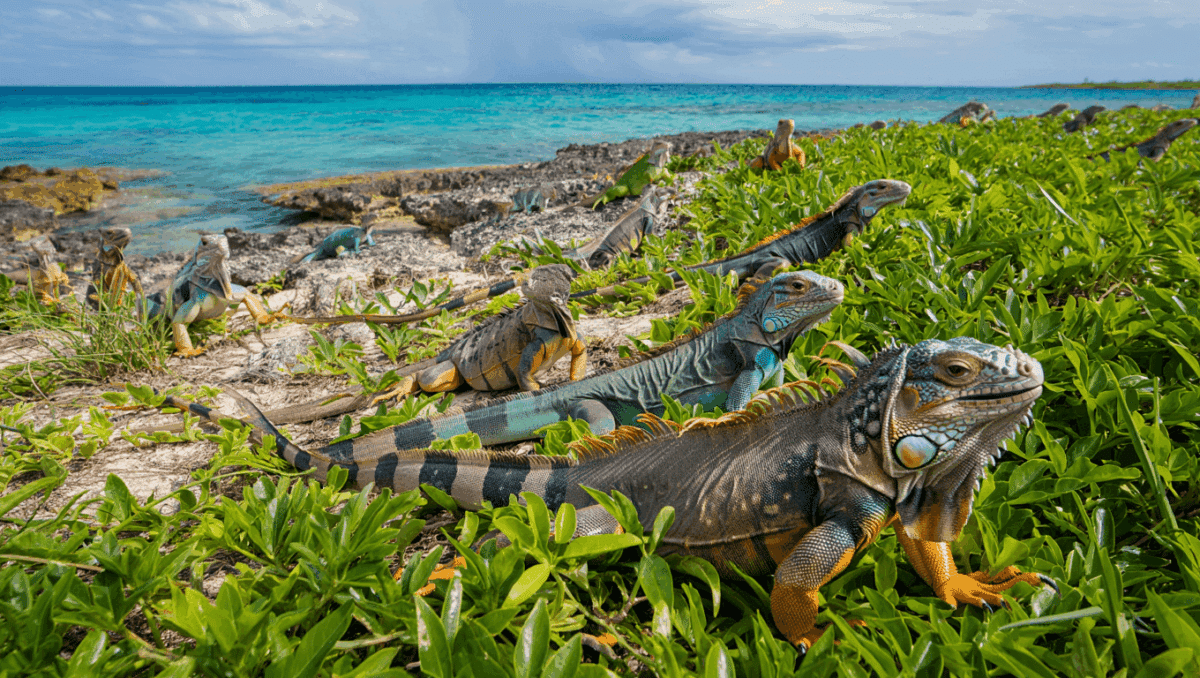
The tiny, windswept islet of Prickly Pear East might look like an unlikely stage for a wildlife comeback, but it has quietly become a lifeline for one of the Caribbean’s most imperiled reptiles. Conservation teams quietly moved threatened iguanas there, planted the seeds of genetic recovery, and now the island is hosting a thriving population that conservationists hope will be a model for regional restoration.
This story is about more than lizards and logistics. It’s a cross-island rescue mission, a test of community-driven conservation, and an example of how small protected spaces—and careful partnerships—can reverse decline for a species on the brink.
Why the Lesser Antillean iguana needed a lifeline
The Growing Demand for Data-Driven Decision Making in Silicon Valley
He quit, ran out of money, and begged to come back — here’s how his boss reacted
The Lesser Antillean iguana (Iguana delicatissima) has suffered dramatic losses across the Eastern Caribbean and is listed as Critically Endangered in many assessments. Fewer than 20,000 adult animals remain regionwide, and the downward trend has been driven by a combination of threats that are largely human-mediated.
- Invasive competitors: The common green or striped-tailed iguana, an aggressive, fast-breeding species that can reach nearly two meters in length, has spread through many islands and outcompetes the native iguanas for food and habitat.
- Disease transmission: Researchers have tied introduced iguanas to the emergence and spread of illnesses that weaken and kill native reptiles.
- Habitat loss and predation: Development, feral cats and dogs, and other disturbances have further reduced safe habitat for the native species.
Moving iguanas to safety: the cross-island rescue effort
Faced with the rapid advance of invasive iguanas on Anguilla, the Anguilla National Trust made a bold decision to relocate the last remnant population from the main island to an uninhabited, alien-free outcrop: Prickly Pear East. In 2016, conservationists translocated 23 individuals to begin establishing a secure refuge.
Adding genetic resilience
Even small, predator-free islands can pose genetic risks if the founding group is too limited. To reduce inbreeding and boost genetic diversity, the Trust reached out to Dominica’s Forestry, Wildlife & Parks Division. Dominica agreed to contribute young Lesser Antillean iguanas, and in early 2021 ten juveniles were flown to Anguilla under careful supervision and released on Prickly Pear East.
Early results: a rapid rebound on a protected islet
Recent surveys reveal striking gains. In under five years since the arrivals from Dominica, field teams counted more than 300 adults and subadults on Prickly Pear East — a dramatic increase that places the islet among just a handful of global strongholds where this species is doing well.
Those numbers suggest the translocation and genetic-boost strategy worked: the relocated animals bred successfully, juvenile survival is promising, and the population appears to be expanding at a pace that gives conservationists real optimism.
How partnerships and funding made it possible
Multiple organizations and government bodies played critical roles in the iguanas’ recovery. Support included logistical assistance from Dominica, technical and conservation expertise from groups such as Fauna & Flora and Re:wild, and financial backing from the UK Government’s Darwin Plus program.
- Anguilla National Trust — led on-the-ground operations and community engagement.
- Dominica Forestry, Wildlife & Parks Division — provided founder animals to improve genetic diversity.
- Fauna & Flora and Re:wild — supplied coordination and conservation capacity.
- Darwin Plus — funding enabled planning, translocations, and surveys.
Scaling up: creating a mainland sanctuary on Anguilla
With Prickly Pear East showing success, Anguilla’s conservation community is aiming to restore the species on the main island as well. A new fenced sanctuary has been established around Fountain National Park to exclude invasive predators and alien iguanas. Organizers plan to reintroduce Lesser Antillean iguanas to that protected mainland site as soon as 2026, drawing some founders from the thriving Prickly Pear East population.
The fence is designed to keep out threats such as cats, dogs, and nonnative iguanas, giving the reintroduced lizards a fighting chance to establish a wild population on Anguilla without the persistent pressure that caused their decline.
Community action: the human side of the recovery
Local people have been indispensable to this effort from day one. Residents reported sightings that helped field teams locate remaining animals, volunteered to care for iguanas during genetic screening and holding periods, and joined the teams that carried out translocations. Volunteers from Dominica also assisted at key moments.
“This project reflects Anguilla’s commitment to restoring a piece of our natural heritage,” said Farah Mukhida, Executive Director of the Anguilla National Trust, emphasizing that the recovery is as much a community achievement as it is a biological one.
Lessons learned and future priorities
- Targeted translocations can succeed when paired with disease screening and genetic planning.
- Small, predator-free islands can act as stepping-stone refuges for species recovery.
- Long-term success requires both protected sites and community buy-in to prevent reinvasion and restore mainland habitat.
You might also like:
- World’s first giant anteater reintroduction in Brazil shows early success
- 158 giant endangered tortoises released on Galápagos island after being extinct for 180 years
- Florida iguanas falling from trees again
- Cloud jaguar sighting in Honduras caught on trail cam, first in a decade
- Bandicoot marsupial to be released across Australia after captive breeding, once extinct in the wild

Michael Thompson is an experienced journalist covering U.S. and global news. With ten years on the front lines, he breaks down political and economic stories that matter. His precise writing and keen attention to detail help you grasp the real‑world impact of every event.


Man, those iguanas sure know how to bounce back! Natures always full of surprises. Maybe we should take notes from these resilient little fellas. Who knew moving them would lead to a population explosion? Mother Nature works in mysterious ways, huh?
Man, those iguanas be wildin! Leaving their safe island crib like they own the place. But hey, seems like it worked out for them with their population explosion. Maybe they just needed a change of scenery, you know?
Yo, for real! Those iguanas be on a whole new level, like peace out, island life, we out! And now theyre out here thriving like they own the joint. Maybe they just needed a lil vacation, you feel me? Change of scenery, new beginnings, all that jazz. Who knew iguanas were such trendsetters, huh?
Man, I remember visiting that island years ago and seeing those poor iguanas struggling. Glad to hear theyre bouncing back now. Nature can surprise us, huh? Hope they keep thriving and spreading their scaly cuteness everywhere!
Dude, I totally get what you mean! Its like these little reptile dudes were down for the count, and now theyre back in the game, rocking their scaly swag all over the place. Natures got some serious comeback vibes, right? Heres to those iguanas keepin it real and spreading their quirky cuteness all around!
Iguanas packing their bags for a new adventure? Talk about a lizard migration! Hope theyre enjoying their new digs. Maybe theyll invite some geckos over for a pool party.
Dang, those iguanas really made a comeback! Reminds me of that time my cat disappeared for a week, then strutted back home like nothing happened. Natures full of surprises, aint it?
I used to think iguanas were all chill and laid-back, but who knew they were such renegades, leaving one island for a new scene? Cant blame em for seeking some action! Hope they behave themselves on their new turf.
Man, those iguanas really know how to adapt and thrive! Its like theyre saying, Adiós, protected island, were off to conquer new territories! Nature always finds a way to surprise us, right?
Man, those iguanas are like the original Caribbean trendsetters, just casually leaving their protected island and BOOM – population explosion! Theyre living their best life, making moves like its nobodys business. Keep slaying, iguanas!
Yo, isnt it wild how those iguanas bounced back like champs? Mother Natures got some serious magic up her sleeve. Who knew moving them around could make such a drastic comeback? Natures full of surprises, man.
I used to think these iguanas were living life on easy mode, you know, protected and all. But now theyre out there exploring the Caribbean like its a buffet. Natures full of surprises, man.
Man, these iguanas are like the ultimate escape artists! Leaving the protected island? Mustve missed the Do Not Exit sign. But hey, seems like their population is having a wild party now. Life finds a way, right?
I remember when these iguanas were on the brink, man. Now theyre bouncin back like its no biggie! Natures got its own rhythm, huh? Maybe we could learn a thing or two from these resilient little fellas.
Yo, for real, its wild how these iguanas went from almost extinct to thriving out here! Natures playin its own game, huh? Maybe we humans gotta take notes from these little dudes on how to bounce back strong, huh? Just chill and adapt like them iguanas.
Man, those iguanas are livin the dream! Leaving the protected island like they own the place, and now their populations boomin. Talk about a rebellious comeback story. Natures full of surprises, aint it?
Dude, did you hear about those iguanas? Leaving one spot for another and then bam! Population explosion. Its like theyre playing island musical chairs. Maybe they just needed a change of scenery to get their groove back.