
Show summary Hide summary
- Why the Green surge looks like a middle-class comeback, not a worker uprising
- The “Peggie test”: how gender debates expose the divide
- Net Zero zeal and the cost to jobs and household budgets
- Immigration politics: perceived empathy gap between elites and communities
- Who’s in the new Green coalition? A map of class and culture
- Why critics call this a counter-populist movement
- The political trade-offs activists often sidestep
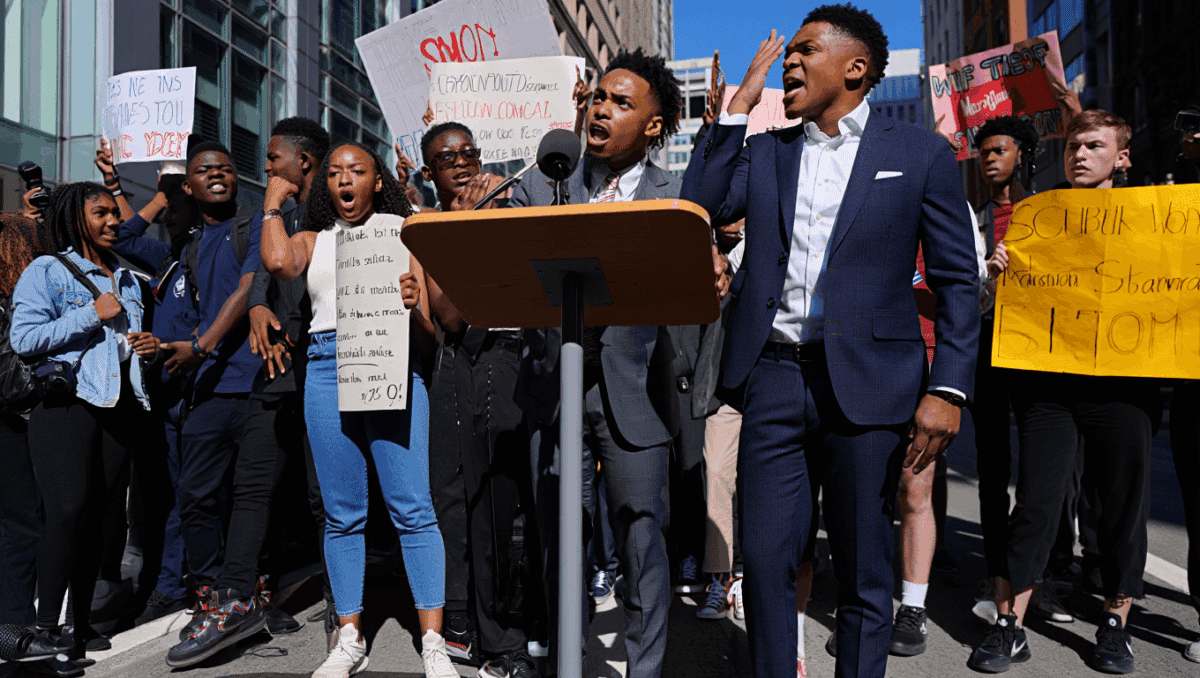
Zack Polanski’s sudden popularity among young, credentialed voters looks less like a grassroots revolt and more like an organized push to restore a particular elite agenda. The rhetoric borrows working-class language and promises solidarity, but a closer look at policy priorities and cultural stances suggests a deep disconnect between the Greens’ new leadership and the everyday concerns of ordinary workers.
Polanski may style himself an eco-populist, but his platform leans toward the priorities of well-educated urbanites rather than the practical needs of families who depend on stable jobs, affordable energy, and secure public services. From gender policy to Net Zero fervor to border politics, the new Green leadership is prompting a quiet backlash from those who feel their interests have been betrayed.
Why the Green surge looks like a middle-class comeback, not a worker uprising
Polanski’s ascent in the UK Green Party has been framed by supporters as a surge of youthful idealism. Yet the policies being promoted are often at odds with the material interests of working people. Rather than expanding access to economic security or tackling precarious employment, the messaging prioritizes cultural recognition and environmental purity—issues that resonate strongly in professional circles but can feel remote or threatening to blue-collar voters.
The Growing Demand for Data-Driven Decision Making in Silicon Valley
He quit, ran out of money, and begged to come back — here’s how his boss reacted
This is not a populist breakthrough; it is, in many ways, the educated classes reclaiming political space—and in doing so, repackaging progressive cultural positions as the only path to justice. The result is a tension: language and imagery borrowed from historic labor movements, combined with policies that would disappoint the very people those movements once served.
The “Peggie test”: how gender debates expose the divide
A local dispute over changing-room access at a Scottish hospital has become a touchstone for the wider debate. A nurse named Sandie Peggie has pushed for women’s spaces where biological females will not be exposed to people who were born male and identify otherwise. Polanski’s public remarks—affirming a broad, inclusive definition of “woman”—place him in firm alignment with activists who prioritize gender identity over sex-based protections.
The consequences of this stance are tangible for many workers:
- Frontline employees in health and care settings facing new protocols that some say compromise privacy;
- Women campaigning for sex-based protections feeling marginalized by a narrative that conflates biological sex with gender identity;
- Employers caught between equality law, public pressure, and the practicalities of workplace safety and dignity.
Supporters argue that inclusion is non-negotiable and protects vulnerable trans people. Critics counter that redefining women’s spaces in ways that ignore biological sex can erode hard-won protections for female workers. The debate reveals a deeper split: whether the left’s agenda should prioritize cultural recognition or day-to-day workplace dignity.
Net Zero zeal and the cost to jobs and household budgets
Polanski’s anti-fossil-fuel stance—opposing new oil and coal developments—reflects a Green orthodoxy that many urban professionals embrace. But for communities built around industry, the implications are stark. Abrupt transitions raise questions about employment, regional economic health, and energy affordability.
Real-world impacts often on the line
- High-paying jobs in extraction, refining, and related sectors could disappear with rapid bans on drilling or new power plants;
- Household energy bills could rise if supply shifts are not carefully managed and new capacity isn’t brought online;
- Rural and industrial towns risk long-term decline without strategic replacement industries and training programs.
Many working-class voters have begun to view environmental policy through the lens of economic security. Where affluent urbanites can absorb higher utility costs or leave industries behind, families in former industrial regions may see only the downside. The tension between climate ambition and labor protection is at the heart of the Green Party’s credibility problem outside metropolitan centers.
Immigration politics: perceived empathy gap between elites and communities
Border control and immigration policy have become flashpoints, with many working-class voters perceiving an elite indifference to the strain on public services and local housing. Polanski and other Green leaders often emphasize humanitarian commitments to migrants and refugees, but critics argue that this emphasis can look like moral posturing if not paired with practical policies addressing capacity, integration, and democracy.
The political dynamics play out like this:
- Middle-class activists frame pro-migrant policies as a moral obligation and a test of progressive credentials;
- Working-class communities report feeling overlooked when local services come under pressure and housing becomes harder to find;
- Opponents of restrictive border policies say humane treatment is essential, but many voters want better-managed, democratic processes that balance compassion with local needs.
This disconnect feeds the sense that the Greens prioritize symbolic virtue over the bargains and tradeoffs central to democratic governance.
Who’s in the new Green coalition? A map of class and culture
Recent surveys and membership patterns point to a party still dominated by professional, credentialed supporters rather than broad working-class bases. Urban, university-educated voters—particularly younger cohorts—are the backbone of the movement that propelled Polanski. That demographic is often highly engaged on cultural questions, climate activism, and identity politics, but less focused on the economic anxieties that animate conservative or populist movements.
Key characteristics of the current Green base include:
- High levels of education and urban residence;
- Strong values-driven motivations, especially on environment and social inclusivity;
- Less exposure to the direct economic effects of deindustrialization and energy transitions.
The upshot is a party eager to impose a moral compass it assumes is universal, while many voters outside its core feel their practical concerns are dismissed.
Why critics call this a counter-populist movement
What looks like a leftward shift in rhetoric can behave like a retreat from democratic popular pressures. By rebranding elitist positions in populist language—championing “the people” while pursuing policies that benefit the cultural priorities of the professional classes—Polanski’s Green leadership risks creating a new kind of political friction.
For many observers, this is less a rebellion from below and more a counterattack from above: an attempt by the educated and institutionally connected to reclaim cultural authority after losing ground in referendums and national elections. The result is a politics that borrows the vocabulary of class struggle while abandoning many of its original aims.
The political trade-offs activists often sidestep
The Green program’s focus on identity, climate absolutism, and open-border sympathies involves trade-offs that are often under-discussed. For democratic politics to remain responsive, parties must grapple with how to balance moral commitments with the material needs of diverse constituencies.
Practical policy questions left unresolved by many Green proposals include:
- How to fund a fair transition for workers displaced by rapid decarbonization;
- How to protect sex-based rights and safe spaces while ensuring inclusion and non-discrimination;
- How to pair humane immigration with enforceable, democratically accountable border controls.
Addressing those trade-offs would require uncomfortable compromises—choices that comfortable urban elites are often reluctant to make, but that working communities expect.
Brendan O’Neill is spiked’s chief political writer and hosts The Brendan O’Neill Show podcast. His recent book, After the Pogrom: 7 October, Israel and the Crisis of Civilization, is available through major retailers. Find him on Instagram at @burntoakboy.
You might also like:
- Hannah Spencer (Greens) accused of abandoning working-class voters
- Zack’s wild year: a look back at 12 months of chaos
- Zack Polanski’s Hypnotic Influence: How He Captivated the Greens
- Reform party now undisputed choice of the working class
- England protests spread nationwide as public revolt grows over government policy

Robert Johnson is a dedicated columnist focusing on political and social debates. With twelve years in editorial writing, he provides nuanced, well‑argued perspectives. His commentaries invite you to form your own views and engage in critical issues.


Man, entitlement is like a virus, spreading everywhere. Its crazy how some folks think theyre owed the world on a silver platter. Gotta check ourselves before we wreck ourselves, yknow?
Man, aint that the truth! Its like some people out here got a deluxe edition of the world delivered to their doorstep. But hey, youre right, gotta do a reality check before we end up crashin and burning. Its a wild ride out there, gotta stay humble, yknow?
Man, entitlement is like that one friend who always takes, never gives. Its a toxic cycle, fueling revenge and backlash. Gotta break that pattern, spread some empathy and understanding, ya know?
Man, entitlement be like that extra topping you didnt ask for but gotta pay for. Its wild how some folks think the world owes em. But hey, karmas the ultimate collector, am I right?
Man, lemme tell ya, entitlement is like that sneaky extra charge on your bill you aint see coming. Its crazy how some peeps walk around thinking theyre the main character entitled to everything, right? But hey, karmas like the bouncer at the universes club, checking IDs and kicking out the troublemakers. Just gotta trust its doing its job, am I right?
Man, entitlement be wildin these days. Like, just cause you think you deserve the world dont mean you gotta crush others for it. We all in this mess together, aint no need for the drama, ya dig?
Man, entitlement is like a virus, spreading and infecting everything. Its crazy how some folks think the world owes them everything. We need a reality check, pronto! Time to ditch the entitlement and embrace some gratitude.
Dude, tell me about it! Entitlement is like a bad cold that just wont go away. Some folks out here actin like theyre the stars of the show, forgetting theres a whole world out there. Time for a serious reality check, ASAP! Gratitude is the new black, my friend. Lets spread that love and ditch the me, me, me mentality.
Man, entitled folks think theyre the kings of the castle! Always expectin the red carpet treatment. But let me tell ya, when they dont get their way, its like watching a toddlers tantrum on steroids. Crazy stuff, right?
Man, entitlements like that annoying guest who overstays their welcome, am I right? Always demanding more, never satisfied. No wonder revenge and backlash come knockin. Its a vicious cycle, my friends.
Man, entitlements like a wildfire, burnin relationships left and right. Gotta douse it with empathy, or itll torch everything in its path. Remember that time cousin Todd threw a fit at Thanksgiving? Classic entitlement move.
Dang, entitlements be creepin up like a sneaky ninja, ruinin the vibe quicker than you can say Thanksgiving leftovers. Todds fit was a whole mood, man. Like, who gave him the script for that drama scene, am I right? Gotta sprinkle some empathy seasoning to cool those flames before they roast the whole family BBQ. Remember to bring marshmallows next time, just in case!
Man, entitlements like that relative who overstays Thxgiving. Always demanding more pie! But seriously, its wild how entitlement breeds backlash. Gotta check our egos and share the dessert, folks.
Man, entitlement these days is like a contagious disease, spreading like wildfire. People need a reality check, not everything is handed on a silver platter. Its about time folks learn some humility and respect.
Man, entitlement can really set folks off. Reminds me of Aunt Marge at Thanksgiving, always demanding the head seat! But seriously, entitlement breeds resentment. Gotta check ourselves before we wreck ourselves, right?
Man, those entitled folk just cant catch a break, huh? Always causing drama and expecting the world to revolve around em. Its like they missed the memo on common decency. But hey, karmas a boomerang, right?
Why do some folks think they deserve the whole universe on a silver platter? Entitlement is the root of all evil, fueling drama and backlash. Time for a reality check, people!
Man, entitlements like a virus these days. You see folks actin like the world owes em somethin. But hey, karmas real – those entitled ones? They aint ready for the backlash train comin their way.
Man, entitlement is like a sneaky virus infectin society. Its wild how some folks think the world owes em somethin. But hey, karmas real – entitlement aint a free pass in life.