
Show summary Hide summary
- How victims become defendants: common pathways to wrongful criminalization
- One survivor’s experience: a case study of misclassification and its fallout
- Legal tools and advocacy strategies that can reverse the tide
- Barriers that still keep survivors trapped in the justice system
- What survivors and allies can do now
- Policy changes under discussion and their potential impact
- The human cost: stigma, mental health and social exclusion
- Voices calling for accountability and change
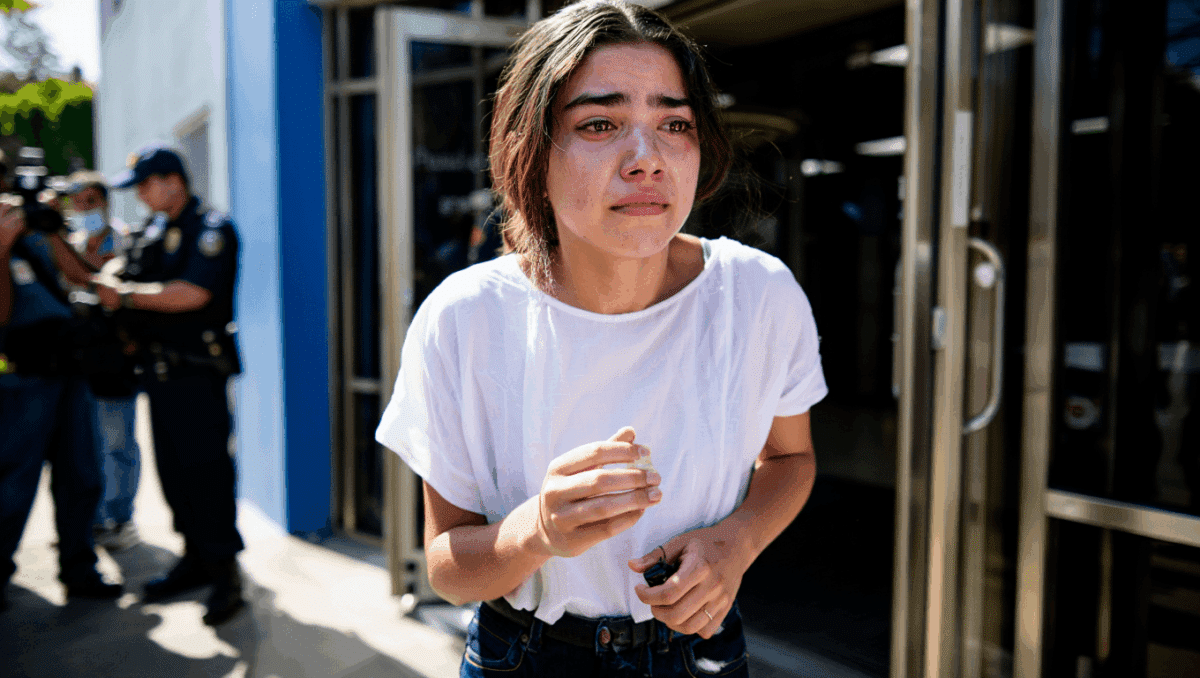
She remembers the nights spent waiting for someone to come home and the repeated promises that she would be safe. Instead, she was trapped in a pattern of control, fear and coercion — and when she finally escaped, the system that should have protected her branded her a criminal. This is the story of how survivors of organized sexual exploitation can be turned into defendants, and why that reversal matters for justice and policy reform.
The problem is not isolated. Across jurisdictions, victims of grooming gangs have been prosecuted for offenses they were forced or manipulated into committing, while their abusers evade full accountability. This article traces how that happens, the legal and social mechanisms involved, and the steps advocates and lawmakers are pushing to prevent victimization from becoming criminalization.
How victims become defendants: common pathways to wrongful criminalization
What begins as manipulation and coercion often evolves into a set of behaviors that appear criminal on paper. Law enforcement may interpret survival strategies — running drugs for protection, participating in theft to placate exploiters, or engaging in sex under duress — as voluntary wrongdoing. Several structural issues contribute to this misreading:
The Growing Demand for Data-Driven Decision Making in Silicon Valley
He quit, ran out of money, and begged to come back — here’s how his boss reacted
- Failure to identify coercion: Officers and prosecutors sometimes lack training to recognize grooming tactics, leaving coercion unseen in statements or evidence.
- Reliance on criminal records: Prior arrests or contacts with police are used to construct a narrative of culpability rather than victimhood.
- Language and immigration barriers: Non-native speakers or people with precarious immigration status may be treated suspiciously instead of as victims.
- Bias and victim-blaming: Stereotypes about sex work, youth behavior, or cultural background can influence charging decisions and jury perceptions.
Stages in the cycle
- Grooming and control: Perpetrators use psychological manipulation, isolation and threats to recruit and maintain control.
- Coerced crimes or survival conduct: Victims are pushed into activities that could result in criminal charges.
- Contact with authorities: When the victim interacts with police — whether as a witness, arrested person or informant — their coerced behavior can be reframed as voluntary misconduct.
- Prosecution and stigma: Prosecutors pursue charges; media coverage and court records amplify stigma, making recovery and legal remedies harder.
One survivor’s experience: a case study of misclassification and its fallout
To understand the mechanics, consider the anonymized account of a woman we will call Maya. Recruited at 15 by an older group that offered protection and money, she was subjected to escalating abuse. When she tried to leave as an adult, the same group threatened her family, and she participated in thefts and delivering packages under duress.
After an arrest following a police raid, Maya’s attempts to explain her situation were dismissed. Investigators labeled her “complicit,” and prosecutors treated her as a perpetrator rather than someone who had been groomed. Her defense relied heavily on trauma experts and social workers, but delays and limited access to specialized legal counsel meant charges stuck for months.
- Immediate consequences: Detention, public criminal records and restricted access to housing and employment.
- Long-term harm: Ongoing fear of retaliation, mental health decline, and difficulty securing witness protection or immigration relief.
Why systems overlook coercion
Maya’s story reflects systemic blind spots. Police reports often prioritize concrete criminal acts over the complex interpersonal dynamics that lead to those acts. Prosecutors face pressure to secure convictions and may see charging victims as a pragmatic route when evidence against higher-level traffickers is thin. Meanwhile, victims may lack consistent access to trauma-informed advocates who can document coercion at the outset.
Legal tools and advocacy strategies that can reverse the tide
Advocates and legal defenders have identified several interventions that improve outcomes for victims wrongly accused of crimes:
- Trauma-informed policing and prosecution: Training first responders and attorneys to identify grooming signs and to treat disclosures with sensitivity.
- Specialized defense units: Public defender teams that focus on trafficking and exploitation can mount effective defenses centered on duress and coercion.
- Clear statutory protections: Laws that formalize immunity for trafficking victims or create post-conviction relief pathways reduce wrongful convictions.
- Non-prosecution policies: Agreements between prosecutors and advocacy groups that decline charges when coercion is demonstrable.
Examples of remedies
Remedies can take many forms, including motion practice to dismiss charges based on evidence of coercion, petitions for expungement or vacatur of convictions obtained from victims, and civil claims against agencies or individuals who failed to safeguard the victim. Outreach programs aimed at early identification — in schools, shelters and healthcare settings — also reduce the chance that a victim’s first interaction with the state is a criminal one.
Barriers that still keep survivors trapped in the justice system
Despite progress, several obstacles remain. Evidence of coercion is often intangible: fear, manipulation and threats leave limited physical traces. Courts vary in how they assess duress and coercion defenses. Funding shortages make specialized defense rare, and public awareness of grooming dynamics is inconsistent.
- Evidence challenges: Without witnesses willing to testify against traffickers, prosecutors may pivot to charging lower-level participants.
- Policy gaps: Not all states or municipalities have explicit protections recognizing victims’ coerced actions as noncriminal.
- Socioeconomic factors: Poverty, unstable housing and lack of health care deepen vulnerability and complicate legal defense.
How data and research can help
Researchers stress the need for better data collection on cases where victims are charged. Systematic tracking can reveal patterns — which jurisdictions are most likely to criminalize victims, what evidence is used, and how outcomes differ by race, gender and immigration status. That evidence can drive policy changes and targeted training programs.
What survivors and allies can do now
There are immediate steps survivors and their supporters can take to reduce the risk of criminalization and to fight back if charges arise:
- Seek legal counsel experienced in trafficking and coercion defenses as early as possible.
- Preserve documentation of threats, communications and any interactions with traffickers or coercers.
- Connect with local victim services and national hotlines for advocacy, shelter and trauma-informed support.
- Report patterns of police or prosecutorial bias to oversight bodies if coercion was ignored or mishandled.
Resources to consider
National and regional organizations offer legal clinics, hotline assistance and housing help for people exiting exploitative situations. Many provide intake without requiring cooperation with criminal investigations, prioritizing the survivor’s safety and autonomy.
Policy changes under discussion and their potential impact
Policymakers are exploring reforms aimed at untangling the legal consequences that bind victims to criminal records. Proposals include statutory immunity for victims of sex trafficking, mandatory diversion programs, limits on the use of prior arrests in charging decisions, and funding boosts for trauma-informed defense teams.
- Immunity and vacatur laws: Allow courts to clear convictions obtained when the defendant was a trafficking victim.
- Mandatory training: Require law enforcement and prosecutors to receive education on grooming and coercion.
- Screening protocols: Implement standard risk-assessment tools in hospitals, schools and custody settings to flag potential exploitation early.
Advocates argue that these reforms not only protect individual survivors but also strengthen prosecutions against higher-level traffickers by encouraging victims to come forward without fear of punishment.
The human cost: stigma, mental health and social exclusion
Beyond the courtroom, criminalization leaves deep scars. A conviction or arrest record often means loss of employment opportunities, housing barriers and sustained social stigma, which can re-expose survivors to the networks that harmed them. Mental health consequences — anxiety, depression, PTSD — are widespread and require sustained, culturally competent care.
- Employment discrimination based on arrest records
- Housing ineligibility tied to criminal history
- Reluctance to seek medical or social services for fear of being judged or reported
Organizations working with survivors emphasize integrated care models that combine legal support, therapy and vocational services to rebuild autonomy and reduce recidivism into exploitative situations.
Voices calling for accountability and change
Survivors, legal advocates and some prosecutors are increasingly vocal about the need to reframe how the justice system treats people groomed into criminal behavior. Their calls focus on a single principle:
Recognition that coercion and exploitation undermine meaningful consent and require a different legal response.
Efforts include litigation, legislative lobbying and public awareness campaigns designed to shift the narrative from blame to responsibility — holding traffickers accountable while protecting those they have harmed.
What to watch next
Follow cases that test duress defenses, monitor the passage of immunity or vacatur laws in state legislatures, and look for changes in police training protocols. As these initiatives take shape, they will provide clearer markers of whether systems are moving toward protecting survivors or continuing to treat them as criminals.
You might also like:
- Diddy guilty on two counts, acquitted of most serious charges: what happens next?
- New Jersey cop charged in murder probe after allegedly ordering pizza instead of investigating
- Small boats grooming gang accused of targeting migrants on English Channel crossings
- Florida man accused of killing and eating pet peacocks during feud with neighbor
- Young women’s prospects erode as safety and job opportunities decline

Robert Johnson is a dedicated columnist focusing on political and social debates. With twelve years in editorial writing, he provides nuanced, well‑argued perspectives. His commentaries invite you to form your own views and engage in critical issues.


Yo, imagine the injustice, man. Being a victim of a grooming gang, then getting wrongly labeled as a criminal? Its like adding insult to injury. How can systems mess up this bad? Crazy.
Man, thats some messed-up situation. Like, youre already dealing with the trauma of being preyed on, and then they go and slap you with a criminal label? Its beyond messed up. Like, wheres the justice in that? Systems can really fail big time, no doubt. Just makes you wonder how many more slip-ups are out there, right?
Man, how messed up is it that grooming gang victims get framed as criminals? Like, talk about adding insult to injury. Its like theyre forced into this nightmare, and then the system turns a blind eye when they cry for help. So wrong.
Man, reading about a grooming gang victim wrongly painted as a criminal hits hard. The struggle of survivors like her to be heard and believed is beyond messed up. How many more stories gotta surface before we fix this broken system?
Man, its like a broken record, aint it? These stories keep popping up, like the systems stuck on repeat. Its messed up, for real. Survivors fight tooth and nail to be heard, but its like talking to a brick wall. How many more gotta suffer before some real change kicks in? Its a cycle that needs breaking, pronto.
Man, reading about innocent folks getting framed as criminals just boils my blood. Its messed up how systems fail em. We gotta do better at recognizing coercion and protecting victims. Solidarity with survivors fighting this injustice.
Dude, tell me about it! Its like were living in some twisted movie plot where the good guys get framed, and the bad guys walk free. Its frustrating as hell. We gotta be there for those whove been wronged, ya know? Keep fighting the good fight!
Yo, I knew this dude who got caught in that mess. They turned his life inside out, man. Its messed up how easily victims can end up wearing the criminal label. Hope things change.
Dang, thats rough, man. The system can be so messed up sometimes, flipping the script on folks like that. Its like a twisted game of Whos the Real Victim? Hope things take a turn for the better, ya know?
Man, reading about innocent people getting framed as criminals hits different. Its like a messed-up rollercoaster of injustice. How many more lives gotta be ruined before the system wakes up and smells the truth? Its enraging.
Dang, I hear ya. Its like watching a twisted movie but realizing its real life. The system needs a serious reality check, man. How many more gotta suffer before they open their eyes? Its legit infuriating.
Man, reading this piece made me fume! It’s insane how grooming gang victims get twisted into the bad guys. We gotta stand up against this injustice and give them the support they really need. Crazy world we live in, huh?
Man, its messed up how a grooming gang victim gets wrongly labeled as a criminal. Like, how does that even happen? Its like kicking someone when theyre already down. Society needs a serious reality check, for real.
I cant believe the system failed her like that. Imagine being a victim, then wrongly labeled a criminal? Its messed up how easily victims can be pushed into the defendant box. We need to fix this broken cycle.
Man, this story hits close to home. Its infuriating how victims get tangled in the legal mess. Systems need a serious overhaul to stop this cycle. No one should suffer twice.
Man, I totally get where youre coming from. Its like this messed-up cycle just keeps on spinning, and the ones whove already been through hell end up trapped in a legal maze. Its a vicious circle, for real. Seems like the system needs a good ol kick in the pants to break free from this mess. Aint nobody should have to endure that kinda pain more than once.
Man, this story hits hard. Its like a messed-up rollercoaster – being a victim, then wrongly branded a criminal? Thats some twisted reality I cant wrap my head around. Just goes to show, truth aint always what it seems.
Man, this story hits hard. Its messed up how a grooming gang victim gets painted as a criminal. Like, cant catch a break, huh? Society needs to do better at spotting the real victims and not doubling their trauma.
Man, the injustice hits hard. As a skeptical critic, I gotta say, its a messed-up cycle. How many more innocent folks gotta suffer this misclassification madness? Time to break this toxic pattern!
Man, its like a broken record, aint it? The system keeps chewing up the good ones and spitting em out like they aint worth a damn. How many more gotta get caught up in this messed-up game of mislabeling before someone steps up and breaks this vicious cycle, huh? Its time for a change, no doubt about it.
Man, this story hits hard. Its like a messed-up movie plot but real life. How can systems fail victims like this? Its a scary reminder of the injustices out there that need fixing, pronto.
Yo, I hear you. This stuff is like a twisted movie plot, but its the real deal. Makes you wonder how these systems can fail so hard, right? Its a wake-up call for sure. We gotta fix these injustices, like, yesterday.
Man, that story hit close to home. I knew a guy wrongly accused once. The stigma stays forever. Its messed up how systems fail victims. We gotta do better, stand up for those whove been through hell.
Man, this story hits deep. Its like a messed-up merry-go-round for this victim-turned-defendant. The systems blind eye to coercion? Seriously messed up. This aint justice, its a twisted plot.
Man, talk bout a messed-up system! Poor victims gettin blamed as criminals? Thats some next-level injustice. Gotta shine a light on these shady practices. Time to flip the script and fight for real justice!
Man, its messed up how victims can end up being treated like criminals. Like, how does that even happen? Its heartbreaking to think about someone going through all that trauma and then getting thrown in jail. Society needs a serious reality check.
Man, the injustice hitting victims twice is messed up. Like, already went through hell and then get wrongly labeled as criminals? System needs a reality check, seriously. Gotta stand up against this messed-up cycle.