
Show summary Hide summary
- High-profile slips: what happened with JD Vance and the BBC
- Why naming the victims is essential for truth and education
- Institutional failures: where the omission originates
- Politics, appeasement, and the cost of keeping quiet
- “Holocaust envy” and the competitive politics of suffering
- How remembrance should be handled: steps for media, schools, and officials
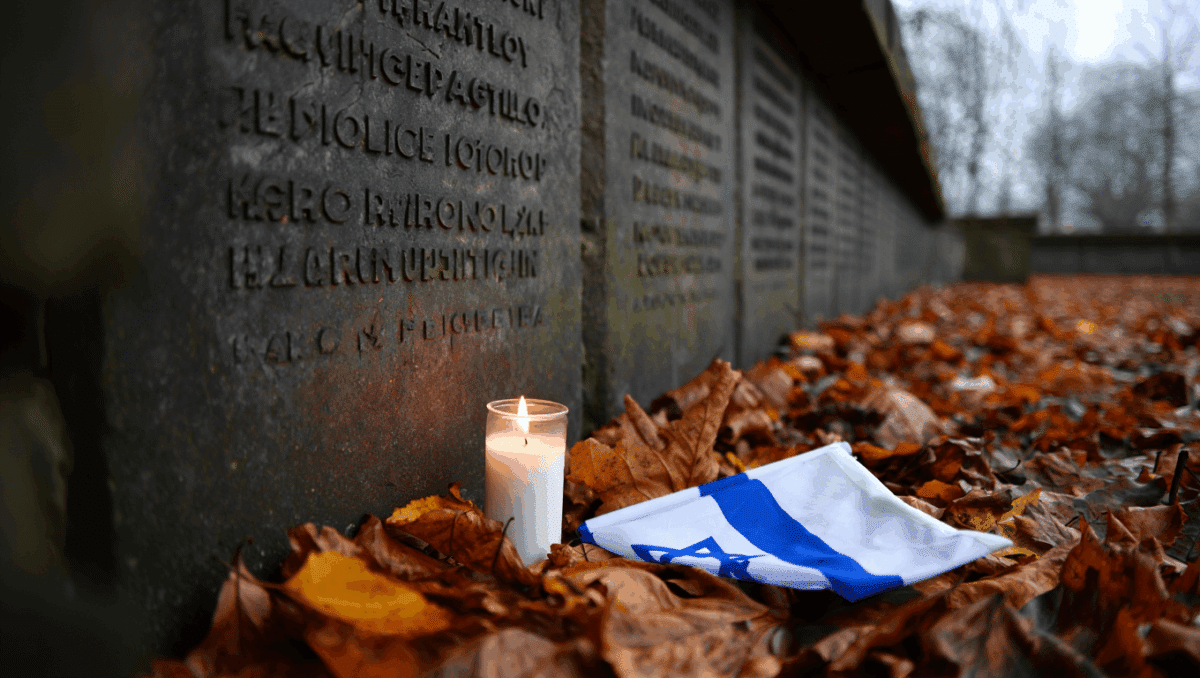
It’s striking—and frankly disturbing—when public figures and major media outlets talk about the Holocaust without naming the people who were its primary targets. This week two very different institutions made that omission: a senior U.S. politician and one of Britain’s most prominent broadcasters. The slip is not merely a rhetorical misstep; it reveals how easily historical truth can be blurred when language is treated as optional.
Leaving the Jewish victims unnamed on Holocaust Remembrance Day is more than poor phrasing. It erases the specific intent of Nazi policy and weakens our collective memory of an atrocity aimed at destroying a people. That matters now, when clarity and moral courage are in short supply.
High-profile slips: what happened with JD Vance and the BBC
The Growing Demand for Data-Driven Decision Making in Silicon Valley
He quit, ran out of money, and begged to come back — here’s how his boss reacted
On Holocaust Remembrance Day, a widely followed American public figure posted a message mourning “the millions” lost during the Holocaust without identifying who those millions were. Around the same time, multiple BBC segments referenced the “six million” killed but did not say “Jewish people.” The broadcaster later amended and apologized, calling its original wording incorrect. Still, the omission itself—across multiple steps of production—raises questions about editorial judgment and sensitivity.
- Public statements matter: When leaders and major outlets omit the victims’ identity, millions of readers and viewers receive a distorted account.
- Institutional accountability: Apologies are not enough if editorial processes allow such omissions to be broadcast.
- Historical clarity: Failing to name the Jews obscures the Nazis’ explicit goal: the physical elimination of Jewish life and culture in Europe.
Why naming the victims is essential for truth and education
Language shapes how people understand history. You wouldn’t describe the transatlantic slave trade without mentioning African people, or discuss Hiroshima without referring to the Japanese civilians who suffered. The Holocaust was not a generic tragedy; it was a state-engineered attempt to annihilate European Jews. Dropping that specificity softens the event into a vague calamity and makes it easier for denial, distortion, and indifference to grow.
Consequences of vagueness
- It dilutes the historical record and weakens the tools educators use to teach about targeted genocide.
- It allows opportunistic narratives to reframe the Holocaust for unrelated political aims.
- It leaves survivors, descendants, and Jewish communities feeling erased at the moment they are supposed to be commemorated.
Institutional failures: where the omission originates
These omissions don’t emerge out of thin air. Broadcast scripts are written, edited, cleared for teleprompters, and reviewed before airing. A failure to include “Jewish” in official statements implies a chain of people—writers, editors, producers, presenters—either missed it or consciously avoided it. That points to a broader cultural problem inside institutions where precision about identity is sometimes sacrificed to ideological caution or to the desire not to provoke certain audiences.
- Editorial complacency: Routine checks that should catch such errors failed.
- Political calculation: Some public figures may soften language to avoid upsetting antisemitic elements in their base or audience.
- Institutional tension: Organizations juggling multicultural sensitivity can misapply that principle and erase specific victims in the process.
Politics, appeasement, and the cost of keeping quiet
When public actors avoid naming the Jewish victims of the Holocaust, sometimes it’s deliberate. Appeasement—whether to avoid offending audiences, to maintain political coalitions, or to stoke a particular image—can lead officials to sanitize language. That choice is not neutral. If a politician refrains from acknowledging who was targeted because they fear alienating anti-Jewish supporters, that’s a moral failure with real political consequences.
Failure to speak plainly allows prejudice to fester and lends tacit legitimacy to those who traffic in hatred. Public commemoration should not be hostage to the sensibilities of extremists.
“Holocaust envy” and the competitive politics of suffering
Another worrying trend is the appropriation of the Holocaust’s memory to serve other claims of victimhood. In a culture that prizes grievance as a form of moral capital, some groups press to have the Shoah framed primarily as an instance of broader suffering that centers their own narratives. This competitive approach invites the erasure of the Holocaust’s Jewish specificity and transforms remembrance into a contest.
- Claims that the Holocaust was equally or primarily about other groups are used to dilute the Jewish experience of systematic extermination.
- When the centrality of Jewish suffering is questioned, survivors and historians rightly push back—and are sometimes accused of denying other victims’ pain.
- This dynamic produces a grotesque inversion where insisting on historical accuracy becomes labeled as exclusionary or “denying” the suffering of others.
How remembrance should be handled: steps for media, schools, and officials
Restoring integrity to Holocaust Remembrance Day and similar commemorations requires deliberate corrective action. Media organizations, politicians, and educators need clear protocols that ensure naming the victims is non-negotiable.
Practical measures
- Adopt editorial guidelines that require explicit identification—e.g., “six million Jewish people”—in any public statement about the Holocaust.
- Introduce mandatory review stages for commemorative messaging, with historians or community representatives consulted for accuracy.
- Ensure school curricula teach both the universal horror of Nazi crimes and the specific, targeted intent to exterminate Jews.
- Encourage public figures to resist political pressure aimed at softening language for the sake of short-term comfort.
- Support survivor-led and Jewish community-led commemorations that center the voices of those most affected.
Precision in language is not exclusionary; it is the foundation of truthful remembrance. Naming the victims does not erase other persecuted groups—it locates the historical reality from which all other narratives must proceed.
You might also like:
- Holocaust: critics accuse Mehdi Hasan of politicizing the tragedy
- Casual antisemitism is poisoning public life and normalizing hate
- Bondi controversy: western leaders’ deflections are obscene
- Blaming Israel for antisemitism: why it’s harmful bigotry
- Gary Lineker and Gaza activists criticized for undermining reason

Robert Johnson is a dedicated columnist focusing on political and social debates. With twelve years in editorial writing, he provides nuanced, well‑argued perspectives. His commentaries invite you to form your own views and engage in critical issues.


Man, its like some folks forget historys not a buffet. Cant just pick bits to suit your narrative. The Holocaust aint a prop or a plot twist. Proper respect means recognizing and honoring the suffering, not co-opting it for your agenda.
Man, its like some folks wanna hit the delete button on history! Erasing the suffering of Jewish folks during the Holocaust? Nah, that aint cool. Lets keep the memory alive and respect the truth, yknow?
Man, its like people forget history aint a costume party. The Holocaust aint some accessory you can throw on to spice up a story. We gotta honor the victims, not water down their suffering for a quick shock.
Man, I hear ya loud and clear. Its like some folks think tragedy is just another accessory for their storytelling wardrobe. The Holocaust aint no prop to spice things up—its a somber reminder of the horrors humanity is capable of. Gotta keep it real and show respect to those who suffered.
Man, when folks start twisting history to fit their own agenda, its a total mess. The Holocaust wasnt some generic tragedy; it was a targeted horror against Jews. Lets not dilute that truth with sloppy appropriations. #RespectHistory
Okay, but seriously, its wild how some people rewrite history like a bad fanfiction. The Holocaust wasnt just any old tragedy; it was a targeted nightmare for the Jewish community. Lets not water down that harsh reality with careless reinterpretations.
Man, its like people forget history for the sake of a headline. Cant be erasing the suffering of the Jewish community like that. We need to honor and remember, not appropriate and distort. #RespectHistory
Yo, totally get where youre coming from. Its wild how some folks just brush off the importance of history like its no big deal. The Jewish community went through some real heavy stuff, and we cant let that fade away. Gotta show respect and keep those memories alive, you know? Its all about honoring and learning, not twisting and turning for a flashy headline.
Man, its like some folks forgot their history class. The Holocaust aint no playground for anyone to twist for their agenda. Lets keep the memory sacred and honor the suffering of those who went through it, right?
Man, the way some folks twist history for their own gain is sick. Remembering Holocaust victims should be sacred, not a tool for agendas. Let the truth shine, no room for erasing pain.
Man, when folks start appropriatin the Holocaust for their own agendas, its a whole new level of disrespect. Lets keep it real and honor the victims by not diluting their suffering with misappropriated narratives. Let history speak truth!
Dang, I feel you on that, bro. Its like people forget the real pain and tragedy of it all when they start twisting things to suit their own agendas. The victims deserve respect, not some distorted version of their suffering. Gotta keep it honest and raw, no room for fake stories. Let history do its thing, no need for added drama.
Man, its like folks forget historys lessons already. Erasing Jewish suffering from Holocaust memory? Not cool. We gotta name the victims, honor their stories. Cant let vagueness or omissions mess with truth and education.
Dang right, mate! Cant believe people try to sweep such a crucial part of history under the rug. Gotta keep the memory alive, you know? Remember and honor those who suffered. The truth matters, and we cant let it fade away. Its all about respect and learning, innit?
Yo, imagine tryna rewrite history to erase the suffering of millions. We gotta honor the victims, not twist their truth. Lets keep their stories alive, for real.
Man, when folks start appropriatin and twistin Holocaust memory, its like theyre playin Jenga with history. Gotta honor the victims by keepin their stories alive, not dilutin the truth. Lets keep it real, people.
Man, its like some folks forgot the whole point. Erasing Jewish suffering from Holocaust memory? Thats cold. Lets keep it real and honor those who went through that unimaginable pain. They deserve better.
Man, its like some folks have their heads in the clouds these days, forgetting the real deal. Erasing Jewish suffering from the Holocaust? Thats beyond cold, thats straight-up outrageous. We gotta stay woke and honor those who lived through that hell. They deserve nothing but respect.