
Show summary Hide summary
- Why the Strait of Hormuz still determines global energy flows
- How Iran has leveraged control of the waterway
- The American counter-blockade and military posture
- Economic pressure and the internal strain inside Iran
- Wider consequences for global markets and manufacturers
- Scenarios to watch as the crisis unfolds
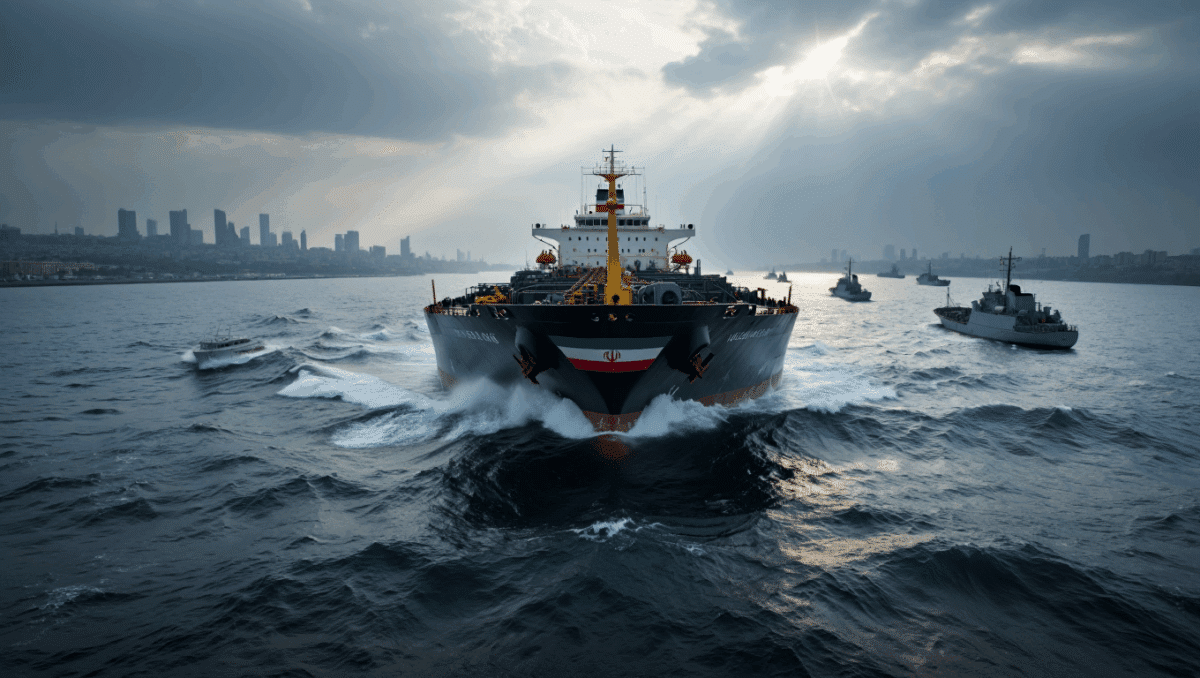
The standoff in the Strait of Hormuz has moved from a regional skirmish to a global fault line, with far-reaching consequences for energy markets, supply chains and the prospects for the Iranian government. In recent weeks Tehran’s control of the narrow waterway and Washington’s robust countermeasures have turned a strategic corridor into the central battleground of an escalating confrontation.
What happens next in and around Hormuz will reverberate across continents. Shipping, fertiliser production, semiconductor manufacturing and diplomatic calculations are all being reshaped by actions taken on the surface of the sea and in the skies above it.
Why the Strait of Hormuz still determines global energy flows
The Growing Demand for Data-Driven Decision Making in Silicon Valley
He quit, ran out of money, and begged to come back — here’s how his boss reacted
The Strait of Hormuz is a geographic bottleneck whose importance is hard to overstate. Linking the Persian Gulf to the Gulf of Oman, it is the single maritime route for much of the region’s oil and gas heading to world markets. At its narrowest point the channel is only about 20 miles across, creating a natural choke point between Iran to the north and Oman and the United Arab Emirates to the south.
About one quarter of global crude oil and roughly one fifth of liquefied natural gas that crosses oceans must transit this passage. That concentration makes the Strait extraordinarily sensitive: any serious disruption instantly ripples through prices, supply chains and geopolitical decision-making.
How Iran has leveraged control of the waterway
Tehran has turned its position north of the strait into a lever of power. Authorities have restricted the flow of tankers and other commercial vessels, at times refusing passage to many cargoes while allowing a handful of ships to proceed under strict conditions.
- Official and unofficial restrictions have driven down exports from Persian Gulf terminals, straining national revenues.
- Tehran announced plans to levy heavy passage fees on vessels, a move that would be unprecedented for a major international shipping lane. Reports put proposed tolls in the range of $1 million to $2 million per voyage for some ships.
- The IRGC and other Iranian maritime forces have physically limited traffic to enforce those measures.
These maneuvers have not been contained to energy alone. Interruptions to natural gas and helium shipments have affected fertiliser production and chip fabrication far beyond the region, hitting agricultural supply chains and electronics manufacturers in Asia and Latin America.
The American counter-blockade and military posture
The United States has met Iran’s moves with a significant maritime and military response. US naval units have been deployed to the Gulf of Oman and adjacent waters, and commanders have signalled an intention to stop, divert and seize vessels suspected of supporting Iran’s wartime economy or flouting international norms.
Washington has also increased ground forces in the broader Middle East by tens of thousands, bolstering air and maritime assets that could be used to secure shipping lanes or support more ambitious operations if political leaders decide to escalate.
Military options on the table—and their challenges
- Enforcement patrols and interdictions aimed at keeping traffic moving and deterring Iranian harassment.
- Targeted strikes on Iranian maritime infrastructure or military assets to degrade the capability to close the strait.
- Amphibious operations to seize strategic facilities, notably large oil terminals such as Kharg Island, which handle significant export volumes. Such assaults would be complex and risky but are within the realm of American military capability.
Any kinetic step carries high risks: naval engagements in a tight maritime environment, potential civilian casualties, and the chance of wider regional escalation involving other state and non-state actors.
Economic pressure and the internal strain inside Iran
Iran’s wartime financial model has depended heavily on oil revenue. With exports curtailed by the closure of sea lanes and international countermeasures, the regime’s income streams have been severely impaired. Industry observers estimate daily shortfalls measured in the hundreds of millions of dollars, a pressure that compounds existing domestic challenges.
On top of financial strain, the Iranian command structure and military formations have absorbed losses that critics say amount to a significant degradation of the state’s coercive capacity. That combination of economic pain and attrition raises questions about political stability, the endurance of the ruling coalition, and how far Tehran can sustain prolonged confrontation.
Wider consequences for global markets and manufacturers
Disruptions in Hormuz cascade into many corners of the global economy:
- Energy markets: Reduced crude and LNG flows push oil and gas prices higher, affecting consumers and industries worldwide.
- Agriculture: Natural gas shortages inflate fertiliser costs, which can lower crop yields or increase food prices in importing nations.
- Tech supply chains: Constraints on helium and other critical materials complicate semiconductor production, threatening outputs in Taiwan and South Korea.
- Insurance and shipping costs: Higher maritime risk premiums and rerouting around longer passages increase the cost of trade.
Scenarios to watch as the crisis unfolds
While many commentators have declared the outcome inevitable, the coming weeks could still take several different paths. Key developments to monitor include:
- Whether the United States limits itself to maritime interdictions or moves toward a targeted amphibious campaign against export infrastructure.
- Iran’s potential escalation options short of all-out war: stepped-up missile and drone attacks, increased mining of shipping lanes, or wider disruption to regional energy hubs.
- Responses from other Gulf states and global powers, particularly efforts to keep oil and gas flowing through alternate routes or by diplomatic pressure.
- Market reactions: spikes in oil and commodity prices, shifts in shipping routes, and supply-chain stress in critical industries.
The Strait of Hormuz is no longer a distant geopolitical abstraction—it is the immediate flashpoint shaping military choices, economic outcomes and diplomatic calculations around the world.
James Woudhuysen is a visiting professor of forecasting and innovation at London South Bank University. Follow him on X: @jameswoudhuysen.
You might also like:
- Trump threatens Kharg Island invasion and nuclear option in Iran
- Iran strikes push Middle East toward regional war
- Iran nuclear threat persists as Tehran expands uranium enrichment program
- UK energy crisis: practical solutions to cut bills and secure supply
- Iran military defeat: is it possible and what would it take

Robert Johnson is a dedicated columnist focusing on political and social debates. With twelve years in editorial writing, he provides nuanced, well‑argued perspectives. His commentaries invite you to form your own views and engage in critical issues.


Man, Irans like that poker player whos bluffing hard but cant keep a straight face. The economic wars a wild ride with no winner yet. Tehrans playing high stakes, but victorys a distant dream.
Man, the whole Iran economy rollercoaster is like a soap opera. Tehran’s trying to flex but the economic wars like, Nah, not today. Its like watching a slow-mo chess match with global stakes. Wild stuff.
Dang, Irans like playing chess with the economy, huh? Tehran aint gonna win overnight. Its like a high-stakes game of Risk, but with oil tankers and sanctions. Wonder what move theyll pull next.
Man, the Iran economy? Its like watching a rollercoaster with no seatbelt. One day its up, next day its down. Tehrans got some serious battles to fight before they even see the light at the end of the tunnel.
Man, the Iran economy is like a rollercoaster ride with no safety harness, I feel ya! Its a wild journey of unpredictable twists and turns. Tehran sure aint catching a break, huh? Gotta wonder if theyll ever catch a glimpse of that light at the end of the tunnel.
Man, Irans economy always in the spotlight. Its like theyre playing a high-stakes game with their cards facing up. Tehrans gotta be sweating bullets, right? Wonder how this economic wars gonna unfold.
Man, its like a chess game with high stakes, aint it? Tehrans economys caught in this tug-of-war, and with the Strait of Hormuz in the mix, its a powder keg waiting to blow. Crazy times were living in, huh?
Man, Irans economic scene is like a rollercoaster ride—dips and loops all over. Wonder how theyll navigate through this tangle. Strait of Hormuz feels like the eye of their storm.
Man, Irans economy is like watching a chess game with no end in sight. Tehrans playing the long game, but the economic wars far from over. Wonder what moves theyll pull next.
Yeah, man, its like being stuck in a never-ending game of chess with Tehran, right? Always waiting for that one unpredictable move to shake things up. Wonder what kind of curveball theyll throw next. Its like economic chess with a twist!
Man, the economys like a rollercoaster in Tehran, huh? Irans playing a high-stakes game with the Strait of Hormuz, but the US aint backing down either. Its a wild financial tug-of-war with no end in sight.
Man, Irans like that chess player who knows how to play the long game, huh? Always strategizing, making moves others dont see coming. Gotta hand it to em for their economic maneuvers, even if its a tough battle.
Man, talk bout geopolitics shufflin the deck! Irans economy keeps jugglin sanctions, power plays, and that ol Strait of Hormuz. Will Tehran find its way or stay on this rollercoaster ride?
Oh man, the whole Iran economy rollercoaster, huh? Its like watching a poker game with the stakes getting higher every round. Tehran might be putting up a fight, but victory seems like a faraway dream in this economic war zone.