
Show summary Hide summary
- Fresh take on the premise: android companion meets social stratification
- What critics and writers are saying about the movie’s tone and pacing
- Performances: Jenna Ortega shines, Amy Adams underused
- Taika Waititi’s direction and the challenge of adapting Ishiguro
- World-building and central themes: technology, class, and grief
- Practical verdict: who should see Klara and the Sun, and where
- Final notes on audience reaction and cultural context
- Where to watch
When a bestselling novel lands in Hollywood hands and a star-packed cast signs on, expectations climb fast. Klara and the Sun, adapted from Kazuo Ishiguro’s acclaimed book and directed by Taika Waititi, arrived with that buzz—and with plenty of skepticism. Audiences and critics have been divided, and the film’s disappointing Rotten Tomatoes score (27% at the time of publication) only amplified the debate: is this an underappreciated mood piece or a misfire that fails to capture the novel’s power?
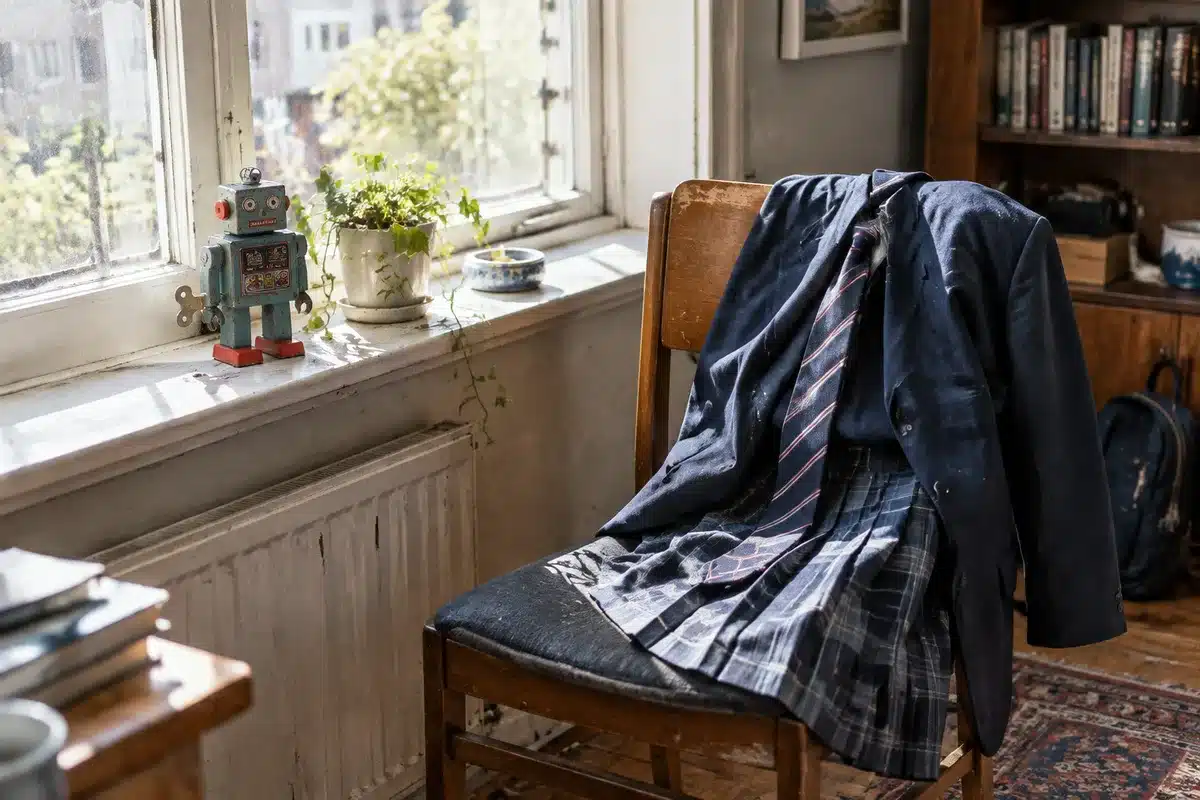
The movie centers on Klara, an older-model artificial friend, and the human relationships around her—most notably her bond with a frail teenage girl. What follows is an intimate, sometimes uneven exploration of technology, grief, and social division that has prompted mixed reactions from reviewers and moviegoers alike.
Fresh take on the premise: android companion meets social stratification
The Growing Demand for Data-Driven Decision Making in Silicon Valley
He quit, ran out of money, and begged to come back — here’s how his boss reacted
At its core, the story follows Klara, an artificial companion purchased for Josie, a young woman battling a serious illness. The narrative is set in a near-future society where genetic enhancement—used to ascend socially and economically—has created a sharp divide between the upgraded elite and the rest. That premise offers fertile ground for questions about empathy, identity, and the cost of pursuing perfection.
Spoiler note: the film keeps several of the novel’s emotional beats but rearranges emphasis and tone in ways that will surprise readers of Ishiguro’s book.
What critics and writers are saying about the movie’s tone and pacing
One recurring criticism is that the film struggles to land on a consistent genre or emotional register. Reviewers who expected a gutting adaptation of Ishiguro’s melancholic novel found themselves unsure whether the movie aimed to be a contemplative drama, a cautionary sci-fi fable, or something closer to mainstream melodrama.
- Many viewers praised the first act for its quiet, intriguing world-building—the film drops hints about a post-war society where the internet is gone and families rely on artificial friends for companionship.
- Yet several observers felt the middle of the movie sagged, losing momentum and failing to expand on the initial mysteries and tensions.
- The ending prompted divided reactions: some found it quietly moving on reflection, while others felt it leaned toward a tamer, almost comforting resolution that blunted the book’s sharper edges.
Performances: Jenna Ortega shines, Amy Adams underused
Acting emerges as the film’s most discussed element. Jenna Ortega, who plays Klara, drew consistent praise for bringing warmth and nuance to a character that could have easily felt robotic or one-note. Her performance was often singled out as the film’s emotional anchor.
Amy Adams, cast as Josie’s mother, received more mixed responses. While her presence promised depth and star power, some critics argued the script didn’t give Adams enough to do—her character’s complex motivations and grief felt only lightly sketched rather than fully mined for dramatic impact.
- Jenna Ortega: a highlight, showing range after her breakout on television and offering clarity to Klara’s curious, earnest perspective.
- Amy Adams: delivers fine moments but may be undercut by limited material and an underdeveloped backstory.
- Supporting players add texture, but several reviewers wished the film had spent more time exploring their moral and emotional stakes.
Taika Waititi’s direction and the challenge of adapting Ishiguro
Taika Waititi’s filmography includes both offbeat comedies and surprising emotional turns, which made him an intriguing choice to helm this adaptation. His previous work—ranging from intimate indie hits to blockbuster comedies—showcases a director who can blend humor and pathos. Yet for some viewers, his voice here felt mismatched with Ishiguro’s restrained melancholy.
Adapting a novel known for its subtlety and elliptical narration poses special challenges. The film keeps many of the book’s central images and ideas, but decisions about tone, structure, and emphasis shifted the story’s emotional arc in ways that didn’t satisfy everyone.
Where adaptation choices landed
- Some narrative beats were streamlined or softened, which made the film more accessible but less haunting than the source material.
- Moments that could have been expanded—such as the reasons behind the social “lifting” process or the full emotional fallout of grief—are often treated as passing details instead of deeper themes.
- The director’s signature touches appear in small flourishes, but they rarely alter the film’s core dilemma: how to balance spectacle and intimacy.
World-building and central themes: technology, class, and grief
The movie’s best sequences are those that linger on the social context: a nation recovering from large-scale conflict, families using genetic engineering to secure advantage, and the role of manufactured companions in a world where human connection has been strained.
Key themes include:
- Ethical and emotional questions around artificial intelligence and sentient companionship.
- How technological “improvements” exacerbate inequality and reshape family choices.
- Grief as both a personal and cultural force—how loss motivates characters to act in ways that blur love and desperation.
Reviewers remarked that while the film introduces provocative world details—like the post-war disappearance of the internet and the comforts of artificial friends—it often fails to interrogate them fully. Small hints of lore suggest a richer universe, but the screenplay rarely follows through on those threads.
Practical verdict: who should see Klara and the Sun, and where
If you’re deciding whether to buy a ticket or wait for streaming, here’s a practical breakdown based on the film’s strengths and weaknesses.
- See it in theaters if:
- You are a fan of Jenna Ortega or Amy Adams and want to witness their performances on the big screen.
- You read Ishiguro’s novel and are curious how filmmakers interpreted its ideas.
- Wait for streaming if:
- You prefer tighter pacing and a more emotionally immediate experience.
- You don’t have a particular attachment to the cast or the source material and aren’t keen on lengthy, meditative films.
- Skip it entirely if:
- You dislike movies that meander or those that soften bleak source material into gentler endings.
Final notes on audience reaction and cultural context
Public response has been split between viewers who appreciated the film’s quieter, reflective moments and those who expected a more emotionally brutal adaptation of Ishiguro’s work. Critics’ low aggregate scores reflect common frustrations—pacing issues, underdeveloped subplots, and a sense that the movie never quite chose the tone it wanted to inhabit.
Still, several elements earned praise: Ortega’s layered turn as Klara, evocative imagery, and the film’s willingness to ask difficult questions about human agency and artificial care. For some viewers, those qualities will be enough to make the experience worthwhile; for others, the film may feel like an elegant but incomplete translation of a beloved novel.
Where to watch
Klara and the Sun is currently playing in theaters. If you plan to see it, consider whether you want the shared theater experience for its performances and visual details, or whether you’d prefer to wait and judge it from home after the initial conversation around the movie settles.

You might also like:
- The Sheep Detectives review: is it worth watching?
- Voicemails for Isabelle movie review: is the emotional rom-com worth watching?
- Voicemails for Isabelle on Netflix: Zoey Deutch and Nick Robinson say it’s more than a rom-com
- The Love Hypothesis movie review: Lili Reinhart rom-com is a solid adaptation
- People we meet on vacation movie vs book: key differences

David Miller is an entertainment expert with a passion for film, music, and series. With eight years in cultural criticism, he takes you behind the scenes of productions and studios. His energetic style guides you to the next big releases and trending sensations.

