
Show summary Hide summary
- What we know so far about the Kraków attack
- Political leaders and the rush to assign blame
- How social media and conspiracy spread distorted versions
- A profile that doesn’t fit neat political categories
- Calling it terrorism: legal categories vs. motives
- Patterns beyond Kraków: a rising phenomenon in Europe and beyond
- What questions policymakers and communities face now
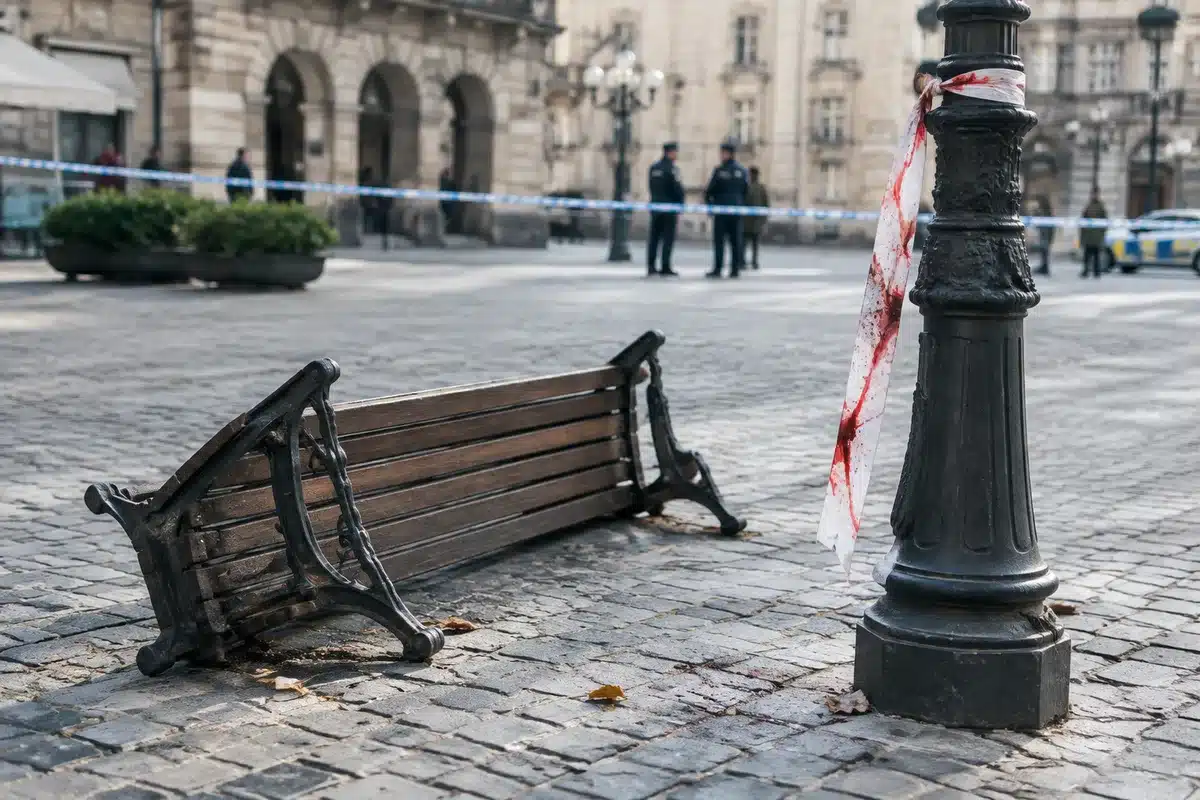
The downtown square in Kraków became a scene of horror when a young man drove into the Main Market Square and opened fire, killing multiple people and injuring others before police stopped him. The attack, which also included the murder of his family at home, left a city in shock and set off a rapid firestorm of political claims, wild conspiracy theories, and intense debate about the nature of modern mass violence.
Within hours the story was no longer only about victims and emergency response. Polish leaders, commentators and international outlets rushed to assign motive and meaning—some insisting on a political explanation, others pointing toward a more disturbing pattern of aimless, internet-fueled rage. The rush to judgment has become part of the aftermath, complicating efforts to understand what actually happened and why.
What we know so far about the Kraków attack
The Growing Demand for Data-Driven Decision Making in Silicon Valley
He quit, ran out of money, and begged to come back — here’s how his boss reacted
The basics of the incident are now public, although investigations are ongoing. Authorities have confirmed that the attacker drove into the Main Market Square, opened fire on passersby and was later wounded in a shootout with police. Emergency crews pronounced several people dead at the scene and treated numerous injured civilians. The suspect’s family was found shot at their residence. The attacker himself died later in hospital from injuries sustained during the confrontation with law enforcement.
- Location: Kraków’s Main Market Square, a high-traffic public area.
- Casualties: Multiple fatalities and a number of wounded; victims included both Polish citizens and foreign nationals.
- Perpetrator: A 24-year-old man; authorities are still piecing together his motives and background.
- Current status: Criminal and counterterror investigations are active; prosecutors have opened a file treating the attack as an act of terrorism.
Political leaders and the rush to assign blame
The attack quickly became a political football. Government ministers and opposition figures offered competing narratives about the shooter’s ideology, and state officials initially linked the suspect to extremist beliefs. One prominent minister declared early on that the attacker appeared to be fascinated by far-right ideas, a statement that spread rapidly through national and international media. That immediate framing framed the incident as part of a familiar culture-war storyline.

As backlash and scrutiny mounted, some politicians moderated their claims; others stood by their initial framing. Yet by then, the narrative had already influenced public perception both at home and abroad. International headlines framed the story as a far-right atrocity, while domestic partisans used it to accuse rivals of radicalizing or tolerating extremism. The political context in Poland—a tense standoff between a pro-EU government and a vocal conservative opposition—made this environment especially combustible.
How social media and conspiracy spread distorted versions
When traumatic events happen, social platforms often become breeding grounds for speculation. Within hours of the attack, numerous unverified claims circulated: assertions about the attacker’s nationality, occupation, sexual orientation or supposed ties to government plots. Some posts tried to pin the shooting on immigrant communities; others suggested it was a staged event intended to influence upcoming public demonstrations.

- False attributions (e.g., claiming the attacker was from another country).
- Political spin linking the incident to planned civic events.
- Labels applied without evidence, often to score political points.
These competing narratives complicated reporting and public understanding. They also demonstrated how rapidly a local tragedy can be reframed to serve broader agendas—undermining trust in institutions and diverting attention from forensic investigation.
A profile that doesn’t fit neat political categories
Available reporting so far suggests the attacker did not belong to an organized political movement or party. Instead, details emerging from acquaintances and neighborhood witnesses point toward a different profile—one often described in studies of mass violence as a mix of alienation, admiration for violent imagery, and a desire to shock.
Accounts describe symbolic clothing and provocative messages rather than party paraphernalia. A former classmate’s recollection of drawings depicting violence, and reports that the suspect may have joked about psychiatric hospitalization, fit a pattern observed in other cases where the perpetrator’s motive seems less ideological and more personal or nihilistic.
Common traits observed in similar attackers
- Social isolation and signs of alienation from peers and community.
- Consumption of violent content or meme cultures that glorify chaos.
- Ambiguous or shifting online identities that mix disparate political and anti-political symbols.
- Prior expressions of fantasy about mass violence or a desire for notoriety.
Within Poland’s official circles, at least one senior security figure suggested the possibility of a “nihilistic extremist”—someone who seeks to sow fear rather than to advance a coherent political program. That distinction matters for both prosecution and prevention strategies.
Calling it terrorism: legal categories vs. motives
Prosecutors have opened a terrorism investigation, a move that focuses on the method and intended effect rather than confirmed ideology. The decision reflects a broader debate: does terrorism require an explicit political goal, or can terror be defined by the deliberate use of violence to intimidate a population regardless of motive?
On one side, traditional definitions of terrorism emphasize organized intent to achieve political or ideological change. Under that view, incidents without a clear program or target ideology are harder to categorize as terrorism.
On the other side, some analysts argue that the very act of attacking a crowded public space is designed to instill fear, which aligns with a functional definition of terrorism regardless of the attacker’s declared beliefs. That functional perspective explains why prosecutors sometimes treat chaotic or nihilistic mass killings as terrorist acts: the instrument is terror itself.
Patterns beyond Kraków: a rising phenomenon in Europe and beyond
The Kraków incident fits into a worrying sequence of violent episodes across Poland and other Western countries characterized by attackers who appear to draw their identity from a fragmented online culture rather than a unified ideology. In recent weeks, there were multiple assaults on schools and public spaces where the perpetrators showed signs of radicalization that does not map neatly onto right-left divides.
Experts point to several contributing factors:
- The radicalizing role of online communities that mix political propaganda, nihilistic humor and violent fantasies.
- Socioeconomic and psychological pressures facing younger generations, including isolation and mental-health gaps.
- Political polarization that amplifies every violent act as evidence that “the other side” is dangerous.
One commentator described a kind of generational nihilism: a readiness to borrow elements from extremes on both sides or to mock all systems of meaning, while simultaneously fetishizing violence and spectacle. This pattern complicates prevention, because it resists the neat categorizations used by law enforcement and counter-extremism programs.
What questions policymakers and communities face now
The immediate criminal investigation will seek to establish the shooter’s intent and any affiliations. Beyond that, policymakers are confronting broader questions about how to reduce the risk of similar attacks and how to respond without inflaming political divisions:
- How can mental-health services and community outreach be scaled to reach isolated individuals before they act?
- What role should monitoring of violent online subcultures play, balanced against privacy and free-speech concerns?
- How can political leaders avoid exploiting tragedies for partisan gain while still holding accountable those who spread violent ideology?
- What measures can improve public safety at dense urban sites without transforming civic spaces into fortresses?
These are practical questions with no easy answers—and the way political actors and the media frame the incident will shape the policy choices that follow.
Jacob Reynolds serves as policy director for Freedom and Sovereignty Initiative Europe.
You might also like:
- Anti-Semitic violence stems from Islamism, not the cost of living
- ISIS: is it part of the progressive alliance?
- Ann Widdecombe investigation embarrasses police
- Belfast unrest: why violence has flared and who’s involved
- Belfast violence exposes deep community tensions after street attacks

Robert Johnson is a dedicated columnist focusing on political and social debates. With twelve years in editorial writing, he provides nuanced, well‑argued perspectives. His commentaries invite you to form your own views and engage in critical issues.

