
Show summary Hide summary
- Why dogs are catching scientists’ attention for cancer screening
- Medical Detection Dogs’ 2024 study: training scent teams
- Turning canine ability into technology: the MIT e-nose project
- Practical benefits and where this technology could go next
- Challenges researchers are addressing
- Real-world impact so far and future possibilities
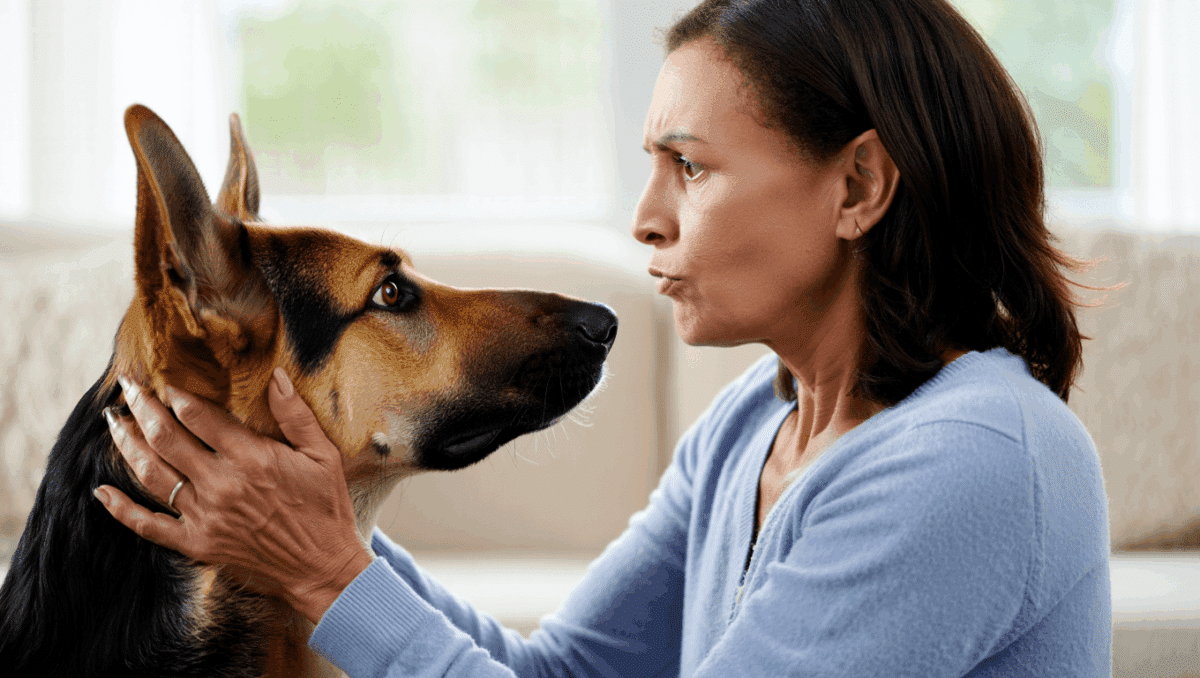
Colleen Ferguson’s German shepherd kept returning to the same spot: her mouth. When two-year-old Inca repeatedly sniffed and stared at her owner, Colleen chalked it up to a quirky habit — until a precautionary full-body scan revealed a small tumor in her left lung. The mass turned out to be stage one lung cancer, and surgery removed it before any further treatment was needed. Colleen, a 60-year-old from Kent, England, now credits her dog with an early detection that likely changed the course of her life.
Stories like Colleen’s are fueling a renewed scientific push to harness animal scent-detection skills for human medicine. Researchers and nonprofits are combining canine training with artificial intelligence to build tools that could bring rapid, noninvasive cancer screening into clinics and even personal devices.
Why dogs are catching scientists’ attention for cancer screening
Dogs’ noses are biologically primed to pick up odors humans cannot perceive. Over the past decade, studies and clinical trials have shown dogs can identify a range of diseases from body odors with surprisingly high accuracy. These findings are shifting how clinicians and engineers think about early detection.
The Growing Demand for Data-Driven Decision Making in Silicon Valley
He quit, ran out of money, and begged to come back — here’s how his boss reacted
- Proven detections: Trained dogs have demonstrated the ability to identify prostate and bladder cancers, COVID-19 infection, and signs of Parkinson’s disease by scent alone.
- Training approach: Positive-reward systems teach dogs to indicate samples linked to disease, refining their detection through repetition and reinforcement.
- Biological question: Scientists are investigating whether dogs are sensing molecules released by tumors or a metabolic response from the body—volatile organic compounds (VOCs) are the leading candidates.
Experts behind the nonprofit Medical Detection Dogs have led controlled studies to quantify these capabilities. Their goal is not to put a dog in every hospital, spokespeople say, but to translate canine intelligence into scalable diagnostic tools.
Medical Detection Dogs’ 2024 study: training scent teams
In 2024, Medical Detection Dogs launched a focused trial training seven dogs — including Labradors, cocker spaniels, and a retriever — to detect cancer-related odors in urine samples. The program aimed to establish reliable protocols for scent-based screening and to collect data that could train machines.
Key features of the study:
- Sample source: Urine collected from patients with confirmed diagnoses and from healthy controls.
- Dog breeds: Selection emphasized breeds with proven olfactory performance and temperament suited to repetitive laboratory tasks.
- Outcome goal: Demonstrate consistency and sensitivity that could be replicated by electronic systems.
Organizers emphasize that these canine trials provide a biological blueprint for what a sensing device should detect, rather than replacing veterinary expertise.
Turning canine ability into technology: the MIT e-nose project
A team at the Massachusetts Institute of Technology, led by quantum physicist Dr. Andreas Mershin, is translating canine scent skills into an electronic nose — an “e-nose” that uses chemical sensors and AI to recognize cancer-associated VOCs in urine. Working with Medical Detection Dogs and chemistry collaborators at the University of Texas at El Paso, the project seeks to teach machines to respond the way trained dogs do.
How the electronic nose is being trained and tested
The e-nose combines sensor arrays that detect minute chemical signatures with machine-learning algorithms trained on labeled samples. The system is being refined through a multi-stage testing pipeline:
- Calibration with known samples to map sensor responses to VOC patterns.
- Training the AI using the same reward-based logic applied to dogs: correct classifications are reinforced in the learning model.
- Clinical validation on a large, blinded sample set to measure sensitivity and specificity.
Currently, the device is undergoing trials on approximately 500 urine samples from patients at Milton Keynes University Hospital in the U.K., including individuals with prostate cancer and healthy controls. The data from these tests will determine how closely the e-nose matches or exceeds canine performance.
Practical benefits and where this technology could go next
If validated, an AI-driven e-nose could change routine cancer screening by offering fast, low-cost, noninvasive testing. Potential advantages include:
- Early detection: Catching cancers at a surgically treatable stage, as in Colleen Ferguson’s case.
- Accessibility: Portable units could extend basic diagnostics to community clinics and low-resource settings.
- Speed and cost: Urine-based or breath-based screening may be cheaper and quicker than many imaging tests.
- Integration with existing devices: Researchers envision sensor modules that could eventually be adapted to consumer electronics to provide health alerts.
Developers are targeting clinical approval within a relatively short time frame, with some teams aiming for hospital-ready tools in about two years pending trial outcomes and regulatory review.
Challenges researchers are addressing
Turning a dog’s nose into a reliable clinical instrument involves several technical and practical hurdles:
- Signal specificity — distinguishing cancer VOCs from confounding odors related to diet, medication, or other health conditions.
- Standardization — collecting, storing, and processing biological samples in consistent ways across sites.
- Regulatory pathway — demonstrating clinical benefit and safety to obtain medical device approvals.
- Scalability — building robust sensors that maintain sensitivity over thousands of tests and in varied environments.
Researchers are addressing these problems with multi-center trials, chemistry optimization, and collaborative training protocols that mirror the success of scent-trained animals.
Real-world impact so far and future possibilities
Colleen’s anecdote is an example of individual lives changed by canine senses; scientists hope the e-nose can multiply those saves across populations. Early-stage validation shows promise, and the collaboration between nonprofits, university chemists, and AI specialists demonstrates a pathway from observation to technology.
- Short-term: refine e-nose algorithms and expand sample diversity in clinical trials.
- Mid-term: seek regulatory approval and pilot hospital deployments.
- Long-term: adapt scent sensors for broader disease screening and home-monitoring platforms.
Developers stress that the objective is not to replace clinical judgment but to create a rapid screening layer that flags samples for follow-up. As teams scale up testing and refine sensor chemistry, the next wave of diagnostic tools may borrow directly from the instincts of animals like Inca — translating a dog’s persistent curiosity into a technology that can alert clinicians earlier than ever before.
You might also like:
- Cancer breath test hailed as most significant step toward lifesaving breakthrough in 50 years
- 220 million reasons: why dogs avoid some people and what they really sense
- Stray dog saved from death row becomes detective, sniffing out lost pets
- Dogs don’t like certain people—and there’s an explanation
- Rescued dogs from squalid house retrained as police sniffer K-9s

Michael Thompson is an experienced journalist covering U.S. and global news. With ten years on the front lines, he breaks down political and economic stories that matter. His precise writing and keen attention to detail help you grasp the real‑world impact of every event.


A skeptical critic: Woah, dogs sniffing out cancer in humans now? Whats next, cats diagnosing heart disease? Better not get on their bad side, or theyll rat you out to the vet.
Skeptical critic: Cancer-sniffing dogs, heart-diagnosing cats…what, are we building a furry medical team now? Just imagine, Fido wagging his tail while Fluffy reads your EKG results. Hey, if it works, who are we to scoff, right? Next up: parrots giving therapy sessions!
Ya know, dogs never cease to amaze me! Sniffin out cancer in humans now? Thats some next-level stuff. Who needs fancy machines when you got a loyal pup with a keen nose? Mans best friend indeed.
Man, talk about a furry hero! Dogs sniffing out lung cancer in a persons breath? Thats some next-level stuff. Imagine if our furry friends can help save lives like this. Pretty pawsome, right?
Yo, have yall seen this? Dogs sniffing out lung cancer from breath? Thats some next-level stuff! Imagine having a furry friend saving your life like that. Its like having a superhero with a wet nose.
Man, dogs really out here saving lives now. I swear, theyre like furry little superheroes with a nose for sniffing out cancer. Cant wait to see how this e-nose thing pans out, technology is wild, aint it?
Oh man, dogs really be out here flexin their superhero skills, huh? Can you imagine a pup in a cape sniffing out cancer like its no big deal? Technologys wild ride, right? Cant wait to see whats next!
Man, dogs are evolving into some kind of superhero sidekicks! Detecting lung cancer just by sniffing breath? Thats some next-level stuff. Wonder if theyll start wearing capes next. Watch out, e-nose, the bark crusaders are coming for ya!
Whoa, dogs on a mission! Sniffing out lung cancer? Thats some serious superpower upgrade. Soon theyll be rocking capes and fighting crime. But hey, e-nose, better watch your back – the bark crusaders are on the rise!
Man, dogs are superheroes in fur! Sniffin out cancer? Thats wild. Imagine your pup savin lives by givin a sniff. Cant wait to see more e-nose magic in action!
Yo, imagine Fido rockin a cape, ready to fight crime with that super sniffer! Its like having a four-legged superhero at home. E-nose magic is the real deal, man. Who needs Batman when you got a pup sniffin out trouble? Cant wait to see more of these fur-superpowers in action!
Man, dogs never cease to amaze me! Sniffin out cancer in moms breath? Thats some next-level superhero stuff. Imagine if we all had e-noses like that—no disease would stand a chance!
I used to think my dog was just a lazy couch potato, but turns out he might have a nose for saving lives! Who knew our furry friends could be such heroes in the fight against cancer? Truly pawsome!
Man, dogs are seriously the unsung heroes, huh? Sniffin out cancer like its no big deal. Who needs fancy machines when you got a furry friend with a nose for saving lives? Truly pawsome.
Oh man, totally feel ya on that one! Dogs are like the undercover superheroes of the animal kingdom, sniffin out trouble and kickin butt without asking for a thank you. Who needs fancy tech when youve got a furry friend whos basically a walking, barking MRI machine, right? Paws down, theyre the real MVPs in the fight against the big C. Aint no doubt about it, theyre the ultimate lifesavers in the fluffiest disguise.
I never thought a pupper could sniff out cancer, man! My dog just sniffs out my snacks. Technologys wild, turning that canine skill into an e-nose? Thats some sci-fi stuff right there!