
Show summary Hide summary
- What the Macaronesia Sanctuary would cover and why it matters
- How the decision was reached at the IUCN Congress
- Who proposed the sanctuary and the conservation network behind it
- What threats the sanctuary aims to reduce
- Open questions: enforcement, governance and funding
- Regional and global context for large ocean protections
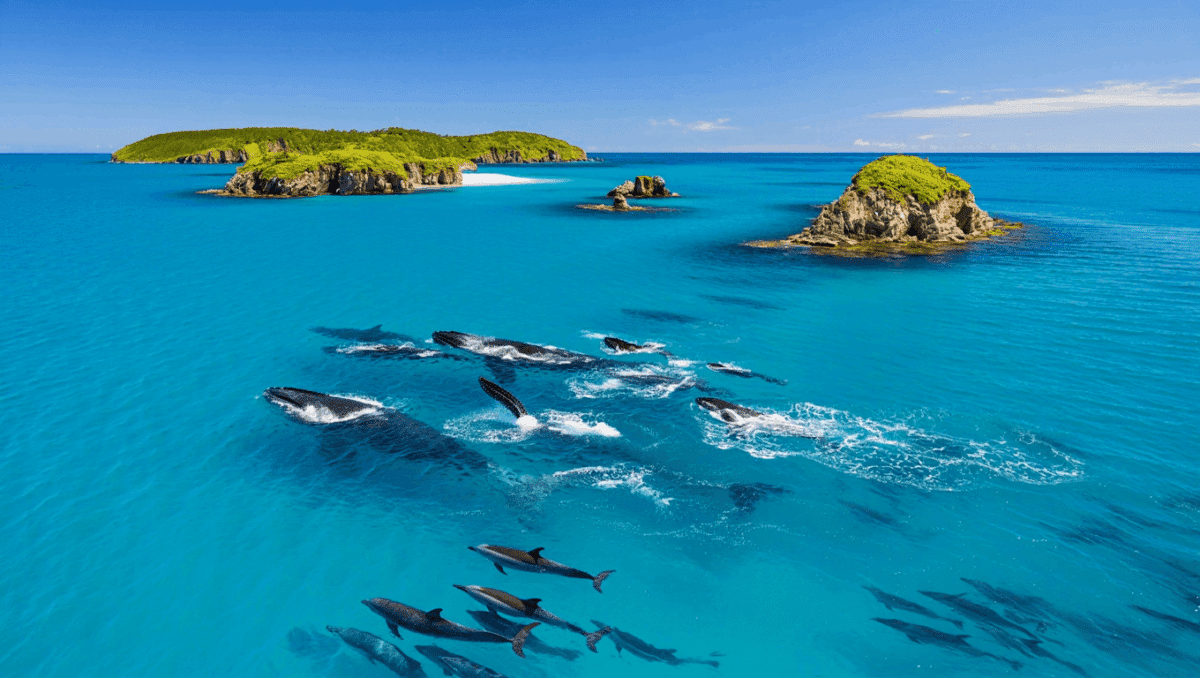
An overwhelming international vote has set the stage for a sweeping new marine sanctuary in the northeastern Atlantic that conservationists hope will protect one of the ocean’s busiest whale and dolphin highways. The area, centered on the island chains of the Azores, Madeira, the Canary Islands and Cape Verde, received near-unanimous backing at the IUCN World Conservation Congress and now moves into a phase of negotiation over how it will be put into practice.
Backers say the proposed Macaronesia Sanctuary could become one of the planet’s most important protected marine corridors, safeguarding migration routes for dozens of cetacean species while galvanizing regional research and cooperation. The initiative is driven by a Canary Islands-based conservation organization and has drawn support from governments and universities across the Macaronesia region.
What the Macaronesia Sanctuary would cover and why it matters
The Growing Demand for Data-Driven Decision Making in Silicon Valley
He quit, ran out of money, and begged to come back — here’s how his boss reacted
The sanctuary proposal focuses on the waters around four Atlantic archipelagos that act as stepping-stones between subtropical and temperate ecosystems. Together, these ocean spaces are used by a large share of the Atlantic’s whales and dolphins during seasonal movements and feeding.
- Primary island groups included: the Azores, Madeira, the Canary Islands, and Cape Verde.
- Scope: A broad swath of open ocean and offshore habitats across international and national waters in the northeastern Atlantic.
- Species impact: The area is estimated to intersect the migrations of dozens of cetacean species, positioning it as a major conservation priority.
How the decision was reached at the IUCN Congress
Delegates at the International Union for Conservation of Nature’s World Conservation Congress approved the resolution calling for the Macaronesia Sanctuary with resounding support. Observers noted the vote demonstrated strong political and scientific alignment around protecting transoceanic wildlife corridors.
Final tally: The resolution passed with approximately 96.5% of votes in favor, a level of consensus that advocates say underscores broad international will to act on ocean conservation.
Who proposed the sanctuary and the conservation network behind it
The Macaronesia idea was led by Loro Parque Fundación, a conservation NGO based in the Canary Islands. Founded by German conservationist Wolfgang Kiessling, the foundation has been active in species recovery and regional conservation projects for decades and partnered with scientists, including marine biologist Petra Deimar, to develop the sanctuary concept.
- Loro Parque Fundación has supported global conservation initiatives and helped coordinate scientific research in the Macaronesia region.
- In 2024, public universities across the Macaronesia countries joined a Marine Biodiversity Manifesto promoted by the foundation to expand research, training and conservation cooperation.
- The IUCN acted as the international forum where governments and NGOs translated scientific recommendations into a formal resolution.
What threats the sanctuary aims to reduce
Advocates highlight a range of human-caused pressures that the designation seeks to address. Protecting the corridor could help reduce mortality and disturbance for migratory marine mammals while supporting healthier ocean ecosystems.
- Fishing gear entanglement: Many whales and dolphins become entangled in nets and lines, often with fatal results.
- Ship strikes: Busy shipping lanes overlap some migration routes, increasing collision risks for large whales.
- Underwater noise: Shipping, seismic surveys and other industrial activities raise background noise levels that disturb cetacean communication and navigation.
- Emerging threats: Deep-sea mining and expanded offshore development pose future risks to habitats and food webs.
Conservationists point out that roughly 84% of Atlantic whale and dolphin species are believed to transit the Macaronesia area, amplifying the potential benefit of coordinated protections across the archipelagos.
Open questions: enforcement, governance and funding
Although the IUCN resolution establishes a strong political signal, it does not by itself create binding legal protections or a management authority. Key implementation details remain to be negotiated among national governments, regional bodies, and international partners.
- Jurisdictional complexity: The sanctuary would span national Exclusive Economic Zones and areas beyond national jurisdiction, raising questions about which laws and agencies would apply.
- Enforcement mechanisms: Plans for patrolling, monitoring and compliance have not been finalized.
- Funding and capacity: Long-term financing for research, surveillance and community engagement is still unresolved, and could come from public budgets, international grants, or public–private partnerships.
- Scientific monitoring: Coordinated monitoring programs and data-sharing agreements will be needed to track outcomes and adapt management measures.
Regional and global context for large ocean protections
Advocates say Macaronesia fits into a growing global trend of establishing large marine protected areas to conserve biodiversity and safeguard migrating species. The proposal has been framed not only as a regional conservation priority but also as part of a broader push to protect critical marine corridors worldwide.
For the Macaronesia Sanctuary to move from aspiration to action, governments of the involved island states and international partners must translate the IUCN resolution into legal designations, funding commitments, and operational plans—work that is already starting in research institutions and policy circles but will require sustained coordination and political will
You might also like:
- French Polynesia protects a biodiverse marine reserve twice the size of Arizona teeming with life
- White abalone found alive after 5 years in Channel Islands survey sparks hope for recovery
- Endangered monk seals’ island home gets new marine protections from Greece
- New Zealand marine reserves: 5 new sites to protect dolphins and kelp forests off South Island
- Bloomberg donates $260 million to turn high seas treaty into lasting ocean protections

Michael Thompson is an experienced journalist covering U.S. and global news. With ten years on the front lines, he breaks down political and economic stories that matter. His precise writing and keen attention to detail help you grasp the real‑world impact of every event.


Man, the Macaronesia Sanctuary is like a shield for our ocean pals! Finally, someone stepping up to protect our underwater buddies. Lets hope its not all talk and they walk the conservation walk, you know?
Man, I remember snorkeling in those waters years back, seeing whales majestically glide by. Hope this sanctuary helps protect their home. We gotta do our part, ya know?
Man, member when we used to explore without a care? Glad Macronesias sanctuarys stepping up for the whales. Hope we all learn to protect our waters like they do.
Man, member when we didnt care bout ocean sanctuaries? Now, Macaronesias doin it right, protectin whales and all. Times are changin, huh? Maybe theres hope for us yet.
Man, the Macronesia marine sanctuary is a big win for ocean conservation! Reminds me of that time I saw a whale breach off the coast. Lets protect those majestic creatures and their homes!
Ah, the Macaronesia Marine Sanctuary! Reminds me of that time I got lost in the Atlantic. Hope this sanctuary helps our whale pals. Kudos to those pushing for marine conservation!
Man, its about time they stepped up to protect those whale habitats! Hopefully, this sanctuary in Macronesia will make a real difference. Every little bit counts, right? Lets see how it plays out in the long run.
Man, this Macronesia sanctuary thing is legit! Protecting the waters around those islands and critical whale habitat? Thats the kind of news that makes me wanna high-five Mother Nature. About time we started taking care of our ocean buddies.