
Show summary Hide summary
- From archaeological digs to modern sightings: the trail that led back to life
- Photography, misidentified specimens, and the role of museum collections in species discovery
- The ring-tailed glider: an ancient lineage reappears in the canopy
- Local knowledge, cultural significance, and conservation concerns
- What these finds mean for biodiversity research and future exploration
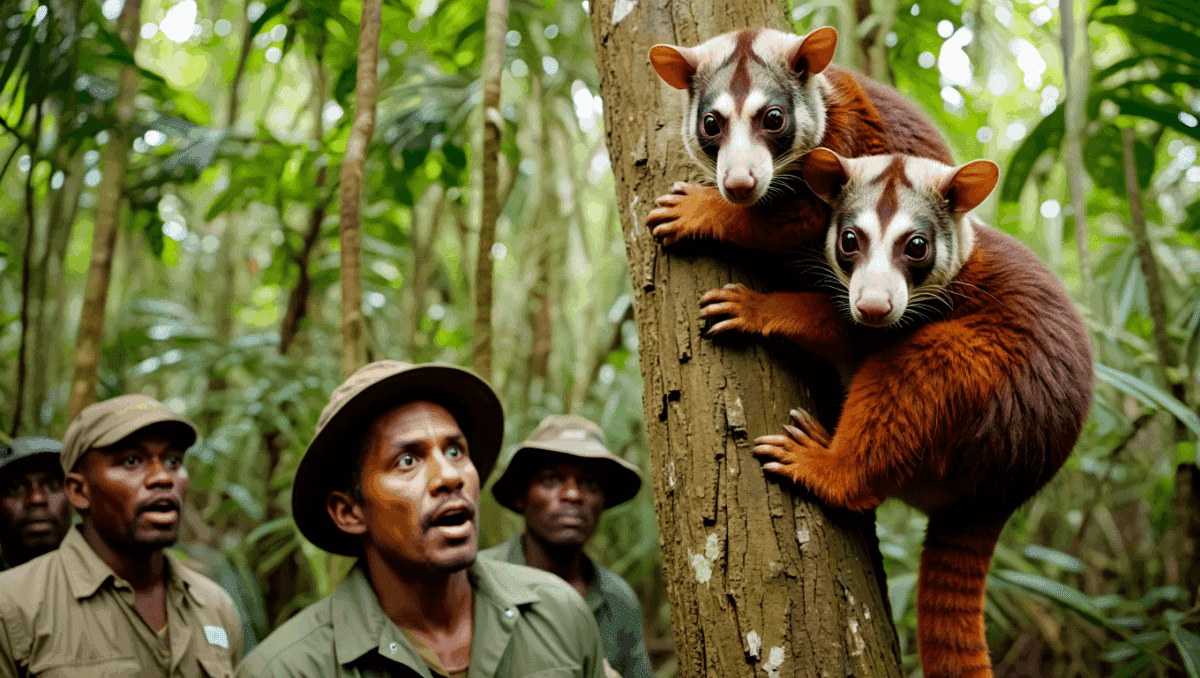
Deep in the rainforests of New Guinea, scientists and local trackers have uncovered a startling chapter in natural history: two tree-dwelling marsupials that science thought had vanished thousands of years ago are alive today. These animals were known only from ancient bones until recent fieldwork, photographs and museum sleuthing revealed them living in the canopy — a rare reversal from fossil record to living species.
The discoveries rewrite parts of the island’s mammal story and raise fresh questions about how many other “lost” species might still be hiding in remote forests. Beyond the excitement of rediscovery, the finds carry urgent conservation implications for Vogelkop (Bird’s Head Peninsula) and the people who share the landscape with these unusual creatures.
From archaeological digs to modern sightings: the trail that led back to life
The Growing Demand for Data-Driven Decision Making in Silicon Valley
He quit, ran out of money, and begged to come back — here’s how his boss reacted
Archaeologists working on Stone Age sites in Vogelkop unearthed skull fragments and teeth more than a decade ago. Those remains, dated to roughly 6,000 years old, hinted at animals that did not match any living species known to science. In paleontological terms, such lineages that vanish from the fossil record and later reappear are labeled “Lazarus taxa.”
One researcher proposed in 2007 that the fossil forms could correspond to extant, but unrecognized, marsupials in the region — a provocative suggestion given how little of New Guinea’s highland and forested interior has been surveyed. For years, that idea remained speculative until a combination of chance photography and careful museum work provided the evidence needed to confirm the link between bone and living animal.
Photography, misidentified specimens, and the role of museum collections in species discovery
In recent field visits organized by mammalwatching.org, photographer Carlos Bocos captured images of a small possum with an extraordinarily long digit protruding from one of its front paws. Photographs alone were insufficient to settle the question, because there are several species of long-fingered possums in the region.
Critical progress came when researchers examined museum specimens held at the University of New Guinea. Two preserved specimens had been cataloged incorrectly as a related species and used for teaching. Once reexamined, those skins and skulls matched the fossil forms and Bocos’ photographs, allowing scientists to stitch together the ancient and modern records.
- Lead researcher: Tim Flannery and colleagues assembled the evidence linking fossils, photos and museum material.
- Scientific milestone: Identification of a previously unrecognized genus of New Guinean mammal, the first such addition since 1937.
- Method: Combining archaeological context, morphology, field images and museum re-assessment.
Why the long finger matters
The newly confirmed pygmy long-fingered possum has a dramatically elongated third digit that functions as a precise foraging tool. These animals probe tree bark and crevices to extract wood-boring insects, a feeding strategy that shaped both their anatomy and their ecological niche. That distinctive trait made it possible to separate this species — and in turn its genus — from other similar possums.
The ring-tailed glider: an ancient lineage reappears in the canopy
The second species, now described as the ring-tailed glider, was known only from fossilized teeth and skull pieces until a 2015 photograph provided an unexpected living image. After analysis, researchers assigned this animal to a new genus as well and connected it to fossil relatives known from Australia’s Pliocene and Pleistocene deposits.
That connection suggests a biogeographic story in which Australia and the Vogelkop region shared fauna in deep time, before tectonic and climatic shifts separated ecosystems. The ring-tailed glider’s closest living relatives are forest gliding species in eastern Australia, such as greater gliders and other ringtail-like marsupials, hinting that Vogelkop’s forests may be refuges for relict Australian lineages.
Local knowledge, cultural significance, and conservation concerns
Indigenous communities in Vogelkop have long recognized these animals. For many, they are viewed as sacred beings or incarnations of ancestors — a cultural insight that helped guide researchers to habitats where sightings were more likely. Including local people as collaborators was key to locating and documenting these secretive mammals.
At the same time, Vogelkop’s forests face growing pressures from logging, agriculture and development. The rediscovery of these rare marsupials comes with a conservation imperative: protecting the forest patches and ecological processes that support species existing nowhere else on Earth.
- Threats: Habitat loss, deforestation, and limited scientific surveys in remote areas.
- Opportunity: New species descriptions can motivate protection measures and community-based conservation efforts.
- Scientific next steps: Broader field surveys, genetic sampling, and long-term monitoring to establish population sizes and ranges.
What these finds mean for biodiversity research and future exploration
Discovering mammals once known only from millennia-old remains forces researchers to rethink assumptions about extinction and persistence in underexplored ecosystems. The Vogelkop work demonstrates the value of combining paleontology, museum science, field photography and local ecological knowledge to reveal hidden biodiversity.
Scientists now emphasize targeted surveys across New Guinea’s remote ridgelines and valleys, where similar surprises may await. As teams expand fieldwork and DNA analyses, additional “ghosts” of the fossil record could emerge alive — but only if their forest homes survive the next wave of human pressures.
You might also like:
- Platypus fossil reveals it swam with dolphins 25 million years ago
- T. rex trackway in North Dakota: first adult 66-million-year-old footprints discovered
- New bird species discovered in Ecuador could reshape conservation
- New cat species Tilcayo discovered: first in over 100 years
- World’s largest whale graveyard teems with deep-sea life including species unknown to science

Michael Thompson is an experienced journalist covering U.S. and global news. With ten years on the front lines, he breaks down political and economic stories that matter. His precise writing and keen attention to detail help you grasp the real‑world impact of every event.


I mean, can you imagine thinking a species is long gone, and then boom, theyre back like surprise, were still here! Its like when you find money in your pocket you forgot about. Natures full of surprises, man.
Man, talk bout a plot twist! Marsupials poppin up after 6,000 years? Natures full of surprises, aint it? Makes you wonder what else is out there playin hide and seek with us!
I remember hearin bout these marsupials in some old documentary! Thought they were long gone, but hey, nature be full of surprises. Guess its like findin a hidden stash of snacks in the back of your pantry, huh?
Yo, for real! Natures like that sneaky friend who always keeps you on your toes, right? Finding those marsupials is like stumbling upon a forgotten bag of chips when youre hangry – total plot twist! Its wild how much we still dont know about our own planet. Lifes full of surprises, man.
I remember reading about these marsupials in my grandpas old books. Thought they were history, but hey, surprise! Natures full of tricks. Makes you wonder what else is out there waiting to be rediscovered, huh?
A nostalgic parent:
Aww, mate, grandpas books are like a treasure trove, aint they? Those marsupials popping up again is like a blast from the past! Nature sure keeps us on our toes with its surprises. Makes you wonder what other old gems are out there just waiting to make a comeback, right?
Man, I always knew those little critters were up to something sneaky! Imagine chilling for millennia, then bam, surprise! Bet theyre having a good chuckle about us humans thinking they were long gone. Natures got jokes, man.
I mean, who wouldve thought these little marsupials were just chilling in hiding for centuries, right? Nature always has a trick or two up its sleeve. Cant wait to see what else is lurking out there!
Man, talk about a comeback story! These marsupials are like the underdogs of the animal kingdom, coming back after 6,000 years like Hey, were still here! Natures full of surprises, aint it?
Man, talk about a comeback! Marsupials hitting us with that surprise, were back move after 6,000 years? Thats some next-level stealth mode. Who needs superheroes when youve got nature pulling off stunts like this?
Man, imagine being a marsupial just chilling for 6,000 years, thinking youre extinct, and then BAM, you pop up like Surprise, yall! Natures got some wicked plot twists up its sleeve, I tell ya.
Man, talk about a comeback story! These marsupials are like the ultimate underdogs, sneaking back into the spotlight after 6,000 years. Natures full of surprises, huh? Who knows what else is out there waiting to make a grand entrance!
Dang, those kangaroos really be pulling off a surprise comeback, huh? Natures like a reality show, you never know whos gonna steal the spotlight next! Makes you wonder what other long-lost celebs are waiting to strut their stuff on the stage of life.
Man, I always thought marsupials were like those distant relatives you hear about but never meet. Turns out they were just really good at hide and seek for 6,000 years! Natures full of surprises, aint it?
Surprise, surprise! Who knew those sneaky marsupials were playing the long game of hide and seek? Natures got more twists and turns than a rollercoaster, aint it? Makes you wonder what other tricks its got up its sleeve. Whats next, talking squirrels?
Yo, did you hear about those marsupials making a comeback after 6,000 years? Its like the ultimate plot twist in the world of fauna! Nature be playin 4D chess, man.
Yo, did yall see that marsupials thought to be extinct for like 6,000 years just popped back up? Nature really out here playin hide and seek on us! Cant wait to see what else is lurking out there.