
Show summary Hide summary
- How a decade of detective work reshaped our view of the Augustinians
- Catalog of green miracles: what monks were credited with doing
- The case of Guglielmo of Malavalle: dragon slayer and ecological restorer
- How the Augustinians used the countryside to claim authority
- Putting the Augustinians back into the story of the Renaissance and the Church
When a scorched cherry twig suddenly put out leaves, or a sickly marsh burst back into “peak fertility,” medieval peasants did not shrug and move on — they told stories. Those stories, scholars now say, helped a little-known religious order win influence across Italy’s countryside long before one of its members sat on the papal throne.
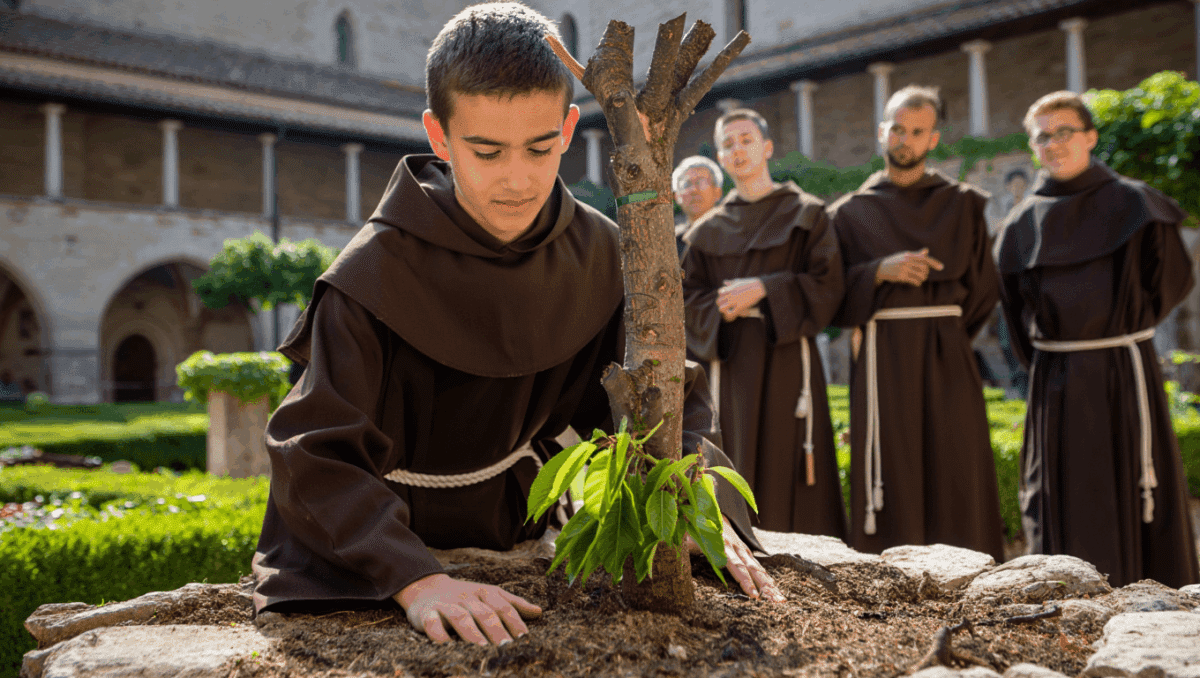
New research by historian Dr. Krisztina Ilko reveals a trove of agricultural and nature-based miracles attributed to the Augustinian friars — episodes that read less like dramatic city-based sanctity and more like practical, life-saving interventions for rural communities.
The Growing Demand for Data-Driven Decision Making in Silicon Valley
He quit, ran out of money, and begged to come back — here’s how his boss reacted
How a decade of detective work reshaped our view of the Augustinians
Dr. Ilko spent ten years tracing records through two dozen archives and more than sixty Augustinian sites, often hiking into remote ruins to examine frescoes, illuminated manuscripts, hagiographies, and private letters. Her work corrected misattributed documents and re-dated manuscripts that had been overlooked by earlier historians.
Her fieldwork shows that many Augustinian miracles were rooted in the land itself — crops, animals, weather, and reclaimed terrain — rather than the urban miracles scholars have usually highlighted.
- Visited sites: over 60 Augustinian churches, hermitages, and ruins across central Italy
- Primary sources consulted: medieval manuscripts, fresco cycles, and archive letters
- Key discovery: a neglected 14th-century collection in Florence that centers rural saints
Catalog of green miracles: what monks were credited with doing
The miracles Dr. Ilko cataloged read like a medieval farmer’s wish list. These acts offered concrete benefits to people who depended on the land for survival.
- Reviving dead or scorched plants: a cherry twig that sprouted anew and a frail apple tree commanded to bear fruit every year.
- Multiplying food: accounts of cabbages increasing in number to feed communities.
- Restoring wetlands and soil fertility: a swamp described as barren and toxic that was transformed back to productive land.
- Healing livestock: an ox with a broken leg made whole — a very practical miracle for agrarian households.
- Purifying landscapes: hermits credited with clearing poisoned air from marshes, effectively curing whole valleys of blight and storm damage.
Why these stories mattered more than pageantry
In the late medieval countryside, a healed ox or a reliable harvest could mean the difference between survival and famine. Dr. Ilko argues that these miracles were not merely pious tales but functioned as public services: they validated Augustinian presence and reassured locals that the friars brought tangible benefits.
By helping with everyday crises — disease among animals, poor yields, or toxic swamps — the Augustinians became trusted actors in the rural economy and religious life.
The case of Guglielmo of Malavalle: dragon slayer and ecological restorer
One striking example Ilko highlights is the 12th-century hermit Guglielmo of Malavalle. Unlike the popular image of Saint George, who appears in art as a mounted soldier slaying a dragon, Guglielmo’s dragon story is rural and restorative.
After hearing a voice from the sky, Guglielmo settled in Malavalle — a valley nicknamed “the bad valley” for its toxic air and frequent storms. Locals believed the area to be blighted by dragon-borne poison that spoiled crops and sickened livestock. Guglielmo’s reputation grew because he allegedly cleansed the air, calmed the storms, and returned the valley to productive use.
Ilko frames Guglielmo not as a mythical warrior but as a “divine gardener” and practical rescuer — someone who made life possible in a hostile environment.
How the Augustinians used the countryside to claim authority
Unlike some orders that built power through urban preaching and civic institutions, the Augustinians drew strength from less glamorous but vital sources: forests, pastures, quarries, and the sea. Direct contact with these landscapes gave friars access to resources and a kind of spiritual credibility tied to nature itself.
Because the order lacked a dramatic founding myth or a towering charismatic founder, these environmental ties helped the Augustinians assert antiquity and influence to the Vatican and local communities.
- Access to timber, grazing, and wild game bolstered economic independence.
- Rituals, feast days, and miracle tales tied religious authority to local topography.
- Healing and environmental restoration reinforced the friars’ reputation as indispensable neighbors.
Manuscripts and misread histories: why the record was neglected
One of Ilko’s most important finds was a 14th-century manuscript in Florence’s Biblioteca Medicea Laurenziana, written by a Florentine friar. The collection opens with the biography of Giovanni of Florence, founder of the hermitage of Santa Lucia in Larniano — a text full of rural miracles.
Scholars in prior generations largely ignored this manuscript, Ilko believes, because its miracle stories seemed too provincial compared with the dramatic urban miracles of bleeding hosts and stigmatized saints. Re-examining these overlooked texts allows historians to see how deeply the Augustinians’ identity was tied to the countryside.
Putting the Augustinians back into the story of the Renaissance and the Church
Dr. Ilko’s decade of research culminated in a book that reframes how we think about the order’s cultural role: The Sons of St. Augustine: Art and Memory in the Augustinian Churches of Central Italy. The volume collects art-historical evidence and textual analysis to show that the Augustinians were authorities not only of faith but of landscape and rural welfare.
With an Augustinian now occupying the papal office — Pope Leo XIV — Ilko suggests there is renewed interest in the order’s long-neglected rural legacy and the very practical miracles that earned it followers across central Italy.
You might also like:
- Timbuktu medieval manuscripts return home after a decade away, safe from insurgents
- King Arthur manuscript with 126 illustrations may soon enter public collection
- Far-right fantasy: country pubs, warm ale and labradors under scrutiny
- 83-mile hiking trail in Welsh valley backed by grassroots effort to repurpose shuttered mills
- Rural French mayors rally to save local cafes and reverse nationwide closures

Michael Thompson is an experienced journalist covering U.S. and global news. With ten years on the front lines, he breaks down political and economic stories that matter. His precise writing and keen attention to detail help you grasp the real‑world impact of every event.


Italian monks and their green-thumb miracles, huh? Reminds me of that time Brother Marco claimed he turned water into wine… turns out he just had a secret stash in his cellar! Wonder what other eco tricks those monks were up to.
Oh man, those Italian monks were like OG environmental influencers, man! Dragon slayers and eco warriors, what a combo! Wonder if they had an Instagram back in the day to show off their green-thumb miracles!
Dude, those Italian monks were the real OGs, no doubt! Dragon slayers and eco warriors, what a wild mix! Imagine them flexing their green miracles on Instagram back then – #HolyGardenGoals. Bet theyd have a killer following!
I once heard about those monks! They were like medieval eco-warriors, pulling off green miracles left and right. Dragon slayers and tree whisperers, man, those Augustinians were onto something. Bet theyd give modern climate activists a run for their money!
Man, those Medieval Italian monks were the OG eco warriors! Resurrecting barren lands, fighting dragons, and flexing their green thumbs like bosses? Im impressed. Maybe they should teach us a thing or two about sustainable living!
Oh, for sure! Those Medieval Italian monks were like the OG eco-warrior MVPs. Resurrecting lands, fighting dragons, and being all about that sustainable living life. Imagine getting gardening tips from those green-thumbed bosses! Maybe theyd school us on life AND gardening skills. Who knew monks were the original nature squad?
Oh man, these medieval Italian monks were like the OG environmental warriors, huh? Dragon slayers and tree-huggers all in one! Who knew they were out there saving the planet way before it was cool?
Oh man, those medieval Italian monks were the OG eco-warriors, for real! Dragon slayers by day, tree-huggers by night – talk about multitasking! Who knew they were saving the planet back when it wasnt even trending?
Yo, did you know those Medieval Italian monks were like the original eco-warriors? Like, they were out there doing green miracles before it was cool. Respect to those monks for being ahead of their time, man.
I used to think monks were all about prayer and psalms, but now I find out they were eco-warriors too? Green miracles and dragon slaying? Whats next, medieval garden shows on TV? Sign me up!
Wait, hold up! Monks doing eco-warrior stuff? Thats like finding out your grannys secretly a rockstar. Medieval garden shows on TV might be a stretch, but hey, stranger things have happened. Who knew monks had a side gig as green miracle workers and dragon slayers? Im as intrigued as a cat in a cheese shop!
Yo, did these monks have secret powers or what? Green miracles sound like a dope superpower. Maybe I should join a monastery and try my luck at summoning some eco-friendly dragons or something.
Yo, buddy, those monks sound like theyre straight out of a fantasy flick, right? Eco-friendly dragons? Sign me up! Who needs superhero movies when you can have green miracles and zen vibes? Maybe well see you riding a recycled dragon in the next blockbuster!
Yo, who knew those Medieval Italian monks were like the OG eco-warriors, right? Green-thumb miracles and dragon-slaying? Sounds like a lit mix! Wonder if they had a secret stash of magic beans or what!
Bro, those Medieval Italian monks were low-key eco-warrior legends! Like, imagine planting veggies in the morning and slaying dragons in the afternoon. A whole vibe, right? Secret stash of magic beans? Bet they had a beanstalk hidden somewhere, ready to conquer the clouds!
Man, those Italian monks were like the OG environmentalists, huh? Dragon slayers and eco-restorers? Thats some next-level green-thumb action right there. Wonder if they had compost bins in the monastery…
Yo, did these monks really have nature on speed dial or what? Imagine rolling up to your local forest and seeing Brother William drop-kicking a dragon… wild times, man. Medieval monks knew how to keep it real, eco-style.
Yo, those medieval monks were straight-up nature ninjas, huh? Brother William drop-kicking a dragon… thats some next-level eco-warrior stuff right there! Bet they were the original hipsters, keeping it real with their organic dragon-slaying techniques. Imagine the forest parties they threw! #MonkGoals
Yo, did yall know those medieval Italian monks were like the OG eco-warriors? Talk about green miracles, man! Forget your fancy tech, these dudes were out there slayin dragons and restorin nature like it was NBD. Respect!
Oh, so medieval Italian monks were like the OG environmentalists? Thats wild! Imagine slaying dragons and planting trees. Maybe they were onto something with that eco-authority gig. Time for a monk makeover!
Dude, those monks were way ahead of their time! Slaying dragons by day, planting trees by night? Talk about a side hustle! Maybe we all need a monk makeover, swap the suits for robes, and start saving the planet medieval style. Whos in for some eco-chivalry?
Medieval monks with green thumbs? Ha, bet they had some magic potions hidden in those monasteries! Wonder if their eco miracles included making wine taste better. Now thats a miracle Id believe in!
Man, these monks were like the OG environmentalists, huh? Dragon slayers AND eco warriors? My compost bin is feeling a bit inadequate now. Time to step up my green-thumb game!
Man, those monks were like the OG environmentalists! Dragon slayers and eco warriors? Sign me up for that monastery life! Medieval monks knew how to keep it real with those green-thumb miracles.
I heard these monks were like natures Avengers, but with robes and prayers instead of capes and gadgets. Green miracles? More like green legends! Medieval eco-warriors, man.