
Show summary Hide summary
Nigel Farage’s offhand remarks about people allegedly taking swans and carp to eat set off the sort of online firestorm that has become predictable in Britain’s immigration debates. The Reform UK leader made the comments on live radio, sparking immediate accusations of xenophobia and misinformation — but a quick look at past reports shows his claims weren’t pulled entirely out of thin air.
This piece unpacks what was said on air, revisits past incidents that may have fed into Farage’s claim, and considers how the media and public respond when cultural practices and criminal acts collide in headlines.
What Farage said on LBC and why it mattered
The Growing Demand for Data-Driven Decision Making in Silicon Valley
He quit, ran out of money, and begged to come back — here’s how his boss reacted
On a morning broadcast, Farage told presenter Nick Ferrari that swans in Royal Parks were being eaten and that carp were being stolen from ponds to be consumed — attributing those acts to “people who come from countries where it’s quite acceptable to do so.” The comments were framed as part of a broader critique of immigration, instantly prompting outrage from journalists and commentators who accused him of stoking prejudice.
The remark mattered not just for its content, but for the context: made by a high-profile politician on a popular radio show, it fed into an ongoing debate about immigration, public space, and cultural misunderstanding.
Past incidents that echo the claim
News stories and broadcast segments
- In 2013 a national news outlet reported a swan found cooked near Windsor Castle, a headline that circulated widely and fed public alarm about wildlife being targeted.
- National newspapers in the mid-2010s carried articles describing villagers blaming migrant workers for the disappearance of ducks and other waterfowl.
- A decade earlier, a BBC documentary followed animal welfare officers into a home after locals reported a missing bird; they found animal remains, feathers and a pot of stew that investigators suggested could be the bird in question.
Clusters of complaints in the 2010s
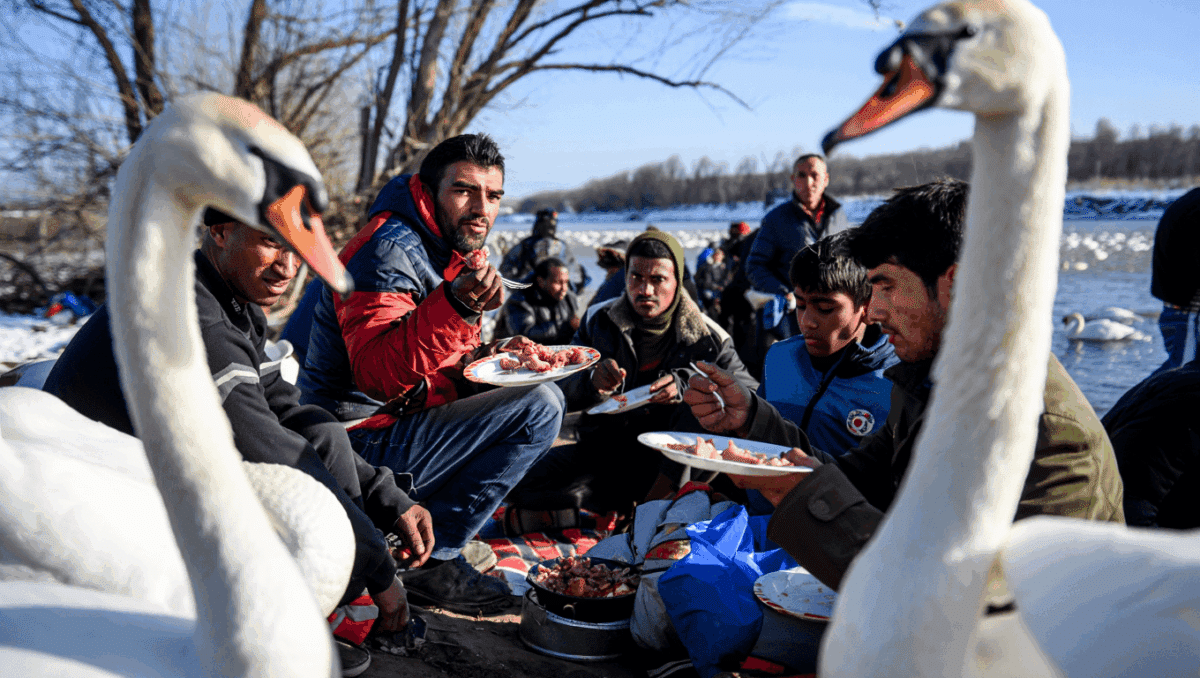
Between about 2010 and 2014 there were multiple reports from different parts of the country: fishermen and pond managers claiming large numbers of carp had gone missing, accounts of people seen cooking outside tents with dead swans nearby, and at least one horrific case where swans were found shot and left for dead. Authorities sometimes speculated cultural differences might explain behavior in isolated instances, though prosecutions and clear proof were often hard to secure.
How media and public figures responded
Reaction was swift after Farage spoke. Some broadcasters and pundits called the statements false and inflammatory, while others pointed out that similar anecdotes had appeared in reputable outlets over the years. Coverage split between those condemning the remarks as dehumanizing and those arguing they reflected real, if rare, incidents.
- Podcast hosts and former mainstream reporters publicly rejected the claim as a distortion aimed at immigrants.
- Editorial writers and columnists labeled it irresponsible and warned about the risks of amplifying stereotypes.
- Conversely, some commentators emphasized that isolated events had been reported before and that dismissing all such claims outright could look like ignoring real problems.
How much is myth and how much is fact?
It is important to separate stray incidents from systemic behavior. There is no evidence to support the idea that large numbers of migrants in Britain habitually hunt or eat protected birds. At the same time, records show specific episodes where wildlife was taken or found harmed, sometimes leading officials to comment that cultural differences might be a factor.
Context matters: a handful of incidents over many years does not prove a widespread practice, but reporting and anecdote can create the impression that something more common is taking place. For journalists and politicians alike, the ethical move is to verify and contextualize rather than generalize.
Reporting responsibly when culture and crime intersect
When stories touch on ethnicity, migration and cultural habits, the way media cover them shapes public perceptions. Sensational headlines draw clicks, but they also risk turning isolated wrongdoings into broad-brush indictments of entire communities.
- Verify the facts: confirm dates, locations, and official findings before linking a single incident to a group.
- Contextualize frequency: note whether events are anomalies or part of a verified pattern.
- Avoid sweeping language that implies collective guilt.
- Include expert voices — wildlife officers, cultural mediators, law enforcement — to explain motives, legal protections, and cultural norms.
Police, animal welfare organizations and local authorities are the primary sources for determining whether a specific case involves criminality, misinterpretation of food customs, or something else. Strong journalistic practice requires leaning on those sources rather than amplifying charged assertions made during political broadcasts.
Public policy and perception — the broader stakes
Stories about wildlife theft or unusual food practices rarely top the list of policy concerns for voters, but they can have outsized effects on sentiment when amplified by politicians or viral stories. For politicians, invoking such anecdotes can be a tactic to tap into deeper anxieties about change, public space and cultural difference. For the press, the choice is between careful scrutiny and sensational repetition.
The lesson for newsrooms and policymakers is twofold: treat allegations seriously enough to verify them, and resist the urge to transform singular incidents into sweeping narratives that shape attitudes toward entire populations. Accurate reporting reduces harm; speculation can inflame it.
You might also like:
- Nigel Farage: Guardian hit job sparks claims of a sinister new low
- Rare fisher spotted on trail cam in Cleveland area, first seen since 1800s
- Posh George scandal: the banal truth behind the headlines
- Pony trapped inside tractor tire rescued unharmed
- Top 10 Most Dangerous Selfie Spots Revealed: Avoid These Deadly Locations!

Robert Johnson is a dedicated columnist focusing on political and social debates. With twelve years in editorial writing, he provides nuanced, well‑argued perspectives. His commentaries invite you to form your own views and engage in critical issues.


I remember Granny used to tell tales bout swans and migrants. Shed say, Them swans, they fly high and free, not for stew pots! Farage and his LBC talk… aint no swan song, more like a quack-tastic mess!
Man, I remember hearing some wild stuff, but migrants eating swans? Thats a new one! Like, seriously, how does someone even come up with that? Gotta say, the things people say never cease to amaze me.
I remember my granny telling stories bout swans, majestic creatures she called em. Now this mess? Migrants eatin em? Nah, cant wrap my head around that. Sounds like a twisted fairytale gone wrong.
I remember when my grandpa used to tell us these wild stories about migrants eating swans. Wed all sit there, eyes wide, not sure if he was pulling our legs or dead serious. Guess some myths just stick around, huh?
I remember Aunt Martha goin on about migrants eatin swans like it was the end o the world. Turns out, its all just a wild myth. Makes ya wonder what other stories folks been cookin up, huh?
Yo, remember that time when everyone went bonkers over that swan-eating thing? Like, seriously, who comes up with this stuff? Cant believe people actually fell for it. The worlds a wild place, man.
Mate, migrants eating swans? Sounds like a dodgy fairytale! Farage spinning his yarns on LBC again? Give me a break. Next thing you know, theyll say unicorns are roaming the streets!
Lol, mate, migrants munching on swans? Sounds like a dodgy bedtime story for sure! Farage and his wild tales on LBC never fail to entertain. Who knows, maybe next unicorns will be spotted at Buckingham Palace!
Man, some rumors out there are wild! Migrants eating swans? Ive heard some fishy tales, but this one takes the cake. Dont people have better things to do than spread such bizarre stories?
Heck, Ive heard some tall tales in my time, but migrants chowing down on swans? Thats a new one! Who even comes up with this stuff? Sounds like folks need to find a hobby or something instead of spreading these zany stories. Cant believe the things that make the rounds these days, right?
Man, I remember my granny telling me all sorts of wild tales, but migrants feasting on swans? Thats a new one! Farages rants are like a broken record, but this white-wing myth is next-level bonkers!
I remember my granny telling me about the swan legend, said it brought bad luck to mess with them. Farage stirring this up? Not cool. Let swans be, man.
I remember when I first heard that swans were disappearing ‘cause migrants were munching on em. Outrageous, right? Turns out, its a load of bull. Can’t believe folks fall for this white-wing myth. Just shows how easily fear can cloud judgment.
I remember my grandpa telling me tales bout swans bein special birds, almost sacred. Now theyre sayin migrants gobble em up? Sounds fishy. Whos spreadin these stories, huh? Just dont add up.
Man, reading about migrants eating swans just blows my mind. I mean, whats next, unicorns on the menu? Its like a plot twist youd never see coming in a crazy fantasy movie. Reality is stranger than fiction, folks.
Mate, I remember my uncle going on about migrants eating swans like it was gospel truth. Always thought it sounded dodgy. Guess some myths just wont die, eh?
Ah, the ol migrant swan feast tale, huh? Sounds like something straight outta a weird family legend. Cant believe how myths like that stick around, mate. Wonder what other wild stories are floatin around out there, ya know?
I remember my grandma telling me stories bout swans bringin luck and protectin migrants. Now, folks twistin tales for their gain? Farage needs a good swan song!