
Show summary Hide summary
- Record Sale at Sotheby’s: A Rare Rembrandt Roars Back Into Public View
- How an Art Collector Turned Philanthropist Links Rembrandt and Wildlife Protection
- Where the Auction Money Will Go: Concrete Conservation Priorities
- What the Drawing Reveals and the Artistic Statement Behind the Sale
- Conservation Context: Why Lions Need Urgent Support
- Voices from the Field: Leadership and the Emotional Weight of the Sale
- What Comes Next for the Lion and the Art World
The art world watched as a rarely seen Rembrandt study of a lion crossed the auction block at Sotheby’s, bringing in a staggering sum that will do more than rewrite sale records — it will bankroll efforts to protect the species the drawing portrays. The sketch, long housed in private hands, sold for about $17.9 million, fueling both headlines and conservation programs.
Owned by Dr. Thomas S. Kaplan and his wife, the work — one of only six known lion studies by Rembrandt — has been part of a larger story that blends collecting with wildlife preservation. Kaplan, who leads both the Leiden Collection and the global big-cat nonprofit Panthera, has directed proceeds from the auction toward initiatives aimed at keeping lions on the landscape where they belong.
Record Sale at Sotheby’s: A Rare Rembrandt Roars Back Into Public View
The Growing Demand for Data-Driven Decision Making in Silicon Valley
He quit, ran out of money, and begged to come back — here’s how his boss reacted
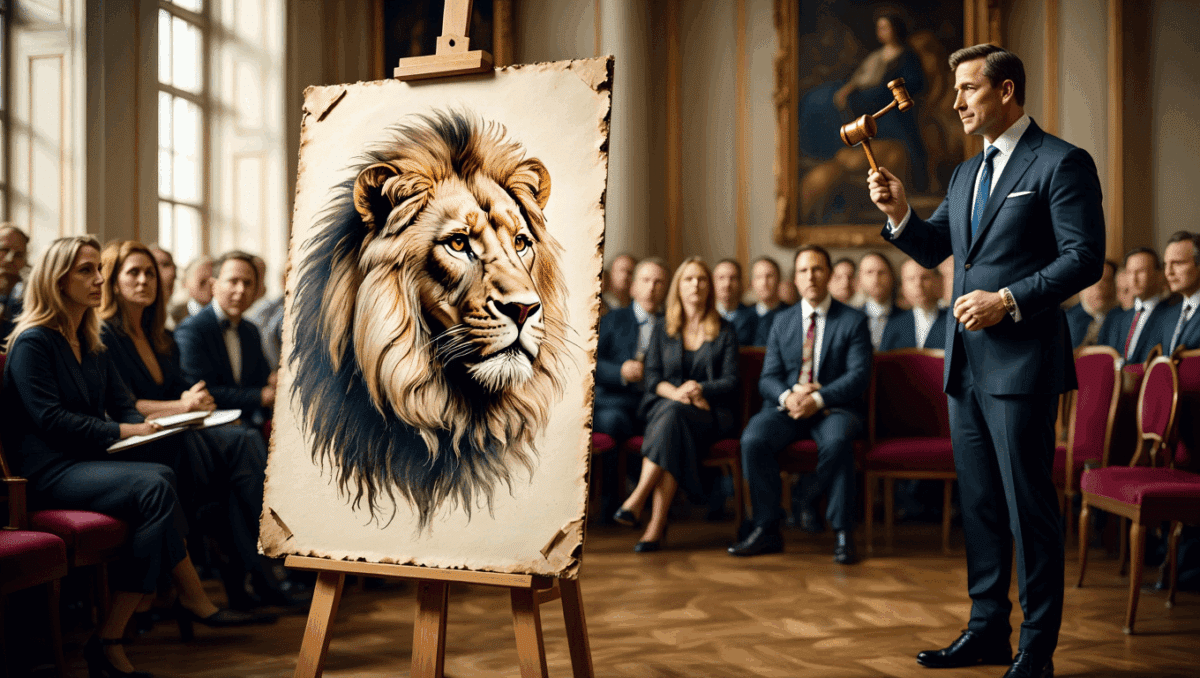
The drawing, cataloged as Young Lion Resting, was the first Rembrandt lion study to appear on the market in roughly a century. Sotheby’s sale price set a new high for any Rembrandt drawing, dramatically surpassing the previous record and attracting attention not only for its monetary value but for its cultural and conservation significance.
- Sale price: Approximately $17.9 million (reported as $18 million in coverage).
- Provenance: Previously held privately by Dr. Kaplan and co-owner Jon Ayers, chair of Panthera’s board.
- Rarity: One of six known Rembrandt lion drawings and the only one recently available from private ownership.
How an Art Collector Turned Philanthropist Links Rembrandt and Wildlife Protection
Dr. Kaplan’s dual roles in the art world and wildlife conservation are unusually intertwined. As founder of the Leiden Collection, he has assembled an international trove of Dutch and Flemish masterpieces. A year after acquiring the Rembrandt sketch, he also helped launch Panthera with conservation scientist Dr. Alan Rabinowitz, creating a platform focused exclusively on protecting wild cats.
Kaplan has long viewed art and conservation as complementary: art can raise funds and public interest, while conservation work gives tangible purpose to philanthropic investments. The decision to put the Rembrandt on the block was driven by that philosophy — turning a masterpiece into direct support for fieldwork across lion range countries.
Where the Auction Money Will Go: Concrete Conservation Priorities
Proceeds from the sale are earmarked for Panthera’s science-led efforts across Africa and parts of Asia. The organization plans to direct funding toward programs that reduce conflict between people and lions, expand protected areas, and strengthen anti-poaching measures.
- Anti-poaching operations: Improved patrols, technology, and enforcement to stop illegal hunting.
- Habitat protection: Safeguarding and connecting landscapes so lions can move and breed.
- Human-wildlife coexistence: Community programs, compensation schemes, and livestock protection to lower retaliatory killings.
- Scientific monitoring: Research on population trends, genetics, and corridor mapping to guide targeted interventions.
Scale and Reach
The donation arrives as Panthera marks its 20th year, and it will support projects in roughly 40 countries across four continents. Kaplan has emphasized that much of the work is community-centered: preventing livestock losses, securing livelihoods, and creating incentives that reduce the incentive to kill lions.
What the Drawing Reveals and the Artistic Statement Behind the Sale
Rembrandt’s sketch captures the animal with fluid lines and a careful eye for animal anatomy — loose strokes that define the lion’s relaxed posture and focused expression. The work’s naturalism is part of what made it irresistible to collectors and compelling as a symbol for conservation.
Alongside the original, the sale included a conceptual companion piece titled Young Lion Vanished, where the silhouette of the animal is deliberately absent. That visual contrast aimed to make a point about the rapid contraction of the lion’s historical range: the image of presence paired with an image of absence.
Conservation Context: Why Lions Need Urgent Support
Over the past century, lions have lost vast swaths of territory. While they persist in several strongholds, they have vanished from many countries where they once roamed. Panthera’s work with local partners seeks to reverse that trend by improving habitat connectivity and reducing human-lion conflict.
- In many places, lions were driven out by habitat loss and human expansion.
- Economic dependence on livestock can prompt people to kill lions after depredations.
- Effective coexistence programs — such as better corrals and community compensation — have shown measurable success where applied.
Successes and Ongoing Challenges
Panthera has logged notable wins with other big cats — including leopards and jaguars — but programs for lions often remain reactive, focusing on defending existing populations rather than restoring lost ones. Kaplan and other conservation leaders argue that with strategic investment and landscape-scale planning, the lion’s decline can be halted or reversed in many regions.
Voices from the Field: Leadership and the Emotional Weight of the Sale
Jon Ayers, who co-owned the drawing with Kaplan, framed the sale as a way to translate the life Rembrandt rendered on paper into real-world protection. Senior leaders at Panthera have described the funds as vital to sustaining patrols, community outreach, and habitat restoration work that save animals day to day.
Kaplan himself stresses pragmatism: saving lions requires both science and social solutions. He has noted that when people’s livelihoods are secured and livestock losses reduced, retaliatory killing declines — a practical path to coexistence that the auction proceeds are intended to advance.
What Comes Next for the Lion and the Art World
The sale has already reshaped conversations at the intersection of cultural heritage and environmental philanthropy, illustrating how artworks can be leveraged to generate large-scale impact. As Panthera deploys the funds into field programs, conservationists will watch for measurable changes in lion survival and habitat connectivity in targeted regions.
Meanwhile, the Rembrandt itself — celebrated for both its artistry and its newfound role as a fundraising catalyst — has reemerged as a powerful emblem linking centuries-old human creativity to contemporary efforts to keep wild species thriving.
You might also like:
- India’s lion population up 70%, habitat area up 15% in last decade
- Flat-headed cats seen in Thailand for first time in 30 years, thought extinct
- Cloud jaguar sighting in Honduras caught on trail cam, first in a decade
- Mummy portrait of ancient man with piercing hazel eyes sells for nearly $1 million
- New Zealand marine reserves: 5 new sites to protect dolphins and kelp forests off South Island

Michael Thompson is an experienced journalist covering U.S. and global news. With ten years on the front lines, he breaks down political and economic stories that matter. His precise writing and keen attention to detail help you grasp the real‑world impact of every event.


Man, that Rembrandt lion drawing selling for $18M is wild! Props to Tom Kaplan for funding lion conservation. Art meeting wildlife protection, thats some next-level synergy right there. Hope it helps the big cats roar for years to come!
Man, that lion drawing by Rembrandt sold for 18 million? Crazy stuff, but at least its going to help the big cats. Tom Kaplans really doing something with that cash. Art meets wildlife, who wouldve thought?
Man, $18M for a lion drawing? Thats wild! But hey, if it helps fund conservation efforts, props to Tom Kaplan. Art and wildlife protection, who knew theyd make such a fierce combo?
Man, $18M for a lion drawing? Thats wild! But hey, if it helps save those majestic beasts, Im all for it. Kudos to Tom Kaplan for combining art and conservation like a boss!
Man, $18M for a lion drawing? Rembrandts got some serious fans! Gotta admit, using the cash for lion conservation is a roar-worthy move. Art and wildlife? Thats wild, in a good way!
Man, thats a crazy amount for a lion sketch! Rembrandt sure knows how to reel in the big bucks. But hey, using that dough for lion conservation? Thats some next-level noble move, gotta give props for that. Art and wildlife teaming up? Now thats a combo I never knew I needed, but its kinda cool, aint it?
A wildlife enthusiast here! Who knew a lion drawing by Rembrandt could fetch $18M for conservation? Tom Kaplans initiative is wild and noble, blending art and wildlife protection like a masterpiece in motion. Kudos!
Yo, isnt it wild how art can help save the lions? Tom Kaplans on another level with this move. Rembrandts lions roar back in style, all for a good cause. Art with a purpose, man.
Yo dude, totally feeling you on this one! Art for a cause hits different, especially when its about saving our majestic lion pals. Tom Kaplans really out here making moves, aint he? Love seeing Rembrandts lions roaring back in style, all in the name of doing some good. Its like arts got a secret superhero side, swooping in to help out where it counts. Who knew brushstrokes could be so powerful, right?
Eighteen million for a lion drawing? Tom Kaplans got both cash and heart, mate. Thats proper philanthropy, aint it? Rembrandt would be chuffed his arts helping protect wildlife. Cheers to that!
Man, $18M for a lion drawing? Rembrandt mustve had a thing for big cats. But hey, if it helps the real lions out there, thats pretty cool. Art meets wildlife conservation, who wouldve thought?