
Show summary Hide summary
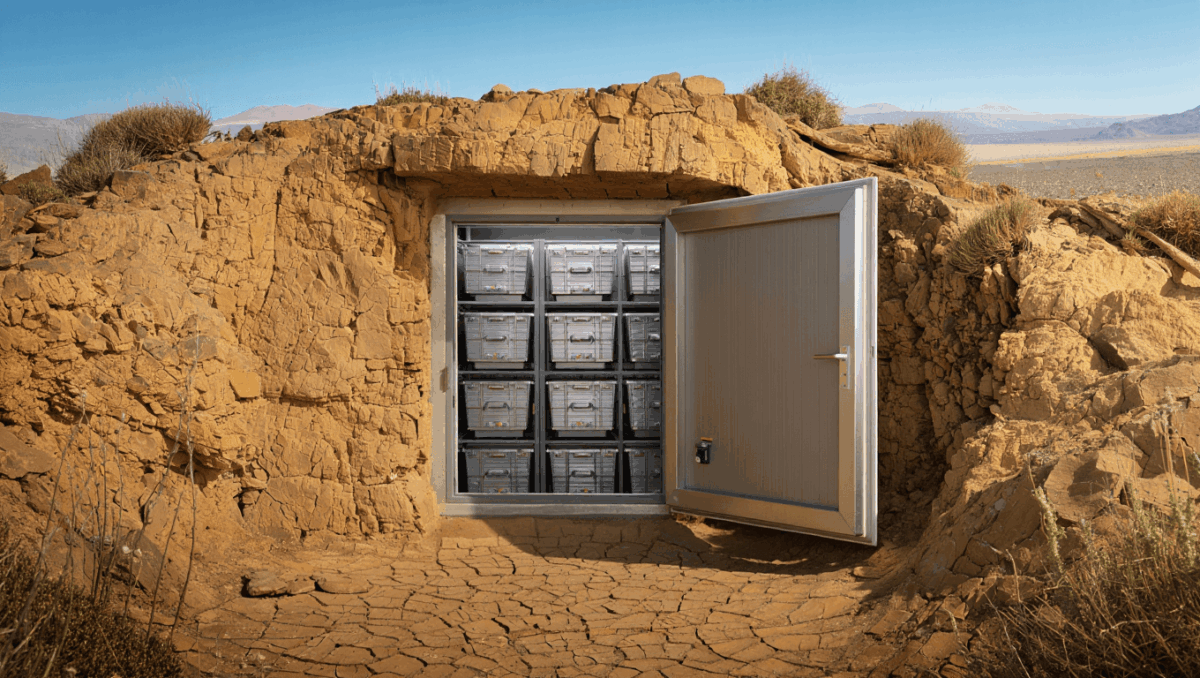
Beneath the sun-baked, salt-crusted plains of the Atacama lies an unexpected refuge: a refrigerated sanctuary that holds the genetic legacy of Chile’s plants. Carved into a rocky ridge and built to withstand earthquakes and extreme temperatures, the Initihuasi Seed Bank works quietly to keep local flora — from fragile wildflowers to cultivated grape varieties — ready for the future.
This subterranean vault is part laboratory, part living archive. Scientists who work there combine fieldwork across Chile’s varied climates with on-site growing rooms, creating a practical playbook for rescuing and reintroducing species as environments shift.
What the Initihuasi Seed Vault Is Protecting
Initihuasi stores seeds from a broad sweep of Chile’s botanical life. On shelves inside the cold rooms, tiny foil packets are cataloged and frozen at -4°F (-20°C) to maintain viability over decades. The collection includes:
The Growing Demand for Data-Driven Decision Making in Silicon Valley
He quit, ran out of money, and begged to come back — here’s how his boss reacted
- Rare and nearly extinct cactus species adapted to desert microclimates
- Wine grapes and other agricultural varieties important to local economies
- Wild plants that make up Chile’s native ecosystems, many found nowhere else
The facility’s design is practical and durable: it sits behind reinforced concrete to resist tremors, and its subterranean position helps stabilize internal temperatures. Researchers describe the seed bank as a repository for both biodiversity conservation and agricultural resilience.
How the Seed Bank Operates: Collection, Storage, and Propagation
Initihuasi is not a solitary silo. It functions as the central hub of a national network of seed repositories and botanical research centers. Its day-to-day work includes:
- Organizing and executing field expeditions across deserts, mountains, and forests to collect fresh seed samples
- Cataloging and long-term cold storage of seed lots from diverse plant families
- Maintaining greenhouse and propagation facilities to test germination and document cultivation methods
- Sharing data and material with partner institutions to support restoration and agricultural programs
Scientists at the center continuously document best practices for germinating and growing more vulnerable species. Those protocols are critical for later restoration efforts and for farmers seeking to preserve heirloom crop varieties under changing climate conditions.
Scale of the Effort
Chile’s flora is unusually rich and localized: thousands of plant species inhabit the country, and a large portion are endemic — found only within Chilean borders. The seed bank and its partners aim to collect representative samples that reflect this diversity, prioritizing species at high risk from habitat loss, climate shifts, or disease.
Regional and Global Partnerships Strengthen Resilience
Initihuasi also plays a coordinating role beyond national borders. It contributes to a continental network of South American seed banks that aim to keep the region’s biodiversity robust even if landscapes fragment or climates change dramatically. Sharing genetic resources and cultivation knowledge across countries helps safeguard the largest and most diverse plant communities on the continent.
Seed vaults have become a recognized tool worldwide for biodiversity protection. They range from botanical garden repositories in places like the United Kingdom to high-profile facilities such as the Global Seed Vault in Svalbard. Each facility fills a different niche — some focus on crop varieties, others on wild species — but the shared goal is to keep options open for future conservationists, farmers, and researchers who may need to restore or reintroduce plants in a warming world.
You might also like:
- Seed bank’s 25-year collection safeguards plant species from extinction
- Birds feast on sunflower seeds outside kitchen window in autumn
- New Jersey wildflower species found that grows only in the state
- 158 giant endangered tortoises released on Galápagos island after being extinct for 180 years
- Nonphotosynthetic plant discovered: species abandoned photosynthesis entirely

Michael Thompson is an experienced journalist covering U.S. and global news. With ten years on the front lines, he breaks down political and economic stories that matter. His precise writing and keen attention to detail help you grasp the real‑world impact of every event.


Whoa, talk about a cool initiative! I mean, freezing seeds in the desert to protect plant diversity? Thats some next-level sci-fi stuff right there. Gotta give props to the folks behind this seed vault in the Atacama Desert, keeping our green buddies safe and sound.
Man, talk about thinking ahead! Stashing seeds in a frozen vault in the Atacama Desert? Thats some next-level safeguarding. Hope they dont mix up the ice cream freezer with this vault; that would be a chilly surprise!
Man, the Atacama Desert seed vault sounds like something out of a sci-fi flick! Imagine all those plants chillin in the deep freeze, waiting for their time to shine. Natures own little time capsule, huh?
I remember visiting the Atacama Desert once, that place is a whole other world, man! Very cool to hear theyre preserving all those plant species in a seed vault. Nature is wild, gotta protect it!
I heard about this seed vault in the Atacama Desert, man. Its like a sci-fi backup for plants! Protecting biodiversity like that is crucial, especially with climate change knocking on our doorstep. Kudos to the folks behind this cool initiative.
Man, the Atacama Desert seed vault is like Mother Natures safe deposit box! Preserving Chiles plant diversity is crucial. Hope they got the Keep Frozen memo right, wouldnt want a thawed-out disaster!
Man, the Atacama Desert seed vault is like natures secret treasure chest. Preserving plant diversity like a boss! So cool to see global partnerships coming together for this crucial mission. Mother Natures got some backup now!
Man, the Atacama Desert seed vault is like natures own little time capsule. Preserving Chiles plant diversity for the future – its like a botanical superhero hideout. How cool is that?
Man, the Atacama Desert seed vault is like Mother Natures safe box. Preserving Chiles plant diversity for the future is some serious superhero stuff. Who knew seeds could be so cool?
Man, the Atacama Seed Vault is like the Fort Knox of plants, keeping those precious seeds safe and sound. Imagine if we all had our own little vaults for our favorite snacks, huh?
Dude, totally get what youre saying! A snack vault would be epic. Id have my own mini Fort Knox filled with chips and chocolate bars, yknow? Imagine the security guards protecting my stash of Oreos and Doritos like theyre priceless treasures. Itd be snack heaven!
Man, the Atacama Seed Vault is like natures own supercool insurance policy, keepin those plant genes safe from any apocalyptic what ifs. Mother Natures got her own backup plan, yknow?
I remember hiking near Atacama once, and let me tell you, that desert is no joke. So hearing about a seed vault there? Its like a little oasis of hope, preserving Chiles plant diversity for the future. Mother Nature would be proud.
Man, talk about preserving the goods! This seed vault in the Atacama Desert is like a plant time capsule, frozen to keep Chiles diversity safe. Natures own little treasure chest, aint it?
Oh man, I remember reading about that seed vault in the Atacama Desert! Its like a sci-fi movie come to life, but for plants. Preserving biodiversity is crucial, so props to Chile for going all out on this one.
Man, that seed vault in the Atacama Desert is like the ultimate plant fortress! Its like natures secret hideout, keeping all those seeds safe and sound. Mad respect for the folks preserving Chiles green legacy!