
Show summary Hide summary
- How student communities reacted: vigils, cancellations and public posts
- What critics say: concerns about honoring a repressive regime
- Who is organizing these tributes and what do they say?
- Campus precedent: a pattern of polarizing political displays
- The institutional challenge: balancing rights, safety and accountability
- Voices on the ground: students and observers react
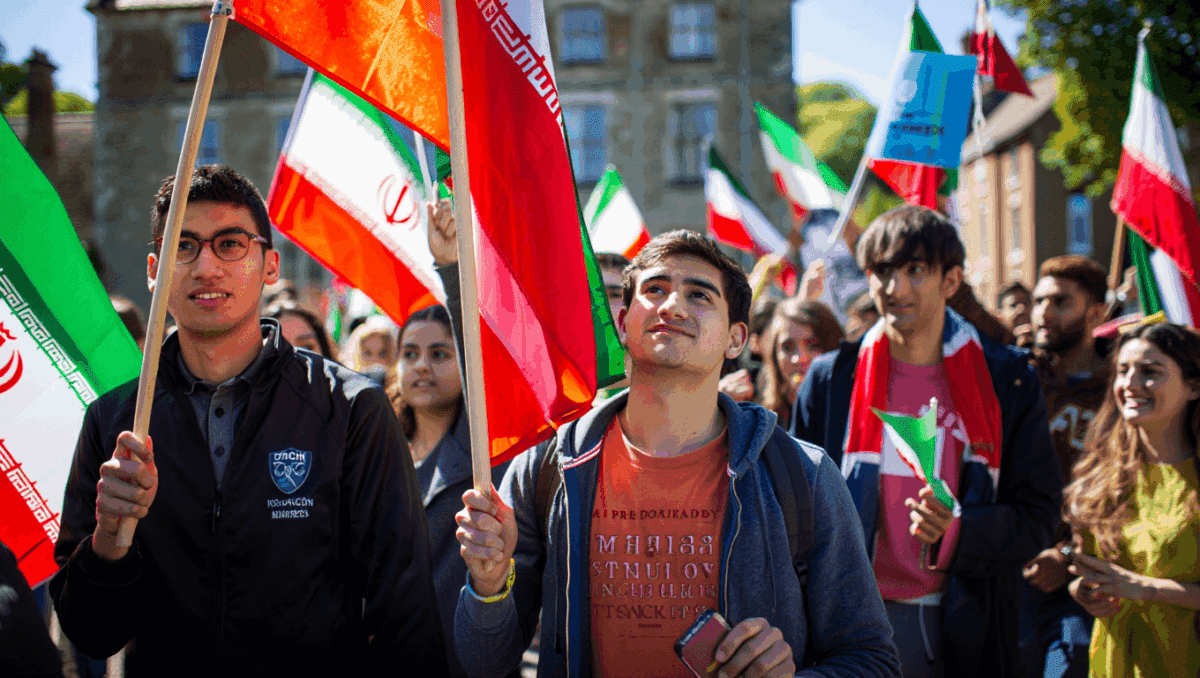
Across Britain’s universities, a startling divide has opened up over recent reports surrounding Iran’s supreme leader. While some communities in Iran reportedly took to the streets in celebration, a number of student groups at elite UK institutions have marked what they describe as a loss with vigils, condolences and public tributes — a reaction that has prompted intense debate about campus politics, free speech and human-rights priorities.
The mix of grief, defiance and public ritual on British campuses is moving quickly from local student groups into national headlines. The gestures have left many human-rights activists and fellow students asking why young people in the UK are honoring a leader widely accused of violent repression — and what university administrators should do about it.
The Growing Demand for Data-Driven Decision Making in Silicon Valley
He quit, ran out of money, and begged to come back — here’s how his boss reacted
How student communities reacted: vigils, cancellations and public posts
Several Ahlulbayt Islamic Societies (AbSocs) and affiliated student groups across the UK publicly acknowledged the reported death of Iran’s leader by organizing vigils, sharing condolence messages, and altering event plans. Their responses varied in tone and visibility, but together they formed a recognizable pattern of public mourning on campus.
- Event announcements and vigils: Some societies promoted candlelit gatherings in London and on campus as spaces for mourning and reflection.
- Public posts and imagery: Social accounts for a number of AbSocs posted black-and-white portraits or yearbook-style tributes that framed the leader’s passing as a communal loss.
- Program changes: At least one coordinating body for Shia student societies reportedly canceled a planned iftar “out of respect,” sharing messages that framed the moment in religious and communal terms.
- Geographic reach: Expressions of condolence were noted from student groups at universities including Cambridge, Edinburgh, Leeds, Manchester and University College London.
What critics say: concerns about honoring a repressive regime
For many observers, the emotional tone of these campus tributes clashes starkly with the documented record of Iran’s government. Critics point to a long history of harsh measures against dissent, including arrests, alleged torture, executions and strict social controls.
Human-rights advocates emphasize a few key grievances:
- The enforcement of mandatory dress codes and the policing of women’s attire, which critics say has led to arrests and mistreatment.
- High-profile cases, such as the 2022 death of Mahsa Amini after detention by morality police, which sparked massive protests and sustained international attention.
- Crackdowns on demonstrators, activists and journalists that rights groups have described as systematic and often violent.
Against this backdrop, the sight of student societies in the West publicly mourning a leader linked to such measures has been described by some as deeply troubling. They argue it raises questions about moral judgment, historical awareness and the signals universities send about acceptable political expression.
Who is organizing these tributes and what do they say?
Many of the public displays have come from groups organized around Shia religious identity, including campus Ahlulbayt societies and wider networks overseen by umbrella organizations. Leaders of these groups have defended their actions as expressions of faith, community solidarity and religious mourning.
When challenged in the press, some student bodies pushed back strongly — accusing media coverage of bias and warning that labeling their grief as “extremist” risks stereotyping and Islamophobia. These defenders argue that interpreting religious mourning through a purely political lens can be reductive and hurtful to students for whom such rites are deeply meaningful.
Arguments from both sides
- Defenders: Say these are faith-based observances and that universities must protect religious practice and free expression.
- Critics: Point to the political dimensions of the gatherings and contend that mourning a figure associated with repression normalizes or celebrates abuse.
Campus precedent: a pattern of polarizing political displays
The recent events are not isolated. Over the past several years, numerous campus episodes have sparked similar controversy, raising broader questions about the limits of protest and the role of student unions and societies in policing political expression.
- Episodes of pro-Palestinian chanting and demonstrations at major universities have previously triggered national debates about antisemitism and campus safety.
- Events framed as memorials or political remembrances for armed or militant actors have in some cases provoked public outcry and disciplinary reviews.
- Student-organized events that blur religious mourning and political messaging have repeatedly tested university policies on permitted speech.
University campuses have increasingly become arenas where international conflicts and ideological battles are played out in very local ways.
The institutional challenge: balancing rights, safety and accountability
University administrators face a difficult calculus: uphold freedom of speech and religious practice while ensuring campus safety and preventing the endorsement of violence or hatred. Responses so far have ranged from formal statements urging calm to limited disciplinary inquiries; critics argue many institutions have been slow or inconsistent.
Legal and policy experts point to several options universities can consider:
- Clearer codes of conduct for student societies that differentiate between protected religious expression and activity that incites or glorifies violence.
- Improved dialogue mechanisms so that students with differing views can engage productively and grievances can be aired without escalation.
- Stronger support for students at risk, including those from persecuted backgrounds who may feel threatened by public celebrations of controversial leaders.
Voices on the ground: students and observers react
Inside student unions and lecture halls, reactions vary widely. Some students describe the vigils as authentic expressions of faith; others are alarmed and say such displays betray solidarity with victims of repression. Campus newspapers, social feeds and local protests have reflected that divide, amplifying national scrutiny.
The controversy underscores how international conflicts and complex histories now shape campus life — and how universities must reckon with both free expression and moral responsibility.
By Georgina Mumford, content producer at spiked
You might also like:
- City University antisemitic attack reported, police investigating
- Charlie Kirk’s apocalyptic rhetoric about trans rights sparks backlash
- UK universities face surge in antisemitism allegations
- Attack on Young Bob part of alarming spate of similar assaults
- Scotland rape trials face scrutiny over alleged bias and free speech claims

Robert Johnson is a dedicated columnist focusing on political and social debates. With twelve years in editorial writing, he provides nuanced, well‑argued perspectives. His commentaries invite you to form your own views and engage in critical issues.


Man, students rallying for an ayatollah? Thats like wearing socks with sandals – unconventional! But hey, everyones gotta pick a side, right? Still, honoring a regime with a questionable track record? Thats a bold move, Cotton!
Ah, dude, students gettin’ all hyped up over an ayatollah? That’s like, I dunno, mixing pineapple on pizza, ya feel me? It’s all about those wild choices. But honoring a regime with a dodgy past? That’s a bold move, Cotton! Do they really know what they’re gettin’ into, or are they just ridin the wave, man?
I remember when our school tried to honor some controversial figure and chaos broke loose. Students divided, tensions flared. Its a tricky path to navigate, balancing beliefs with the greater good. Whats your take on this situation?
A skeptical critic:
So, students back Irans ayatollah? Whats next, a parade for oppressive regimes? Its like honoring a bully for their bullying skills. Cant wrap my head around this one.
Honestly, its like giving a gold star to the class bully for their excellent behavior, right? But hey, maybe its just students showing their love for controversy. Wonder if next week theyll throw a party for the cafeteria food… Who knows whats next with these unpredictable peeps?
Man, its wild how opinions can split like that. Students backing the ayatollah, huh? Wonder what pushes them to support a regime some see as repressive. Complex stuff, man.
A perplexed skeptic here. Supporting an oppressive regime, really? Students should educate themselves on the realities before blindly backing a leader with a questionable record. Its crucial to look beyond the surface and understand the full picture.
Man, its like a mixed bag of emotions hearin about students supportin Irans ayatollah. Some say its unity, others call it supportin repression. Whats your take on this hot mess, folks?
Honestly, its a total rollercoaster of feels, aint it? Some folks see it as solidarity, others straight-up label it as endorsing oppression. Its like the ultimate clash of perspectives! How do you even start unpackin this tangled mess, yall?
Man, its like were in a real-life movie with all this drama. Students supporting the ayatollah? Thats some serious loyalty. Wonder if they really know what theyre backing or just caught up in the moment.
Man, those students supporting the ayatollah, thats like cheering for a villain in a movie. Are they for real? Whats next, a parade for Darth Vader? Hope they know what theyre doing…
Man, its like these students are living in a whole different world, backing up the ayatollah like its their favorite sports team. Wonder what goes through their minds – loyalty or just following the crowd blindly?
I mean, its cool to support your roots and all, but backing a regime known for repression? Thats a whole different level. Students need to dig deeper before showing blind allegiance, yknow? Think before you wave those flags.
I mean, supporting a repressive regime? Thats a hard pass for me. Students should be all about freedom and democracy, not backing oppressive leaders. Whats next, cheering for cartoon villains? Cmon, guys.
I remember when my college tried to host an event honoring a controversial figure — chaos ensued! Its tricky balancing free speech with respecting sensitivities. How do you navigate such thorny situations without stepping on toes?
Man, its wild seeing students rallying behind Irans ayatollah. Wonder if they know the full story or just going with the flow. Hope theyre informed about the implications. Could spark some heated debates!
Man, these students supporting the ayatollah… Are they for real or what? Feels like a bad movie plot. Wonder what their endgame is. Hope theyre not just following the crowd without thinking.