
Show summary Hide summary
- Where and how the wreck was found in the Øresund Strait
- Dimensions and construction: a cog unlike any previously recovered
- Artifacts recovered: daily life and the empty hold
- Tree-ring dating and the ship’s place in time
- Why this discovery reshapes understanding of medieval trade and shipbuilding
- Conservation, research priorities, and public display plans
- Broader maritime archaeology context and continuing excavations
For six centuries, a remarkable piece of maritime history lay hidden beneath the muddy waters between Copenhagen and Sweden. What surfaced this spring is not just another wreck; it’s a window into how commerce, shipbuilding, and daily life at sea evolved in the late Middle Ages.
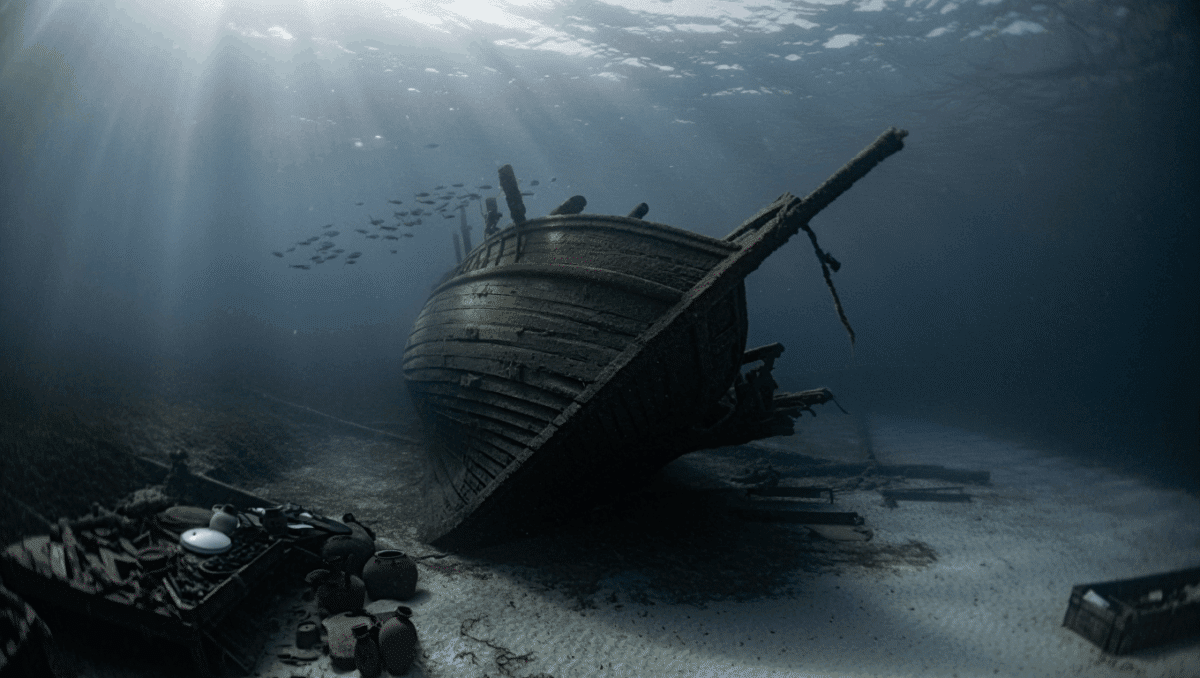
Marine archaeologists from the Viking Ship Museum in Roskilde announced the recovery of a massive medieval cargo vessel — the largest example of a “cog” ever documented. The find, preserved in cold silt and salt, delivers rare details about construction, onboard living spaces, and the trade networks that propelled Northern Europe in the 15th century.
Where and how the wreck was found in the Øresund Strait
The timbered hull was discovered in the Øresund, the narrow waterway separating Denmark and Sweden near Copenhagen. Much of the ship’s starboard side remained buried in anoxic mud, which limited decay and kept delicate features intact.
The Growing Demand for Data-Driven Decision Making in Silicon Valley
He quit, ran out of money, and begged to come back — here’s how his boss reacted
Archaeologists named the vessel Svaelget 2 after the channel where it was located. Divers and underwater teams mapped the site carefully before excavating, documenting timbers in situ and retrieving fragile artifacts that normally would not survive centuries underwater.
Dimensions and construction: a cog unlike any previously recovered
Svaelget 2 challenges prior assumptions about medieval merchant ships. Key measurements and construction facts include:
- Length: about 98 feet (approx. 30 meters)
- Width: more than 25 feet (over 7.5 meters)
- Height: roughly 18 feet (5.5 meters) from keel to highest point
- Estimated cargo capacity: around 300 tons
The hull’s framing and planking reveal a cog built on a scale bigger than any previously known example. Where earlier finds typically preserve only lower hull timbers, the mud preserved higher and more delicate structures here, including a covered working platform and extensive rigging. The rigging remains — ropes, blocks, and attachment points — provide direct evidence of how sailors controlled and managed the single square sail typical of cogs.
Unique features: the “castle deck” and brick-built galley
Among the rare survivals is a raised, covered platform often referred to in sources as a “castle deck.” Archaeologists found the structure intact enough to confirm that cogs could be fitted with sheltered areas where crew could work or take protection from rough weather. This is physical proof of deck arrangements that previously existed mainly in artistic or textual records.
The ship also contained a fireproof galley: a cooking chamber lined with brick tiles. Excavators recovered roughly 200 bricks and numerous roof tiles from this space. The presence of a hearth built into the hull signals an important improvement in seafaring comfort and safety over earlier open-decked vessels.
Artifacts recovered: daily life and the empty hold
Despite evidence the ship was traveling north from the Low Countries, it appears to have sunk without a full cargo. Excavations turned up personal items from the crew that give a human dimension to the find, including:
- Combs and small personal grooming items
- Rosary beads and religious objects
- Fragments of rigging and sail hardware
- Brick fragments and kitchenware from the galley
These small finds help reconstruct routines and beliefs onboard, showing a crew that balanced workaday needs with devotion and limited comforts while at sea.
Tree-ring dating and the ship’s place in time
Dendrochronology (tree-ring dating) provided a precise construction window: the oak beams used in the hull were felled around 1410. The wood analysis points to Baltic or Polish oak sources, consistent with the raw material flows that supplied medieval Northern European shipbuilding.
That date places Svaelget 2 in the period when maritime trade across the North and Baltic Seas was intensifying. Cogs like this one were the freight haulers of their day, bridging ports and fueling urban growth across the Hanseatic and neighboring trading communities.
Why this discovery reshapes understanding of medieval trade and shipbuilding
Archaeologists say the size and features of Svaelget 2 force a re-examination of how far cog design could be pushed and what economic systems must have existed to justify such large carriers. As the lead excavator explained, the find provides direct evidence that merchant societies commissioned and operated ships of this scale — meaning trade volumes and organizational complexity were substantial.
Key implications include:
- Proof that cogs could be built and sailed at far larger sizes than previously documented.
- A clearer image of onboard living arrangements, especially sheltered work areas and integrated cooking facilities.
- Confirmation of timber sourcing and construction techniques tied to Baltic and Polish oak supplies.
The vessel shows how maritime technology evolved from Viking-era clinker-built knarrs to larger, flat-bottomed cogs capable of greater cargo, longer voyages, and more efficient crew operations.
Conservation, research priorities, and public display plans
After careful excavation, recovered timbers and artifacts require long-term conservation to prevent deterioration once exposed to air. The Viking Ship Museum will oversee stabilization, desalination treatments, and cataloging for future study.
Researchers plan multidisciplinary analyses — including wood chemistry, rope and textile examination, and residue studies of the galley — to extract as much information as possible about construction methods, provisioning, and the material culture of the crew. Public outreach efforts are also in development so museum visitors can see the wreck’s story brought to life.
Broader maritime archaeology context and continuing excavations
Svaelget 2 joins a growing list of shipwrecks that illuminate Northern European seafaring history. Unlike many sites where only lower hull timbers survive, the anaerobic conditions in the Øresund preserved above-deck elements and fittings that are ordinarily lost. That difference makes this site a rare and exceptionally informative archaeological record.
Ongoing fieldwork at the site and comparative studies with other medieval wrecks will refine models of trade flows, shipbuilding economies, and daily life at sea during the transition from Viking to late medieval maritime technology. The discovery is already prompting scholars to rethink assumptions about how and why ports, shipyards, and merchants organized themselves to support such large-scale shipping ventures.
You might also like:
- 143-year-old shipwreck resurfaces on New Jersey beach
- Endurance shipwreck discovery rewrites history of the legendary Antarctic ship
- Viking coin hoard found in Norway by metal detectors is the largest-ever discovery
- Viking sword found by 6-year-old on school field trip, buried for 1,300 years
- Britannic bell, other artifacts recovered by deep-sea divers from Titanic’s sunken sister ship

Michael Thompson is an experienced journalist covering U.S. and global news. With ten years on the front lines, he breaks down political and economic stories that matter. His precise writing and keen attention to detail help you grasp the real‑world impact of every event.


Mate, imagine stumbling upon a medieval treasure chest at the bottom of the sea! This sunken cog ship is like a time capsule, giving us a peek into the past. Makes me wonder what other secrets are hiding down there!
Yo, imagine stumbling upon a medieval ship in a strait? Thats like finding treasure in your grandmas attic! The history buff in me is geeking out over the artifacts recovered. Time travel in real life, man.
No way, mate! A sunken medieval ship? Thats like a time capsule right there! Imagine the stories those artifacts could tell. History buffs are gonna lose it over this find.
Man, uncovering a sunken medieval ship? Thats like stumbling upon a real-life treasure chest! Wonder what stories those artifacts hold. Makes you feel like a modern-day explorer, diving into the mysteries of the past.
Man, finding a sunken medieval ship feels like uncovering a real-life treasure chest! I bet the artifacts they discovered give a peek into the past. Imagine the stories those old walls could tell… History coming alive, yall!
Oh man, stumbling upon a sunken medieval ship is like finding a time capsule from way back! Those artifacts must be like pieces of a jigsaw puzzle from another era. Imagine the tales those old walls could spin… History really does know how to put on a show, huh?
Man, that sunken medieval ship find is wild! Makes me feel like a treasure hunter, except Im just scrolling through news. Wonder if they found any cursed loot or spooky skeletons down there. Exciting stuff!
A history buff here, but this find is on another level! Can you imagine stumbling upon a sunken medieval ship? Gives me serious pirate vibes. Wonder what other treasures are still hidden beneath the waves. Arrr!
Mate, I hear ya! Imagine the rush of finding a sunken ship from the medieval times! Its like stepping into a real-life pirate tale, aint it? Makes me wonder what other treasures are lying hidden down there in the deep blue sea. Arrr! Who knows what other secrets are waiting to be uncovered beneath the waves, right?
Whoa, discovering a sunken medieval cargo ship sounds like a plot straight out of a swashbuckling tale! Imagine the stories those artifacts could tell. History really is full of hidden treasures waiting to be unearthed.
Oh, mate, thats like stumbling upon a real-life treasure hunt! The mysteries those relics could unravel, right? Its like stepping into a time machine and getting a glimpse of the past firsthand. Can you imagine the adventures that ship witnessed back in the day? Its mind-blowing!
I swear, every time they find a sunken ship, its like diving into a real-life pirate tale! This medieval cog discovery? Sounds like a page from a forgotten history book brought back to life. Imagine the stories those artifacts could tell!
Yo, imagine stumbling upon a sunken medieval cargo ship, like, straight outta a history book! Finding a cog with a castle deck and brick-built galley? Thats some next-level time-traveling adventure waiting to happen!
Man, this discoverys like finding treasure in your own backyard! Imagine the stories these artifacts hold, like peeking into a time machine. Cant wait to see what tales this sunken ship spills!
Whoa, mate, a medieval ship? Thats like straight outta a pirate movie! Imagine the stories those old planks could tell. Cool find, but hey, did they find any treasure or just some dusty old books? *wink*
Ahoy there, matey! A medieval ship, ye say? Arrr, thats like somethin straight outta a pirate flick, aint it? Them old planks mustve seen some real salty tales, I reckon. As for treasure, well, Id be keepin me eyes peeled for hidden chests or maps to X marks the spot! Who knows what secrets those dusty old books might be hidin? *wink*
Whoa, imagine stumbling upon a medieval ship just chilling at the bottom of the sea! Its like finding buried treasure in your backyard. I bet those artifacts are like pieces of a real-life time capsule. Wonder what stories they hold.