
Show summary Hide summary
- Who is Shah Rahman and what was the plot against the London Stock Exchange?
- How the legal challenge unfolded: asylum claim, deportation and the ECHR
- Why the ruling is fueling public and political controversy
- Policy options often proposed by politicians and security experts
- Implications for rehabilitation programs and community trust
- How this case could shape wider debates on human rights and national security
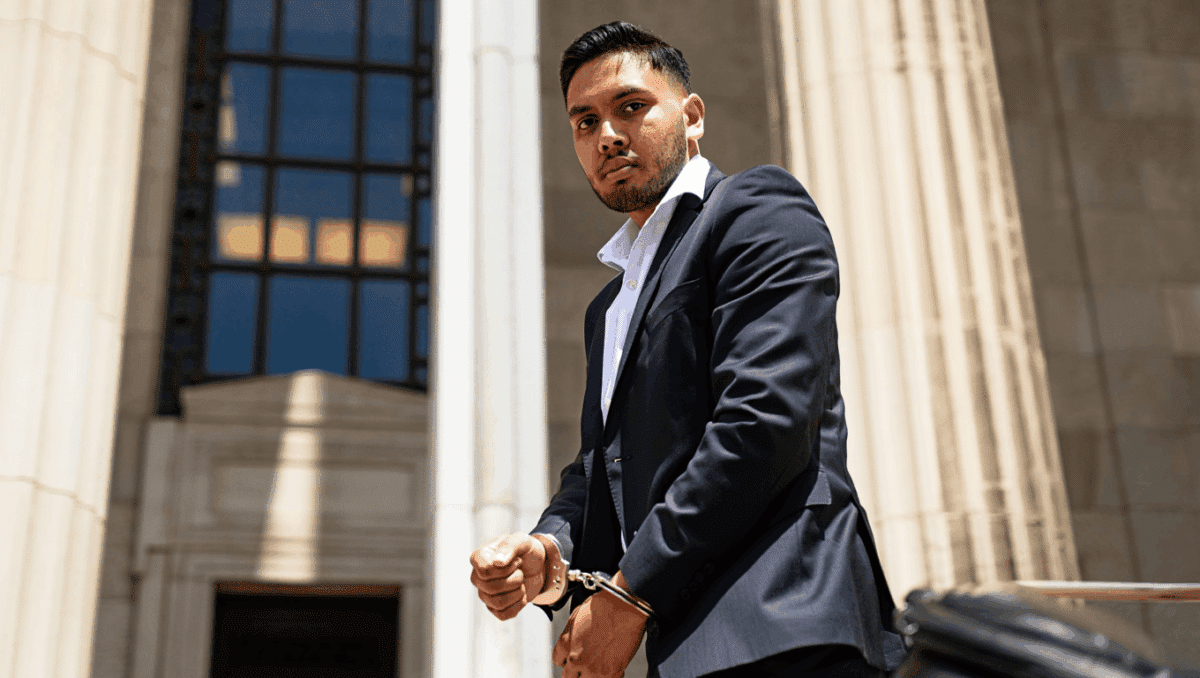
The case of Shah Rahman — a Bangladeshi-born man convicted in a plot to target the London Stock Exchange — has reignited fierce debate in Britain about the balance between human-rights protections and national security. A judge has ruled that removing him from the UK would breach the European Convention on Human Rights, allowing him to remain despite a criminal record tied to Islamist terror planning.
The ruling comes after years of legal wrangling, time served in prison and a rejected asylum application. For many, the decision raises uncomfortable questions about whether existing safeguards adequately protect the public while honoring international obligations.
The Growing Demand for Data-Driven Decision Making in Silicon Valley
He quit, ran out of money, and begged to come back — here’s how his boss reacted
Who is Shah Rahman and what was the plot against the London Stock Exchange?
Shah Rahman was prosecuted in 2012 alongside four others for a scheme linked to an Al-Qaeda-inspired plan to strike the London Stock Exchange. The conspiracy was one of a number of plots that drew attention to how international terror networks and homegrown radicals interact.
- Conviction: Rahman was among those convicted in 2012 for involvement in the plot.
- Sentence and release: He served several years and was released on licence in 2017.
- Co-defendants: The case included individuals such as Usman Khan (also known as Abu Saif), who later became infamous after the 2019 London Bridge attack in which two people, Jack Merritt and Saskia Jones, were killed.
How the legal challenge unfolded: asylum claim, deportation and the ECHR
After his release, Rahman lodged an asylum claim in 2017 that was initially refused by immigration authorities. The matter escalated to the courts when a deportation order was challenged on human-rights grounds.
A judge ultimately found that sending Rahman back to Bangladesh would violate Article 3 of the European Convention on Human Rights, which forbids subjecting a person to inhuman or degrading treatment. That determination turned on assertions about the risk Rahman would face if returned to his country of origin.
- 2012: Conviction for terrorism planning tied to a plot against the London Stock Exchange.
- 2017: Released on licence and submitted an asylum application; application refused.
- Post-2017: Judicial review resulted in a finding that deportation would breach Article 3, allowing Rahman to stay in the UK.
Why the ruling is fueling public and political controversy
At the heart of the dispute is a clash between two imperatives: the state’s obligation to protect its citizens and its duty to respect international human-rights commitments. Critics argue the legal framework can produce outcomes that prioritize the personal safety claims of foreign nationals — even those with terror convictions — over community safety.
Supporters of the human-rights protections counter that Article 3 imposes an absolute bar on sending someone to face torture or degrading treatment, regardless of their past crimes. They warn that weakening these safeguards risks contravening long-standing international obligations and could expose the UK to criticism from human-rights bodies.
Policy options often proposed by politicians and security experts
In response to cases like Rahman’s, a range of policy remedies has been debated. They span legal adjustments, operational reforms and diplomatic measures aimed at allowing removal of dangerous non-nationals while remaining within the boundaries of the UK’s human-rights commitments.
- Amending domestic law to narrow the protections that can prevent deportation in terrorism cases, while aiming to stay compatible with international law.
- Stronger use of derogations or tailored legislative carve-outs for those convicted of serious offenses, subject to parliamentary and judicial scrutiny.
- Negotiating bilateral assurances with receiving states to reduce perceived risk of ill treatment upon return.
- Creating or expanding safe third-country agreements where removal can be lawfully carried out.
- Enhancing monitoring and licence conditions for released offenders to reduce public risk if they remain in the UK.
Implications for rehabilitation programs and community trust
The case also casts a shadow over deradicalization and post-release supervision. The profile of some convicted extremists who later reoffend — or who are perceived as having “escaped” deportation — undermines confidence in programs intended to rehabilitate and monitor former offenders.
Security services and probation authorities face the difficult job of managing risk when legal avenues for removal are closed. That creates pressure to improve:
- risk-assessment tools and information-sharing between agencies;
- enforcement of licence conditions and rapid recall mechanisms; and
- community engagement to rebuild trust where perceptions of leniency have taken hold.
How this case could shape wider debates on human rights and national security
Rahman’s situation is likely to be seized on by politicians, campaigners and media outlets as emblematic of broader tensions over immigration, counterterrorism and Britain’s relationship with European human-rights law. Some will press for swift legal change; others will urge caution, reminding policymakers that human-rights protections are a cornerstone of democratic governance.
Either way, the ruling raises urgent questions for lawmakers about how to reconcile competing priorities: safeguarding the public, meeting international obligations, and ensuring that legal remedies are perceived as fair, transparent and effective.
You might also like:
- Child rapist case in Britain sparks debate over border policy
- Mehdi Hasan: does he think deporting foreign sex offenders is immoral?
- ISIS leader’s family living in UK at taxpayers’ expense faces scrutiny
- ECHR: Lord Hermer’s defense called dishonest and desperate
- Rape gang ringleader must be deported now

Robert Johnson is a dedicated columnist focusing on political and social debates. With twelve years in editorial writing, he provides nuanced, well‑argued perspectives. His commentaries invite you to form your own views and engage in critical issues.


Man, the legal and human rights stuff always makes things messy. Shah Rahmans London Stock Exchange plot and the whole deportation issue got everyone riled up. Its like a never-ending loop of controversy and politics, aint it?
I mean, come on, legal and human rights makin it hard to deport terrorists? Wheres the common sense in that? Gotta prioritize public safety over technicalities, right? Sheesh.
Seriously, mate, its like playing chess with handcuffs on, innit? I get it, we want safety, but cant we find a middle ground between following the rules and protecting the people? Its like trying to make a sandwich with just one slice of bread — it just doesnt add up. Whats your take on finding that balance, huh?
Man, legal loopholes are wild! Cant just kick out terrorists? Shah Rahman playing the system. Crazy how this London Stock Exchange plot drama unfolds. Whats your take on balancing security and human rights?
Man, this whole deportation mess got me scratching my head. Like, how do we balance security and rights? Its a tough nut to crack. Should we prioritize safety or uphold human rights? Tough call, dude.
Man, legal loopholes can be a real pain. Its like watching a movie where the bad guy keeps slipping away cause of some technicality. But hey, gotta respect those human rights, even if it means letting a potential threat stick around. Tough call, for sure.
Yo, can you believe this mess? Legal and human rights stuff keeping terrorists from getting deported? Its wild out there. Wonder how theyll sort this out without risking security.
I mean, its like a never-ending loop, right? Legal and human rights, sure, but what about protecting innocent lives? Tricky balance, for sure. But hey, whos Shah Rahman and whats the deal with the London Stock Exchange plot? Sounds like a movie plot gone wrong!
Man, the legal loopholes protecting terrorists are mind-boggling. Shah Rahmans case is a mess. Politicians need to step up and close these gaps. Public safety should come first, right?
Man, the whole legal maze around terrorist deportation is like a twisted game of chess. Shah Rahman and his plot against the London Stock Exchange really stirred the pot. Cant believe the ECHR ruling causing such a fuss! What a mess.
Man, this legal maze for deporting terrorists is a rollercoaster. Shah Rahmans plot against the London Stock Exchange? Wild stuff. The human rights tangle, though… Its a puzzle. How do we balance safety and rights in cases like these?
Balancing safety and rights, huh? Its like trying to juggle watermelons in a hurricane. I mean, sure, we gotta keep the bad guys out, but we cant stomp all over peoples rights either. Its like walking a tightrope with greased-up shoes, mate. Tricky business, that is. Whats your take on this circus act, eh?
I mean, its crazy, right? The whole legal maze protecting terrorists. Shah Rahman and his London Stock Exchange plot, man, its like a movie. But real life. Deportation debates are a mess. Whats your take on this?
Mate, its a tricky situation when legal and human rights clash like that. Shah Rahmans case is wild! Wonder how authorities balance security and individual rights. What a mess, eh?
I remember when folks screamed deport them all! Now, turns out terrorists got legal shields? Shah Rahmans London Stock Exchange plot, asylum claim twists, ECHR drama… Who knew human rights could trump security?
Man, this whole deal is a mess. Legal loopholes protecting terrorists? Its like a bad movie plot, but scarier cause its real life. How do we balance rights and security in cases like this? Tough call.
Mate, this whole things a mess. You got terrorists plotting against the London Stock Exchange, and now they cant be deported? Legal hurdles stopping security measures? Makes you wonder whos really winning here.