Show summary Hide summary
- Where George and Bertha stand at the start of Season 4
- Actors’ chemistry and why fans can’t get enough
- Morgan Spector’s arc: addiction, power, and “his season”
- Historical echoes: monopoly, unions, and lessons for today
- Why Coon and Spector speak out politically
- Fandom and the nicknames: Railroad Daddy, Opera Mommy, and more
- On craft: how the actors turned politics and personal stakes into performance
- What to watch for this season
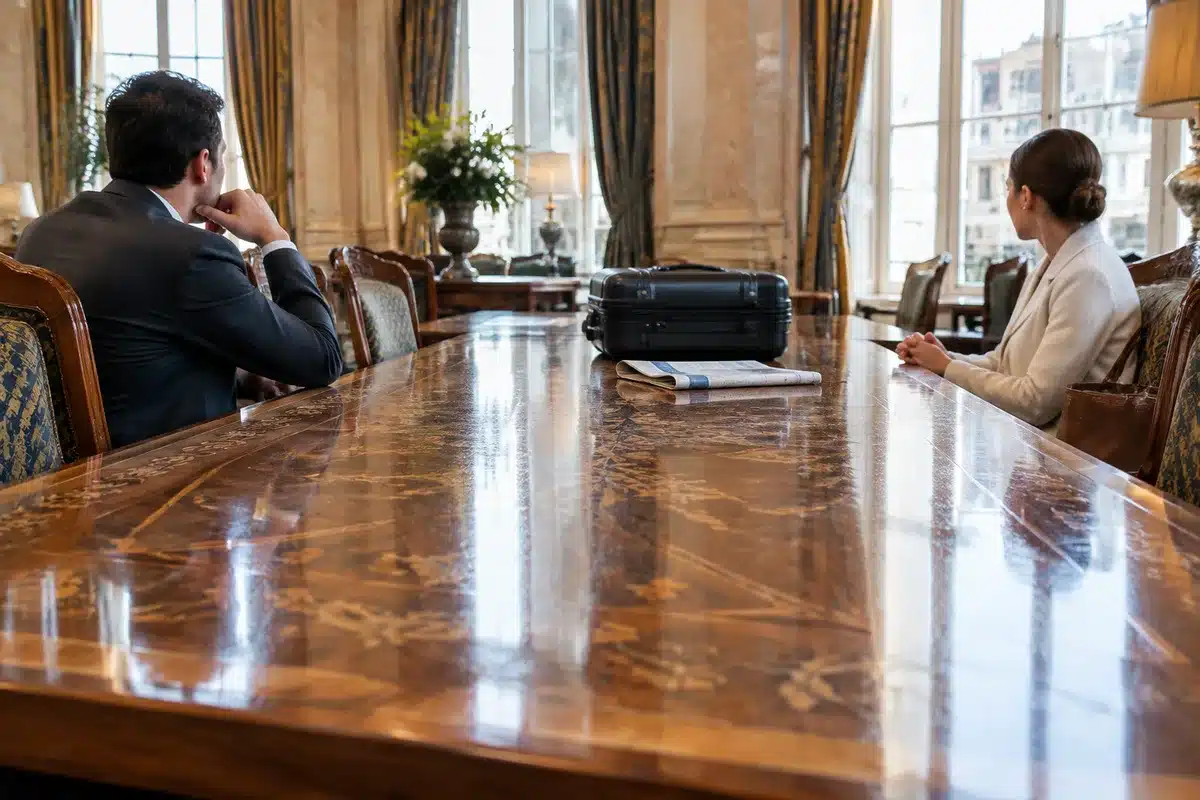
The fourth season of The Gilded Age opens with the Russells farther apart than ever — emotionally and geographically — while the actors who play them sit side by side and banter like old friends. At a table in the Plaza Hotel, Carrie Coon and Morgan Spector glide between playful teasing and pointed political talk, illustrating the strange mix that makes the show so addictive: sumptuous period detail and wardrobe alongside sharp commentary about wealth, power, and the labor struggles that shaped modern America.
On screen the couple’s marriage is fraying: one partner in England attending family obligations, the other clinging to a crumbling business empire. Off camera, Coon and Spector are united in their defense of the arts and outspoken critiques of concentrated wealth. That contrast — polished marital discord versus warm, aligned performers — is at the heart of why audiences have rallied around George and Bertha Russell.
Where George and Bertha stand at the start of Season 4
The Growing Demand for Data-Driven Decision Making in Silicon Valley
He quit, ran out of money, and begged to come back — here’s how his boss reacted
Season 4 begins by splitting the power couple across an ocean. Bertha Russell has traveled to England to be with the daughter she engineered into marrying a duke, and she’s present for the birth of a grandson. Back in New York, George Russell faces mounting pressure to protect his railroad holdings from new anti-monopoly legislation and the legal scrutiny that threatens his empire.

Last season established cracks in their relationship — George had already left the family home — and this year those fissures have widened. The two are not simply at odds; they’ve become isolated from one another, struggling to communicate and to find a path back to partnership. The dramatic tension is quieter than spectacle-driven television, but it’s no less powerful: the story interrogates loyalty, ambition, and the cost of maintaining status.
Actors’ chemistry and why fans can’t get enough
Carrie Coon and Morgan Spector feed off each other’s energy. In person they’re funny and affectionate, often riffing on pop-culture jests — including playful claims about “Sexiest Man Alive” titles — before pivoting to a rapid-fire, earnest conversation about politics and the role of art in public life. That easy back-and-forth shows in every scene they share and helps explain the social media mania around the Russells.
What draws viewers to the couple
- Magnetism and complexity: The Russells are glamorous but morally complicated, which makes their scenes compelling.
- Authentic partnership: The actors’ rapport suggests a real-life friendship that elevates the intimacy and stakes of on-screen fights and reconciliations.
- Romantic fantasy and historical critique: The show balances light, romantic plotlines — party etiquette, wardrobe obsession — with deeper explorations of class, gender, and race.
Morgan Spector’s arc: addiction, power, and “his season”
Both performers describe this installment as especially demanding for Spector’s character. George’s unraveling includes an addiction storyline woven into the pressures of preserving a railroad empire and navigating impending antitrust action. The season gives the actor material that shifts the focus of the narrative and creates a significant dramatic challenge — one Coon applauds as “what actors dream of,” a stretch of scenes where performance, vulnerability, and consequence intersect.

The creative process for portraying the couple’s distance involved close collaboration. The actors and writers worked to map the emotional journey back toward one another: not a single reconciliatory moment but a series of incremental acts that could plausibly reknit a marriage strained by ambition and betrayal.
Historical echoes: monopoly, unions, and lessons for today
The series repeatedly draws parallels between the Gilded Age and the modern era. Rapid industrial growth, concentrated wealth, and the rise of monopolies in the late 19th century triggered sweeping reforms then — trust-busting, regulatory interventions, and labor organizing. The show uses that historical frame to comment on contemporary issues: the political influence of concentrated capital, the erosion of democratic responsiveness, and the challenges of organizing in a global economy.
How the past informs the present
- Urbanization and industrial consolidation created leverage for workers in a way that’s harder to replicate today, when supply chains and production are dispersed globally.
- Trust-busting and the New Deal reshaped power balances in the 20th century, but many of those lessons were abandoned amid globalization and deregulation.
- The consequences for democracy are visible when political priorities align more with large donors than with average voters — a point the actors raise when discussing the show’s political resonance.
The central worry: extreme concentration of wealth and influence weakens democratic institutions, and by dramatizing the legal and social fights of the Gilded Age, the series invites viewers to consider what regained balance might look like.
Why Coon and Spector speak out politically
Both performers stress that their activism and political commentary did not start with the show’s popularity. Many in the cast come from theater backgrounds where political engagement is common; several have long advocated for greater public investment in the arts and protections for creative workers. That prior engagement gives the actors a kind of credibility, they say, when they talk about class inequality or the pressures facing artists.
In press rounds for a series that so clearly mirrors modern debates, the cast finds it difficult to avoid connecting fictional events to real-world policy. For them, discussing inequality, union power, and the role of capital is a continuation of conversations they were already having — not a publicity stunt invented for ratings.
Fandom and the nicknames: Railroad Daddy, Opera Mommy, and more
Some of the show’s most viral moments have spawned affectionate and sometimes raucous fan labels: “Railroad Daddy,” “Train Daddy,” and a host of clever variants tied to character traits and plot beats. Spector laughs about the objectification and embraces the humor — noting the rarity of being sexualized as a straight white man — while Coon delights in the devotion directed at Bertha.
Why Bertha inspires a stan culture
- Style and swagger: Her costumes and commanding presence make Bertha a fashion icon for many viewers.
- Ambition and ruthlessness: She pursues power for herself and protection for her family, even when her methods are controversial.
- Outsider energy: Both George and Bertha are portrayed as disruptors trying to wedge themselves into an elite that resists them — a storyline about belonging that resonates with modern audiences.
Fans praise Bertha for daring choices and unfiltered energy; the character’s combination of calculated strategy and fierce loyalty creates a magnetic, modern-feeling heroine within a historical setting.
On craft: how the actors turned politics and personal stakes into performance
The actors emphasize that the political subtext amplifies their characters’ private stakes rather than replacing them. The Russell marriage is not just symbolic of larger class struggles; it’s a domestic story about love, compromise, and competing appetites for influence. This dual focus — intimate character work plus a larger social critique — is what keeps the show from feeling like a lecture. It remains, at heart, a narrative about people trying to secure meaning and power in a chaotic moment.
Elements that make the performances land
- Collaborative plotting of emotional beats so that reunions, arguments, and reconciliations feel earned.
- Balancing spectacle (wardrobe, parties, social rituals) with quieter scenes that reveal inner fractures.
- Using humor and tenderness to humanize figures who could otherwise be reduced to caricature.
What to watch for this season
Viewers should pay attention to how legal threats reshape George’s decisions, how Bertha’s social maneuvering affects the family’s position, and how both characters respond to the personal costs of public power. Expect heightened focus on addiction, the slow rebuilding of trust, and the political fights that mirror real debates over monopoly and labor rights.
New episodes of The Gilded Age arrive on HBO every Sunday.
You might also like:
- Sterling K. Brown & Ernest Kingsley Jr.: Joyful Rebellion Takes Over Washington Black
- Washington Black shows Black stories can be hopeful, not just about trauma
- Emmy nominations 2026: will Hacks sweep and is there Brad Pitt fatigue?
- Bridgerton season 4: how divorcing class from race weakens the show’s impact
- Bridgerton gender swap: Masali Baduza and Hannah Dodd respond

David Miller is an entertainment expert with a passion for film, music, and series. With eight years in cultural criticism, he takes you behind the scenes of productions and studios. His energetic style guides you to the next big releases and trending sensations.