
Show summary Hide summary
- What surgeons call “tooth‑in‑eye” surgery and why it’s used
- A rare procedure finally arrives in Canada
- How the tooth becomes part of an eye: step‑by‑step
- Why a tooth is chosen as the structural anchor
- Patient impact: what Brent can do now
- The human side of radical eye surgery
- Risks, follow‑up care, and who might benefit
- What this case signals for vision care
A 34-year-old Canadian man who spent two decades navigating near‑darkness has regained functional sight after a highly unusual transplant: a tooth was reshaped and placed into his eye to anchor an artificial lens. The operation — the first of its kind performed in Canada — has reopened a visual world that Brent Chapman had not known since early adolescence, and it offers a striking example of how old surgical techniques can solve modern, stubborn vision problems.
Chapman’s recovery is both technical and deeply human: it closes a long chapter of repeated procedures and uncertainty, and begins a new one filled with everyday moments he once missed — reading faces, traveling, and returning to the job he loves. Surgeons and patients alike describe the result as quiet, profound, and emotionally charged.
What surgeons call “tooth‑in‑eye” surgery and why it’s used
The Growing Demand for Data-Driven Decision Making in Silicon Valley
He quit, ran out of money, and begged to come back — here’s how his boss reacted
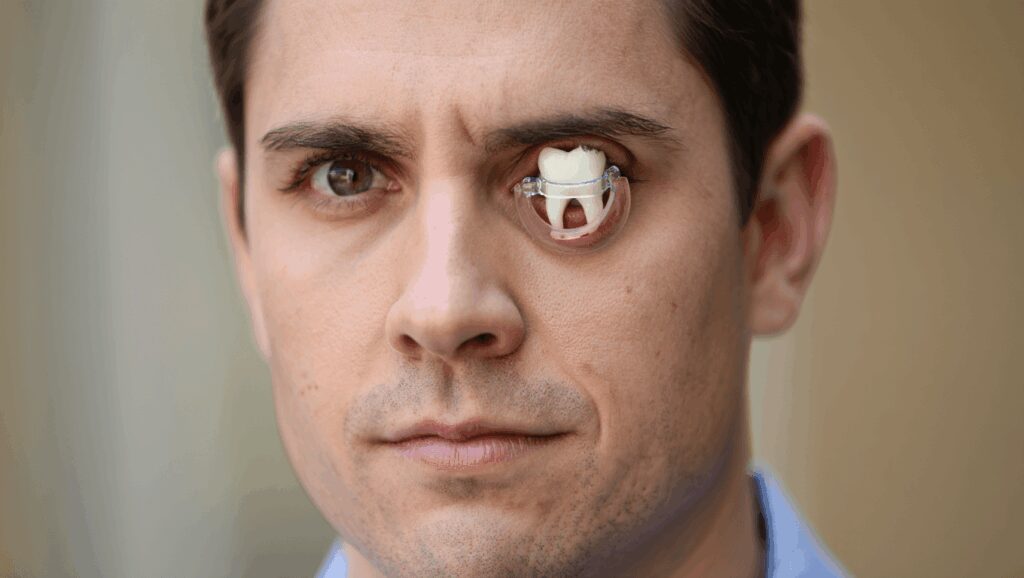
Osteo-odonto-keratoprosthesis (OOKP) is a mouthful of a name for a procedure that sounds stranger than it is: a patient’s own tooth and surrounding bone are used as a structural mount for an optical device that replaces a damaged cornea. Doctors reach for this technique only after conventional corneal transplants and other treatments are judged unlikely to work.
When this operation becomes an option
- Severe corneal scarring from chemical or thermal burns that leaves the eye surface unsuitable for a standard graft
- Repeated transplant failures or chronic surface inflammation that will destroy donor tissue
- Extensive damage involving eyelids, conjunctiva, or tear production that make conventional repairs futile
A rare procedure finally arrives in Canada
Although the concept was developed several decades ago, surgeons perform OOKP only in specialized centers because it requires dental and ocular teams working together and a long staged treatment plan. In Brent Chapman’s case, University of British Columbia corneal surgeon Dr. Greg Moloney led a complex course of surgeries that culminated in the tooth‑anchored lens being placed into Chapman’s right eye — the first time Canadian surgeons have completed this operation.
Chapman’s path to the procedure was long and difficult. A severe reaction to an over‑the‑counter pain reliever when he was a teenager caused deep burns to the front of his eyes. One eye later succumbed to infection, leaving him with only peripheral or limited vision for many years. After more than 50 surgeries, grafts, and other attempts to restore sight, doctors determined that an OOKP offered the best chance of meaningful visual recovery.
How the tooth becomes part of an eye: step‑by‑step
The operation requires coordination between dental and ophthalmic teams and unfolds in multiple stages over months. The broad steps include:
- Selection and preparation of a tooth, usually a canine because of its robust root and bone support.
- A small hole is created through the tooth/bone segment and a high‑precision optic is secured inside this biological mounting.
- The tooth‑optic complex is allowed to integrate in a soft tissue pocket (often in the patient’s cheek region) so it becomes living, vascularized tissue.
- In a later surgery, the integrated unit is transferred to the eye and positioned so the artificial pupil lines up with the retina and optic nerve.
- Follow‑up procedures manage surface healing, control inflammation, and optimize the visual axis.
The biological advantages: using the patient’s own tissue reduces the chance of rejection, and a solid tooth/bone structure provides a rigid, durable base for a lens where synthetic materials might fail.
Why a tooth is chosen as the structural anchor
Teeth are among the hardest and most resilient tissues in the body, made to withstand mechanical stress. That rigidity makes them effective at holding an optic in a stable, centered position. Because the graft is autologous — taken from the patient — the body is far less likely to react against it compared with donor material.
Surgeons say that in eyes where the front surface is destroyed or scarred beyond repair, the tooth‑anchored prosthesis can create a reliable channel for light to reach the retina, effectively rebuilding a path for vision where none remained.
Patient impact: what Brent can do now
After the implant and subsequent adjustments, Chapman now sees well enough with corrective eyewear to be measured around 20/30 — meaning he can identify at 20 feet what a person with standard vision would see at 30 feet. That degree of sight is far from perfect but life‑changing for someone who hadn’t experienced routine visual cues for most of his adult life.
- Emotional reconnection: making direct eye contact for the first time in many years and re‑recognizing faces.
- Professional return: Chapman is a massage therapist and expects to resume regular work without the constant worry that his vision might fail.
- Daily freedom: travel plans, social outings, and spontaneous activities that once felt risky are suddenly more accessible.
The human side of radical eye surgery
Surgeons describe OOKP not only as a technical rescue but as an experience that frequently brings strong emotional responses. Restoring sight touches identity and social connection in ways that purely clinical outcomes can’t fully capture.
For Chapman, the return of vision meant more than reading a sign or navigating a street — it was reconnecting with loved ones and experiencing everyday beauty that sighted people often take for granted. He has talked about small future pleasures he’s eager to enjoy: seeing his young niece and nephew’s faces clearly, traveling to destinations he’d put off for fear of sudden vision loss, and being less consumed by planning around potential medical setbacks.
Risks, follow‑up care, and who might benefit
OOKP is not without risk. The procedure involves multiple surgeries, a lengthy recovery timeline, and vigilant long‑term follow up to monitor for infection, glaucoma, or other complications. Candidates are typically those who have exhausted conventional options and whose ocular surface is hostile to standard corneal grafts.
Key considerations include:
- Commitment to multiple stages of surgery and extended rehabilitation
- Access to specialized surgical teams experienced in OOKP
- Ongoing ophthalmic care to manage inflammation and protect intraocular structures
What this case signals for vision care
Chapman’s successful surgery highlights how rare, multidisciplinary procedures remain important options for people with the most severe eye injuries. While it won’t replace more common corneal transplants, the tooth‑in‑eye technique is a powerful reminder that sometimes the best answers come from creative uses of the body’s own materials and long‑established surgical concepts updated with modern optics and care pathways.

You might also like:
- Firefighters rush 5-year-old’s fingertips to hospital; she recovers and paints thank-you picture
- 5-year-old with rare disease: younger sister offers to be bone marrow donor
- Rare pregnancy: mom and baby survive 1-in-a-million odds
- Osteoarthritis reversal within months: simple shot shows promise after animal trials
- Gene therapy restores vision in 6-year-old Saffie with rare blindness

Michael Thompson is an experienced journalist covering U.S. and global news. With ten years on the front lines, he breaks down political and economic stories that matter. His precise writing and keen attention to detail help you grasp the real‑world impact of every event.


I once joked that Id rather have eyes in the back of my head. This tooth-in-eye surgery tops that! Can you imagine having a tooth in your eye? Science never fails to surprise me, for better or for weirder!
Well, Ive seen it all now! A tooth in the eye bringing back vision? Thats some next-level medical movie material right there. Wonder what the tooth fairy thinks about this new gig!
I once lost a tooth playing hockey, but it never ended up in my eye! Cant imagine how weird thatd feel. Kudos to modern medicine for such wild advancements. Wonder if its like having a tiny window in your head!
Dude, a tooth in the eye? Thats some sci-fi level stuff right there! Cant wrap my head around it, but hey, if it restores vision after all those years, who am I to judge? Science is wild, man.
Oh man, I know right? A tooth in the eye sounds like something straight out of a freaky sci-fi flick! But hey, if it helps someone see again, I guess its worth the weirdness. Science sure knows how to keep us on our toes, huh?
I remember when my cousin got a tooth knocked out in a hockey match. Wish they couldve done this eye-tooth thing back then. Maybe hed be scoring goals with his eyes closed now!
Dang, talk about a bizarre eye-opener! Literally! I mean, having a tooth in your eye to restore vision? Thats some next-level medical wizardry right there. Cant decide if its fascinating or just plain creepy…
Oh, geez, imagine waking up to find a tooth in your eye! But hey, if it brings back someones vision after 20 years, who am I to judge? Science works in mysterious ways, I guess.
Man, talk about bizarre medical miracles! I mean, a tooth in the eye? Thats some next-level stuff. Cant decide if its creepy or cool, but hey, if it brings back someones vision after two decades, who am I to judge?
Oh, man, eye-tooth surgery sounds like a sci-fi movie plot! I mean, Ive heard it all, but a tooth bringing back sight? Wild! Science is on another level these days, huh? Wonder if theyll start using toenails to fix broken bones next.
Man, my vision aint the best, but a tooth in the eye? Thats some wild stuff. Cant imagine waking up with a whole dental situation in my eyeball. Science is really out there, huh?
Yo, for real, imagine that – a tooth in your eye? Thats next-level bizarre. Science be on some whole new level craziness. Can you picture waking up to a dentist appointment in your eyeball? Wild stuff indeed.
Man, I remember when I lost my tooth as a kid and thought the Tooth Fairy had swiped it. Now theyre implanting teeth in eyes? Thats some wild sci-fi stuff, but hey, if it helps people see, why not?
I cant help but think, whats next? Tooth-in-ear? Hair follicles on fingertips? The medical world never ceases to amaze. But hey, if it works, it works. Who am I to judge, right?
Yo, Im all for crazy medical breakthroughs, but a tooth in the eye? Thats some sci-fi level stuff right there. Cant decide if its genius or just plain bonkers. Would you volunteer for this eyeball adventure?
Yo, dude, I hear you! Tooth in the eye, like, what even, right? Its like something straight outta a twisted sci-fi flick. I mean, Im all up for pushing boundaries, but eyeball adventures? Thats a whole new level of wild. Would I sign up? Hmm, gotta say Id stick to regular check-ups for now. What about you, fearless explorer, ready to rock that toothy eye trend?
Whoa, talk about science fiction coming to life! A tooth in the eye? Sounds like a wild plot twist in a sci-fi flick. Wonder if theyll start seeing x-ray vision or shooting lasers from their eyeballs next!
I remember when my buddy joked about getting a tooth in his eye to see better. Now, reading this, Im like, Wait, thats a real thing? Science is wild, man. Who knew teeth could be eye-openers, literally!
Whoa, hold up, a tooth in the eye bringing back sight? Thats some intense sci-fi stuff right there. Cant decide if its creepy or cool. Imagine having a whole new kind of vision, literally!
Oh man, eye tooth? Thats some wild sci-fi stuff! Cant imagine waking up with a tooth in my eye, but hey, if it brings back someones vision after 20 years, Im all for it. Science is bonkers, man.
I mean, imagine having a tooth in your eye for 20 years and then bam, suddenly you can see again! Life is wild, man. Just when you think youve seen it all, something like this comes along. Nature is full of surprises!