
Show summary Hide summary
- From World War II pioneers to today’s flight students: the Tuskegee link
- How the aviation science program prepares new pilots
- Voices from the cockpit: students connecting history and ambition
- Moton Airfield: training on hallowed tarmac
- Why Tuskegee’s program matters for aviation and diversity
- Media attention and public interest
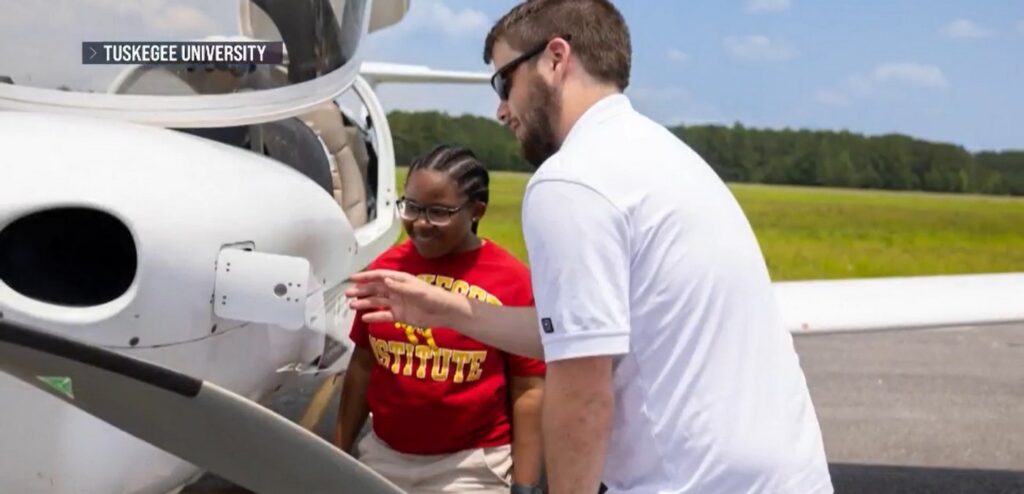
Tuskegee University is reviving a storied legacy while answering a modern national need: training a new generation of Black pilots to help ease America’s growing shortage of aviators. Students are taking to the runways at the historic Moton Airfield, where lessons from the past merge with contemporary flight training and career-focused instruction.
Among the recent graduates is Kembriah Parker, who earned her pilot’s license after overcoming a long-held fear of heights. Her achievement is being celebrated not only as a personal milestone, but as a continuation of the Tuskegee tradition that first produced the famed Black military aviators of World War II.
From World War II pioneers to today’s flight students: the Tuskegee link
The Growing Demand for Data-Driven Decision Making in Silicon Valley
He quit, ran out of money, and begged to come back — here’s how his boss reacted
The name Tuskegee is inseparable from the group known as the Tuskegee Airmen — the Black pilots and support personnel who broke barriers during World War II. Over 900 Black cadets trained at Tuskegee in that era, and about 335 were sent overseas, primarily to campaigns in North Africa and Italy, where they flew combat missions under perilous conditions.
Those wartime achievements established a legacy of resilience and excellence that Tuskegee University now invokes as it prepares civilian pilots for a peacetime challenge: filling a national shortage of qualified commercial and private pilots.
How the aviation science program prepares new pilots
Tuskegee’s aviation science curriculum blends classroom instruction with hands-on flight time. Students study aircraft systems, navigation, and operations on the ground, then log hours in the cockpit at Moton Airfield.
- Ground school: aerodynamics, regulations, and maintenance basics
- Flight training: dual instruction, solo flights, and cross-country experience
- Licensing pathways: private pilot certificates and steps toward commercial credentials
- Career readiness: career counseling and pathways into regional and commercial airlines
The program is designed to produce both private and commercial pilots, with a target cohort this year of around 50 graduates who will enter the workforce equipped for multiple aviation roles.
Voices from the cockpit: students connecting history and ambition
Kembriah Parker’s story resonates with the program’s mission. She describes a personal shift from nervousness about heights to the confidence that comes with a pilot’s license. Parker points out a contrast with the past: while women worked at Tuskegee during World War II, they were often not the ones flying planes. Now, as she climbs into the cockpit, she feels she is carrying forward a piece of that history.
Parker’s license symbolizes both individual growth and a broader cultural moment — more women and people of color stepping into roles that were denied or limited in earlier generations.
Moton Airfield: training on hallowed tarmac
The flight line at Moton Airfield serves as more than a practice space; it’s a living monument. The same runways and hangars where WWII pilots trained are now used by students working toward civilian certification. That continuity gives the training a unique emotional weight, as modern aviators literally walk the paths of pioneers.
Instructors emphasize practical skills and safety while grounding lessons in the site’s historical significance. Many students say the setting deepens their commitment to excellence — a reminder of the sacrifices and achievements that paved the way.
Why Tuskegee’s program matters for aviation and diversity
America’s pilot shortage has implications for airlines, cargo carriers, and general aviation. Programs like Tuskegee’s address that shortfall while also expanding representation in the cockpit.
- Providing structured training pipelines that feed regional and commercial airlines
- Creating role models who encourage underrepresented youth to pursue STEM and aviation careers
- Preserving and honoring an important chapter of U.S. military and civil rights history
By combining technical training with historical context and mentorship, the aviation science program aims to produce pilots who are both technically qualified and mindful of the broader significance of their work.
Media attention and public interest
National outlets have highlighted these developments, profiling students and the program’s efforts to expand access to aviation careers. Coverage often focuses on individual journeys — like Parker’s — to illustrate how training at Tuskegee both confronts contemporary workforce needs and keeps the memory of the Tuskegee Airmen alive.
Officials and instructors say interest in aviation careers has grown as young people look for stable, high-skill professions with clear training pathways. Tuskegee’s model — historical site-based instruction combined with rigorous flight training — is one response to that demand.

You might also like:
- American Teen Pilot in Chilean Antarctica: Defense Claims No Crime Committed
- Olandria Carthen on her love story, HBCU education and handling fame
- Deaf woman hit by plane survives while walking her dog
- Mississippi student reading scores surge: how the state climbed from bottom to top
- Pilot dies in plane crash carrying 180 kilos of alleged SpaceX-branded cocaine

Michael Thompson is an experienced journalist covering U.S. and global news. With ten years on the front lines, he breaks down political and economic stories that matter. His precise writing and keen attention to detail help you grasp the real‑world impact of every event.


Man, these Tuskegee aviators dont play around! From WWII heroes to todays sky conquerors, they keep the legacy soaring. Moton Airfield must be buzzing with energy, history, and dreams. Hope they navigate those skies like champs!
Man, these Tuskegee aviators keep inspiring generations! From World War II to today, talk about a legacy soaring high. Cant help but wonder where these flight students will take us next. Skys the limit, right?
Man, those Tuskegee aviators? Legends, for real! Their legacy? Its like a plane that never lands, always flying high. Wonder where the next flights heading? Sky aint even the limit, man, its just the start!
Man, those Tuskegee aviators got grit! Love seeing the legacy soar with new pilots. Its like passing a baton in the sky. So, whos next to break barriers? Skys the limit!
Man, these Tuskegee aviators aint just history, theyre inspiration in motion. From WWII to now, seeing this next gen soar high? Gives me chills. Salute to these pilots breaking barriers, skys the limit!
Man, those Tuskegee aviators were the OGs, blazing trails back in the day. Now seeing their legacy live on with new flight students? Thats some real inspiration right there. Keeping history alive through the skies, love to see it.
Man, these young aviators are like a breath of fresh air. Keeping the Tuskegee legacy alive and kicking! Cant wait to see them soar to new heights and make history in the skies.
Man, these young aviators are like the modern-day Red Tails, soaring high and breaking barriers. From the dusty airfields of history to todays challenges, they embody resilience and ambition in the skies. Skys the limit for these pilots!
Man, these young aviators got some big shoes to fill, following in the footsteps of the Tuskegee legends. Hope they soar high and make history too. Skys the limit, right?
Man, those Tuskegee aviators paved the way for todays sky warriors! History meets ambition up there. Such a cool legacy. I wonder how their training differs now. Must be a thrill to soar where legends once did.