
Show summary Hide summary
- Global narratives and the aftermath of the Gaza conflict
- How media coverage shaped public perceptions
- International law and the politics of human rights institutions
- Scrutinizing the UN Commission of Inquiry’s findings
- Protests, pressure groups and the future of campus and street activism
- Who is Natasha Hausdorff and why her perspective matters
The fighting in Gaza may have subsided, but the public debate over who is to blame is intensifying. Accusations once branded as fringe have migrated into mainstream institutions, shaping diplomatic moves, media coverage, and legal claims against Israel — and not always with full regard for facts. Barrister Natasha Hausdorff, known for her legal advocacy on behalf of Israel, argues that a coordinated campaign of misinformation has warped international responses.
In a recent conversation with Brendan O’Neill, Hausdorff laid out how what she calls an orchestrated propaganda effort has affected everything from hostage negotiations to United Nations inquiries and street-level protests. Below is a reconstructed, edited account of that discussion, reorganized to clarify the key issues she raised about media reporting, international law and public activism.
Global narratives and the aftermath of the Gaza conflict
The Growing Demand for Data-Driven Decision Making in Silicon Valley
He quit, ran out of money, and begged to come back — here’s how his boss reacted
Even as active combat operations wound down, the political fallout accelerated. According to critics like Hausdorff, many Western governments and institutions moved quickly from condemnation of Hamas to blanket criticisms of Israel, often framing long-standing military campaigns as acts of genocide. These narratives, she says, have real consequences — influencing diplomacy, shaping arms embargoes and complicating efforts to recover hostages.
Hausdorff contends the timing and tone of Western responses helped prolong suffering — citing delays in hostage releases and extended fighting that cost lives on both sides. She singles out a number of national governments that recognized Palestinian statehood or imposed restrictions on Israel, arguing those decisions hardened positions and made negotiated settlements harder to reach.
How media coverage shaped public perceptions
For Hausdorff, a major problem has been the conduct of international journalists and news organizations. She says many reporters have amplified Hamas narratives while underreporting or ignoring violent abuses perpetrated by Hamas against Palestinians in Gaza.
- She points to instances where Hamas allegedly executed or punished Gaza residents accused of collaboration or disloyalty, including people who accepted humanitarian aid.
- She argues mainstream outlets rarely ran in-depth investigations into such abuses, creating a one-sided picture that emphasizes civilian suffering without context about the local dynamics.
- The result, she warns, is a distorted public empathy that blames Israel without acknowledging Hamas’s role in endangering Palestinian lives.
International law and the politics of human rights institutions
Another strand of Hausdorff’s critique is aimed at international bodies that investigate alleged war crimes. She describes a process in which NGO reports and select testimony are amplified and institutionalized, then presented as authoritative legal findings.
Key concerns she raised about the UN Human Rights Council and similar bodies
- Alleged reliance on unchecked or partisan sources that trace back to Hamas propaganda.
- Reports that omit or minimize the role of Hamas in conducting military operations from within civilian areas.
- Institutional bias that treats Israel as uniquely culpable while giving insufficient attention to Hamas’s tactics and abuses.
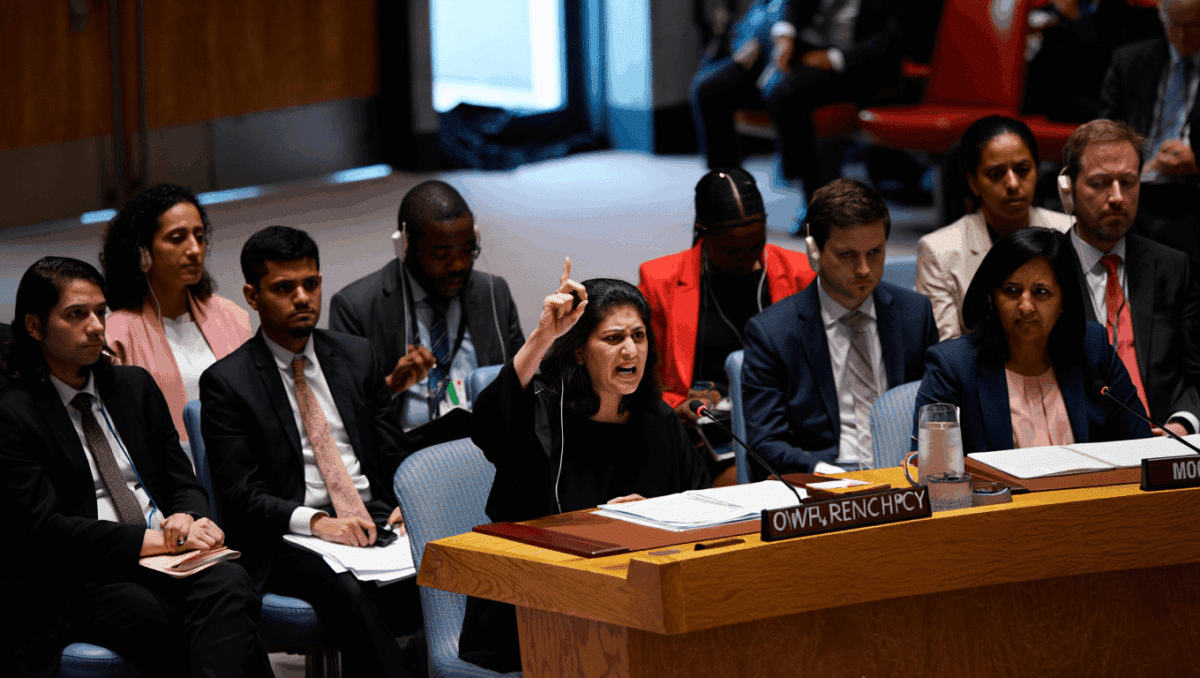
When Hausdorff addressed the UN Human Rights Council, she said she was there to call out what she views as systemic flaws — labeling the council a central vehicle for circulating misinformation. Her speech, she recalls, received a sharp on-the-record rebuttal from the meeting chair but also drew significant public attention online.
Scrutinizing the UN Commission of Inquiry’s findings
Hausdorff reserved strong criticism for the UN Commission report that accused Israel of genocidal intent. She described parts of the report as repetitive and unoriginal, recycling allegations she regards as unproven. One example she singled out was the focus on an attack that struck an IVF clinic — an incident the report used to suggest deliberate targeting of future generations.
After her own investigation, Hausdorff concluded the strike was likely the result of a stray shell rather than a calculated effort to destroy reproductive facilities. She emphasized that the commission’s framing amplified a narrative of intent without fully weighing available evidence.
She also criticized the report for notable omissions: it did not adequately address Hamas’s military activities, its reported use of civilians as shields, or Israel’s documented efforts to reduce civilian harm and provide humanitarian relief.
Protests, pressure groups and the future of campus and street activism
On the ground, public demonstrations and targeted actions have continued to evolve. Hausdorff expects pro-Palestine protests to persist, driven in part by a broader activist ecosystem that she says thrives on vilifying Israel. She highlighted the escalation from demonstrations at Israel-linked sites to more aggressive acts, including attempts to disrupt military installations.
- Groups like Palestine Action have shifted tactics, she noted, prompting increased concern from law enforcement and government officials.
- Hausdorff argued that a reluctance by authorities to intervene strongly has only emboldened some activists.
- For her, sustained activism reflects both genuine political beliefs and an industry that benefits from ongoing outrage.
Who is Natasha Hausdorff and why her perspective matters
Natasha Hausdorff is a barrister and legal director of the UK Lawyers for Israel Charitable Trust. Her work centers on legal advocacy and media accountability regarding allegations directed at Israel. In the interview with Brendan O’Neill, she blended legal critique with on-the-ground observations to argue that a broad set of Western institutions has failed to present a balanced account of recent events in Gaza.
Her message is consistent across forums: call out misinformation wherever it appears, challenge institutional narratives that lack evidentiary support, and demand that international law and journalism apply the same scrutiny to all actors involved in a conflict. She presented these points not only as political criticism but as a legal and moral plea for accuracy in how the world judges wartime conduct.

You might also like:
- Israel’s war for survival is just beginning
- Trump Gaza deal exposes falsehoods about Israel
- The gradual unraveling of the genocide narrative: A critical examination of historical misconceptions
- Trump deals devastating blow to anti-Israel sentiment
- Meloni faces pro-Palestine protests in Italy — will she bow to pressure?

Robert Johnson is a dedicated columnist focusing on political and social debates. With twelve years in editorial writing, he provides nuanced, well‑argued perspectives. His commentaries invite you to form your own views and engage in critical issues.


Man, the UNs like that one friend who says theyll help you move but conveniently ghosts you on moving day. All talk, no action. Its like, Hey, world peace, where you at? *eye roll*
Man, the UN has more drama than a reality TV show these days. Can they get it together and focus on real issues? Sick of the political games. Time to shape up or ship out!
Man, the UNs like a drama-filled reality show these days. Cant tell whos the hero and whos the villain anymore. Just hoping they sort out their mess and get back to actually helping people.
I once thought the UN was a superhero squad fighting for justice. Now? Feels like theyre tangled in their own web. Can they untangle and step up for real change? Or are we just chasing a dream?
Man, the UNs like that one friend who always says theyll help you move but never shows up. Critics aint holding back on calling them out. Its like a reality show, but with more politics and less drama, or maybe more, who knows!
Man, the UNs like that one friend who always promises to help you move but never shows up. You wanna trust em, but then you hear all these stories… Whats the deal with these global big shots?
Man, the UN drama is like a never-ending soap opera. Can they actually clean up their act or are we stuck watching this messy show? Its like a bad reality TV, but with higher stakes.
Man, the UNs like that one friend who talks a big game but never shows up when you need em. Cant deny theyve done some good, but the rot at the core? Thats a tough pill to swallow.
Man, the UNs like that friend who talks big but never delivers. Always in the news for drama, but wheres the real action? Its like a TV show you keep watching, knowing it wont change.
Man, the UN’s like that friend who talks big but never delivers. Always in the news for drama, but wheres the real action? Its like a TV show you keep watching, knowing it wont change. Cant argue with that, mate. Sometimes it feels like theyre stuck in a loop, like a broken record playing the same old tune. Maybe they need a script change or a new director to spice things up a bit!
I remember when I thought the UN was like some superhero squad for global issues. Now? Feels like theyre in their own drama series. Can they get their act together, or is it all just for show?
Man, the UN drama never ends! Its like a soap opera, but with more power struggles and fewer make-out scenes. Wonder if theyll ever get their act together or if its just one big power play.
Ugh, the UN mess is like that one friend whos always late and full of excuses. Cant they get their act together? The world needs some serious cleaning up, and theyre just adding to the chaos. Time for a reality check, folks!
Man, the UN drama is like a never-ending soap opera. Can they really fix their mess or should we just grab popcorn and watch the chaos unfold? Its like a bad movie, but were stuck in the front row!
Man, the UN always in the spotlight for the wrong reasons. Cant help but wonder how deep the rabbit hole goes. Its like a real-life drama series, but with higher stakes and lower ratings.