
Show summary Hide summary
- Restoring missing players: the plan for Făgăraș’s wildlife comeback
- How vultures will be reintroduced and acclimated
- Why vultures matter: ecological benefits and public health
- Lessons from the Balkans: neighboring recoveries offer hope
- Policy, protection, and the push for a national park
- Community buy-in and the road ahead
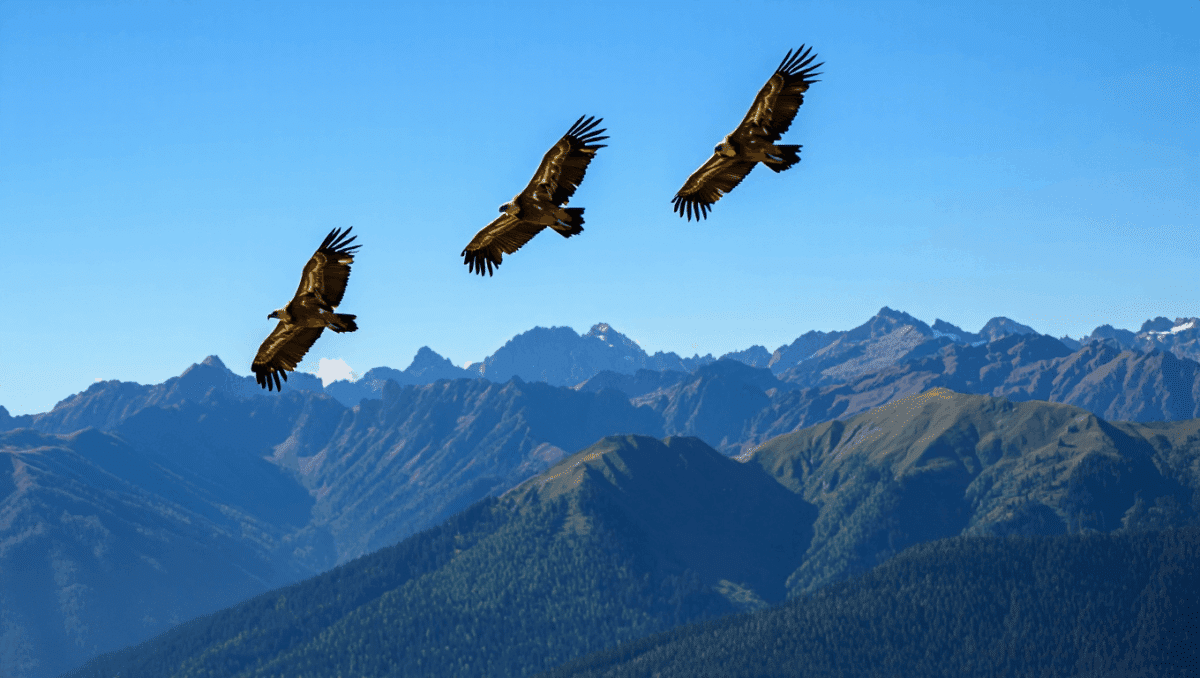
Young griffon vultures are poised to return to Romania’s Carpathian Mountains after roughly a century away, part of a bold restoration that champions wildlife recovery and rural renewal. The effort centers on the Făgăraș range, where conservationists are stitching back together lost ecological roles to shape what supporters call a European counterpart to Yellowstone — a vast, functioning landscape with apex predators, large herbivores, and now scavengers once again roaming freely.
This reintroduction is not just about bringing back a single bird species. It’s a coordinated push to restore whole processes — from river engineering by beavers to forest shaping by bison and the sanitary cleanup provided by vultures — so ecosystems can recycle nutrients and resist disease naturally. The project blends hands-on animal care, habitat protection, and local engagement to build long-term resilience across the southern Carpathians.
Restoring missing players: the plan for Făgăraș’s wildlife comeback
The restoration campaign began more than a decade ago under the stewardship of Foundation Conservation Carpathia (FCC). Their strategy has emphasized returning species that perform outsized ecological functions, complementing already-present large predators such as Eurasian lynx, wolves, and brown bears.
The Growing Demand for Data-Driven Decision Making in Silicon Valley
He quit, ran out of money, and begged to come back — here’s how his boss reacted
Key elements of the program:
- Reintroduce keystone herbivores like bison to reshape vegetation and open habitats.
- Bring back beavers to restore wetlands and stabilize stream networks.
- Release scavengers — starting with griffon vultures — to complete the nutrient and disease-control cycle.
Those steps are intended to rebuild missing links in food webs and create the landscape-scale dynamics found in the most intact ecosystems. By facilitating natural processes, the project aims to reduce human intervention over time while boosting biodiversity and ecotourism opportunities.
How vultures will be reintroduced and acclimated
Vultures are long-distance scavengers that learn to use new areas gradually, so conservationists are taking a staged approach. Young griffon vultures will be brought into large on-site aviaries where they can acclimate to local terrain, thermals, and food sources before being released.
Why this matters:
- Immediate release risks the birds dispersing beyond the target area, reducing local population establishment.
- Aviaries help fledglings bond to a release site and learn to forage where carcasses will be available.
- After griffons are established, teams plan to follow with other species such as cinereous and bearded vultures.
FCC is working with the Vulture Conservation Foundation and other partners to manage transport, veterinary care, and post-release monitoring. The aim is to create a self-sustaining vulture population that can forage across the Carpathians and contribute to regional ecological health.
Why vultures matter: ecological benefits and public health
Scavenger birds provide services that are hard to replicate with any other group. Their ability to locate and rapidly consume carcasses helps curb the transmission of disease, speed nutrient cycling, and maintain clean landscapes.
Important roles vultures play:
- Sanitation: Efficiently remove carcasses that could otherwise harbor pathogens.
- Nutrient recycling: Turn animal remains into organic material that enriches soils.
- Complementary functions: Different vulture species specialize in distinct food items — for instance, bearded vultures can process bones thanks to highly acidic stomachs.
Bringing vultures back also reduces pressure on humans to manage carcasses and supports predator-prey balance by indirectly limiting scavenger competition that can spread disease.
Lessons from the Balkans: neighboring recoveries offer hope
Nearby countries provide encouraging examples. Where protections and targeted conservation measures were applied, vulture populations in parts of the Balkans recovered after dramatic declines. Griffon and cinereous vultures have been recorded moving between ranges, demonstrating their ability to repopulate suitable habitat when conditions improve.
Conservationists point to two practical takeaways:
- Long-term protection and threat reduction — including curbing persecution and tackling poisoning sources — are essential.
- Regional cooperation allows birds to use larger landscapes, improving genetic diversity and resilience.
This cross-border perspective is central to the Făgăraș work because vultures naturally range over wide areas and depend on connectivity across mountains and valleys.
Policy, protection, and the push for a national park
In 2016 Romanian authorities signaled support for creating a large national park in the Făgăraș Mountains, an area that could span roughly 2,000 square kilometers and includes Moldoveanu, Romania’s highest peak. Supporters argue that a park of that scale would protect core habitat needed by big mammals and vultures while unlocking sustainable tourism benefits.
Current context and considerations:
- Only a small share of Romania’s land is under strict national park protection, leaving room for expansion.
- Local opinions are mixed: ecotourism and outdoor recreation businesses tend to support the park, while some forestry and resource interests are cautious.
- Many rural communities are exploring how wildlife recovery and nature tourism could bolster local incomes without compromising traditional livelihoods.
Community buy-in and the road ahead
Conservation leaders emphasize that long-term success depends on local people choosing to support the project. Field teams are working with residents to design programs that create jobs in ecotourism, monitoring, and habitat stewardship, while also addressing concerns about land use and livelihoods.
What stakeholders are focusing on now:
- Education campaigns to explain vulture ecology and benefits.
- Measures to reduce poisoning risks, including safer livestock carcass practices.
- Adaptive monitoring to track bird movements, survival rates, and ecological impacts.
By combining scientific reintroduction techniques with community engagement and policy measures, the Făgăraș initiative aims to transform a century-long absence into a multi-species recovery that reshapes both the landscape and local economies.
You might also like:
- Rare fisher spotted on trail cam in Cleveland area, first seen since 1800s
- Cloud jaguar sighting in Honduras caught on trail cam, first in a decade
- World’s first giant anteater reintroduction in Brazil shows early success
- 158 giant endangered tortoises released on Galápagos island after being extinct for 180 years
- Azerbaijan bison rebound: 25 wild calves born in seven-year recovery from one surviving male

Michael Thompson is an experienced journalist covering U.S. and global news. With ten years on the front lines, he breaks down political and economic stories that matter. His precise writing and keen attention to detail help you grasp the real‑world impact of every event.


Man, talk about a comeback story! These vultures are like the rockstars of the animal kingdom, making a grand return after a century. Can you imagine the vulture party up in those mountains now? Wild!
Man, vultures making a comeback after a whole century? Thats like a grand return of the feathered rockstars to the wild stage. Hope they bring the drama and help balance that whole ecosystem vibe. Let the show begin!
Ill tell you, mate, been waiting for this comeback like waiting for a bus in the rain. Vultures back in the mountains after a century? Thats nature hitting the refresh button, innit. About time!
Man, talk about a comeback story! Vultures back in the game after a century? Thats some serious dedication. Cant wait to see how they shake things up in Europes Yellowstone. Nature sure knows how to hit us with the plot twists!
Man, natures like a soap opera, but better! Vultures back in the game after a century hiatus? Thats some epic comeback plot twist! Cant wait to see how this wildlife drama unfolds. Nature, you wild!
Man, can you believe vultures are back after a century? Its like a nature comeback tour! These mountains gonna be lit with those birdies cleaning up. Hope they stick around this time.
Man, its like a nature reboot or somethin! Vultures makin a comeback after a century? Thats wild, like theyre makin a grand entrance to a party they missed out on. Natures got surprises, yknow?
Dude, totally! Its like the vultures are showin up fashionably late to the party, makin an entrance that screams were back, baby! Nature sure knows how to keep us on our toes. Who knew vultures had that grand comeback vibe, right? Wild stuff!
I remember my grandpa telling stories bout vultures in these mountains. Glad theyre back after a century! Natures got its rhythm, man. Cant wait to see the skies filled with these majestic birds again.
I remember grannys tales bout vultures in the mountains. Now theyre comin back after a century. Natures got its own rhythm, huh? Excitin to see Europes Yellowstone reborn.
Ah, mate, them vultures are like the OGs of the mountains, innit? Coming back now after a century, natures really vibin with its own flow. Its proper excitin to see Europes own lil Yellowstone makin a comeback. Cant wait to see what other surprises Mother Natures got up her sleeve, eh?
Dang, vultures back in the game after a century? Thats like natures comeback tour, man. Cant wait for the drama, the gossip, and the bird shenanigans up in those mountains. Natures reality show, yall!
Man, these vultures are like the OG nature cleaners, coming back after a century. Can you imagine the stories theyd tell if they could talk? Bet theyve seen some wild stuff!
Dude, for real! Those vultures are like the OG clean-up crew of nature, swooping in to tidy up the mess. Imagine the tea theyd spill if they could chat! Theyve probably witnessed more drama than a soap opera marathon. Bet theyve seen it all, from epic battles to juicy romances. Natures little gossip queens!
Man, this whole vulture comeback in the mountains after a century? Its like nature hitting the reset button, you know? Hope they thrive and keep the balance. Wild to think about, right?
I remember hearin’ tales ‘bout them vultures vanishin’—now they back like they just remembered they left the stove on! Nature’s got its own rhythm, I reckon. Can’t wait to see these feathered fellas soar again in the mountains.
Man, I swear natures like a DJ with its remixes! Vultures ghostin then poppin up like, Hey, remember us? Cant front, its like a nature reality show. Cant wait to see those winged Houdinis take flight in the mountains—its gonna be a wild show!
I once heard a tale bout vultures reclaimin their spot in the wild after 100 long years. Natures twists always amaze me, like a blockbuster movie plot playin out in real life. Cant wait to see these majestic birds soar again!
Man, these vultures are like the OGs of the mountains, coming back after a century hiatus. Its like a wildlife version of a reunion tour, bringing that ecological balance back to the stage!
I remember Grandmas tales bout vultures circlin these mountains. Bout time they come back, eh? Natures got its own rhythm, aint it? Lets see if they bring some balance back to this place.