
Show summary Hide summary
- What the Citywide Racial Equity Plan actually proposes
- How the plan would reshape everyday city services
- Voices from City Hall: the rhetoric behind the rollout
- Political identity, messaging and the mayor’s background
- Will the plan help lower rents and the cost of living?
- Implementation hurdles and legal, logistical concerns
- Concerns from communities and critics
- What to watch next as the plan moves from paper to practice
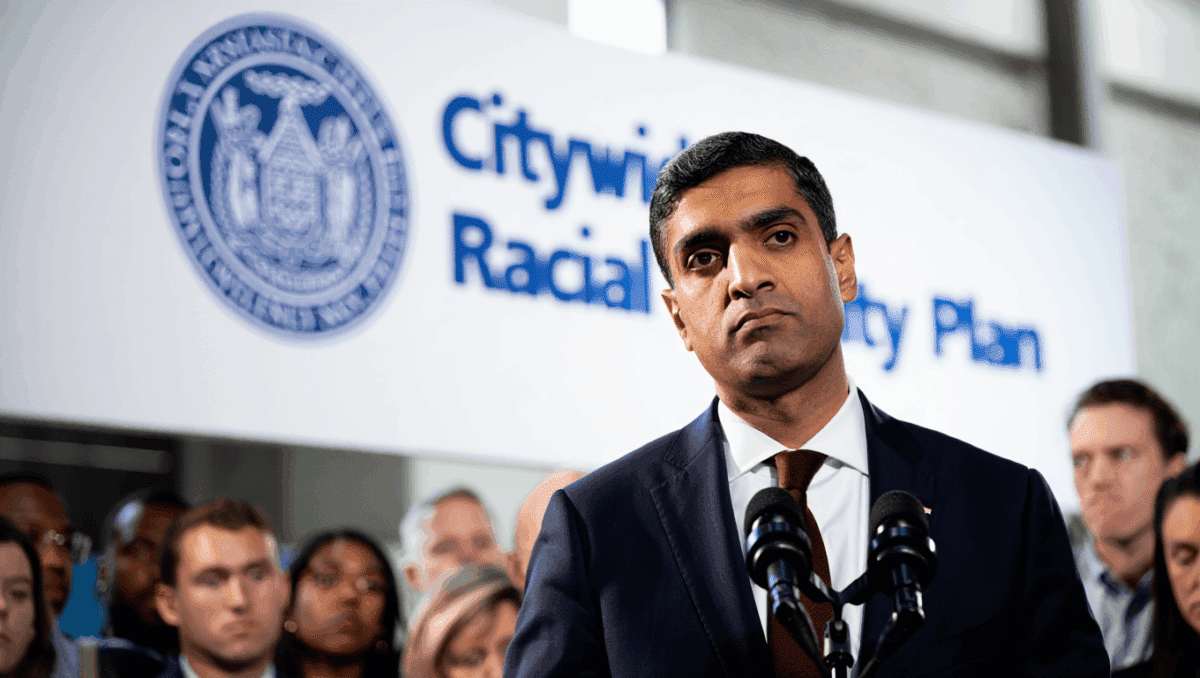
New York’s new mayor, Zohran Mamdani, introduced a sweeping Citywide Racial Equity Plan that promises to touch nearly every part of municipal life. Framed as a response to what the administration calls centuries of racial injustice, the document lays out an ambitious blueprint to realign government services, contracts, schools and housing around racial equity priorities.
The announcement has already stirred debate across the city: supporters praise its attention to long-standing disparities, while critics worry the plan will bureaucracy-first solutions and politicize everyday services. Below is a look at what the plan contains, how it could change life in the five boroughs, and the practical and political questions it raises.
What the Citywide Racial Equity Plan actually proposes
The Growing Demand for Data-Driven Decision Making in Silicon Valley
He quit, ran out of money, and begged to come back — here’s how his boss reacted
The mayor’s policy package is extensive. At roughly 350 pages, it maps out multiple programmatic changes and administrative shifts designed to make race-conscious decision-making a routine part of city governance.
- Scope: A large set of domains are targeted, including children and youth services, adult programs, family services, housing, healthcare and civil rights.
- Coordination: The initiative names a taskforce and expands existing offices — including a strengthened Mayor’s Office of Equity and Racial Justice and a new Commission on Racial Equity — to steer implementation.
- Agency involvement: Some 45 city agencies are identified as participants, charged with carrying out more than 800 distinct strategies.
- Goals: Officials say the intention is to make racial equity a routine consideration in policy choices and service delivery — to “embed” it across city systems rather than treat it as a separate program.
How the plan would reshape everyday city services
The proposals stretch from classrooms to procurement offices, signaling broad administrative changes rather than a single targeted program. Some of the key operational ideas include:
- Education: Teachers are expected to adopt what the plan calls culturally responsive teaching methods and to update curricula to reflect the city’s diverse family structures and histories.
- Workforce training: City employees would undergo anti-racism and equity training as part of routine professional development.
- Housing and development: New housing projects would be evaluated against equity criteria, and planning processes would be adjusted to meet unspecified racial-equity standards.
- Procurement: The city aims to prioritize contracts for businesses owned by women and historically marginalized groups.
The administration frames these steps as interlocking: solve affordability, they say, and you must address structural racial disparities; address racial disparities, and affordability improves. Critics argue the connection is asserted rather than demonstrated.
Voices from City Hall: the rhetoric behind the rollout
At the plan’s unveiling, senior officials tied economic justice to racial justice in strong terms. Deputy Mayor Julie Su described structural racism as embedded in the city’s foundations, while the commissioner for equity and racial justice emphasized that city systems must be regularly examined to prevent disparities from persisting.
School leaders and department heads also pledged to remove gaps in outcomes, with education and health officials promising targeted interventions. The administration’s public framing is unapologetically transformative: it wants to place racial equity at the center of policy design.
Political identity, messaging and the mayor’s background
Mamdani campaigned on a platform that frequently highlighted identity and representation. During his victory speech and throughout the campaign, he invoked immigrant and working-class communities as central to his mandate. That rhetorical focus has led some observers to question whether the plan’s emphasis on race reflects political strategy as much as policy urgency.
Questions about credibility and motives
Critics point to Mamdani’s upbringing and career path when assessing his credibility as the architect of a citywide cultural shift: raised in an educated, widely connected family, a graduate of an elite liberal arts college and a relatively young newcomer to executive office, he is portrayed by detractors as an unlikely champion of grassroots economic struggle. Supporters counter that personal background is not dispositive and that his platform responds to measurable disparities across neighborhoods.
Will the plan help lower rents and the cost of living?
One central claim from the mayor’s team links anti-racism work with affordability: the argument is that structural racial inequity and the cost-of-living crisis are mutually reinforcing problems. But the document mixes long-term institutional reforms with short-term economic goals, and the path from administrative changes to lower rents is unclear.
- Policy clarity: Many strategies in the plan are procedural — reviews, trainings, new assessment tools — rather than direct economic interventions such as rent control changes or increased housing supply.
- Measurability: Observers want more detail on metrics. With hundreds of strategies across dozens of agencies, tracking outcomes will be complex.
- Time horizon: Administrative reforms typically take years to translate into measurable economic relief; voters facing immediate cost pressures may see little quick benefit.
Implementation hurdles and legal, logistical concerns
Turning broad principles into day-to-day practice will require new systems and oversight. Potential challenges include:
- Defining standards: Terms like “racial equity benchmark” and “equity standards for new housing” are vague without clear regulatory criteria.
- Resource allocation: Agencies already stretched thin may lack the staff or funding to add compliance reviews, trainings and new assessments to their workflows.
- Political resistance: Mandating racial-equity priorities across agencies could provoke legal and political pushback, especially if procurement or hiring practices change materially.
- Equity trade-offs: Favoring certain businesses or groups for contracts raises questions about competitive procurement rules and the definition of disadvantage.
Concerns from communities and critics
Some New Yorkers worry that the plan will bureaucratize good intentions and reduce the city’s practical flexibility. Others argue the approach risks focusing on symbolic compliance rather than measurable improvements in health, safety and housing affordability.
- Perception of exclusion: A number of critics note that not every community was explicitly addressed in the public communications around the plan, which can fuel perceptions of selective attention.
- Administrative burden: Smaller nonprofits and community organizations may face new reporting expectations to demonstrate alignment with equity standards.
- Potential culture clash: Mandated trainings and curricular changes could prompt debates over academic freedom and local control in schools.
What to watch next as the plan moves from paper to practice
The mayor’s office has a long list of actions to operationalize, and the coming months will show whether the administration can translate strategy into measurable change:
- Which agencies receive additional funding to fulfill equity mandates?
- How will equity standards for housing and procurement be defined and enforced?
- What metrics will the city publish to track outcomes across neighborhoods and demographic groups?
- Will legal challenges or city council pushback alter the plan’s trajectory?
Embed racial equity across city services is the administration’s stated objective, but delivering on that goal will require concrete rules, resources and transparent accountability — and whether those are forthcoming remains an open question.
You might also like:
- Andy Burnham’s devolution plans are all talk and no action
- Zohran Mamdani: could progressive Muslim-led coalition reshape NYC politics?
- Zohran Mamdani faces backlash over bread-and-circuses tactics
- Two-tier Britain: Nigel Farage warns of widening inequality
- New York mayor Mamdani: could his policies harm the city?

Robert Johnson is a dedicated columnist focusing on political and social debates. With twelve years in editorial writing, he provides nuanced, well‑argued perspectives. His commentaries invite you to form your own views and engage in critical issues.


Man, the drama in progressive circles never ends. Mamdanis getting called a racial Stalinist? Its like a soap opera in City Hall. Wonder how this plan will actually play out… gonna need some popcorn for this one.
Man, the drama in progressive politics never ends. Mamdanis being called a racial Stalinist now? Cant keep up with these wild accusations. Wonder how this will play out in City Hall. Politics is a whole other world, I tell ya.
Man, politics be wild. Zohran Mamdani caught up in all that racial Stalinism drama? Sounds like a plot twist straight outta a soap opera! Who needs TV when you got real-life politicians throwing shade like that?
Man, this political drama is wild! Mamdani labeled racist Stalinist? Its like a reality show out here. Gotta grab my popcorn and watch this play out. Who needs TV when youve got real-life politics, am I right?
Man, the drama in progressive politics never stops. Accusing Mamdani of racial Stalinism? Thats a new one. Wonder if theyll ever run out of wild accusations or if its just the norm now.
Man, talk about drama, right? Accusing Mamdani of racial Stalinism? Thats like mixing peanut butter with pickles, just doesnt make sense! Wonder if theyre just throwing darts blindfolded at a board of accusations. Whats next, labeling veganism as a cult? The wild ride never ends!
Man, the drama in politics never ends! Mamdani accused of playing the racial card. Is it genuine concern or a power play? Hard to tell under all that smoke and mirrors. Politics, man, a whole different beast.
Man, this whole drama with Zohran Mamdani is like a soap opera on steroids. Accusations flyin left and right, racial Stalinism? Whats next, aliens in City Hall? Cant wait for the next episode of Progressive Politics Unplugged.
Oh man, here we go again with the drama in politics. Accusations flyin around like confetti at a parade. Cant they just focus on gettin stuff done instead of all this bickering? Sheesh.
Ugh, tell me about it! Its like watching a never-ending soap opera, right? All this finger-pointing and name-calling, its enough to make your head spin. Wish theyd put as much effort into actually getting things sorted as they do stirring the pot. Can you imagine the progress wed see if they focused on work instead of the theatrics?
Man, this whole situation with Zohran Mamdani sounds like a messy drama unfolding. Accusations flying left and right, labels getting thrown around… Cant they just sort it out like adults without the name-calling?
Man, this whole Zohran Mamdani drama got me feelin like Im watchin a reality show. Accusations flyin left and right, racial Stalinism thrown around like confetti. Cant wait to see how this plot twist unravels. Drama, drama, drama!
Man, aint that the truth! Its like a soap opera playing out in real life. The twists and turns in this Zohran Mamdani saga got me on the edge of my seat. Cant help but wonder whats gonna happen next in this wild ride of drama!
Man, politics is a minefield these days. Mamdanis facing some fierce heat. Racial Stalinism? Thats a new one. Cant wait to see how this progressive party drama unfolds. Grabbing the popcorn for this ride!
I heard about this Zohran dude, and man, theyre saying hes on some racial Stalinism trip. Politics these days, huh? Whats your take on this progressive party drama? Sounds like a spicy mess!
I remember when politics used to be about ideas, not mudslinging. Accusing someone of racial Stalinism sounds more like a bad movie plot than a serious political debate. Can we get back to real issues, please?