
Show summary Hide summary
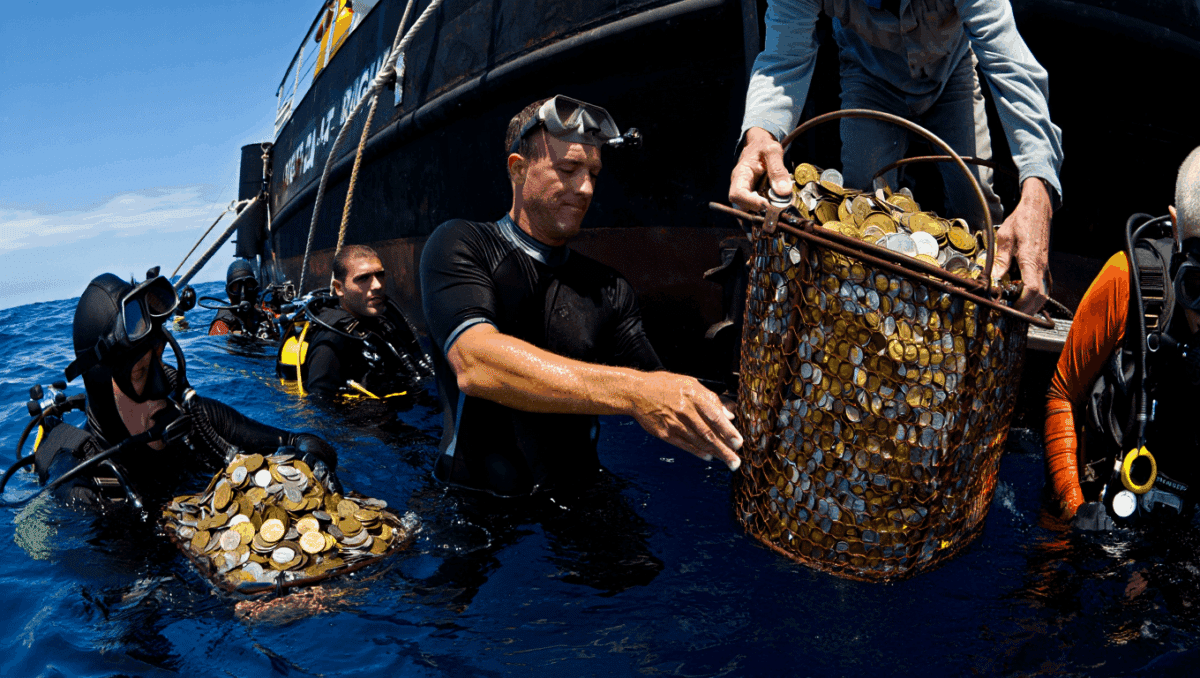
Sunlight glinted on the deck of the M/V Just Right as divers brought up coins that had slept on the ocean floor for more than three centuries. What began as a targeted salvage dive along Florida’s famed Treasure Coast quickly turned into a high-profile recovery: more than 1,000 Spanish-era coins surfaced from a wreck linked to the ill-fated 1715 treasure fleet.
Archaeological teams and commercial salvors are now cataloging the haul, which includes rare gold escudos and hundreds of silver reales, artifacts that carry both historic weight and modern market value. The find highlights how wreck sites from the early 18th century continue to reshape our understanding of maritime trade, colonial history, and the ongoing hunt for sunken treasure off Florida’s east coast.
Where the find happened and who’s in charge of recovery
The Growing Demand for Data-Driven Decision Making in Silicon Valley
He quit, ran out of money, and begged to come back — here’s how his boss reacted
The coins were recovered from a known wreck zone along the coastline often called the Treasure Coast, an area long associated with the 1715 Plate Fleet disaster. Under U.S. law the federal court in Florida oversees ownership of the wrecks, and it has granted exclusive salvage rights to a private contractor to locate and retrieve artifacts.
- Operator: Queen’s Jewels LLC is the exclusive salvage operator contracted by the U.S. District Court for Florida.
- Vessels involved: The M/V Just Right led the recent dive; other vessels tied to the operation include the Mighty Mo.
- Key personnel: Capt. Levin Shavers commanded the recovery dive, while Saul Guttuso serves as the salvage team’s director of operations.
What the salvage team recovered: coins, containers and clues
Divers pulled more than a thousand coins to the surface during this season’s fieldwork. The most attention-grabbing pieces were five gold escudos — high-value coins from the Spanish empire — but the majority were silver reales, the famous “pieces of eight.” Many coins still bear mint marks and dates that tell where in the Americas they were struck.
Breakdown of notable finds
- Gold escudos: Five recovered so far; particularly valuable both historically and monetarily.
- Silver reales: Hundreds of coins minted in colonial centers across Peru, Bolivia and Mexico.
- Evidence of storage: Remnants indicating coins had been carried in a burlap sack, suggesting clusters of coinage may remain nearby.
Market-watchers estimate the newly raised coins could fetch around $1 million collectively, a figure influenced by both rarity and the contemporary climb in gold prices. Beyond dollar value, salvors stress the research value: each coin acts as a micro-history, revealing trade routes, mints, and circulation patterns from the early 1700s.
Historical context: the 1715 Plate Fleet and the hurricane
In 1715 a Spanish treasure convoy carrying vast quantities of gold, silver and jewels from the New World to Europe was overwhelmed by a hurricane off Florida’s coast. The series of wrecks—often referred to as the Plate Fleet—was transporting what contemporaries estimated at the time to be an enormous fortune back to Spain. Eleven ships are thought to have been lost in that storm.
- The fleet’s cargo included bullion and prized colonial coinage intended for European markets.
- The sudden storm scattered wreckage and artifacts along a broad stretch of coastline and seafloor.
- Centuries later, the wrecks still yield items of archaeological and commercial interest.
Salvage methods, archaeology and legal oversight
Modern recoveries in the area mix commercial salvage practices with archaeological controls. Licensed teams dive with metal detectors, hand tools and careful recording protocols to preserve context. The court-appointed contract holder must balance artifact recovery with reporting and conservation responsibilities to ensure scientific value is not lost to headline-grabbing trophy hunting.
Typical steps in a controlled salvage operation
- Survey and mapping of the site to identify debris fields and concentrations of artifacts.
- Documenting finds in situ with photography and notes to preserve contextual information.
- Careful removal, conservation and cataloging of artifacts on deck and in laboratory facilities.
- Coordination with federal authorities and sharing information for historical records.
What the recoveries reveal and what remains to be found
Recovered coins bear clear traces of their colonial origins: mint marks, designs, and wear patterns that tell stories about where and when they were made. The burlap-sack evidence suggests coins were stowed together, and salvors estimate the potential exists for thousands more coins still lying nearby—some estimates point to as many as 2,000 additional pieces in pockets of sediment around the wreck.
Veteran salvors acknowledge the scale of the task. Mike Perna, who operates one of the recovery vessels, has likened the storm’s swift destruction to the years of painstaking work required to recover its scattered cargo: the wreck event took minutes, but rebuilding the historical record is a multi-generational effort.
You might also like:
- Britannic bell, other artifacts recovered by deep-sea divers from Titanic’s sunken sister ship
- Rare Tudor coins unearthed in backyard, family to sell at auction
- Viking coin hoard found in Norway by metal detectors is the largest-ever discovery
- Gold hoard found after construction worker hits gold bar with jackhammer
- 2,500-year-old golden helmet recovered after being stolen from museum in January

Michael Thompson is an experienced journalist covering U.S. and global news. With ten years on the front lines, he breaks down political and economic stories that matter. His precise writing and keen attention to detail help you grasp the real‑world impact of every event.


Oh, man, imagine finding that treasure! My grandpa used to tell wild stories bout lost gold. Who gets to keep it though? Hope it funds some cool history projects or somethin.
Man, imagine stumbling upon a treasure like that! Makes you wonder about all the other lost riches out there waiting to be found. Who knows what else is hiding beneath the sea!
Man, finding all that treasure from the 1715 shipwreck is like hitting the jackpot! Imagine stumbling upon a million bucks in gold and silver coins just lying at the bottom of the sea. Makes you wonder what other hidden treasures are out there waiting to be discovered.
Man, you aint kiddin! Its like the ultimate game of hide and seek, but with way better prizes! Just picturing those shiny coins sparklin at the bottom of the ocean… its like a pirates dream come true. Who knows, maybe theres a whole underwater world full of treasures just waitin for someone to stumble upon em. The ocean sure keeps its secrets well, huh?
Man, imagine stumbling upon a stash of gold and silver coins from a 1715 shipwreck. Thats like hitting the jackpot in a real-life pirate movie! Bet the salvage team felt like they hit the historical jackpot, aye?
Imagine stumbling upon that treasure! Id be torn between buying a yacht or investing in a cozy beach house. Who knew history could pay off big time? Sign me up for that salvage crew!
Man, stumbling upon a $1 million treasure haul from a 1715 shipwreck? Thats like hitting the jackpot in real life! Makes you wonder what other hidden treasures are lurking beneath the ocean waves, waiting to be discovered. Exciting stuff!
Oh man, imagine stumbling upon a treasure chest like that! Id be booking my ticket to Florida right now, ready to join the next treasure hunting expedition. Who knows, maybe Id get lucky too.
Dude, I hear ya! Finding a treasure chest like that would be insane. Who needs a boring ol 9 to 5 when you could be out there hunting for gold? Florida, here we come! Just imagine the stories youd have to tell after a wild adventure like that. Time to channel our inner pirates and hunt for some shiny loot, arrr!
Man, finding all that treasure from a shipwreck? Makes you wonder what other hidden treasures are out there waiting to be discovered. Maybe I should grab a metal detector and go on a hunt myself. Whos in?
Man, imagine stumbling upon all that treasure! Id be out there with my metal detector, hunting for those sweet coins. Wonder who gets to keep all that loot, though. Lucky finders or govt?
Dude, I feel ya! Hunting for treasure with a metal detector sounds like an epic adventure. But, man, who actually gets to keep all those riches? Hope its not just the govt swooping in and taking it all. Imagine finding a chest of gold and Uncle Sams like, Thanks, thats mine now. Total buzzkill, right?
Man, finding that treasure from a shipwreck? Reminds me of my uncles wild stories. Bet those coins have some serious history. Makes you wonder who held em before. Cool find!
Man, those coins from the shipwreck? My uncle used to swear he once found a message in a bottle with a map to hidden gold. Kept us kids entertained for days! But, seriously, imagining the hands those coins passed through – pirates, sailors, who knows? Gives me chills. Historys wild, huh?
Man, imagine stumbling upon a treasure trove like that! Makes you wonder what other goodies are still hiding down there. Bet that salvage team is having the time of their lives, huh? Wish I could join em!
Man, finding all that treasure from the 1715 shipwreck is like hitting the jackpot in real life! I wonder if theyll uncover any mysterious artifacts or cursed doubloons next. Talk about a real-life pirate adventure! Arrr!
Man, finding a treasure fleet shipwrecks like hitting the jackpot! $1 million in gold and silver coins? Thats some real-life pirate bounty, matey. Arrr, wheres me eyepatch and parrot?
Aye, matey, thats like striking gold in a treasure hunt, aint it? Imagine stumbling upon all that pirate booty just waiting to be discovered. Makes you wanna grab a compass and set sail, eh? But seriously, wheres the doubloons and rum at? Time to channel your inner Jack Sparrow, savvy?