
Show summary Hide summary
- Why the post-George Floyd unrest felt like a turning point for liberal politics
- How media and tech shaped the narrative — and pressured liberal institutions
- What this shift meant for liberal principles and civic institutions
- The cultural battles: cancel culture, identity, and the limits of liberal tolerance
- Policy implications: policing, public safety, and the liberal dilemma
- Responses from the left and the right — and where Williams thinks liberalism faltered
- What this moment means for future civic life and political strategy
- Critiques of Williams’s diagnosis and alternate readings of the unrest
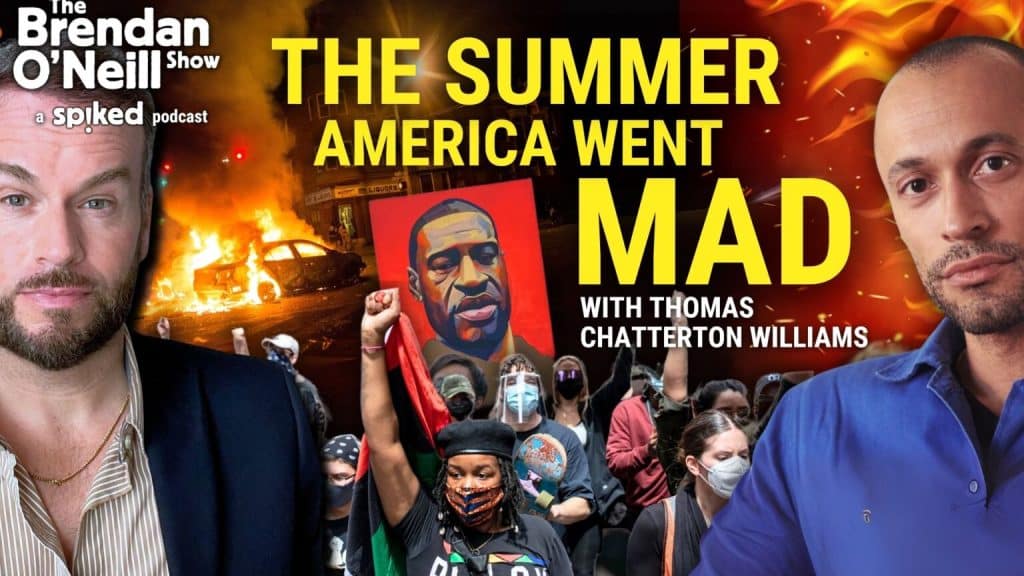
Thomas Chatterton Williams has spent years writing about race, culture, and the shifting contours of liberal thought. In recent essays and interviews he argues that the unrest following George Floyd’s murder in 2020 — the protests, the riots, and the political fallout — marked a decisive rupture for American liberalism, pushing it into a new, unstable phase that prizes moral clarity over pluralism and consensus-building.
His critique traces how a movement for racial justice collided with media dynamics, social pressure, and institutional caution. The result, he says, is a version of liberalism that often retreats from debate, conflates dissent with bad faith, and struggles to navigate the messy trade-offs of real-world politics.
Why the post-George Floyd unrest felt like a turning point for liberal politics
Williams frames the unrest as more than a moment of protest; he sees it as an inflection point that exposed long-running tensions inside liberal thought. As demonstrations swept cities, many institutions responded quickly and publicly — often with statements of solidarity, policy pledges, or personnel changes. Those rapid responses, Williams argues, revealed a fragile center that prioritizes reputational safety and symbolic alignment over deliberative compromise.
The Growing Demand for Data-Driven Decision Making in Silicon Valley
He quit, ran out of money, and begged to come back — here’s how his boss reacted
- Visibility and velocity: Social media amplified demands and flattened nuance, forcing faster institutional reactions.
- Symbolic politics over policy: Public apologies and renamings replaced many substantive conversations about policing, funding, and governance.
- Intolerance for intellectual dissent: Longstanding debates within liberal circles about strategy and trade-offs were sometimes shut down as disloyal or insensitive.
How media and tech shaped the narrative — and pressured liberal institutions
The viral footage of George Floyd’s death created a moral moment that mainstream media and technology platforms quickly framed as urgent. Williams highlights how that framing left little room for incrementalism. News cycles rewarded clarity and moral certitude, and platforms incentivized content that evoked strong reactions. Institutions — universities, corporations, local governments — responded to that pressure with swift, visible gestures.
Mechanisms that encouraged rapid public signaling
- Real-time outrage loops on social platforms that penalize perceived delay.
- Brand and institutional risk calculations that favor immediate mea culpas and hardline positions.
- Editorial incentives in newsrooms to center conflict and crisis over slow policymaking.
What this shift meant for liberal principles and civic institutions
Williams contends that classical liberal commitments — pluralism, free speech, and tolerance for disagreement — came under strain when moral clarity became the dominant currency. The pressure to choose sides quickly often sidelined the institutional patience and negotiation that democratic problem-solving requires. In practical terms, that produced a series of consequences:
- Local governments facing budget crises had to decide whether to cut police funding amid calls for reform, often without long-term plans.
- Universities and cultural institutions navigated competing demands for accountability and academic freedom.
- Public debate narrowed as certain lines of inquiry were labeled unacceptable, chilling nuanced discussion.
The cultural battles: cancel culture, identity, and the limits of liberal tolerance
A major strand of Williams’s argument examines how the language of accountability evolved into a broader phenomenon many call “cancel culture.” He argues that when institutions reflexively remove or punish individuals to signal alignment, they risk suppressing the very pluralism that sustains liberal societies.
Williams warns that the ease of symbolic punishment — firing, boycotting, or ostracizing voices — creates a climate where fear replaces debate, and where the threshold for reputational destruction becomes dangerously low.
Key cultural frictions
- The gap between private beliefs and public expression, and the penalties for misalignment.
- Generational divides over what constitutes acceptable speech and acceptable protest tactics.
- The tension between restorative justice aims and punitive, career-ending responses.
Policy implications: policing, public safety, and the liberal dilemma
The unrest prompted urgent policy questions about policing, funding priorities, and accountability. Williams notes that while many liberals supported reform, the political conversation often fragmented between those seeking pragmatic change and those demanding sweeping institutional transformation.
- Some municipalities moved to reallocate resources; others doubled down on law enforcement in response to crime concerns.
- Policy debates became entangled with symbolism, making consensus harder to achieve.
- Lawmakers and administrators found themselves balancing short-term public pressure with long-term governance needs.
Responses from the left and the right — and where Williams thinks liberalism faltered
Conservatives seized on episodes of unrest to portray liberal cities as chaotic and ineffective, while many on the left insisted that moral urgency justified uncompromising demands. Williams suggests that liberalism faltered in between: unable to defend the messy process of democratic negotiation and too quick to absorb rhetorical positions that foreclosed disagreement.
He argues that a resilient liberal politics would reclaim the language of institutions, incremental reform, and open argument rather than retreating into branding exercises or punitive culture wars.
Examples of contested responses
- Corporate diversity statements that skirted operational change.
- University tribunals that prioritized immediate discipline over transparent adjudication.
- Local leaders issuing pledges without implementing clear policy timelines.
What this moment means for future civic life and political strategy
If Williams is right, the years after George Floyd exposed vulnerabilities in a liberal coalition built around moderation and institutional trust. Moving forward, political actors of all stripes will have to decide whether to recommit to deliberative processes or to double down on the politics of immediate moral affirmation.
- Public officials may need to rebuild credibility through transparent policymaking rather than symbolic gestures.
- Civic institutions could strengthen forums for contested debate rather than defaulting to punitive action.
- Voters will likely reward candidates who can balance moral clarity with tangible plans for governance.
Critiques of Williams’s diagnosis and alternate readings of the unrest
Not everyone agrees with Williams’s assessment. Some critics argue that swift institutional responses were necessary corrective measures against entrenched injustices and that calls for moderation can be a defense of the status quo. Others say that while symbolic acts can be insufficient, they often catalyze policy shifts that would not occur otherwise.
- Supporters of the protests emphasize long-term policy wins that followed public pressure.
- Defenders of institutional accountability point to cases where rapid action prevented further harm.
- Scholars caution against equating all forms of public censure with suppression of debate.
You might also like:
- Iran war exposes Labour’s green delusions
- 9/11 moral test: America still failing victims, survivors and core values
- Britain driven to the edge by clashes over sacred beliefs
- BBC losing trust and viewers across the UK
- Trump’s messiah complex: how it shapes his rhetoric and loyal base

Robert Johnson is a dedicated columnist focusing on political and social debates. With twelve years in editorial writing, he provides nuanced, well‑argued perspectives. His commentaries invite you to form your own views and engage in critical issues.


Man, 2020 was a rollercoaster ride! From the pandemic madness to the protests and burnout, it felt like a never-ending saga. Cant deny it, though – something shifted in the air, especially for liberal folks. Time to buckle up for more surprises, I guess.
2020, man, what a wild ride, right? The whole world felt like it was collectively holding its breath. And youre right, something did change in the air. But hey, surprises keep life interesting, dont they? Heres to hoping for some good ones this time around, fingers crossed!
Man, 2020 was like a reality show gone wrong. The chaos, the burnout, the unrest – felt like we were in a giant pressure cooker. Hope were learning something from this mess, cause we cant afford a repeat!
Man, 2020 was like a rollercoaster ride with no seatbelts. The chaos, the protests, the burnout – it was like the universe hit fast-forward. But hey, maybe we needed that wakeup call, yknow?
Man, 2020 was like a wild rollercoaster ride with no seatbelts. Pandemic, protests, burnout – felt like a never-ending drama series. Did we hit a turning point or are we just stuck in a loop? Time will tell.
2020 really hit us hard, man. Felt like a never-ending rollercoaster ride with no chill. Who knew a year could pack so much drama, right? Are we finally turning the page or just stuck on replay? Time will spill the tea…
Man, 2020 was like a rollercoaster ride nobody asked for. Pandemic, protests, burnout – felt like we were stuck in a dystopian movie or something. Hope were steering towards a better sequel.
Man, 2020 was a rollercoaster ride nobody asked for! Pandemic, protests, burnout – its like someone hit the chaos button on America. Wonder if well bounce back stronger or just keep spiraling.
Man, the chaos of 2020 hit like a ton of bricks. The protests, the pandemic, burnout galore – its like America went through a pressure cooker. Wonder how well bounce back from this rollercoaster ride.
Man, 2020 was like a rollercoaster nobody wanted to ride. Pandemic, protests, burnout – felt like we were stuck in a dystopian movie. Wonder if well look back and think, Did that all really happen?
Man, 2020 was like a rollercoaster ride through a hurricane. Pandemic, protests, burnout – feels like I aged a decade in a few months. Hoping for smoother waters ahead, but who knows, right?
Man, 2020 was like a rollercoaster ride through a hurricane for America. Pandemic, protests, burnout – felt like the world was on full tilt, yknow? Changes happening faster than my morning coffee runs, shoo!
Dang, 2020 really hit America like a ton of bricks, huh? It was like trying to ride a unicycle during an earthquake! Everything was all topsy-turvy, faster than a squirrel on Red Bull. Cant blame you for feeling like the world went off the rails. Hopefully, 2021 brings some smoother sailing, right?
Man, 2020 was like a rollercoaster ride through a hurricane. The madness of the pandemic, the protests… It was like the universe hit the fast-forward button on America. Can we just hit pause and catch a breath for a sec?
Man, 2020 was like a rollercoaster ride through a hurricane! Pandemic, protests, burnout – felt like living in a history textbook. Hope weve learned something cause we cant afford a sequel to that chaos.
Man, 2020 was a rollercoaster: pandemic, protests, burnout. Liberal politics got hit hard. Media and tech played ringmaster. But did this chaos help us grow or just mess us up more?
Man, 2020 really threw us for a loop, didnt it? Its like we were all riding a rollercoaster blindfolded! The chaos was off the charts – pandemic, protests, burnout… And dont even get me started on the political circus and the media hype. But hey, maybe amidst the madness, we found some unexpected growth spurts. Or did we just end up more tangled in this crazy web? Whats your take on this wild ride, buddy?