
Show summary Hide summary
- Understanding the personality traits that fuel messianic political appeals
- How messaging and media amplify leader-centered politics
- Why the appeal matters to voters: emotions over details
- Institutional consequences and democratic risks
- How opponents, institutions, and allies respond
- Practical advice for journalists, voters, and civic actors
- Why this matters beyond any single election
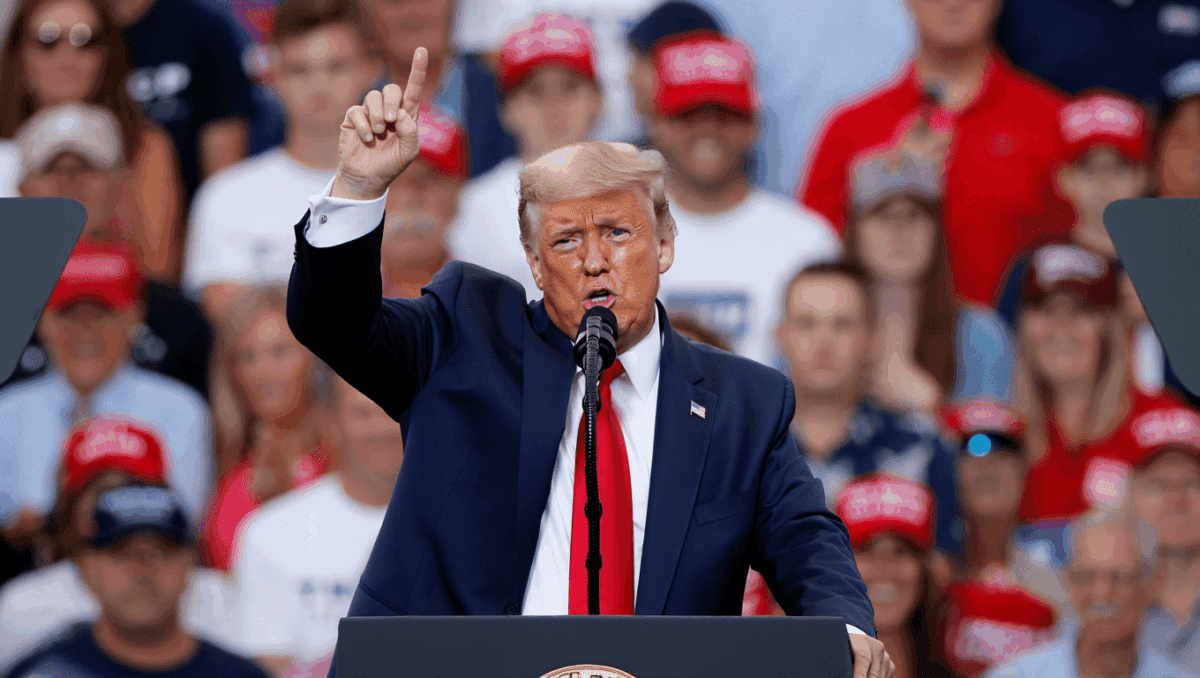
Donald Trump’s political style has long blended spectacle, certainty, and a promise of redemption for a large chunk of the electorate. For supporters, his language often reads like a pledge: one leader who alone can fix institutions, restore pride, and blunt the momentum of opponents. For critics, that same rhetoric can look dangerously messianic—tipping toward personalization of power, distrust of democratic constraints, and a politics organized around a single figure rather than shared governance.
This piece examines the phenomenon often labeled the “messiah complex” in contemporary politics: what it means psychologically, how it reshapes media and voter behavior, and the risks it poses to democratic norms. The aim is to unpack the language and mechanics of this political persona without diagnosing individuals, focusing instead on observable patterns and their effects on institutions and public life.
Understanding the personality traits that fuel messianic political appeals
Political actors who cultivate a savior image typically mix confident certainty with moral urgency. Psychologists and political scientists point to several recurring traits and tactics that make this appeal effective:
The Growing Demand for Data-Driven Decision Making in Silicon Valley
He quit, ran out of money, and begged to come back — here’s how his boss reacted
- Grandiose rhetoric: Constant claims of unique knowledge or capacity to save the nation heighten the sense of indispensability.
- Binary framing: Complex problems are presented as simple battles between good and evil, where compromise is framed as betrayal.
- Delegitimizing institutions: Courts, media, and bureaucracies are portrayed as obstacle rather than safeguard, a narrative that prepares followers to accept extraordinary measures.
- Charismatic performance: Rallies, direct-to-supporter communications, and theatrical gestures create a community feeling and reinforce leader-centric loyalty.
No single profile fits every leader labeled messianic, and observers caution against clinical labels as political critiques. Still, these elements combine to make a leader appear both necessary and singular in capability, which can be powerful in polarized or uncertain times.
How messaging and media amplify leader-centered politics
Modern media ecosystems are fertile ground for leader-driven narratives. Social platforms, partisan outlets, and algorithmic amplification can turn phrases, images, or claims into sustained storylines. Key mechanisms include:
- Rapid repetition of slogans and catchphrases that condense complex agendas into shareable beliefs.
- Echo chambers that reward loyalty and punish dissent, strengthening in-group cohesion.
- Disinformation or selective framing that reframes setbacks as external sabotage rather than policy failures.
- Visual branding and iconography that turn a political figure into a symbol beyond policy—helmets, hats, flags, and staged imagery.
When media narratives prioritize personality over policy, voters may judge leaders more on perceived authenticity and toughness than on institutional competence or long-term outcomes.
Why the appeal matters to voters: emotions over details
Political psychologists emphasize that voters often decide based on emotion first, rational analysis second. A leader who promises certainty, belonging, and moral clarity taps into several voter needs:
- Economic and social anxiety: Simple narratives provide hope when institutions seem slow or indifferent.
- Identity affirmation: A leader who champions a group’s grievances validates identity and creates solidarity.
- Desire for strong leadership: In moments of perceived crisis, decisive leaders attract support even if their methods are unconventional.
These dynamics help explain why messianic messaging can win loyal followings across wide demographic groups even when policy specifics remain vague.
Institutional consequences and democratic risks
When political life centers on a single, elevated figure, several institutional vulnerabilities can arise:
- Erosion of norms: Long-standing practices—respect for free press, judicial independence, and handover of power—face pressure if they clash with leader-driven goals.
- Polarized governance: Power becomes zero-sum, reducing incentives for bipartisan problem-solving and increasing gridlock or brinkmanship.
- Accountability challenges: Personal loyalty can shield officials from scrutiny, weakening oversight mechanisms and reducing transparency.
Scholars warn that these consequences do not happen overnight. They tend to accumulate as institutional checks are normalizedly criticized, bypassed, or weakened under the guise of necessity.
How opponents, institutions, and allies respond
Different actors adopt varied strategies when facing a leader with a messianic brand. Responses range from containment and adaptation to counter-mobilization.
Tactics used by critics and watchdogs
- Strengthening institutional safeguards: reinforcing legal norms, improving transparency, and shoring up independent agencies.
- Targeted messaging: exposing contradictions between promises and outcomes while offering alternative, practical solutions.
- Coalition-building: uniting disparate groups around shared policy goals rather than personality-driven contests.
How allies and supporters sustain the narrative
- Amplifying victories: emphasizing symbolic wins and personal loyalty over granular policy wins to maintain momentum.
- Deflecting criticism: framing investigations or losses as persecution to rally further support.
- Institutional capture: working to place loyalists in key positions to secure lasting influence.
Practical advice for journalists, voters, and civic actors
Accurate reporting and civic engagement matter more when personalization of politics increases. Practical steps include:
- For journalists: Prioritize context, track policy impacts rather than personality, and avoid amplifying unverified claims.
- For voters: Evaluate leaders on measurable outcomes—economic indicators, institutional resilience, and policy implementation—not only charisma.
- For civic groups: Invest in civic education, strengthen local institutions, and create platforms for cross-partisan dialogue.
These approaches aim to rebalance the conversation from individual charisma to collective governance and accountability.
Why this matters beyond any single election
Personalized, messianic politics reshape expectations about leadership and governance. When political success depends on one person’s aura, systems designed for shared decision-making and peaceful transitions grow fragile. That fragility affects everything from public trust to the day-to-day functioning of government services. Observing and responding to these dynamics is essential for anyone invested in the long-term health of democratic institutions and civic life.
You might also like:
- Akhmed Yakoob and the failure of multiculturalism: what his case reveals
- Blair and Boris caused Britain’s downfall, says David Starkey
- Iran: neither the ayatollah nor the shah alone explains its modern history
- Elon Musk right about EU tech rules: what it means for AI and business
- Backlash against tolerance reshapes politics and culture

Robert Johnson is a dedicated columnist focusing on political and social debates. With twelve years in editorial writing, he provides nuanced, well‑argued perspectives. His commentaries invite you to form your own views and engage in critical issues.


Man, Trumps like that one kid in school who always needs attention. His messiah complex is on another level. Its like hes in his own reality show, and were all just extras. Crazy how some folks buy into that act.
I remember watchin Trump on TV, talkin like hes the one true savior. Its like a crazy show, yknow? But then I see folks buyin into it, and Im like, Wait, for real? Messed up world, man.
Man, I feel ya. Its like watching a train wreck in slow motion, right? Hes got that whole reality TV star charisma mixed with some wild political rhetoric. Its like a messed-up crossover episode where you cant look away even though you know its gonna be a disaster. The fact that people actually buy into it? Mind-blowing. Its like were living in a real-life sitcom, but the jokes arent as funny. Crazy world were in, buddy.
Man, Trumps whole messiah complex thing is like watching a reality show gone rogue. The way he spins his rhetoric, its like hes the hero in his own movie, but we all know its just smoke and mirrors. Crazy times were living in, huh?
Man, Trumps like that guy at the party who wont stop talking about himself. Its all me, me, me. But hey, if people dig that messiah vibe, who am I to judge? Just hope theyre paying attention to more than the show.
Man, Trumps got this ego the size of a football field, thinking hes the chosen one. His supporters eat it up like candy. Its like watching a reality TV show, but with, like, the fate of the country at stake. Wild ride, man.
Man, Trumps messiah complex is like a bad movie sequel – you know its coming, but its still cringey. Cant believe people buy into that act. Its like watching a reality show gone wrong.
Man, Trumps ego is the size of Jupiter! His messiah complex makes him think hes the second coming. But hey, his loyal base eats it up like candy. Its a wild circus, folks!
Man, Trumps messiah complex? Its like hes got a one-man show on repeat. But hey, you gotta admit, its captivating in a trainwreck kinda way. Wonder how this saga ends.
Man, Trumps ego is bigger than my uncles BBQs. Its like hes the lead singer in a one-man band. But, hey, gotta admit, his stage presence hooks folks in. Wonder if his messiah complex is his encore or his swan song.
Man, Trumps like that friend who never stops talking about themselves at the party. Just goes on and on about how great they are. Cant decide if its impressive or annoying. But hey, his loyal base sure eats it up.
Oh man, I totally get what youre saying! Trump really hogs the spotlight like that one friend who cant stop talking about themselves. Its like, Hey, buddy, there are other people at the party too, you know! But yeah, gotta hand it to him, his loyal crew laps it all up like candy. Its a wild ride watching it all unfold, aint it?
Man, Trumps always gotta make it about himself, huh? His messiah complex aint foolin anyone. Its like hes starin in his own movie 24/7. But hey, some folks lap it up like its gospel. Wild times were livin in.
Man, Trumps like that dude at the party who wont stop talking about himself. Its cringy how his fans eat it up. But hey, gotta give it to him, he plays the messiah card like a pro. Wonder if its all smoke and mirrors or if hes actually buying into his own hype.
Man, Trumps like that friend who always thinks hes the smartest in the room, but you cant help but roll your eyes. His whole messiah act just amps up his base, like a bad reality show you cant turn off.
Man, I swear, Trumps like that dude who always talks about himself at a party. But instead of funny stories, hes like, I alone can save the world. And some folks are nodding like, Yeah, youre our guy! Wild times, man.
Man, Trumps like that friend who always thinks hes the smartest dude in the room, yknow? His shticks all messiah vibes, but some folks are eatin it up like candy. Its a wild ride, thats for sure.
I remember when leaders were just leaders, not wannabe messiahs. Trumps complex messes with facts and the minds of his flock. Its like watching a reality show gone too far. But hey, who needs democracy, right?