
Show summary Hide summary
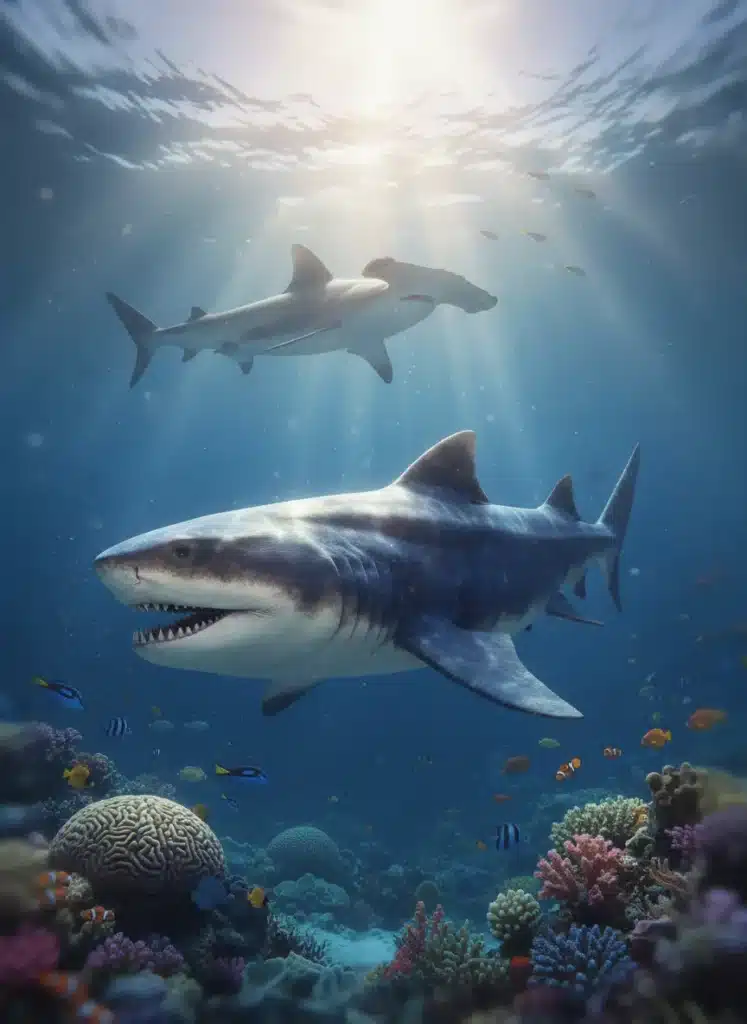
Imagine peering into the shadowy depths of a cave and stumbling upon a relic from an age so distant, modern sharks would blush with envy. The ancient world has delivered such a surprise—not once, but twice—revealing two astonishingly well-preserved giant shark fossils, each a staggering 325 million years old. Discovered deep in the heart of Kentucky and Alabama, these prehistoric titans rewrite what we thought we knew about life during the Carboniferous. Let’s sink our teeth into this extraordinary paleontological adventure.
From Darkness, Giants Awaken
The unearthing of these fossils was nothing short of breathtaking. The first find happened in the vast networks of Mammoth Cave in Kentucky—one of the largest underground labyrinths worldwide. Here, far from sunlight, the remains of Troglocladodus trimblei emerged, trapped in limestone for eons. Not to be outdone, just a few months later, Alabama’s own mysterious cavern delivered a showstopper: Glikmanius careforum, a fearsome species that once ruled ancient coastlines.
The Growing Demand for Data-Driven Decision Making in Silicon Valley
He quit, ran out of money, and begged to come back — here’s how his boss reacted
But these were not your stereotypical tropical relics washed up on a beach. The caves themselves maintain a unique microclimate that seems crafted for fossil preservation: absolute darkness, humidity above 98%, and a steady 13°C. Picture it: nature’s own time capsule, where decomposition slams on the brakes and even sensitive details like skin imprints or traces of once-beating organs might survive the march of millions of years.
Secrets Carved in Stone (and Skin)
Every new shark fossil is a biological treasure chest, but these finds shatter the mold. Both species have been previously identified, but extremely rarely in such spectacular condition. These predators once dominated their coastal homes, playing the lead in bustling marine ecosystems with dazzling biological variety. For paleontologists, discovering their nearly intact remains isn’t just exciting—it’s priceless. Especially since, in these cave laboratories, the fossilization process was painstakingly slow and stable, allowing for truly exceptional conservation.
The recipe? A steady temperature, ever-present humidity to protect fossilized tissues, and darkness to ward off the chemical havoc wreaked by light. While most fossil sites see vital details eroded by nature’s impatience, here the clock has all but stopped for hundreds of millions of years. The result? Bones, teeth, even bits of ancient skin holding strong through the eons. Sometimes, against all odds, patches of skin or ghostly remnants of organs endure, opening new frontiers for paleontology.
- Microclimate: consistent 13°C, humidity >98%, pitch black
- Natural “labs” preserve bones, teeth, and skin imprints
- Unlocks study of rarely fossilized features
How Did These Leviathans Get There?
To trace this story’s roots, we travel to the twilight of the Carboniferous, amid the colossal tectonic ballet that formed Pangaea. Back then, a vast inland sea lapped what is now America’s heartland, bordered by teeming lagoons. When the sea withdrew, the bodies of many marine creatures (giant fish included) found themselves buried under thick limestone sediment.
The drama didn’t end there. Tectonic upheavals, collapsing bedrock, and the slow, relentless action of underground water eventually sculpted the first caves. Locked away from the world above, these ancient shark skeletons remained untouched—until intrepid explorers and researchers finally gazed into those abyssal crypts.
Before these remarkable finds, scientists relied on scattered shark teeth or poorly preserved bone fragments for clues. Now, with entire (or at least partially articulated) skeletons in hand, the door opens to richer understanding of ancient lineages, hunting tactics, adaptations, and even the original sea’s dramatic transformations.
Ripples Across Prehistory and Beyond
The impact of this scientific double whammy is not limited to sharks alone. Fossils like these help illuminate how Carboniferous ecosystems responded to major climate changes, such as the rise and retreat of the inland sea. Analysis of sediment, plant residue, and fossil distribution reveal just how dynamic this ancient world could be—and how even dominant predators sometimes fell to environmental upheaval.
This exceptional preservation now acts as a golden template. Other similar cave systems may be hiding further surprises—odd vertebrates, new species, or echoes of an ancient arms race between predator and prey. New non-invasive analytical tools (like CT scanning and microradiography) make it easier to study these treasures without so much as a scratch, encouraging more daring subterranean missions.
- Insight into ecosystem responses to climate shifts
- Model for finding new fossil hot spots
- Potential for new discoveries as technology and exploration advance
In the lush underwater jungles and coral thickets of the Carboniferous, giants like Troglocladodus trimblei and Glikmanius careforum reigned supreme. Their legacy, captured and frozen in Kentucky’s and Alabama’s enigmatic caves, reminds us just how quickly fortunes can shift—even for the best-adapted. As paleontological teams push further into America’s karstic depths, who knows what other titans—and secrets—wait to rewrite our planet’s grand evolutionary tale?
You might also like:
- Ancient giant shark ruled the seas before megalodon, fossils reveal
- Platypus fossil reveals it swam with dolphins 25 million years ago
- Scariest sea creatures: 10 real ocean animals that actually exist
- Great white shark teeth: science explains why they’re replaced constantly
- 2-million-year-old elephant ancestor tooth found on beach by boy

David Miller is an entertainment expert with a passion for film, music, and series. With eight years in cultural criticism, he takes you behind the scenes of productions and studios. His energetic style guides you to the next big releases and trending sensations.


Man, talk about a blast from the past! Those ancient giant sharks turning up after 325 million years frozen? Thats like a plot twist even Hollywood couldnt dream up. Natures the real MVP when it comes to surprises, huh?
Talk about a blast from the past, right? Those ancient giant sharks showing up outta nowhere after being frozen for 325 million years is wild! Like, Mother Nature really out here flexin her surprises. Hollywood writers gotta step up their game for real! Can you imagine the chaos if these sharks started roamin around now? Natures the ultimate showrunner, man.
Imagine stumblin upon these ancient sharks like, Surprise, were 325 million years old! Bet theyve seen some stuff. Natures hardcore time travelers, man. What other crazy sea secrets are still chillin out there?
Man, them sharks been chillin for 325 MILLION years? Thats like… way before Jurassic Park was even a movie idea! Natures got some mad history lessons, yo. Wonder what else is hiding out there.
I mean, can you imagine stumbling upon two massive sharks from 325 million years ago? Like, talk about a blast from the past! Makes you wonder what other jaw-dropping secrets are hidden in the depths. Mind officially blown!
Man, those prehistoric giant sharks aint holding back, huh? 325 million years frozen but still making waves! Natures a wild ride, lemme tell ya. Makes you wonder what other ancient surprises are lurking out there.
Man, them prehistoric sharks? Theyre like the OGs of the ocean, rewriting the whole natural history script! 325 million years frozen? Thats some next-level time travel right there. Wonder what else those giants got up their fins…
Man, those prehistoric sharks are like the OGs of the ocean, rewriting the whole natural history script, right? 325 million years frozen? Thats some next-level time travel for sure. Wonder what other jaw-dropping tricks those giants got up their fins. The oceans got some serious old school cool!
Man, can you believe 325 million years frozen? Those two giant sharks shook things up! Natures full of surprises, aint it? Makes you wonder what else is hidden out there in the depths.
For real, those sharks had me shook too! Natures always pullin surprises outta its hat, aint it? Like, what other jaw-dropping stuff is chillin in the deep blue sea, huh? Maybe a squad of ancient octopuses throwin a secret party down there or somethin!