
Show summary Hide summary
- How researchers mapped tooth change across ages and jaw positions
- What juvenile great white teeth look like and why
- When the diet shifts: what happens around three meters
- How different regions of the mouth divide the work
- Upper vs. lower jaws: different jobs, one system
- Why continuous tooth replacement matters for adaptability
- What this tells us about great white ecology and future questions
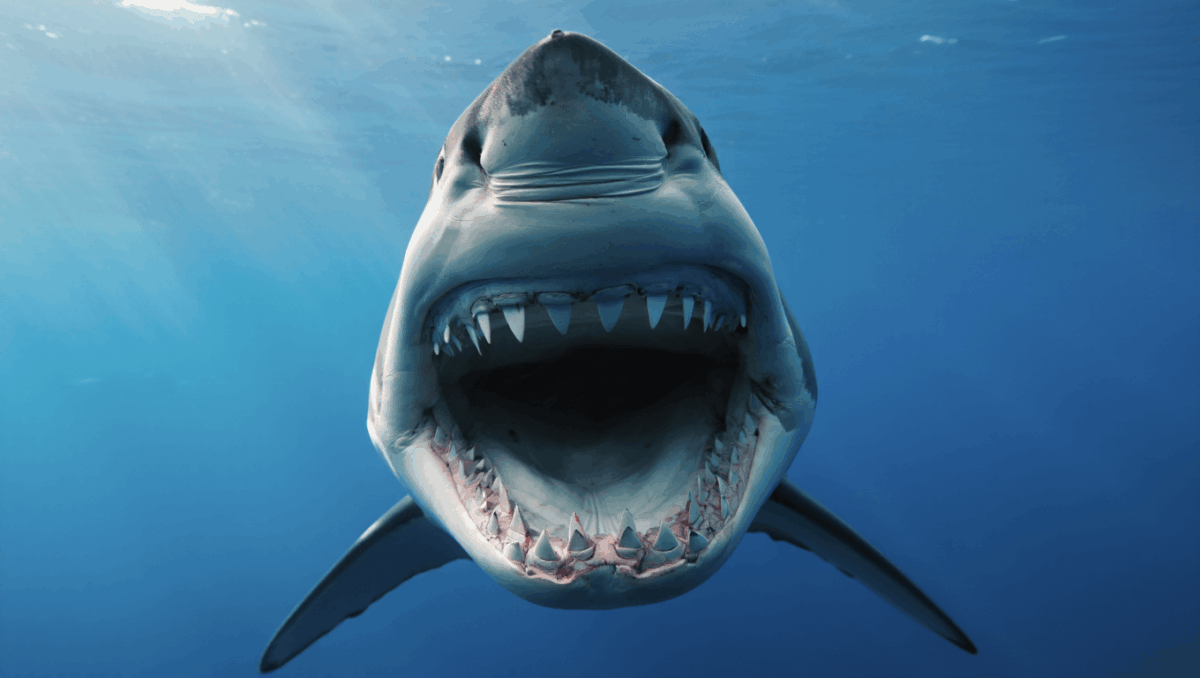
Great white sharks are already center stage in the ocean’s drama, and much of their fearsome reputation boils down to one thing: their teeth. Scientists have long known these jaws are lethal, but new research reveals that a great white’s dental toolkit doesn’t just wear out and get replaced—its shape actually changes as the animal grows and shifts its diet.
How researchers mapped tooth change across ages and jaw positions
A team published their findings in Ecology and Evolution after examining teeth from nearly 100 great white sharks of varying sizes. Rather than studying a single tooth or one life stage, the researchers compared teeth from different positions in the mouth and from individuals at multiple growth stages. That broader look allowed them to connect tooth morphology directly to feeding habits through a shark’s life.
- Sample size: close to 100 animals, providing a wide age and size range.
- Scope: teeth from multiple jaw positions, not just isolated specimens.
- Goal: link tooth shape and function to dietary shifts as sharks mature.
The Growing Demand for Data-Driven Decision Making in Silicon Valley
He quit, ran out of money, and begged to come back — here’s how his boss reacted
What juvenile great white teeth look like and why
Young great whites feed mainly on fish and squid. Their front-line tools reflect that diet: teeth are narrow, pointed, and sometimes bear small lateral cusps that help grip quick, slippery prey. Those slender, piercing teeth are ideal for catching fast-moving animals and holding them long enough to swallow or reposition.
When the diet shifts: what happens around three meters
At roughly three meters in length, many great whites begin adding marine mammals—like seals—to their menu. That dietary pivot brings a major change in dental design. New teeth forming after this size threshold become broader, thicker, and develop serrated edges built for cutting rather than just holding.
- Sharp, narrow teeth with side cusps → optimized for fish and squid.
- Broad, serrated blades → optimized for slicing through flesh and blubber.
- Timing: the shift in tooth form tracks the shark’s move to larger, fattier prey.
How different regions of the mouth divide the work
Teeth are not uniform tools across the jaw; position matters. The study shows a clear functional division:
Front teeth: the bite starters
- Front teeth remain broad and robust to handle the initial impact of a bite.
- These teeth absorb the force when a shark seizes large prey and help secure it for further processing.
Rear teeth: tearing and processing
- Teeth farther back the mouth tend to be narrower and set at an angle, specializing in slicing and tearing after the bite is secured.
- This positional specialization creates an efficient sequence of actions—grip, then cut—distributed across the jaw.
Upper vs. lower jaws: different jobs, one system
The researchers also noted consistent differences between the upper and lower jaws. Generally, lower teeth play a stronger role in holding prey in place, while upper teeth are more involved in cutting. Together, the jaws form a complementary system where each tooth position contributes to the overall feeding strategy.
Why continuous tooth replacement matters for adaptability
Great whites cycle teeth constantly. New teeth form in the back of the jaw and rotate forward on a schedule that can be a matter of weeks. That turnover isn’t just maintenance; it’s an adaptive mechanism. Because new teeth develop according to the shark’s current dietary needs, the mouth reflects what the shark eats now—rather than what it consumed in the past.
- Rapid turnover: new teeth move forward every few weeks.
- Adaptive development: teeth forming at a given life stage mirror the prey types the shark is currently hunting.
- Functional updating: the jaw’s toolkit evolves incrementally as the animal grows and its hunting strategy changes.
What this tells us about great white ecology and future questions
This study reframes tooth replacement as more than a simple repair process; it’s a dynamic, life-stage-specific response to feeding challenges. By linking tooth shape to diet and jaw position, the research explains how great whites maintain hunting effectiveness through growth. It also opens new avenues for scientists to explore how environmental changes or prey availability might alter tooth development and feeding behavior in populations over time.
You might also like:
- Great White Sharks Swarm Maine Beaches: What’s Drawing Them Closer?
- Ancient giant shark ruled the seas before megalodon, fossils reveal
- The largest great white shark ever recorded spotted near a major tourist hotspot
- Scariest sea creatures: 10 real ocean animals that actually exist
- Bite-proof wetsuit fabric nearly eliminates shark bite injuries

William Anderson is a multimedia producer specializing in videos, podcasts, and interactive galleries. With five years of immersive content creation, he turns information into a rich audio‑visual experience. His storytelling skills draw you directly into the heart of every story, on any platform.


Man, sharks are like the rockstars of the ocean with their never-ending supply of teeth! Imagine if we could just grow a new set every time we lost a tooth. The tooth fairy would go bankrupt!
Dude, totally feel ya on that! Sharks are basically the Mick Jaggers of the sea, rockin those teeth like its nobodys business. Can you imagine the tooth fairys face if we could pull that stunt? Shed be like, Alright, kids, time to start investing in shark teeth futures! *chuckles*
Man, great whites are like the rockstars of the ocean! Constantly swapping their teeth like its no big deal. Imagine if we could just grow fresh teeth whenever we wanted, no more dentist bills!
I remember watching a shark documentary where they talked about teeth constantly popping up. Its like they have a secret stash of backups! Natures way of saying, Dont worry, I got you covered. Nature is wild, man.
Man, these sharks are like the kings of dental hygiene, always swapping out their teeth! Its like a built-in tooth fairy service! Natures way of saying, Out with the old, in with the new. Mother Nature, youre a wild one!
Dude, sharks are like natures ultimate chompers, man. Constantly swapping out those teeth, its like having a built-in tooth fairy on the go. The science behind those great white shark teeth is wild, makes my own dental routine seem kinda boring.
Man, sharks and their teeth are wild, right? Like a conveyor belt of freshness in their mouths. Natures got some crazy ways of keepin things rollin. Sharks be like, Out with the old, in with the new!
Man, great white sharks are like the rockstars of the ocean with their never-ending stash of backup teeth. Just when you thought losing a tooth was a big deal, these bad boys are out here shedding them like its no biggie. Natures got some wild ways, huh?
Dude, totally! Those sharks are like the ultimate rockstars, aint they? I mean, talk about living life on the edge with a never-ending supply of backup bling. Losing a tooth? Pffft, childs play for those toothy champs. Mother Nature sure knows how to keep things interesting, huh?
Man, sharks and their teeth, its like a never-ending tooth fairy tale! Imagine if our teeth regenerated like that, wed never have to worry bout cavities or losing em! Sharks got it all figured out, huh?
Man, sharks are like the rockstars of the ocean, aint they? Constantly swapping out their teeth like its no big deal. Wish I could regenerate my phone battery as easily as a great white grows new teeth!
Man, sharks be wild! Constantly swappin out their teeth like its no big deal. Makes my own dentist visits seem like a walk in the park. Natures dental plan on a whole other level!
Sharks are out here hustlin, right? Swappin teeth like its a side gig. Dentist visits? Pfft, childs play compared to what those underwater legends are doin. Maybe we should take notes from them, start a new trend or somethin. Whos in for a teeth swap party?
Man, sharks are like the rockstars of the ocean, aint they? Constantly shedding and regrowing their teeth like its no big deal. Natures dental plan on point!
Man, great white shark teeth are like the ultimate dental hygienists! Constantly replacing teeth like its no biggie. Meanwhile, Im over here struggling to remember to floss. Nature really showing off its cool tricks!
Man, great white sharks are like the rockstars of the ocean with their constant tooth replacements! Its like having an unlimited supply of pearly whites. Natures way of ensuring they stay sharp for the next meal, huh?
Man, sharks are like the ultimate teeth-changers, huh? Imagine if we humans could swap out our teeth as easily as they do. Bet dentists would be out of business real quick! Natures got some crazy tricks up its sleeve.
Man, great white sharks got it made with their teeth game! Constantly replacing em like its no biggie. Wish I had that kinda dental plan, you know? Natures wild, folks.
Man, sharks are like the rock stars of the ocean with their teeth constantly rockin and rollin. Its wild how they keep swapping those pearly whites for fresh ones. Natures built-in dental plan!