
Show summary Hide summary
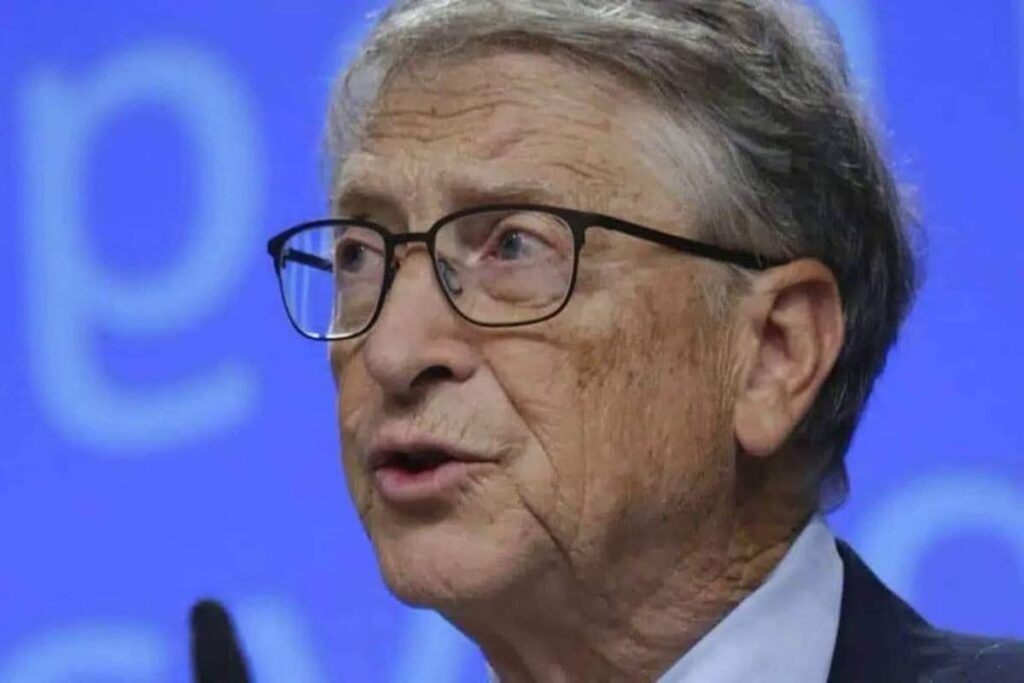
As artificial intelligence continues to reshape industries at lightning speed, one surprising profession stands firm against automation. According to Bill Gates, even a hundred years from now, one job will still need a human touch — and it’s not what you might expect.
A candid view on AI’s growing influence
Bill Gates is no stranger to the future of tech. But in a recent conversation, he openly admitted what many are thinking: AI’s rise is both exciting and unnerving. “I’m scared, too,” he confessed, echoing the unease felt across sectors worldwide.
The Growing Demand for Data-Driven Decision Making in Silicon Valley
He quit, ran out of money, and begged to come back — here’s how his boss reacted
There’s plenty of reason for that anxiety. The World Economic Forum projects that 85 million jobs could be lost globally to automation by 2030. But it’s not all doom and gloom. That same forecast suggests we might see the creation of 97 million new roles, many in industries we’re only beginning to understand.
The challenge? Making sure these changes benefit everyone — not just the tech-savvy or well-connected. Gates envisions a future where AI enhances our productivity, potentially giving us more time for personal fulfilment — but only if we manage it wisely.
Why programming stands out from the rest
Among all the jobs being reimagined, Gates singles out one that he believes will always remain uniquely human: programming.
Sure, AI can generate basic code or debug more efficiently than most of us ever could. But programming, in its true form, goes far beyond typing out instructions. It’s about solving complex problems, making creative decisions, and building something entirely new — tasks that require intuition, logic, and imagination.
And that’s not something machines can fully replicate.
Many programmers describe moments of inspiration — sudden insights or unexpected solutions that come not from a manual, but from deeply human thinking. Gates argues that this kind of innovative reasoning is what sets human programmers apart, and why the role will endure, even as AI tools become more advanced.
AI’s impact varies across industries
Of course, programming isn’t the only profession navigating the AI revolution. Gates points out that fields like biotech and energy also rely on complex human judgment — things that can’t easily be outsourced to a machine.
At the same time, other sectors face more direct disruption. Administrative roles, for instance, or even parts of graphic design, are increasingly handled by tools that can write, schedule, or design at the click of a button.
This doesn’t necessarily mean mass job loss — but it does signal a major shift. The future of work will likely involve adapting to AI, not resisting it. That means learning new tools, upskilling regularly, and rethinking how tasks are divided between humans and machines.
What research says about staying ahead
Recent findings from organisations like France Travail support this idea. Their research shows that careers relying on critical thinking and complex decision-making are the most resilient to automation. In other words, jobs that rely on emotional intelligence, ethics, and nuanced reasoning are the ones least likely to be replaced.
And while AI can certainly help — by speeding up research, crunching data, or automating the boring stuff — the real edge still belongs to the human brain.
Embracing change without losing what makes us human
If there’s a takeaway from all this, it’s that curiosity and adaptability are key. AI isn’t going anywhere — but neither is the need for humans who can lead, create, and make sense of complexity.
So whether you’re a seasoned developer or just trying to keep up in a changing workplace, the message is clear: treat AI like a partner, not a rival. Use it to enhance what you do — but never stop learning, thinking, and questioning.
And if you’ve ever worried about machines taking over your job, take a cue from Gates. Some things, like real problem-solving and human creativity, simply can’t be coded. Not now. Not in 100 years.
You might also like:
- AI-proof job? Bill Gates names the one role safe for the next 100 years
- Zuckerberg, Musk, and Altman say smartphones are over — but Apple isn’t giving in
- Immigration could be the issue of the century, experts warn
- AI extracts valuable materials from trash to boost recycling and resource recovery
- Workers’ right to private opinions threatened by employers: what to know

David Miller is an entertainment expert with a passion for film, music, and series. With eight years in cultural criticism, he takes you behind the scenes of productions and studios. His energetic style guides you to the next big releases and trending sensations.


Man, I remember when AI was just a sci-fi dream. Now Gates says it cant replace teachers? Better keep my job safe with those lesson plans! *winks*
Man, AIs takin over, huh? But Bill Gates says theres one job it cant snatch – bein a chef! Cant argue with that, gotta appreciate a good ol cookin human touch. Pass the salt, robot!
Man, AIs are everywhere these days, right? But ya know, ol Bill Gates has a point there about keepin chefs safe from the robot uprising. Cant beat the human touch in cookin! Pass the salt, robot? Nah, pass the spatula, buddy! Lets see if you can flip a pancake as good as grandma.
Man, AI takin ova everything, but Gatesy says programmers still gonna be needed. Cant imagine a world without coders, huh? Guess well keep our jobs even if robots run the show. Sounds like a plan!
I remember tellin my grandpa bout AI takin over jobs. He chuckled, said, No bot can replace a plumber fixin a leaky sink. Guess ol Gates agrees, even after a century. Plumbers, keep shinin!
Man, AI takin over jobs left and right. But Gates says they wont snatch up creative gigs like artists. Guess were safe from robot Picassos for now! Still, wonder how AIs gonna shake things up in other fields.
Man, AIs takin over everything these days, right? But hey, at least Bill Gates thinks theres one job it wont snatch – lemme guess, professional ice cream taster? Gotta keep some things sacred, I guess!