
Show summary Hide summary
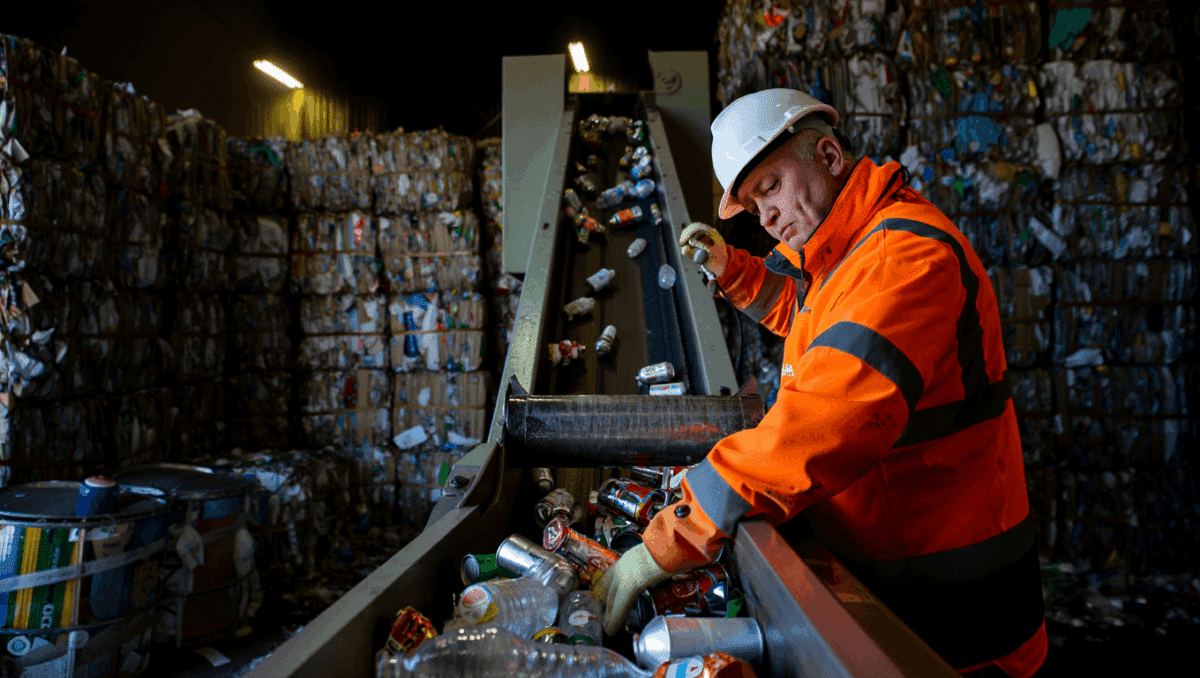
Trash is starting to look a lot more like a bank account than a burden. With the market prices for recycled paper, plastic and aluminum climbing, waste companies are finding unexpected profits in the piles they once paid to haul away—thanks in large part to AI-driven sorting machines that can pluck valuable items from mixed waste streams at scale.
These smart sorters don’t just replace human hands; they make split-second choices about material quality, contamination and market value, turning what used to be tossed into the landfill into recoverable commodities. The result: higher recovery rates, cleaner bales for mills and growing returns on the technology investment.
Why curbside trash is suddenly worth more
Several economic and industry shifts have pushed the value of recyclables higher in recent years. Tariffs on aluminum and the closure of pulp mills, among other supply-side disruptions, have tightened material supply and raised prices. At the same time, demand for reusable feedstock remains strong.
The Growing Demand for Data-Driven Decision Making in Silicon Valley
He quit, ran out of money, and begged to come back — here’s how his boss reacted
- Rising commodity prices for paper, plastic and metal
- Fewer processing facilities (pulp mills closing) leading to supply constraints
- Trade measures and tariffs that alter global material flows
- Improved sorting technology that increases material purity and marketability
Higher market prices combined with better sorting have made many items in the waste stream worth extracting rather than burying.
How AI-powered robots sort garbage — and what they can pick out
Robotic sorters use camera arrays, sensors and trained machine learning models to identify thousands—even billions—of object variations. These systems evaluate color, shape, logos, SKU markings and material condition to decide whether an item belongs in a bale for recycling or should be diverted elsewhere.
Types of robotic actions on the line
- Robotic arms with grippers that pick and place individual items
- Compressed air jets that blow materials into different chutes
- Vision systems trained on millions of images to recognize brands, shapes and contaminants
One example, AMP’s Delta sorting unit, can isolate around 80 distinct items per minute and distinguish countless shapes, sizes and identifiers even when objects are tangled together. The machines are trained on a huge range of variations so they can make thousands of decisions every minute about what to recover.
Major operators are rolling out robots — and seeing returns
Large waste companies are committing heavily to automation. Republic Services, the country’s second-largest waste firm, has installed AI-enabled sorters in about one-third of its 79 material recovery facilities. Waste Management, the largest operator, has put roughly $1.4 billion into robotic sorting technology across its network.
Those investments are translating into measurable financial gains. Higher-quality bales fetch better prices, and greater capture rates increase the volume of saleable material. In some quarter reports, recycled-material sales and margins have boosted overall profitability.
A closer look at a long-term contract
AMP signed a 20-year deal to run a materials recovery facility for Virginia’s Southeastern Public Service Authority, an agency that previously recycled only about 7% of incoming waste. The facility came online about two years ago. Under the contract AMP receives roughly $50 per ton for handling waste and is contractually responsible for diverting at least 50% of incoming material from the landfill—an obligation the company has met so far.
Economic and social trade-offs: jobs, safety, and efficiency
Automation at recycling plants raises familiar questions about employment. While robotic systems do reduce the need for repetitive manual sorting, many argue the trade-off improves safety and efficiency: sorting facilities are physically demanding and can expose workers to hazardous or unpleasant conditions.
Executives and industry analysts emphasize that the financial case for robots is not only about cutting labor costs. The critical drivers are:
- Higher recovery rates — more material reclaimed from the same waste stream
- Improved purity and quality — cleaner bales that sell for more
- Throughput gains — faster sorting lines that process more tons per hour
- Safer workplaces — fewer people placed in hazardous positions on the conveyor
Companies point to recovery, value extraction and improved purity as the main ROI drivers, not just headcount reductions.
What cities and recycling programs are likely to see next
As more facilities adopt AI sorters and commodity markets stay favorable, municipalities and waste authorities can expect shifts in how recycling programs are operated and contracted. Potential impacts include:
- More pay-for-performance contracts tied to diversion rates
- Increased private operation of public materials recovery facilities
- Better incentives for source-separated streams if markets reward purity
- Opportunities for smaller cities to access higher-quality processing through shared regional facilities
AI-driven sorting is changing the math of recycling: what was once too expensive to separate by hand is now economically feasible, and that’s unlocking value hidden inside the tons we send away each week.
You might also like:
- New Delhi teens recycle 2 million pounds of waste across 14 Indian cities after asthma attack
- San Francisco Trash Art Wows: 35 Years of Creativity From Recycled Garbage at Free Gallery Event
- 3D printer filament made from recycled fishing nets
- E-waste vaporization recovers precious metals at 13x lower cost, study finds
- Ocean plastic cleanup: phone case brand builds autonomous floating collection platform

Michael Thompson is an experienced journalist covering U.S. and global news. With ten years on the front lines, he breaks down political and economic stories that matter. His precise writing and keen attention to detail help you grasp the real‑world impact of every event.


Man, aint technology wild? AI diving into trash like its a treasure hunt. Who knew our curb could hide a goldmine? Robots sorting our garbage — its like a sci-fi dream come true!
Back in my day, trash was just trash. Now, robots and AI are turning garbage into gold. Its like a sci-fi dream come true! Who knew recycling could be so high-tech?
Oh man, I hear ya! Back in the day, trash was just trash, no fancy robots getting involved. Its like were living in a sci-fi flick with all this high-tech recycling business. Who wouldve thought our good ol garbage could turn into gold, right? Its crazy how times have changed!
Man, AI sorting trash? Thats some sci-fi level stuff right there. Wonder if those bots ever get tired of all the garbage they have to deal with. Recycling game just got a whole lot cooler.
Man, those AI trash-sorting bots are living the recycling dream, aint they? Sorting through all that mess like its a never-ending episode of Trash Wars. Bet theyre secretly wishing for a day off to chill and binge-watch some sci-fi movies instead. Who knew recycling could be this high-tech and cool?
Man, these AI-powered trash-sorting robots are like the unsung heroes of our recycling game, you know? Turning curbside trash into treasure? Thats some next-level stuff right there. Who knew garbage could be so *valuable*?
I remember watchin those robots in action sortin trash on the line like it was yesterday. Crazy how AIs now pickin out valuables, boostin recycling. The futures here, folks!
Man, those robots on the trash line were a sight to see, huh? Its like we blinked and suddenly theyre all fancy pickin out the good stuff. Recycling game leveled up big time! The futures sneakin up on us faster than my morning coffee kicks in!
I tell ya, these AI-powered trash-sorting bots are like the unsung heroes of recycling, yknow? Digging through our junk, finding gold. Its like a high-tech treasure hunt, but for old soda cans and pizza boxes. Crazy world we live in, man.
I mean, who wouldve thought trash could be a goldmine, right? AI sorting trash like a boss, finding treasure in those landfills. Robots doing the dirty work, gotta give em credit for that. Trash talk never sounded so cool.
Aint it wild how AIs diving into trash, like a treasure hunt in a landfill? Recyclings getting a sci-fi upgrade! Who knew curbside trash could turn into a goldmine? Trash to cash, baby!
Man, I remember when trash was just trash. Now, with AI and robots gettin in the game, suddenly that curb-side gold is worth more? Wild times we live in. Gotta give it to tech for making recycling cool again.
I remember watching WALL-E and thinking, Hey, thats some sci-fi magic! Now, AI sorting trash for recycling? Feels like were living in a quirky blend of the Jetsons and the Muppets. Trashy treasures, eh?
Man, them robots diving into trash like its a treasure hunt? Wild times were living in. But hey, if theyre making recycling more efficient, Im all for it. Anything to help Mother Earth, right?
Yo, I hear ya! These robots scavenging through the trash like its a fancy treasure hunt? Tell me about it! But, hey, if theyre helping out with recycling and giving Mother Earth a little breather, why not, right? Gotta take those wild times and make em work for us somehow. Cheers to a cleaner planet!
Man, imagine if my ex was like these AI robots—sifting through trash to find something valuable. Maybe then shed have found some worth in our relationship! Kidding aside, its rad seeing tech make recycling kick butt!
Man, I remember the days when trash was just trash. Now, with AI and robots joining the party, its like garbage is getting a glow-up! Who knew sorting junk could be so high-tech? Recycling game strong!
I remember seeing those AI-powered robots sorting trash on TV. Crazy how technologys diving into recycling! Robots picking out valuable stuff from trash? Thats like finding treasure in a dumpster! Cant wait to see how this evolves.