
Show summary Hide summary
- A risky proposition: the setup that sparks chaos
- Performances that anchor the absurdity
- Satire with teeth: what the film says about the art world and capitalism
- Direction, tone, and visual choices that sell the premise
- What the film gets right — and where it stumbles
- Questions the movie raises about mentorship and legacy
- Why this film matters now
Natalie Portman returns to center stage in a darkly comic tale about ambition, visibility, and the art world’s performative cruelty. At Sundance, Cathy Yan’s provocation of a film landed with a mix of laughter and discomfort — a satire that leans into absurdity while probing what people will sacrifice to be seen. The premise is outrageous on purpose, and the movie asks us to squirm as we recognize ourselves in its compromises.
A risky proposition: the setup that sparks chaos
At the heart of the story is Polina Polinski, a Miami gallery owner whose career has stalled. In place of slow-burn desperation or melodrama, the film throws her into an increasingly reckless gambit: after a notorious online influencer collapses and dies at her opening, Polina opts to present his corpse as an art object. It’s a premise that sounds like a twisted comedy sketch — and the film commits to that tone. This decision sets off a chain reaction that exposes the art market’s hunger for spectacle and the lengths people will go to claim relevance.
The Growing Demand for Data-Driven Decision Making in Silicon Valley
He quit, ran out of money, and begged to come back — here’s how his boss reacted
The initial act is deliberately jarring: an attempt to turn the grotesque into currency and a test of how far reputations and ethics can stretch before snapping. From there, the plot keeps escalating into blackly humorous territory — sometimes sharper than it needs to be, sometimes proudly over-the-top — but always aimed at showing how ambition deforms good sense.
Performances that anchor the absurdity
What prevents the film from descending into pure farce is its cast. Their work gives the satire emotional weight while leaning into its camp. The ensemble reads like a study in compromise and collusion.
- Natalie Portman as Polina: She balances vulnerability and mania, portraying a woman who has convinced herself that notoriety equals legitimacy. Portman’s choices sell both the desperation and the dangerous charisma that makes us sympathize with her even as we recoil.
- Jenna Ortega as Kiki: Ortega brings jittery nervous energy, a departure from her usual reserve. Her Kiki is impressionable and hungry for the spotlight, and Ortega captures the inner conflict of a young professional torn between loyalty, fear, and ambition.
- Da’Vine Joy Randolph as the original artist: Underused on paper, she fills her role with simmering intelligence. Her reactions — often conveyed in a glance — speak volumes about being sidelined, tokenized, and participating in a system that exploits her.
- Support players like Zach Galifianakis (as the obnoxious influencer), Sterling K. Brown (Polina’s blustering ex), Charli XCX (a shallow girlfriend), and Catherine Zeta-Jones (a morally flexible aunt) round out the film with comic timing and sharp edges.
Standout chemistry and generational tension
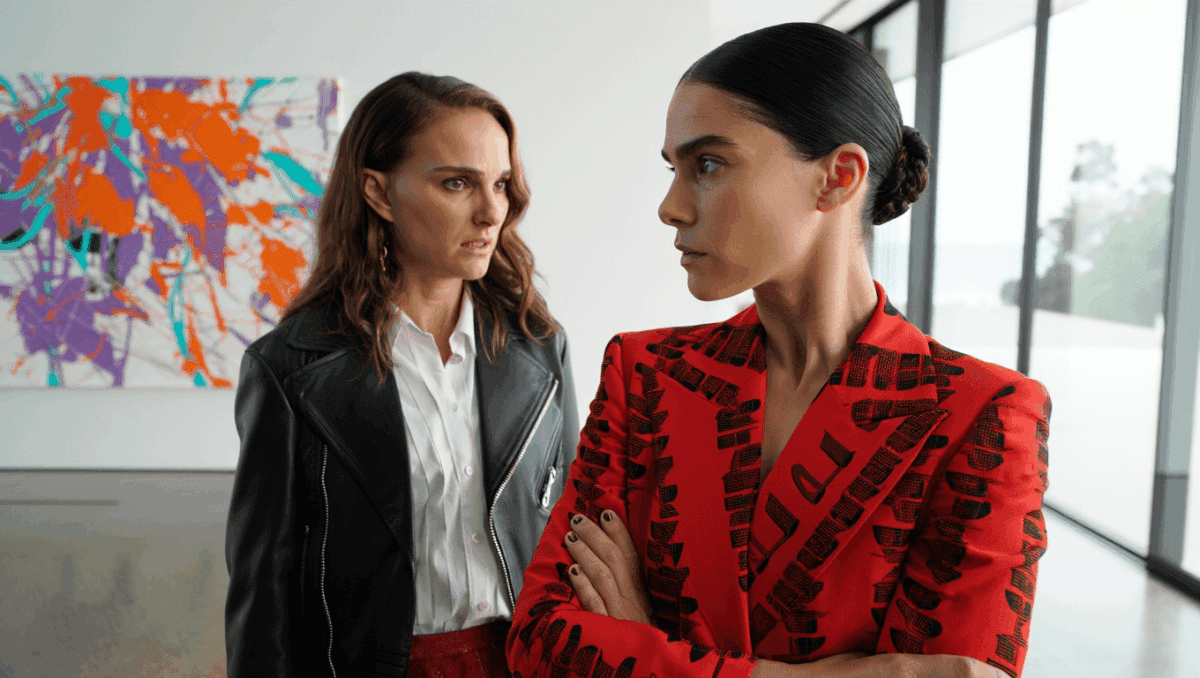
The relationship between Portman and Ortega provides the film’s emotional engine. Their interactions flicker between mentorship, rivalry, and mutual manipulation. The older woman sees echoes of her own younger hunger in the junior partner, while the younger woman both idolizes and envies her. That push-pull — admiration turned into competition — is one of the movie’s most compelling through-lines.
Satire with teeth: what the film says about the art world and capitalism
The Gallerist uses its bizarre central conceit to skewer cultural gatekeeping and the commercialization of outrage. It suggests that attention itself is a currency, and that fame can be manufactured from anything — even death. The satire is not subtle, but it’s often effective because it refuses to let the audience off the hook.
- Tokenism and exploitation: Several characters illustrate how institutions exploit marginalized creatives for cachet while offering little real power or protection.
- Survival as complicity: The film poses uncomfortable questions: when the system demands moral compromise, who gets blamed for adapting? Who pays the cost when ambition becomes the only viable strategy?
- Ambition as a corrosive force: Rather than flattering ambition, the story shows it as something that warps relationships and ethics — an idea that feels timely in an era where visibility often eclipses integrity.
Direction, tone, and visual choices that sell the premise
Cathy Yan’s direction keeps the movie visually alive. She leans into contrasts — glitzy gallery interiors versus the emotional mess underneath — and makes the aesthetic part of the parody. The cinematography and production design feed the satire by giving the world an exaggerated gloss that makes the characters’ moral filth more visible.
Tonally, the film rides a line: it’s part camp, part moral fable. That balance works when the actors commit, and when the staging amplifies the surreal quality of turning a corpse into a spectacle. At times the satire lands with a scalpel; at other moments, it brandishes a blunt instrument. Both approaches feel intentional.
What the film gets right — and where it stumbles
The Gallerist scores when its performances and social critique sync up. Portman’s grounded yet unhinged lead keeps the absurd plot emotionally believable, and the supporting cast adds layers that prevent the film from being just a one-joke satire.
- Strengths: Sharp performances, an uncompromising moral premise, and a willingness to interrogate how ambition distorts women’s relationships.
- Weaknesses: The plot becomes increasingly outlandish to the point of straining plausibility — a deliberate choice that may alienate viewers who prefer subtler satire. Some jokes land too obviously, and a few characters are sketched more as archetypes than fully rounded people.
Questions the movie raises about mentorship and legacy
There’s a late sequence where the key women scramble to keep their scheme from collapsing — a moment that reads like a parable about three generations of women in precarious, exclusionary industries. Each generation has learned a different strategy for survival, and the film forces viewers to consider what those strategies cost.
Who is to blame when the ladder is built to topple you? Are compromises survival tactics or betrayals? The Gallerist doesn’t answer these cleanly; it prefers to show the work of moral corrosion in action.
Why this film matters now
Debuting at Sundance, the film feels of-the-moment: a commentary on social media fame, the art market’s appetite for provocation, and the gendered dynamics that undergird professional advancement. It asks uncomfortable questions about power and the transmission of values from mentors to proteges — and it asks the audience to examine how much we enable by applauding spectacle.
The film leaves the viewer with images that are meant to linger — a reminder that sometimes the choices people make to survive a system reveal as much about that system as they do about personal character. How we react to those choices may be the clearest indictment of all.
You might also like:
- Is God Is lets Black women feel their rage and find catharsis
- Natalie Portman’s new movie Arco: animated climate change wake-up call
- Spa Weekend movie cast calls it mom porn in hilarious star-studded interviews
- Wicked: Elphaba and Glinda’s love story in For Good finds strength in sincerity
- Charli XCX and the Moment: don’t take it seriously

David Miller is an entertainment expert with a passion for film, music, and series. With eight years in cultural criticism, he takes you behind the scenes of productions and studios. His energetic style guides you to the next big releases and trending sensations.


I mean, I get it, art can be weird, but this movie took it to a whole new level. Portman and Ortega were on fire, though. Their chemistry saved this messy rollercoaster of absurdity.
Yeah, man, that movie was like a wild acid trip through an art exhibit. Portman and Ortega were like a dynamite duo, right? Their energy was the glue holding that wacky ride together. It was like a chaotic masterpiece, but somehow it worked, you know? What was your favorite part of the madness?
Man, watching The Gallerist felt like looking through a cracked mirror at the art world. Portman and Ortegas chemistry? Fire! But dang, that chaos felt a bit *too* messy. Still, had me thinking about ambition and capitalism for days.
Man, The Gallerist had me laughin and cringin at the same time. Portman and Ortega killed it, but that storyline? Absurdity on fleek! Wonder if artists are nodding or rollin their eyes at this satire.
Man, watching The Gallerist felt like a rollercoaster ride through a tornado! Portman and Ortega were a powerhouse duo, but that plot twist had me scratching my head for days. Still not sure if I loved it or hated it.
Man, The Gallerist had me on a rollercoaster of emotions! Natalie and Jenna killed it with their performances, but that chaotic storyline… Still, that satire on the art world and capitalism? *chefs kiss*
Dang, I feel you, bro! Natalie and Jenna were fire, but that storyline was like a maze with no exit sometimes. That satire, though? Pure gold. Had me rethinking every art exhibit Ive ever been to. Its like they peeled back the curtain on the whole circus. What a trip, man.
Man, The Gallerist got me thinking – art world or chaos? Portman and Ortega brought fire chemistry, but that messy plot had me scratching my head. Satire or just plain absurd? Whats your take?
Man, The Gallerist had me feeling like I was on a rollercoaster ride through a modern art museum. Portman and Ortegas dynamic was fire, but the chaos was a bit too much even for this art lover.
Man, I totally get what you mean! The Gallerist was like a wild art adventure, right? Portman and Ortegas were straight-up lit together, but dang, that chaos dial was turned up to eleven! I low-key felt like I needed a breather, even with all that artistic eye candy. Did you find yourself needing a chill pill too?
I swear, The Gallerist is like a wild rollercoaster ride through a modern art fever dream. Portman and Ortega? Surprisingly good duo. But man, that chaotic plot had me questioning reality more than the art itself.
Man, The Gallerist got me rethinking my life choices. Natalie Portman and Jenna Ortega? Their chemistrys on fire! But the chaos and satire? Aint for everyone. Its like a wild ride through a painting thats half genius, half mess.
Man, the art worlds a total circus, right? The Gallerist seems like its diving headfirst into the chaos. Can Natalie Portman and Jenna Ortega pull off this absurdity, or is it just a hot mess on canvas?
Man, watching The Gallerist felt like diving headfirst into a crazy art installation. Portman and Ortegas dynamic was like a wild painting – messy, but oddly captivating. The films satire scratched some deep societal itches, gotta give it that!
Dang, I feel ya! The Gallerist was like stumbling into a trippy art maze, right? Portman and Ortega were like a funky painting you cant stop staring at – messy, but damn intriguing. That satire hit those societal nerves hard! Got me thinking too. Whats your take on the ending, though? Curious to hear your thoughts.
Man, The Gallerist had me in stitches! Portman and Ortega killed it with their chemistry. The chaos? Hilarious! But that messy take on art and ambition? Gotta love the madness!
Dude, The Gallerist was a riot! Portman and Ortega were like a comedy duo, right? The chaos had me in stitches! But that artsy ambition mess? Yeah, thats the charm of it, man. Gotta embrace the madness!
Man, The Gallerist had me chuckling! Portman and Ortega – what a duo! The chaos and satire were wild, like a rollercoaster jam-packed with art and ambition. Cant decide if its brilliant or bonkers!
Man, The Gallerist got me thinking bout my last visit to a modern art museum. Messy, absurd, yet strangely relatable. Portman and Ortegas chemistry? Solid gold. Satire with a bite, yknow?
Man, watching The Gallerist was like being on a rollercoaster after eating too much cotton candy. Wild performances, but the chaos felt like a toddlers art project. Still, that satire hit hard, digging into the art world like a hungry squirrel in Central Park.
Dang, dude, your rollercoaster-cotton-candy analogys spot-on! Its like they dumped a box of crayons on a canvas and called it art, huh? But I gotta admit, that squirrel in Central Park metaphor? Pure gold! It did slice through the art world like a ninja. So, was it a chaotic masterpiece or just a hot mess, in your book?