
Show summary Hide summary
- A Moment Designed to Break You: The Door, the Duet, and the Revelation
- How Critics Responded — And What They Missed
- Actors and Arcs: Who Shines and How
- Plot Beats and Thematic Choices: What the Film Changes and Why It Matters
- Politics on Screen: Fascism, Redemption, and Moral Complexity
- Adaptation Choices: From Novel to Stage to Screen
- The Friendship at the Center: Platonic Love as Radical Force
- Where the Film Stumbles — And Why Some Fans Felt Shortchanged
- Why the Emotional Choices Still Resonate
- Open Questions the Film Leaves on the Table
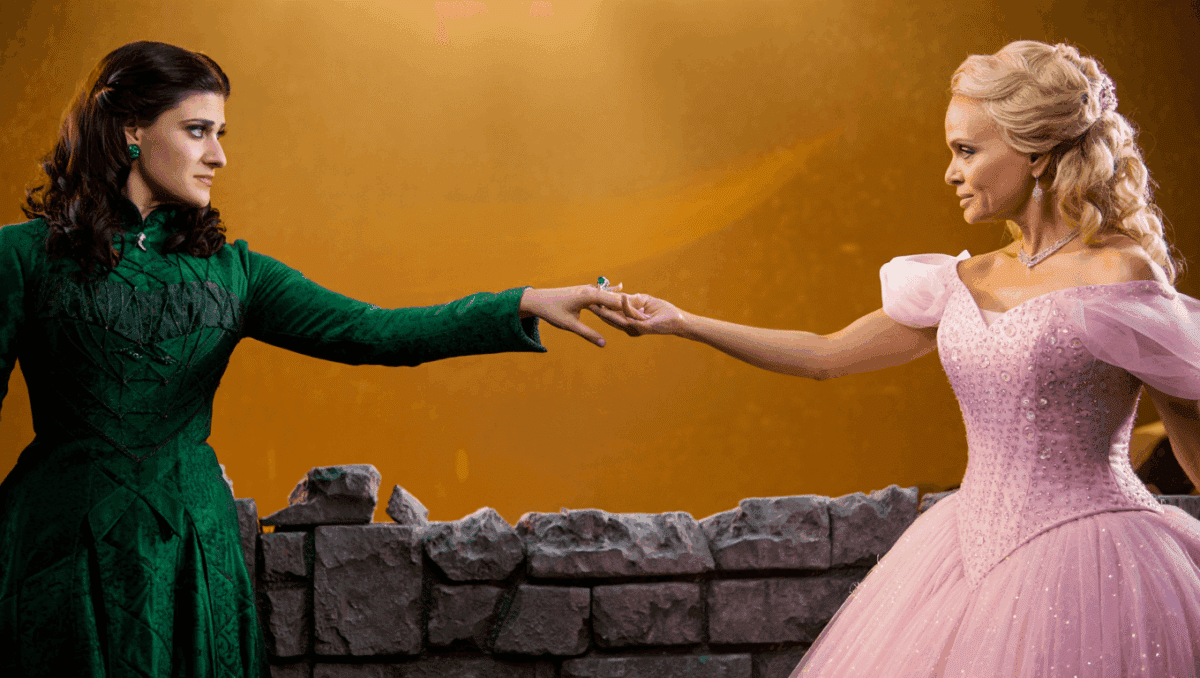
The finale of Wicked: For Good lands like a gut punch and a warm hug at once. If you saw the film, you know the exact instant — two women separated by a crumbling barrier, voices breaking, the world around them collapsing, and an exchange of words that upends decades of subtext: a whispered, unguarded admission of love. Spoiler alert: this piece discusses plot points and the film’s closing sequence in detail.
That door, that duet and the tears have sparked wide debate. Some viewers left the theater moved to tears; others shrugged and critiqued pacing or faithfulness to source material. But beyond headline takes, the movie’s emotional core is built on a deliberate choice: to center the bond between Elphaba and Glinda as the story’s driving force. The way director Jon M. Chu stages that relationship — from youthful intimacy to painful separation — is what makes the film feel both grand and intimate at once.
A Moment Designed to Break You: The Door, the Duet, and the Revelation
The Growing Demand for Data-Driven Decision Making in Silicon Valley
He quit, ran out of money, and begged to come back — here’s how his boss reacted
The film’s signature sequence is staged for maximum emotional return. During the title song “For Good,” Cynthia Erivo’s Elphaba and Ariana Grande’s Glinda meet across a dilapidated divide and deliver one of the movie’s most intimate exchanges. That final trio of words — an admission of deep affection — reframes their history and the whole narrative arc.
Why it works:
- Performance: Erivo and Grande commit fully, tapping into a lifelong theatrical sensibility that leans into big feelings.
- Staging: The physical barrier becomes a metaphor for choices, sacrifice, and the limits of reconciliation.
- Subtext made explicit: An emotional truth that stage audiences long debated is finally voiced on film.
How Critics Responded — And What They Missed
Major outlets were divided. Some reviews argued the second installment felt like an extension of material that could’ve been tighter; others called the film visually uneven or questioned the inclusion of familiar Oz characters. Headlines ranged from calls for a single condensed movie to sharp dismissals of the finale’s filmmaking.
Yet many critiques overlooked an intentional artistic choice: the film’s earnestness. What some see as cloying or naïve — tidy moral wins, sentimental beats, a politics that leans hopeful — can also be read as an answer to a cultural moment where cynicism is constant and joy is scarce. The production trades gritty ambiguity for emotional clarity, and that’s a conscious trade-off.
Actors and Arcs: Who Shines and How
Main performances that hold the film together
- Cynthia Erivo (Elphaba) — Moves through a sequence of roles: activist, sister, lover, and martyr. Her performance supplies the film’s moral weight.
- Ariana Grande (Glinda) — Carries much of the sequel’s emotional turnaround, charting a transformation from naïveté and complicity to repentance and leadership.
- Jonathan Bailey (Fiyero) — Provides the romantic tension that tests both witches’ loyalties; his presence serves the friendship-first story rather than a traditional love triangle.
- Michelle Yeoh (Madame Morrible) — A mixed but pivotal performance that ties into the film’s power dynamics.
The strongest throughline is the Elphaba–Glinda relationship: performances anchor melodrama to human truth. Even when the script opts for melodramatic turns, the actors keep the characters believable and emotionally accessible.
Plot Beats and Thematic Choices: What the Film Changes and Why It Matters
Compared to the stage show and Gregory Maguire’s novel, the cinematic adaptation smooths certain rough edges and amplifies others. Key plot threads in For Good include:
- Elphaba as fugitive and conscience — her campaign to expose the Wizard and free the voiceless creatures of Oz.
- Glinda’s rise to celebrity and complicity — celebrated as the face of “Good” while upholding a repressive regime.
- The love triangle as test, not center — Fiyero’s role primarily examines the emotional stakes of Glinda and Elphaba’s bond.
- The decision to make Elphaba a symbolic “villain” — a deliberate and painful self-sacrifice to protect a cause and a love.
These elements underline a core idea: the film is less interested in neat ideological purity than in the messy, costly reality of doing right when systems reward the opposite.
Politics on Screen: Fascism, Redemption, and Moral Complexity
Wicked: For Good frames its villains in the language of authoritarian rule: propaganda posters, erasure of dissent, and manufactured consent. The imagery of Elphaba’s demonized likeness evokes historical forms of racist caricature, which the film uses to remind viewers how propaganda dehumanizes dissenters. At the same time, the movie leans into the possibility of personal transformation — particularly Glinda’s — even if that choice feels, to some, simplistically redemptive.
Key questions the film asks:
- Can personal morality survive inside a corrupt system?
- Is redemption convincing when it arrives late and at cost to others?
- What does it mean to choose a public role of villain in order to protect the vulnerable?
These are messy, real questions — and the film doesn’t always answer them to everyone’s satisfaction. But it insists on asking them, and that insistence is meaningful in a time when symbolic choices often carry real-world consequences.
Adaptation Choices: From Novel to Stage to Screen
Gregory Maguire’s original book and the Broadway musical both gave the story different tonalities: the novel is darker and more adult, the stage show balances camp, heart, and political allegory. The film adapts that middle ground and further modifies it for a global movie audience.
Changes on screen include:
- Expanded depth for Glinda — the film leans into a redemptive arc that adds nuance and screen-time to her evolution.
- Sensitivity edits — certain character arcs, such as Nessarose’s, are reframed to avoid ableist readings and modernize the story.
- Visual storytelling — film allows for sprawling set pieces and a different kind of emotional intimacy than stage performances.
These alterations aren’t neutral. They steer the story toward accessibility and optimism — choices that some critics call dilution and others call necessary adaptation for a different medium.
The Friendship at the Center: Platonic Love as Radical Force
Ultimately, the movie stakes its claim on the radical power of friendship. Rather than treating Elphaba and Glinda as foils whose rivalry propels action, the film treats their relationship as the event itself: formative, transformative, and binding. Their bond restructures both characters’ moral universes and, as the finale shows, defines their legacies.
Scenes that emphasize this:
- The wedding juxtaposition — Glinda’s privilege versus Elphaba’s resistance, staged to highlight inequity and duty.
- Fiyero’s moment of truth — a violent choice that clarifies loyalties and forces Glinda to reckon with who she loves and who she has been.
- The final door scene — a farewell that is both break-up and benediction, and that codifies the pair as each other’s great love, whether romantic or platonic.
Where the Film Stumbles — And Why Some Fans Felt Shortchanged
Not everything lands perfectly. Common criticisms include a sense that the movie undercuts Elphaba’s agency at times, or that certain supporting characters are reduced to plot functions. Viewers who wanted a darker, more politically sharp adaptation may find the film’s optimism frustrating.
Specific concerns:
- Elphaba’s sacrifice can feel like a loss of narrative power in favor of a symbolic martyrdom.
- Some cinematic flourishes and the inclusion of Dorothy and company invited questions about necessity and tone.
- Political commentary is softened compared with its literary source, narrowing the scope of some moral dilemmas.
Why the Emotional Choices Still Resonate
Even with those flaws, the film’s emotional instincts work. When performers commit—when the camera lingers on a small look, or when two voices find a harmonic sorrow—the movie finds transcendence. The director’s willingness to let emotion come first is the design: Wicked: For Good trades some structural sophistication for a big-hearted, human pay-off.
Moments that repay generosity
- The improvised “I love you” — a small, unscripted intimacy that unlocks the scene (as Erivo has noted, it evolved organically).
- Large set pieces that ground the political stakes visually, making propaganda and spectacle part of the story’s machinery.
- Performances that turn potentially saccharine moments into genuine heartbreak.
Open Questions the Film Leaves on the Table
The ending deliberately keeps readers and viewers guessing. Does Glinda fulfill the promise Elphaba imagines for her? Does Elphaba find a new life outside Oz? Will Oz itself recover from the rot of authoritarian leadership? Those uncertainties—paired with the image of two women who changed one another forever—are part of the film’s aftertaste.
Wicked: For Good asks audiences to weigh spectacle against sincerity, political complexity against emotional truth. It invites debate rather than closing it, trusting that viewers will take its heart and argue with its head.
You might also like:
- Fashion and beauty shopping: Rejoicify’s curated picks to love
- Best performances of the year: Black artists dominated critics’ lists
- Natalie Portman, Jenna Ortega star in The Gallerist: messy, absurd take on art and ambition
- The Love Hypothesis movie review: Lili Reinhart rom-com is a solid adaptation
- Madelyn Cline, KJ Apa say The Map That Leads to You is gut-wrenching

David Miller is an entertainment expert with a passion for film, music, and series. With eight years in cultural criticism, he takes you behind the scenes of productions and studios. His energetic style guides you to the next big releases and trending sensations.


Man, Elphaba and Glindas bond in For Good hits different. Its like that friend whos always got your back, ya know? Their love storys all about sincerity and growth, and thats real special.
I remember watching Wicked live, feeling the chemistry between Elphaba and Glinda. Their love story in For Good hits different, ya know? Its all about that raw, sincere connection that makes you feel a lil emo inside.
Oh, totally get what ya mean! That Elphaba and Glinda duo had me in my feels too. Their chemistry was off the charts! For Good? That songs a real tearjerker, aint it? Its like they reached into your soul and turned on the waterworks. Who knew a green witch and a blonde could hit us right in the feels like that, right?
Man, Elphaba and Glinda in For Good hit me right in the feels. That duet, the raw emotion, its like a punch in the gut. Their bond is so real, its like theyre living in my head rent-free.
Man, I gotta say, Elphaba and Glindas bond in Wicked is pure magic. Their journey in For Good hits different, yknow? Its about growth, acceptance, and love. Gets me every time.
Man, Elphaba and Glinda in Wicked hit differently. Their bond in For Good is like a rollercoaster of emotions. Its all about that raw, real connection that leaves you in awe. Cant help but root for them!
Man, Elphaba and Glindas bond is like peanut butter and jelly – unexpected but so right. Their journey in For Good hits deep, showing that even different worlds can collide in the most beautiful way.
I gotta say, Elphaba and Glindas bond in For Good hits different. Their journey is like a rollercoaster, full of raw emotions and growth. Its the kind of connection that sticks with you, yknow?
Man, Elphaba and Glindas bond in Wicked hits different, yknow? Its like finding a rare gem in a sea of pebbles. They bring out the best in each other, and thats real magic. So much depth in that friendship!
Oh, totally get what ya mean! Elphaba and Glindas dynamic in Wicked is like a breath of fresh air in a stuffy room, right? Its like they complete each others puzzle, adding a sprinkle of magic to the mix. Their friendship is like a rollercoaster – full of twists and turns but oh-so worth the ride. Who knew witches could be so relatable, huh?
Man, Elphaba and Glindas bond in For Good hits different. The raw emotion, the growth…its like a gut punch every time. Their love story is the heart of the show, no doubt. Just beautiful.
Man, that Elphaba and Glinda friendship hits me in the feels every time. Their bond is so genuine, its like a breath of fresh air in a world of fake relationships. For Good is a bittersweet reminder that true connections can weather any storm.
Man, Elphaba and Glindas bond in For Good hits different. The raw emotions, the complexities, its like a rollercoaster of feels. Cant help but get swept away by their journey. Such a powerful connection, yknow?
Man, Elphaba and Glindas bond in For Good hits different. Its like a rollercoaster of feels – starts slow, then BAM, heartstrings pulled! Their love story is a gem in a sea of mediocrity. Just sayin.
Man, the bond between Elphaba and Glinda in Wicked is like a rollercoaster of feels! Their friendships highs and lows hit you right in the heart. Its that kind of raw emotion that sticks with you, ya know?
Totally feel ya! Elphaba and Glindas friendship is like a whirlwind, innit? One minute youre all in your feels, the next youre like, Wait, what just happened here? Its that rollercoaster ride of emotions that keeps you hooked, you know what I mean? Like, you cant help but root for them, even when theyre driving you nuts with their drama. But hey, thats what makes it all so darn captivating, right? Just cant get enough of that raw, heart-tugging bond.