
Show summary Hide summary
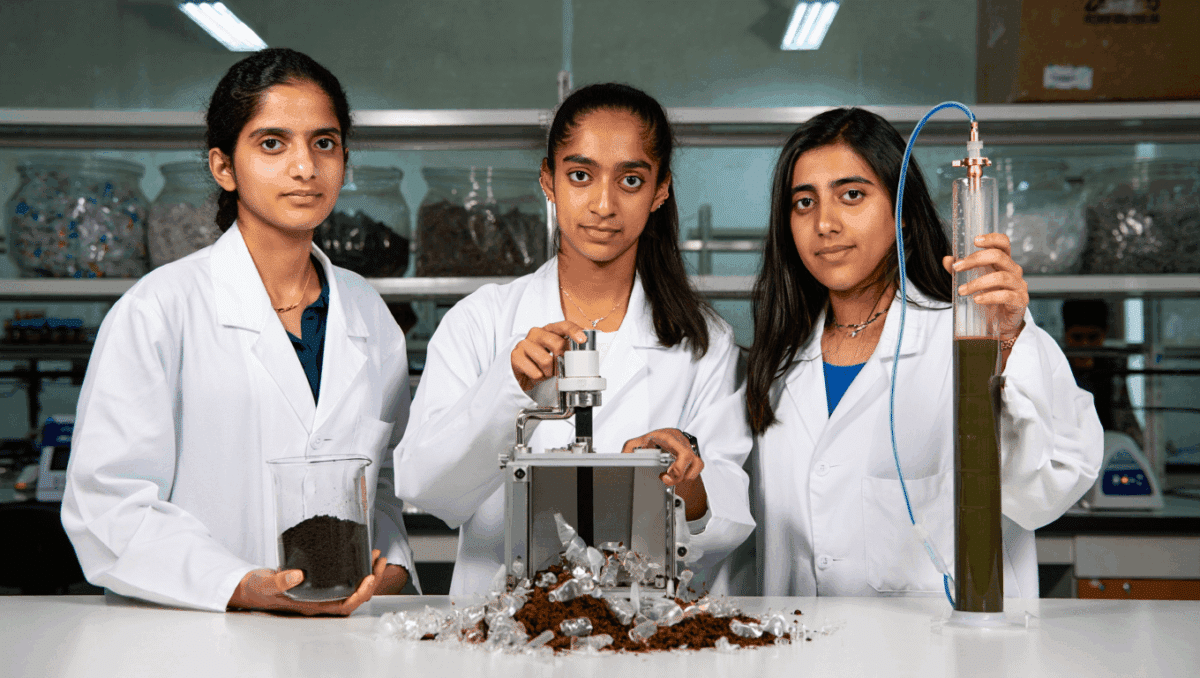
A team of researchers in the United Arab Emirates has turned everyday trash into a potential climate tool: spent coffee grounds and plastic bottles are being combined and transformed into activated carbon that can pull carbon dioxide from industrial emissions. The method has been patented and aims to tackle two pollution problems at once—organic waste that releases methane in landfills and single-use plastics that persist for centuries.
Their approach mixes used coffee grounds, polyethylene terephthalate (PET) from plastic packaging, and potassium hydroxide to produce a highly porous adsorbent. Laboratory tests indicate this activated carbon is effective at capturing CO₂, offering a low-cost route to create industrial-scale sorbents from widely available waste streams.
From cups and bottles to CO₂-capturing material
The research centers on converting two abundant waste flows into value. Worldwide, an estimated eight million tons of spent coffee grounds are discarded every year, often ending up in landfills where they emit methane and other greenhouse gases. PET, a common polyester used in beverage bottles and packaging, accumulates in the waste stream and presents recycling challenges.
The Growing Demand for Data-Driven Decision Making in Silicon Valley
He quit, ran out of money, and begged to come back — here’s how his boss reacted
Scientists at the University of Sharjah developed a synthesis that blends these ingredients with potassium hydroxide (KOH), a potent activating agent. When processed under controlled heat, the mixture forms activated carbon with a vastly increased surface area and pore structure suitable for gas adsorption.
How the activation process works and why it matters
The team’s process harnesses chemical activation rather than relying solely on high-temperature thermal decomposition. Key features include:
- KOH activation: Potassium hydroxide etches the carbon matrix, creating micro- and mesopores that trap CO₂ molecules.
- Lower operating temperature: The activation is carried out at around 600 °C, which is lower than many thermal recycling routes for plastics, reducing energy input.
- Waste-to-resource conversion: Coffee grounds supply organic carbon and structure, while PET contributes an additional carbon source and material consistency.
Researchers say this route can produce high-performance adsorbents suitable for capturing CO₂ emitted by fossil-fuel-based power plants and industrial processes.
Potential applications and industrial uses of the activated carbon
Activated carbon is already a staple in a variety of purification and treatment systems. The new material produced from coffee and PET could be used in:
- Gas purification and CO₂ adsorption units
- Drinking water filtration systems
- Wastewater and sewage treatment
- Pool and aquarium filtration
Because the feedstocks are inexpensive and plentiful, the technique may offer a scalable, lower-cost source of adsorbent media compared with conventional materials.
Environmental benefits and waste reduction
By diverting coffee grounds from landfills and reusing PET, the method addresses multiple environmental pressures:
- Reduces organic waste that would otherwise decompose and release methane.
- Provides an outlet for plastics that are difficult to recycle mechanically.
- Generates a product that can help limit CO₂ emissions when installed in industrial exhaust streams.
The inventors emphasize the circular-economy angle: what starts as a disposable cup and a single-use bottle can be converted into a tool for pollution control.
Who’s behind the innovation and where it could go next
The work was led by Dr. Haif Aljomard and colleagues at the University of Sharjah. Their patent describes the detailed synthesis steps and the performance characteristics of the resulting activated carbon. Dr. Aljomard notes that the patent documents demonstrate the feasibility of synthesizing effective adsorbents from common wastes and point toward commercial possibilities.
Next steps for the technology include scale-up trials, integration into pilot CO₂ capture systems, and lifecycle assessments to quantify net climate benefits. If these stages prove successful, manufacturers of filtration media and companies working on carbon-capture solutions may adopt the approach as an affordable, sustainable feedstock option.
Challenges and considerations for adoption
Several factors will determine whether the innovation reaches wide use:
- Feedstock logistics: collecting and transporting spent grounds and PET in sufficient quantities.
- Production costs: ensuring the activation process remains economically favorable at scale.
- Durability and regeneration: assessing how many capture cycles the activated carbon can withstand and whether it can be regenerated efficiently.
- Regulatory and market acceptance: meeting standards for industrial adsorption systems and convincing stakeholders of performance and cost advantages.
Why this approach could attract attention from industry and policymakers
Transforming waste into functional materials aligns with global goals for circular economies and emissions reduction. The dual benefit—cutting landfill emissions while producing media that sequester CO₂—makes the technology attractive to municipal waste managers, beverage companies, and industries seeking lower-cost carbon-capture options.
If the patent holders can demonstrate reliable performance in real-world settings, this coffee-and-plastic route to activated carbon could become a practical tool in efforts to cut pollution and reuse waste.
You might also like:
- Plastic to vinegar: sunlight-powered process converts multiple plastics with no emissions
- 6 million pounds of compost delivered to NYC gardeners in 2025 as part of an organic waste program
- Methane to methanol breakthrough turns greenhouse gas into high-demand methanol
- Ocean plastic cleanup: phone case brand builds autonomous floating collection platform
- Permafrost thaw emits and absorbs CO2, landmark study finds

Michael Thompson is an experienced journalist covering U.S. and global news. With ten years on the front lines, he breaks down political and economic stories that matter. His precise writing and keen attention to detail help you grasp the real‑world impact of every event.


Man, talk about innovation! Repurposing coffee and plastic waste for CO2 capture? That’s some next-level thinking. Kudos to the female-led Arab team for shaking things up. Can’t wait to see where this tech goes!
Man, I remember trying to explain to my buddies how coffee grounds could save the planet – they thought Id lost it! Now this Arab teams out here making activated carbon from coffee and plastic waste to fight CO2. Whos laughing now?
Dude, imagine turning coffee and plastic trash into CO2 traps? Mind-blowing! This Arab squad kickin butt with female power — love it! Who needs caped crusaders when you got badass science queens saving the planet?
Dude, imagine turning used coffee and plastic into CO2-trapping magic? Thats some next-level recycling game! Kudos to the Arab squad for this brainwave. Cant wait to see this eco-wizardry in action!
Man, I never thought my old coffee grounds and plastic bottles could be saving the planet. Hats off to that Arab team for turning trash into treasure! Who knew CO2 capture could be this cool?
Man, talk about innovation! Using coffee and plastic waste to make CO2-capturing activated carbon? Thats some next-level thinking right there. Kudos to the female-led Arab team for thinking outside the box and tackling climate change head-on. Cant wait to see where this project goes!
Yo, talk about thinking outside the box, right? Using coffee and plastic waste for CO2-capturing activated carbon is some wild stuff! Big props to the female-led Arab team for their killer innovation. Cant wait to see the impact this project has on climate change. Lets hope its a game-changer!
I always knew coffee was magical, but turning it into CO2-catcher? Thats next-level sorcery! Kudos to the female-led Arab team for brewing up this eco-friendly gem. Who needs wands when youve got coffee grounds and plastic on your side?
Man, talk about turning trash into treasure! This Arab teams onto something with coffee and plastic waste. Bet theyre giving Mother Nature a high-five right now. Wonder if my morning brew could save the planet too?
Man, this Arab teams onto something cool with coffee and plastic waste. Capturing CO2? Thats next level! Wonder what other everyday stuff could turn into climate heroes. Lets brew up some more ideas!
Man, talk about turning trash into treasure! Coffee and plastic saving the planet? Thats some real superhero stuff right there. If a cup of joe and some old bottles can make a difference, who knows what other random things might join the climate crusade. Lets keep brainstorming and brewing up those innovative ideas!
I used to think coffee was just for waking up, but now its saving the planet too? Thats some next-level recycling! Big up to the female-led Arab team turning trash into treasure. Time to rethink my morning brew!
Man, this Arab team is onto something wicked cool! Turning coffee and plastic waste into carbon to trap CO2? Thats like alchemy for the environment! Big brains, big moves. Wonder what else theyll cook up next?
Ive always said, innovation knows no boundaries, man! Turning coffee and plastic into CO2-capturing magic? Thats some serious brainpower at work. Who knew our daily waste could save the planet? Way to go, ladies!
Dang, talk about creativity! Who knew coffee and plastic waste could team up to fight CO2? This Arab squads onto something big. Cant wait to see these activated carbon heroes in action!
Yo, this project is like a breath of fresh air! Turning coffee and plastic waste into CO2-trapping activated carbon? Thats some next-level innovation. Big ups to the female-led Arab team making moves for the environment!
I mean, who knew coffee and plastic could team up to fight climate change, right? Gotta give props to that female-led Arab squad for thinking outside the box. Lets turn trash into treasure, one CO2 molecule at a time!